
Which Nikon lens will rescue your dimly lit living-room portraits and make cramped event spaces look cinematic?
Indoor shooting throws a mix of low light, tight framing and messy backgrounds that demand more from your glass than from your camera body.
You can tame that chaos with the right focal length and aperture choices.
A curated set of five Nikon lenses can solve those problems without forcing compromises.
This guide highlights options that cover portraits, architecture and indoor events, emphasizing low-light speed, perspective control and handling in tight rooms.
Each pick here prioritizes indoor strengths over flashy features.
Think of it as a quick, practical roadmap that matches lens character to real-world indoor use cases.
You’ll get concise, experience-based advice on which optical traits—fast apertures, useful focal lengths and smooth background rendering—matter most for specific scenarios.
No jargon, just actionable guidance.
Whether you shoot environmental portraits in a cozy apartment, interiors for listings and architecture, or fast-moving moments at small events, the right lens makes all the difference.
Match lens character to how you work and the spaces you shoot in, and you’ll see immediate improvements in exposure, sharpness and subject separation.
This primer offers straightforward, experience-based recommendations to help you buy with confidence.
1. Nikon NIKKOR Z 35mm f/1.8 S

Nikon NIKKOR Z 35mm f/1.8 S
Sharp 35mm prime delivering cinematic bokeh, fast low-light performance, and professional-grade optics for portraits, street, and everyday shooting.
Check PriceThe Nikon NIKKOR Z 35mm f/1.8 S is a Z‑mount prime that shines indoors. I reach for it for portraits, run‑and‑gun videography, and low‑light work where I want a natural perspective and fast aperture.
Optically it’s impressive: reviewers praise its round bokeh and exceptional sharpness. The lens also shows reduced flare and chromatic aberration, giving clean contrast even under mixed indoor lighting.
Handling is a big plus — it’s lightweight and compact, so I can move around a room without tiring. It pairs particularly well with Nikon Z bodies (example: Z6), which makes autofocus and image quality a cohesive package.
The f/1.8 maximum aperture is the main reason I use it indoors; it gives shallow depth of field and lets me keep ISOs lower in dim rooms. That said, the 35mm fixed focal length means you must physically reposition more to frame shots, which can be limiting in very tight spaces.
In short, this lens is mostly a winner for photographers who want a sharp, fast, and portable prime for indoor portraits and video. If you shoot on Nikon Z bodies and prefer moving to zooming, it will likely become a staple. If you need flexible framing without moving, a zoom might be more practical.
- Large f/1.8 aperture for low light and shallow depth of field
- Beautiful round bokeh (nine-blade rounded diaphragm)
- Very sharp with minimal flare and ghosting
- Lightweight and compact for indoor handling
- Fixed focal length limits framing flexibility indoors
- Only compatible with Nikon Z mirrorless systems
2. Nikon 16-35mm f/4G ED VR

Nikon AF-S FX NIKKOR 16-35mm f/4G ED VR
Versatile ultra-wide zoom with constant aperture and image stabilization, ideal for landscapes, architecture, and handheld travel photography.
Check PriceThe Nikon 16-35mm f/4G ED VR is a full-frame (FX) DSLR zoom built for interior and architectural work. As a Nikon-mount lens it plugs straight into Nikon DSLRs and handles wide compositions with ease.
Indoors it really shines for real estate and room shots where you need to capture entire spaces. The wide end lets you frame whole rooms without introducing excessive distortion, so lines stay believable and rooms feel natural.
Optically it performs impressively — reviewers note it is extremely sharp across the focal range. That sharpness makes it reliable for stitching interior panoramas or shooting details in corners without softness ruining the image.
Vibration Reduction (VR) is a practical bonus for handheld indoor work. VR helps stabilize shots in lower light, so you can often avoid very high ISOs or a tripod when walking through a property or shooting events.
Build quality is solid and geared toward professionals who travel between sites. The construction feels durable and reassuring for day-long shoots in varied conditions.
There are trade-offs to consider: the f/4 maximum aperture limits light gathering compared with faster lenses, so plan on using flash, higher ISO, or slower shutter speeds in dim rooms. Also, some users find it relatively expensive compared with other wide-angle zooms, which is worth weighing if budget is tight.
Overall, if you shoot real estate, architecture, or general interiors and need a sharp, wide, and stable zoom for Nikon DSLRs, this lens is a strong, dependable choice.
- Wide enough for interiors without excessive distortion
- VR helps handheld shots in low light
- Extremely sharp across focal range
- Durable, professional construction
- f/4 aperture limits light gathering vs faster lenses
- Some users find it relatively expensive compared with other wide-angle zooms
3. Nikon Z 14-30mm f/4 S

Nikon NIKKOR Z 14-30mm f/4 S
Compact ultra-wide zoom offering edge-to-edge clarity, lightweight design, and professional control for dramatic landscapes and tight interiors.
Check PriceThe Nikon Z 14-30mm f/4 S is a wide-to-ultra-wide zoom designed for Nikon Z mirrorless shooters, and it’s an excellent tool for interior work. Its focal-length spread covers the most useful ranges for rooms and architectural interiors, helping you capture whole spaces without excessive distortion.
Sharpness is where this lens shines—images are consistently crisp across the frame, which matters when you need corner-to-corner detail for real estate or architectural shots. That optical quality lets you rely on sensor performance to pull great images even when stopping down from f/4.
Physically the lens is compact and lightweight, so you can move through homes or tight spaces all day without getting worn out. The streamlined design makes handheld walkthroughs and long shoots far more comfortable than bulkier wide-angle options.
Its S-series construction gives you a reassuring build quality and professional feel on a Z-series body, so it stands up to regular use on client jobs. The combination of optical performance and build makes it especially attractive for photographers who prioritize image quality and portability.
If your work frequently requires shooting in very dim locations, note that the f/4 maximum aperture is slower than f/2.8 zooms, so you’ll rely more on good sensor ISO performance or additional light. Also, some shooters ask for tighter focal-length control, but the 14–30mm range covers most common interior needs.
Overall, pick this lens if you want exceptional sharpness, a true wide-to-ultra-wide range, and a lightweight package that feels at home on Z-series bodies.
- Excellent sharpness for wide to ultra-wide indoor shots
- Focal-length range suited to interiors and architecture (14–30mm)
- Compact and lightweight design
- Solid Nikon S-series build quality
- f/4 is slower than f/2.8 zooms for very low light
- Some users want tighter focal length control
4. Nikon 14-24mm f/2.8G ED

Nikon AF-S NIKKOR 14-24mm f/2.8G ED
Ultra-wide, fast-aperture zoom delivering exceptional sharpness, superior low-light capability, and dramatic perspective for professionals and creatives.
Check PriceThe Nikon 14-24mm f/2.8G ED is a top-tier ultra-wide zoom designed for Nikon DSLR bodies in FX format. It’s built specifically for indoor and low-light shooting where you need both wide coverage and strong optical performance.
With a constant f/2.8 aperture, this lens excels in dim interiors and event situations, letting you keep shutter speeds up and ISO down without resorting to flash. The optic design delivers extremely sharp edge-to-edge results with minimal distortion, which is exactly what you want for real estate, architectural interiors, and dynamic event coverage.
Optical corrections are taken seriously here: ED elements and a nano coating reduce chromatic aberration and flare so highlights stay clean and contrasty under mixed indoor lighting. The result is superior low-light image quality and punchy, usable files straight out of camera.
The trade-offs are practical. The lens is heavy and robust, built to professional standards, so it can feel bulky for casual handheld shooting or long run-and-gun assignments. The 14–24mm zoom range is ultra-wide and powerful, but it does restrict framing options compared with longer zooms; you’ll need to move your feet or reposition more often to compose tighter shots.
- Fast f/2.8 aperture ideal for low-light interiors
- Extremely sharp edge-to-edge
- ED elements and nano coating reduce chromatic aberration and flare
- Strong, durable professional build
- Bulky and heavy
- Limited zoom range (14–24mm)
5. Nikon NIKKOR Z 50mm f/1.4 S

Nikon NIKKOR Z 50mm f/1.4
Bright standard prime producing creamy bokeh, striking subject separation, and exceptional low-light performance for portraits and everyday artistry.
Check PriceThe Nikon NIKKOR Z 50mm f/1.4 S is a Z‑mount prime built for Nikon Z mirrorless bodies. It’s celebrated for exceptional sharpness and stunning bokeh, making it a go‑to for indoor portraits, environmental shots and candid moments.
Its very fast f/1.4 aperture enables strong low‑light performance and creative depth‑of‑field control. That wide aperture gives you subject separation and smooth background rendering that really lifts indoor portraits.
Optically, the lens delivers extreme sharpness and clarity even wide open, so eyes and facial detail are tack‑sharp without having to stop down. The 50mm focal length feels natural indoors and is versatile across many shooting situations, from headshots to environmental portraits.
There are practical trade‑offs to consider. As a prime, you’ll need to move more to frame shots, or crop in post, which can slow you down at events. It’s also heavier and larger than some f/1.8 primes, so if you prefer minimal gear for long handheld shoots this might feel a bit bulky.
- Very fast f/1.4 aperture for dim indoor lighting
- Extreme sharpness and clarity, even wide open
- Beautiful, natural background blur for portraits
- Versatile focal length for many indoor shooting types
- Prime requires frequent repositioning or cropping to compose
- Heavier and larger than some f/1.8 primes
Indoor Portrait Lens Selection Tips
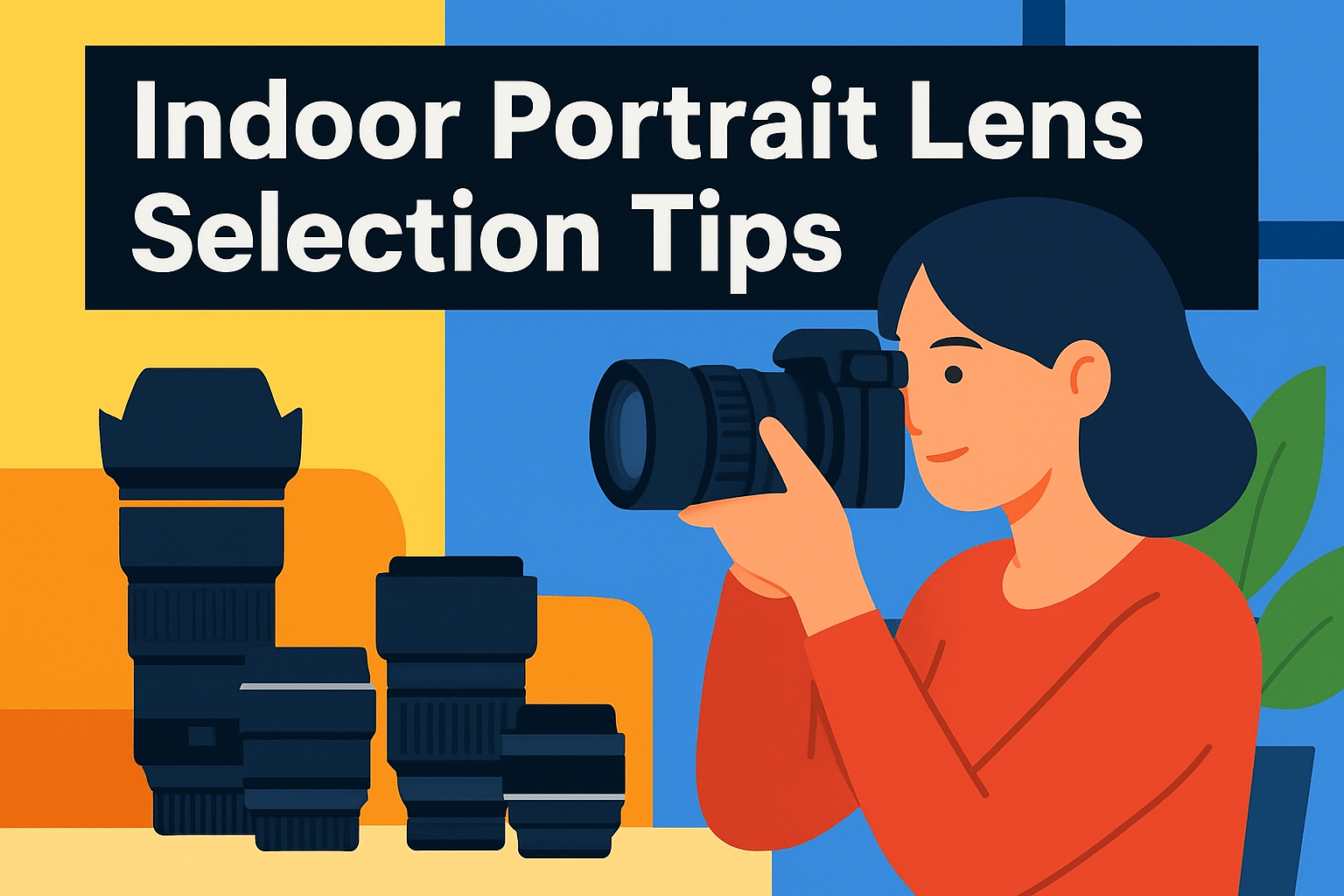
When shooting portraits indoors, aperture is the single most important decision you’ll make. A lens that opens to f/1.8 or wider lets you use faster shutter speeds and lower ISO in dim rooms, while giving you the shallow depth of field that separates a subject from clutter.
That shallow focus is gorgeous, but it’s also unforgiving. Wide-open shooting means the plane of focus is pencil-thin—make the eyes the priority and don’t hesitate to stop down to f/2–f/2.8 when you need more of the face in focus or when you’re photographing pairs.
Focal length shapes the portrait differently. A 35mm is my go-to in tight apartments and for environmental portraits; it captures context without heavy distortion. A 50mm gives a natural perspective for full-body and head-and-shoulder shots, while an 85mm delivers flattering compression and strong background separation if you have the working distance.
Sharpness matters as much as aperture and reach. Look for lenses that deliver strong center sharpness wide open so the eyes and fine facial detail stay crisp. I often test a lens wide open to make sure its character matches the look I want.
Autofocus speed and accuracy are non-negotiable for candid or moving subjects. Modern Nikon AF systems with quiet, fast motors lock on in lower light and give you more keepers, so prioritise AF performance.
Also think about size and presence. Compact, lightweight primes are easier to manoeuvre in crowded rooms and tend to make subjects feel relaxed. They let you move and refine composition, often producing more natural results than constant zooming.
Finally, don’t overlook background quality. Lenses with rounded aperture blades and wide maximum apertures create smooth, creamy bokeh that looks professional. If you can own only one indoor portrait lens, match focal length to the space: 35mm for tight scenes, 50mm for general versatility, 85mm when you can step back for flattering compression.
When To Choose Prime Lenses Indoors
Reach for a prime when ambient light is limited or you want clear subject separation. Primes usually open wider (f/1.8, f/1.4 or faster) so you can use lower ISO and faster shutter speeds without flash. They also deliver crisper images with less distortion and creamier bokeh, which really helps portraits and detail shots in cluttered rooms.
For candid and lifestyle work a prime’s size and responsiveness matter. Smaller primes are less intimidating; their quiet shutters and fast AF let you catch natural expressions. A 35mm is superb in tight apartments for environmental portraits, while a 50mm excels at headshots and subject isolation.
In studio or controlled-light setups primes pay dividends. You get consistent rendering and maximum sharpness for product, headshots and editorial work. A fast 50mm or 85mm prime will give predictable falloff and effortless background blur when you’re shaping light with modifiers.
Using primes forces you to move and see the scene differently. That constraint often leads to more deliberate framing and stronger images than mindlessly zooming. It also trains you to read light and distance, which improves your indoor shooting overall.
Be realistic about the trade-offs: fixed focal lengths mean you must reposition when framing options are tight. If you can’t move, or you need wide-to-tight coverage quickly, a wide zoom is the better tool. For most indoor shoots I carry two primes — a 35mm and a 50mm — and switch between them depending on space and subject.
In short, choose primes indoors when you want low-light performance, superior image quality and beautiful bokeh. They demand more movement but reward you with cleaner files and more intentional pictures. Balance those benefits against the need for framing flexibility and you’ll find primes are often the smarter choice.
What People Ask Most
What focal length is best for indoor photography with a Nikon camera?
It depends on the space and subject: wider focal lengths suit tight interiors while standard focal lengths give a natural perspective for portraits. Choose based on how much of the scene you need to include and how much working distance you have.
Which Nikon lens is best for indoor portrait photography?
Fast primes with wide apertures are often preferred for portraits because they render pleasing background separation and perform well in dim light. A mid-tele or standard prime is a versatile choice for flattering subject perspective and sharpness.
Which Nikon lens is best for low-light indoor photography?
Lenses with wide maximum apertures are the most helpful for low-light interiors because they allow faster shutter speeds and lower ISOs. Fast primes or faster zooms are both good options depending on whether you prioritize light gathering or framing flexibility.
Is a prime or zoom lens better for indoor photography with Nikon cameras?
Primes tend to offer wider apertures, superior image quality, and lighter weight, making them excellent in low light and for subject isolation. Zooms give framing versatility and convenience for changing scenes, which can be valuable for events and interiors.
Can I use a Nikon DX lens for indoor photography on a full-frame Nikon?
DX lenses are designed for smaller sensors, so on a full-frame body they may not cover the entire frame without using a crop mode or an appropriate adapter. For full-frame coverage and optimal image quality, lenses designed for full-frame are generally recommended.
What lens should I use for indoor event or wedding photography with a Nikon?
Choose lenses that balance low-light capability and framing flexibility, such as a combination of a fast standard prime and a versatile wide-to-normal zoom. Reliable autofocus and comfortable handling are also important for capturing candid moments and changing scenes.
What is the best aperture to use for indoor photography with Nikon lenses?
Prioritize wider apertures to let in more light and create shallow depth of field when you want subject separation. Stop down when you need greater depth of field or edge-to-edge sharpness for interiors.
Conclusion for Nikon Indoor Lenses
These recommendations show how different lens characteristics support indoor work — from portraits and environmental shots to interiors, events and low-light situations, so prioritize aperture, focal length, autofocus performance and size when choosing.
Think about your specific indoor use—environmental portraits, real estate, candid events or dim venues—and match a lens’s strengths to that task rather than chasing specs alone.
Primes often deliver wider apertures and compact handling for low‑light and shallow depth‑of‑field work, while zooms provide framing flexibility for rooms and events; also consider ergonomics and background rendering when making your pick.
To keep improving your indoor photography, explore more guides and reviews on our site for practical tips, sample workflows and inspiration tailored to different shooting scenarios.
If you have a question or need help choosing gear for a specific shoot, leave a comment below — we usually reply within a few hours.


0 Comments