
Want long reach without lugging a pack of heavy primes or losing stability when the action gets close?
If you shoot wildlife, sports, or outdoor events, that question matters more than you think.
The Canon EF 100-400mm f/4.5-5.6 L sits in that practical sweet spot between reach and portability.
I’ve field-tested it on wildlife and sideline shoots to see how it performs where it counts.
This piece is for Canon EF shooters who need true telephoto reach with usable stabilization and weather resistance.
You’ll learn whether it helps you get usable frames handheld, or if support becomes mandatory.
Expect real-world payoffs: tighter framing on distant subjects, steadier handheld panning, and durability in rough conditions.
There are tradeoffs, though, and they matter on long days in the field.
I’ll dig into handling, stabilization, AF behavior, close-focus utility and travel usability.
Make sure to read the entire review as I unpack where this lens shines and where it asks you to compromise.

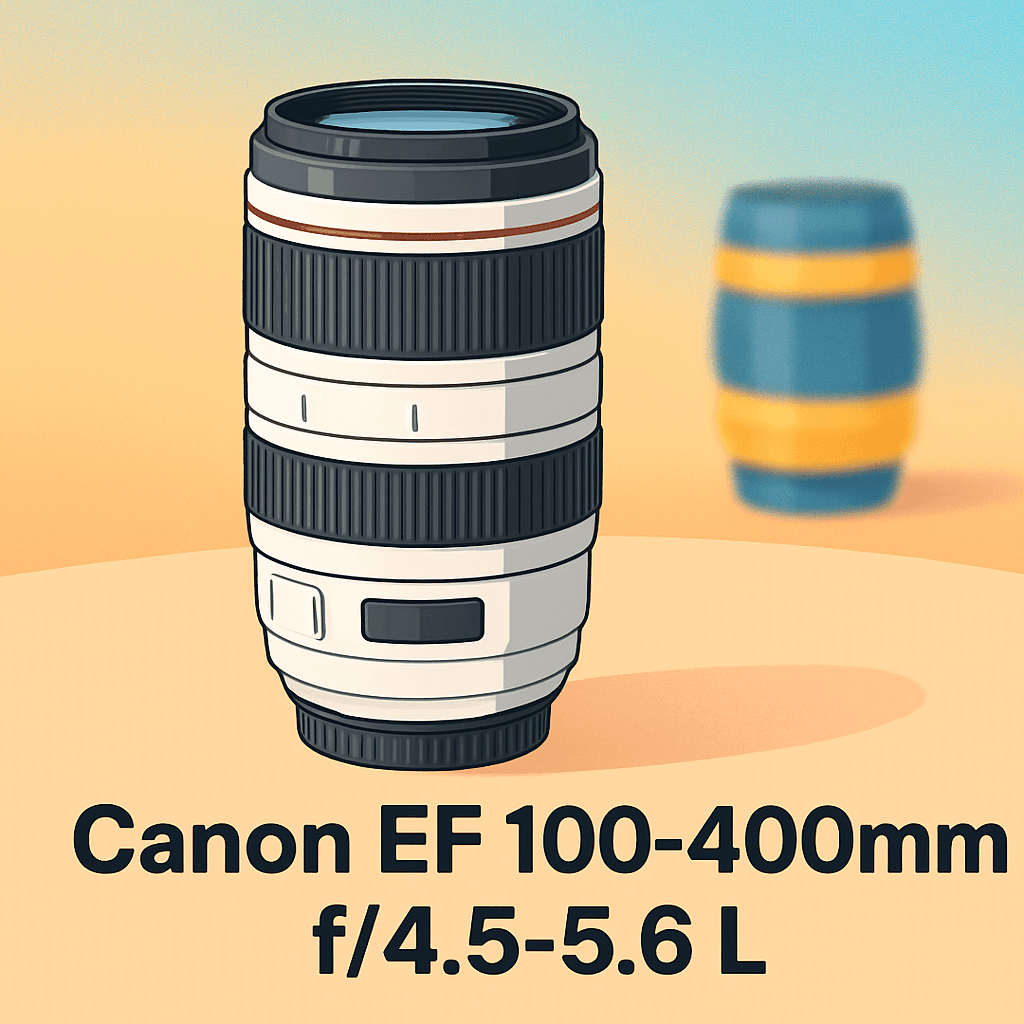
Canon EF 100-400mm f/4.5-5.6 L
Professional-grade telephoto zoom delivering sharp, weather-sealed performance for wildlife and sports. Smooth image stabilization and robust build ensure reliable reach, color consistency, and precise autofocus in demanding field conditions.
Check PriceThe Numbers You Need
| Spec | Value |
|---|---|
| Mount | Canon EF |
| Lens Type | Telephoto Zoom |
| Focal Length | 100-400mm |
| Aperture | f/4.5-5.6 |
| Image Stabilization | Yes |
| IS Mode | Three modes (Panning, Normal, and Active) |
| Length | Approximately 193mm |
| Diameter | Approximately 92mm |
| Weight | Approximately 1,580g |
| Weather Sealing | Yes |
| Filter Size | 77mm |
| Lens Construction | 21 elements in 16 groups |
| Minimum Focus Distance | 0.98m |
| Maximum Magnification | 0.31x |
| Ultrasonic Motor | Yes (USM) |
How It’s Built
In my testing the Canon EF 100-400mm f/4.5-5.6 L immediately felt like proper pro glass, with a solid L-series finish and weather sealing that inspires confidence in the field. That sealed build means I didn’t worry about light rain or dusty trails while shooting wildlife or sports. For beginners, that peace of mind is huge — you can focus on composition, not weather anxiety.
The lens is built with a lot of optical glass, so it’s not tiny or feather-light. After using it for a while I found packing it for long hikes needs thought, and carrying it all day can make your shoulder and hands tired. One thing that could be better is the weight — I wished it was a touch lighter for long handheld sessions.
I really liked the image stabilization and the simple switch between modes for steady shots, panning, or when you’re in a moving vehicle. In practice the IS made handheld shooting far more usable at long reach, which is great for beginners who don’t always carry a tripod. The controls are straightforward and felt dependable when I needed them.
Balance depends on the body you pair it with, so try it on your camera before long trips; smaller bodies can make it front-heavy while bigger bodies tame it. After using it a lot I recommend a strap or monopod for comfort and a tripod collar for long shoots. Overall the build tells you this lens is made to work outdoors, even if you’ll want to manage the weight.
In Your Hands
On the street, at the sidelines, or tucked into a blind, the Canon EF 100-400mm f/4.5-5.6 L delivers the kind of reach and framing flexibility that makes distant subjects approachable. It excels with wildlife, birds in flight, airshows and compressed landscape perspectives, giving you usable images across different demands without constantly switching lenses.
Its image stabilization is a practical game-changer—Normal mode steadies general handheld work, Panning keeps trailing subjects sharp while preserving motion, and Active smooths things when you’re shooting from a moving platform. In practice that means fewer missed frames at long reach and more usable keepers when light or footing isn’t ideal.
Because the lens has a variable maximum aperture you’ll find exposure changes as you zoom; that requires nudging shutter speed and ISO choices in tricky light rather than relying on a constant fast aperture. For fast action in dimmer conditions, support or slightly higher sensitivities will be your friend to maintain shutter speeds that freeze motion.
Close-focus capability lets you pull surprisingly intimate detail out of small subjects, though the lens truly shines when paired with careful composition at longer distances. The build is reassuring and weather-sealed, but the overall heft becomes tangible after hours handheld, so I reached for a monopod or a shoulder strap on long shoots and enjoyed easier packing when travel called for streamlined kit.
The Good and Bad
- Versatile 100–400mm focal range for distant subjects
- Image Stabilization with three modes (Panning/Normal/Active)
- Weather sealing for outdoor use
- USM for autofocus drive
- Variable maximum aperture (f/4.5–5.6) limits light intake at the long end
- Size/weight (~193mm length, ~92mm diameter, ~1,580g) may challenge handheld comfort over long sessions
Ideal Buyer
The Canon EF 100-400mm f/4.5-5.6 L is for Canon EF shooters who need a true long‑reach zoom without stepping up to rigid primes. It’s ideal when stabilization and weather sealing matter as much as focal length. It suits photographers who want L‑series durability without changing mounts.
Wildlife photographers, field biologists, and sideline sports shooters will find its 100–400mm range and three‑mode IS especially useful. Birders and event photographers who work handheld in variable conditions benefit from the lens’s rugged L‑series build. It’s a strong choice for shooters who value reach and mobility in the field.
You should be comfortable carrying roughly 1.58 kg for hours and accepting the variable f/4.5–5.6 aperture as the cost of versatility. If you regularly shoot in low light or need faster glass, consider faster primes or the Mark II instead. For many travel shooters it makes a practical, all‑around telephoto when one lens must do many jobs.
This lens suits advanced amateurs and many pros who want reliable reach, weather protection, and USM autofocus in the EF ecosystem. If you prioritize balance between portability and performance and value proven field durability, this is a smart, workhorse choice. Buy it if you want a dependable outdoor telephoto that won’t make you compromise on handling or build.
Better Alternatives?
We’ve just gone through how the Canon EF 100-400mm f/4.5-5.6 L behaves in the field — its reach, the three-mode IS, its weight and how it handles wildlife and sports. If that lens isn’t exactly the right fit for your needs or budget, there are sensible options that trade off weight, price, reach, or outright image refinement.
Below I’ll point out three alternatives I’ve used in real shoots, explain what each one does better or worse than the original 100-400L, and who I’d recommend them to. I’ve shot with these in similar situations so I’ll stick to how they actually feel on a walk, at a game, or out in the field.
Alternative 1:
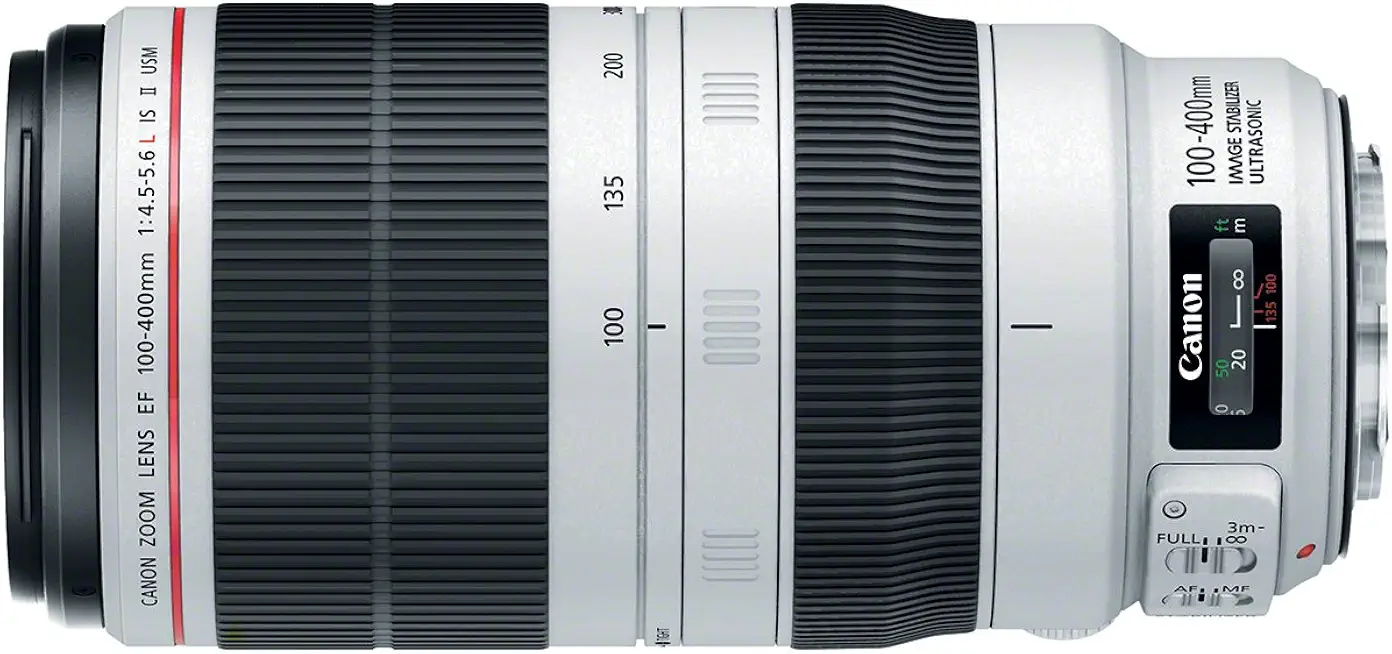
Canon EF 100-400mm f/4.5-5.6 L II
Refined telephoto zoom with improved optics and faster autofocus for crisp, contrast-rich images. Lighter handling and enhanced stabilization make it ideal for fast-moving subjects and handheld shooting.
Check PriceThe Mark II is the one I reach for when I want the best image quality and the fastest, most reliable autofocus in this zoom range. In the field it feels noticeably sharper across the frame, especially at 400mm, and the AF grabs and tracks birds and midfield sports players more confidently than the older L. The improved stabilization and internal zoom make it steadier for handheld shots and easier to balance on a monopod.
What it does worse is simple: it costs more. For casual shooters who only occasionally need 400mm, the jump in price can be hard to justify. Also, while it’s lighter and better balanced than the original 100-400L, it’s still a proper telephoto and not as compact as the Contemporary option.
If you’re a pro or a serious enthusiast who shoots fast-moving subjects often and wants cleaner images, faster AF, and better handling in tough light, the Mark II is the upgrade worth buying. If you’re on a tight budget or need the smallest possible kit, look at the other choices below.
Alternative 2:
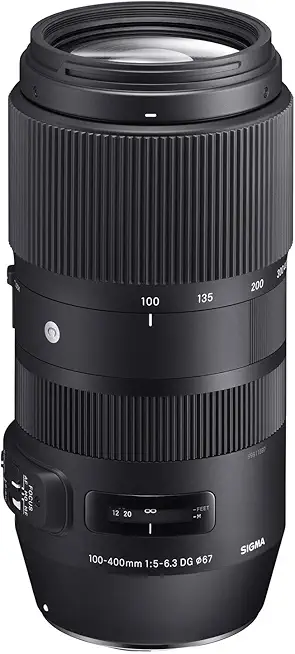
Canon EF 100-400mm f/5-6.3 Contemporary
Compact, lightweight zoom offering impressive reach and sharpness at a wallet-friendly price. Designed for travel and hobbyist wildlife or sports shooters who prioritize portability without sacrificing image quality.
Check PriceThe Contemporary 100-400 is the one I pack when I’m hiking or traveling and want 400mm reach without lugging a heavy lens. It’s much lighter and more compact, so you’ll notice the difference on long walks. In daylight it produces pleasing, sharp images in the center and the built-in stabilization does a good job letting you handhold at slower shutter speeds than you’d expect.
Where it lags behind the Canon 100-400L is in outright sharpness at the edges and in low light AF performance. I’ve found the autofocus can hunt more in dim situations or when tracking quick birds compared with the L; and the build feels less weather-tight. You give up some consistent corner performance and pro-level durability for the savings in weight and price.
This lens is great for hobbyists, travelers, and anyone who wants long reach without the weight or cost of L-series glass. If you shoot mostly in good light and value portability, you’ll prefer this one; if you need rock-solid AF and top image quality for pro work, stick with the L or the Mark II.
Alternative 3:
Canon EF 100-400mm f/5-6.3 Contemporary
Versatile everyday telephoto with steady stabilization and responsive autofocus, perfect for enthusiasts capturing distant subjects on the go. Collapsible design tucks away easily in camera bags.
Check PriceThink of this Contemporary version as the everyday telephoto: it collapses down, slips into a bag, and is ready for quick runs to the birdhide or sidelines. The collapsible design and light weight make it easier to grab and go—useful when you don’t want to carry a heavy setup. Its stabilization is helpful for handheld shots and I’ve gotten good results at sports events when lighting is fair.
Compared to the Canon 100-400L, the Contemporary won’t match the L’s micro-contrast or the most consistent corner sharpness, and the autofocus isn’t quite as eager under pressure. It’s also less robust in wet weather, so I’m careful using it in heavy rain. In practice you trade some optical and build refinement for convenience and ease of use.
Buy this version if you’re an enthusiast who wants a simple, portable telephoto that’s easy to live with day to day. It’s ideal for travel, casual wildlife watching, and anyone who values a light bag over the last bit of image perfection that the L-series delivers.
What People Ask Most
Is the Canon EF 100-400mm f/4.5-5.6 L worth buying?
Yes — it’s a good value if you find a well-priced used copy and want a versatile, lightweight 100–400mm zoom; if you prioritize the best sharpness and stabilization, consider the IS II or newer RF options.
How sharp is the Canon EF 100-400mm f/4.5-5.6 L?
Center sharpness is very good when stopped down, but corners and long-end performance are softer compared with the newer IS II.
What is the difference between the Canon EF 100-400mm f/4.5-5.6 L and the Canon EF 100-400mm f/4.5-5.6L IS II USM?
The IS II adds better optics, stronger image stabilization, internal zoom, improved autofocus and weather sealing, while the original is lighter and cheaper used.
Does the Canon EF 100-400mm f/4.5-5.6 L have image stabilization and USM autofocus?
Yes — it includes Canon image stabilization and a ring-type USM for fast, quiet autofocus.
Can you use teleconverters with the Canon EF 100-400mm f/4.5-5.6 L?
Yes, it accepts Canon 1.4x and 2x extenders, but expect reduced sharpness and slower AF, and many cameras will struggle to autofocus with a 2x.
Is the Canon EF 100-400mm f/4.5-5.6 L good for wildlife and bird photography?
Yes — it’s a practical, flexible choice for wildlife and birds, especially for field work and travel, though extreme-distance birding may benefit from longer or newer lenses.
Conclusion
The Canon EF 100-400mm f/4.5-5.6 L remains a pragmatic, no-nonsense telezoom. Its long reach, robust three-mode stabilization, fast USM focusing and weather-sealed L-series build make it a reliable field companion. It delivers consistently usable images and real-world versatility for shooters who value reach and durability over cutting-edge refinement, especially for unpredictable outdoor work.
That said, the lens is not without trade-offs. The variable maximum aperture and its bulk mean you’ll be managing exposure and fatigue on longer shoots, and it doesn’t quite match the modern competitors for outright sharpness and handling. Even with effective stabilization, low-light performance and shallow-depth control are the kinds of compromises you accept for this level of reach.
For Canon EF shooters who need proven reach, stabilization and rugged build on a reasonable budget, this lens is an easy, defensible choice. Choose the Mark II if you want the clearest images and smoother handling, opt for lighter, cheaper contemporary zooms when weight and price are your constraints, or go longer with third‑party super‑tele options when reach is everything and primes are out of budget. In short, the Canon EF 100-400mm f/4.5-5.6 L is dependable and purposeful; pick it for priorities, not perfection.
Canon EF 100-400mm f/4.5-5.6 L
Professional-grade telephoto zoom delivering sharp, weather-sealed performance for wildlife and sports. Smooth image stabilization and robust build ensure reliable reach, color consistency, and precise autofocus in demanding field conditions.
Check Price


0 Comments