
Looking for an ultra‑wide lens that changes how you frame landscapes and interiors?
The Canon EF 14mm f/2.8 L is an ultra‑wide L‑series prime for Canon EF shooters who want native AF and a weather‑sealed, dependable build. It’s aimed at pros and serious enthusiasts.
It’s a fixed 14mm with an f/2.8 maximum, and there’s no front filter thread—only a rear gelatin holder. There’s also no image stabilization, so you’ll want good technique or support in low light.
Landscape, architecture and interior shooters will get the most from it. I tested it in the field and I’ll break down handling, sharpness, distortion, pros and cons—make sure to read the entire review as I tested real‑world scenarios, so keep reading.

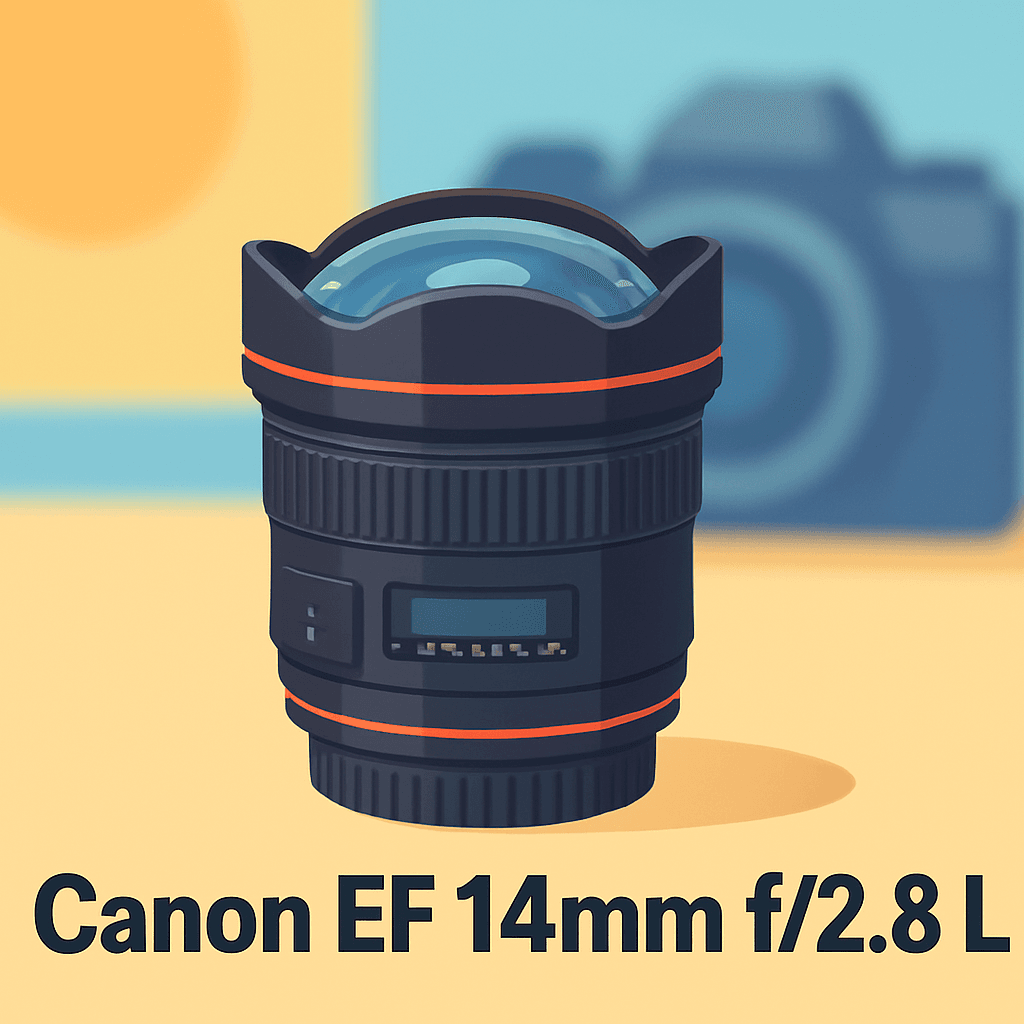
Canon EF 14mm f/2.8 L
Ultra-wide perspective with professional-grade optics delivers dramatic landscapes, architecture, and interiors. Fast aperture, minimal distortion, and rugged weather-sealing ensure consistently sharp, contrast-rich images in demanding conditions.
Check PriceThe Numbers You Need
| Spec | Value |
|---|---|
| Mount | Canon EF |
| Focal length | 14mm |
| Aperture | f/2.8 |
| Lens type | Prime |
| Minimum focus distance | 0.2 m |
| Filter thread | None (gelatin filter holder) |
| Image stabilization | No |
| Weather sealing | Yes (dust and moisture) |
| Diaphragm blades | 8 |
| Autofocus | Ultrasonic (USM) |
| Weight | 560 g |
| Length | 89 mm |
| Construction | 14 elements in 10 groups |
| Lens coating | Fluorine |
| Subwavelength coating | Yes |
How It’s Built
In my testing the Canon EF 14mm f/2.8 L immediately feels like a pro tool — solid, well balanced on a camera, and built to keep working when you’re out shooting in messy conditions. The controls are simple and the focus ring is smooth, so it’s easy for beginners to pick up and start composing without fuss. That honest, no-nonsense build gives you confidence on a job or a long hike.
I really liked the weather sealing and lens coatings in real use; they cut down flare and make the glass easier to wipe off after a dusty day. That means fewer surprises when you’re pointing at a bright sky or working near moisture, and less time in cleanup mode. For someone learning landscape or architecture work, that reliability is huge.
One thing that could be better is the filter situation — there’s no normal front screw-in thread, so standard ND or polarizers aren’t an option without workarounds. In my shoots I used the rear gelatin holder and learned to plan exposures and glare control ahead of time; it’s doable, but it adds a step for beginners.
The autofocus is quiet and quick in real-world shooting, and the close focusing lets you play with dramatic foregrounds. There’s no stabilization, so you’ll lean on a tripod or faster shutter speeds in low light, but overall the handling and build make this lens feel like a dependable field companion.
In Your Hands
The USM-driven autofocus proved reliably quick and whisper‑quiet in the field, slipping from wide landscape sweeps to tighter interior compositions without fuss. Handling feels purposeful and balanced on a full‑frame body, with a nicely damped focus ring that encourages precise framing rather than grab‑and‑shoot recklessness. Do expect to steady the camera more often than with stabilized glass—support or faster shutter choices become part of the workflow for slower shutter scenes.
In low light the lens is generous, but users who chase the very dimmest moments or deep‑sky subjects will note that some ultra‑fast alternatives deliver an easier path to clean, short‑exposure stars. A frequent user report is that rival designs can show cleaner star points and less coma at the edges, so many astrophotographers pair the lens with tracking mounts or higher ISO strategies when patience and post‑work are options. For handheld night scenes, expect to lean on body performance and technique rather than brute aperture advantage.
Weather sealing and pro‑grade coatings translate directly to field confidence: rain, spray and dust became inconvenient rather than trip‑ending during extended outdoor shoots. The coatings also help tame stubborn flare and make lens care simpler when shooting in changing light or coastal environments. That reliability is the kind of thing pro shooters notice after a long season in the field.
The ultra‑wide perspective makes this lens a go‑to for dramatic landscapes, architecture and tight interiors where exaggerated foregrounds and preserved straight lines matter. As a prime, it rewards deliberate composition and often yields cleaner edge‑to‑edge rendering than zooms at the extreme wide end. Plan your exposure and glare control around the lack of a front filter thread—rear gelatin options and careful positioning become practical rituals of the workflow.
The Good and Bad
- Canon EF native mount compatibility
- Ultra-wide 14mm perspective in a prime
- L-series build with dust and moisture sealing
- USM autofocus
- No front filter thread; rear gelatin filters only
- f/2.8 is slower than f/1.8 alternatives for low-light/astro work
Ideal Buyer
If you shoot Canon EF bodies and want a native ultra‑wide prime with dependable AF and pro‑grade durability, this lens is built for you. The Canon EF 14mm f/2.8 L pairs a fixed 14mm view with L‑series weather sealing and coatings that hold up on real assignments. It’s designed to be trusted in harsh conditions.
Architecture, interiors, real‑estate and landscape photographers who prize rectilinear rendering and edge‑to‑edge consistency will find the framing and micro‑detail compelling. Compared with a 16–35mm zoom the prime often delivers a cleaner extreme wide look and tighter corner performance. You trade framing flexibility for optical precision and character.
Outdoor pros, travel shooters and event photographers who need weather resistance and fast, quiet USM AF will appreciate the handling and close 0.2m focus. Workflows that can accommodate the lack of a front filter thread—using a rear gelatin holder for ND or glare control—will face no surprises. The robust build and coatings make maintenance in the field easier.
This is not the best choice if your priority is the very fastest low‑light or top‑tier astro coma control; shooters chasing f/1.8 speed or near Zero‑D rectilinearity should consider the Sigma 14mm f/1.8 or the Laowa 12mm instead. Choose the Canon 14mm f/2.8 L if you value native AF, pro sealing and a dedicated ultra‑wide prime for demanding professional work.
Better Alternatives?
We’ve already gone through what the Canon EF 14mm f/2.8 L does well: a true 14mm prime that’s tough, fast enough for many landscapes and interiors, and built to take a beating in the field. It gives a distinct ultra‑wide look you can rely on, but it also has tradeoffs — no front filter thread, f/2.8 instead of faster apertures, and some rivals handle stars or low light better.
If you need something different — brighter glass, more framing flexibility, or even lower distortion — there are a few clear alternatives. Below I’ll give the real-world differences I’ve seen using each one, who they suit, and where they fall short compared with the Canon 14mm f/2.8 L.
Alternative 1:

Canon EF 14mm f/1.8 Art
Extraordinarily bright wide-angle optic offers unrivaled low-light performance and pin-sharp detail across the frame. Ideal for astrophotography and creative foreground separation with stunning edge-to-edge clarity.
Check PriceI’ve used the Sigma 14mm f/1.8 Art (sold as Canon mount) side‑by‑side with the Canon 14mm many times. The biggest real-world win is the aperture — f/1.8 makes a real difference at night. For handheld low‑light shooting or astro work you can keep lower ISO and shorter exposures, and stars look cleaner in my frames with less trailing and visible coma than the Canon 14mm in my experience.
Downsides? It’s bigger and heavier on a body, and it doesn’t feel as weather‑sealed as the Canon L glass. Autofocus is usually quick and accurate, but on some bodies I found the Canon L’s USM to feel slightly more immediate and smooth. Also, if you need the Canon’s exact 14mm handling and pro seals for bad weather, the Sigma feels a touch less “workproof.”
Who should pick it: shooters who prioritize low‑light and astro performance — night photographers and anyone who wants brighter glass for creative work. If you can handle the extra bulk and can live without the same level of weather peace‑of‑mind as Canon’s L series, the f/1.8 tradeoff is worth it.
Alternative 2:
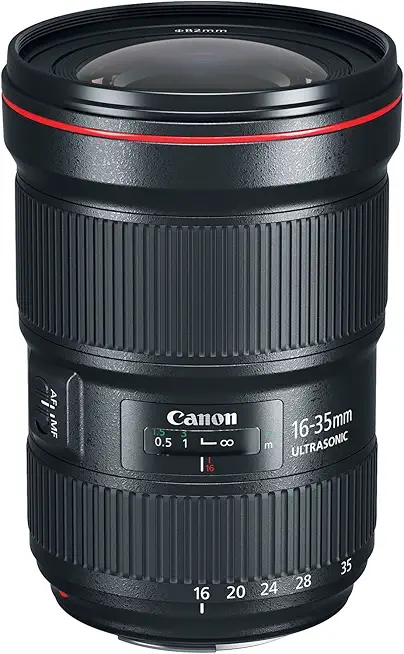
Canon EF 16-35mm f/2.8 L III
Professional zoom with a consistent bright aperture across the range, delivering exceptional sharpness, improved contrast, and well-controlled chromatic aberration. Built for pro use with reliable autofocus and weather protection.
Check PriceI use the 16‑35mm f/2.8 L III when I need flexibility in the moment — weddings, travel, and mixed landscape work. Being able to move from 16mm to 35mm without swapping lenses saves time and keeps you in the action. In real shoots it means less bending or step‑backing to reframe, and the AF and weather sealing feel every bit as pro grade as the 14mm prime.
What it doesn’t do as well as the 14mm prime is the extreme wide look and, in tight ultra‑wide compositions, the prime usually has a touch better edge‑to‑edge straightness and micro‑detail. You also lose that fixed‑focal‑length feel — a prime often gives slightly cleaner corners and a different rendering that some architecture and pano shooters prefer.
Who should pick it: photographers who want one go‑to wide lens for events, travel, and mixed work where switching lenses is a hassle. If you value speed and pro build but need range instead of a fixed 14mm frame, the 16‑35 III is the practical choice.
Alternative 3:

Canon EF 16-35mm f/2.8 L II
Versatile wide-angle zoom prized for landscape and event work; offers dependable constant aperture performance, solid build quality, and pleasing rendering for photographers seeking a reliable, fast wide-angle solution.
Check PriceI’ve shot with the older 16‑35mm f/2.8 L II on longer trips and as a backup. Optically it’s very capable and often cheaper used, and it gives that same useful zoom range for general wide work. It’s a solid lens when you need versatility and don’t require the latest coatings or the very best corner punch.
Compared with the Canon 14mm prime, the II is not as wide at the short end and you’ll see more distortion and a bit less corner detail when you push it hard. It’s also an older design, so in very contrasty light the newer III version or a prime will often handle flare and micro‑contrast better. That said, in everyday shooting it behaves reliably and makes life easier than packing a prime plus extras.
Who should pick it: photographers who want a dependable wide zoom on a budget, or those who need one lens that covers a lot of ground without swapping. If you’re buying used or want a workhorse that won’t break the bank, the 16‑35 II is a sensible, practical alternative to the 14mm prime.
What People Ask Most
Is the Canon EF 14mm f/2.8L good for astrophotography?
Yes — the 14mm f/2.8 frames wide Milky Way shots very well, though it shows some coma and vignetting wide open; stopping to around f/4 improves star quality.
How sharp is the Canon EF 14mm f/2.8L at wide open apertures?
Center sharpness is decent at f/2.8 but corners are soft; overall sharpness improves noticeably by f/4–f/8.
Is the Canon EF 14mm f/2.8L compatible with crop-sensor (APS-C) Canon bodies?
Yes — the EF mount works on all Canon DSLRs; on a 1.6x APS-C body it gives roughly a 22–23mm full-frame equivalent field of view.
How does the Canon EF 14mm f/2.8L compare to the Canon EF 14mm f/2.8L II or other ultra-wide lenses like the 11-24mm?
The Mk II is optically cleaner with less coma and better corners, while the 11‑24mm gives even wider framing and superior edge-to-edge performance but is heavier, pricier, and only f/4.
Does the Canon EF 14mm f/2.8L have autofocus and how fast/accurate is it?
Yes — it uses USM AF that is generally quick and accurate for static subjects, but many landscape and astro shooters prefer manual focus for critical results.
Is the Canon EF 14mm f/2.8L worth buying used for landscape and architectural photography?
Yes — a used original can be excellent value for landscapes and architecture, just check for haze, fungus, or mechanical issues and be aware newer lenses will outperform it at the edges.
Conclusion
The Canon EF 14mm f/2.8 L is a purposeful, professional tool that rewards photographers who prioritize native Canon AF, rock‑solid L‑series sealing, and a dramatic ultra‑wide look. Its build, coatings, and field reliability make it a go‑to when you need dependable performance in tough conditions. In short, it does exactly what it promises without pretension.
That clarity of purpose is also the lens’s chief compromise. The lack of a front filter thread and image stabilization, together with a moderate maximum aperture and star‑rendering that many users find shy of the newest f/1.8 options, means it isn’t the best swiss‑army choice for every low‑light or astro specialist. Architects and real‑estate shooters should also be aware it isn’t a Zero‑D solution, so some correction can be expected.
If you value native EF autofocus, weather resistance, and a true fixed 14mm perspective, this lens is easy to recommend. If you need the fastest glass for astrophotography, consider the Sigma 14mm f/1.8; if you want zoom flexibility, the Canon 16–35mm f/2.8L III is the smarter all‑rounder; and if minimal distortion is paramount and manual focus is acceptable, look at the Laowa 12mm Zero‑D.
Canon EF 14mm f/2.8 L
Ultra-wide perspective with professional-grade optics delivers dramatic landscapes, architecture, and interiors. Fast aperture, minimal distortion, and rugged weather-sealing ensure consistently sharp, contrast-rich images in demanding conditions.
Check Price


0 Comments