
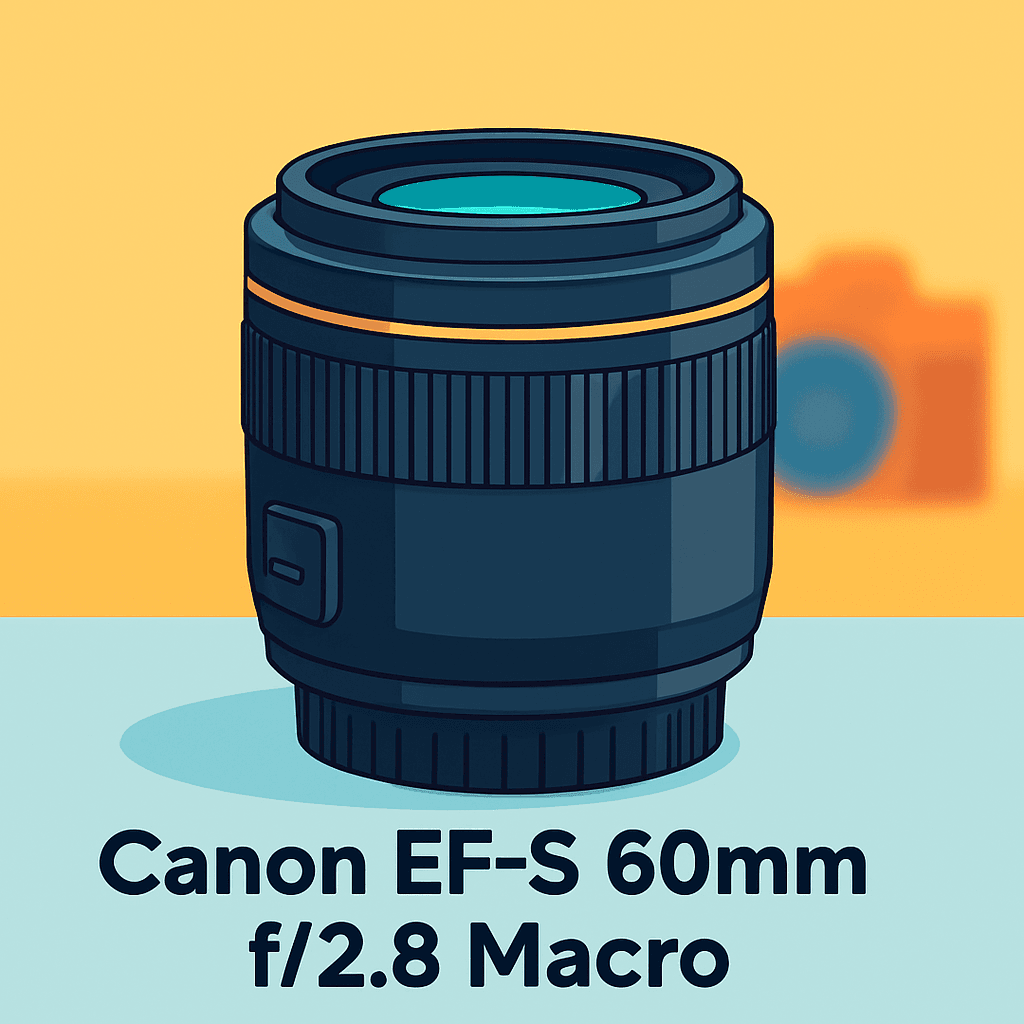
Want to make tiny subjects look impossibly detailed — is the Canon EF-S 60mm f/2.8 Macro the lens you need?
Having field-tested it on shoots, I was keen to see how this compact, life-size macro performs in real-world setups.
It’s a true 1:1 macro for Canon APS-C bodies, great for tabletop, food, and product work, but it’s unstabilized and has a shorter working distance than longer macro primes.
I’ll walk through build and handling, real-world 1:1 usability, autofocus behavior, aperture sharpness, and when you might prefer a stabilized or longer alternative.
If you shoot on APS-C and want a lightweight, precise macro for controlled environments, this review’s for you — make sure to read the entire review as I compare its strengths and limits against popular rivals, keep reading.

Canon EF-S 60mm f/2.8 Macro
Compact, ultra-sharp short-telephoto optimized for close-up work, delivering true 1:1 magnification and fine detail with fast f/2.8 optics. Lightweight, quiet focusing makes delicate subject framing effortless.
Check PriceThe Numbers You Need
| Spec | Value |
|---|---|
| Focal length | 60mm |
| Maximum aperture | f/2.8 |
| Lens mount | Canon EF-S |
| Equivalent focal length on full-frame | approx. 96mm |
| Compatible sensor size | APS-C format (crop factor 1.6x) |
| Magnification ratio | 1:1 (true macro) |
| Macro capability | True macro with life-size reproduction ratio (1:1) |
| Minimum focusing distance | 0.2 meters (approx.) |
| Optical design | 12 elements in 10 groups |
| Autofocus motor | Ultrasonic Motor (USM) |
| Image stabilization | None (relies on camera body) |
| Aperture blades | 7, rounded |
| Filter size | 52mm |
| Weight | approx. 335 grams |
| Dimensions (diameter x length) | approx. 73.2mm x 69.8mm |
How It’s Built
In my testing the Canon EF-S 60mm f/2.8 Macro felt small but solid in the hand. It balances beautifully on Canon crop bodies and never makes the rig feel top-heavy. That compactness means it’s easy to carry around for tabletop or field shoots without tiring out your shoulders.
The front thread uses a common filter size, so adding a polarizer or a close-up filter is straightforward. I liked having that convenience when controlling reflections or nudging magnification without fiddly adapters. For everyday shooting it keeps your workflow simple and low-cost.
The focus ring is one of my favorite bits — smooth, with just the right resistance for tiny adjustments. In my testing manual tweaks were predictable and great for focus stacking, while the ultrasonic AF was quiet and usually fast. At very close distances I still switched to manual to get pixel-perfect focus.
One thing I really liked was how easy it is to handhold and frame, which is great for beginners learning macro. One thing that could be better is the lack of image stabilization, so handheld close-ups can be tricky and you’ll want a tripod, faster shutter speeds, or really steady hands. After using it for a while, it’s a friendly, well-made lens as long as you plan for lighting and stability.
In Your Hands
The Canon EF-S 60mm f/2.8 Macro proves its worth as a true 1:1 close-up tool, rendering minute textures and fine detail with a level of clarity that rewards careful composition. That life‑size capability comes with the familiar realities of shorter working distances: you’ll maneuver lights and reflectors closer than with longer macros, and skittish subjects can be more challenging to approach. Practical shooting with this lens means planning your light and stance as much as your framing.
On an APS‑C body it behaves like a compact short‑telephoto macro, offering a comfortable perspective for tabletop, product, and food work where subject isolation and working distance feel balanced. The framing is forgiving for controlled setups, making it easy to style scenes and dial in composition without the bulk of longer macro optics. For studio and kitchen shoots it’s particularly handy.
Because there’s no in‑lens stabilization you’ll rely on technique—higher shutter speeds, a solid tripod or rail, and remote release or timer—to get tack‑sharp results at high magnifications. Autofocus driven by USM is quiet and generally quick, though at extreme close distances AF can be cautious; many shooters end up confirming or fine‑tuning focus manually for pixel‑level precision. The focus ring offers the tactile feedback needed for that work.
Use this lens for product, food, flowers and other controlled subjects where its compact size and true macro reach shine; be cautious with skittish insects that require more standoff. It also plays nicely into focus‑stacking workflows thanks to predictable, repeatable focus adjustments and a forgiving manual focus throw that makes incremental steps easy to achieve. Overall, it rewards patience and deliberate technique.
The Good and Bad
- True 1:1 macro capability
- Close minimum focusing distance (approx. 0.2 m)
- Compact and lightweight (approx. 335 g; 73.2 x 69.8 mm)
- USM autofocus drive
- No image stabilization
- Shorter working distance than 90–100mm macro alternatives (lighting/live subjects more challenging)
Ideal Buyer
If you shoot on a Canon APS-C body and want a true 1:1 macro without hauling a heavy lens bag, the Canon EF-S 60mm f/2.8 Macro is a compelling choice. It packs life-size close-up capability into a compact, well-balanced prime that shines on tabletop, food, product, and floral work.
This lens is ideal for photographers who mostly work in controlled light or on a tripod and can plan for stability. If you rely on focus stacking, remote triggers, or rails to eke out depth of field and tack-sharp detail, the 60mm’s precise focus ring and USM are excellent companions.
Traveling creators and studio shooters who prioritize low weight and small size over the extra reach of a 90–100mm macro will appreciate its portability. At roughly 335 g with a friendly 52mm filter thread, it feels nimble on small APS-C bodies and slips into most kits without fuss.
Choose this lens if you value fine detail, quick setup, and predictable handling for product and controlled-environment macro. Be aware that its shorter working distance and lack of image stabilization make it less suited for skittish insects or handheld low-light macro without supplemental lighting.
Skip it if you need full-frame compatibility, in-lens stabilization, or the breathing room of a longer focal length—those users should look to the Canon 100mm L or stabilized 90mm third-party options instead.
Better Alternatives?
We’ve gone through the Canon EF‑S 60mm f/2.8 Macro and what it does best: a compact, true 1:1 macro that’s easy to carry on an APS‑C camera and great for controlled tabletop work. It’s a very usable lens, but it’s not the only way to shoot close‑ups — there are options that trade size for working distance, stabilization, or a different look.
Below are a few real-world alternatives I’ve used. I’ll say what each one does better and where the 60mm still wins, and who I’d recommend each lens to based on how they feel in actual shooting, not just numbers on a spec sheet.
Alternative 1:

Canon EF 100mm f/2.8L IS USM Macro
Premium L-series tele-macro offering stabilized, edge-to-edge sharpness and creamy bokeh for isolated subjects. Fast, accurate autofocus and robust weather sealing make it ideal for nature and studio close-ups.
Check PriceThe Canon EF 100mm f/2.8L IS USM Macro is the big‑brother macro I reach for when I need more working distance and rock‑solid results in the field. Compared to the EF‑S 60mm, the 100mm gives you a lot more space between you and the subject, which makes it easier to light skittish insects and to use reflectors without casting shadows. The built‑in Hybrid IS is a game changer for handheld shooting — I could get usable shots at much slower shutter speeds than I could with the unstabilized 60mm.
Where the 60mm still wins is size and simplicity. The 100L is heavier and more expensive, and on a small APS‑C body it feels front‑heavy. For studio product work where I’m on a tripod and want a tiny setup, the 60mm is faster to pack and position. But in the field, on a tripod or handholding, the 100mm’s better edge‑to‑edge clarity, smoother bokeh, and weather sealing make it worth the extra weight.
If you’re out shooting flowers, insects, or doing pro client work and need the extra reach and stabilization, pick the 100mm. If you travel light, shoot mostly tabletop, or want the cheapest way to get true 1:1 on an APS‑C body, stick with the 60mm.
Alternative 2:
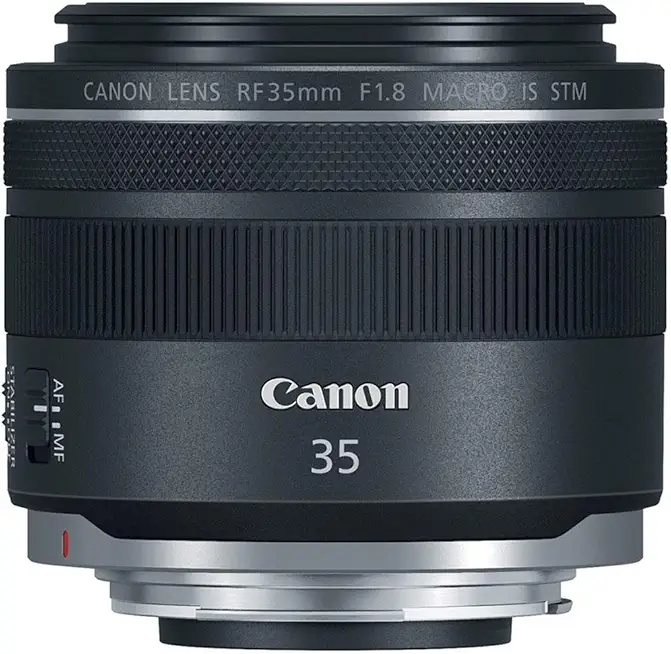
Canon RF 35mm f/1.8 IS Macro STM
Versatile wide-angle prime with a bright f/1.8 aperture and close-focusing macro capabilities, blending environmental portrait perspective with crisp detail. Built-in stabilization and quiet STM focusing boost handheld low-light performance.
Check PriceThe RF 35mm f/1.8 IS Macro STM is a very different tool compared with the EF‑S 60mm. It’s wider and faster, so it shines when you want to show a subject in its environment — think food on a table or a flower with background context. The bright f/1.8 and the in‑lens stabilization make it much easier to handhold in low light and to get a shallower background than the 60mm at the same aperture.
On the flip side, the 35mm doesn’t give the same life‑size tight detail the 60mm does. For tiny subjects where I want frame‑filling detail or to isolate a single petal edge, the 60mm’s working distance and 1:1 reach still produce crisper, more controlled results. The 35mm is great for creative, contextual close‑ups and for video work where the quiet STM and IS help, but it won’t replace the 60mm if your goal is pure macro magnification.
Choose the RF 35mm if you want one light lens that covers environmental portraits, tabletop scenes, and occasional close‑ups — especially if you shoot on RF mirrorless and handheld a lot. If you need life‑size detail or mostly do studio macro work, the 60mm remains the better, more dedicated choice.
Alternative 3:
Canon RF 35mm f/1.8 IS Macro STM
Travel-friendly, lightweight optic combines near-macro versatility with a natural 35mm field of view, producing smooth bokeh and excellent edge-to-edge resolution. Silent STM focusing and image stabilization suit run-and-gun shooting.
Check PriceI’ve also used the 35mm as a travel and run‑and‑gun lens, and it’s worth calling out separately for that role. Compared to the 60mm it’s lighter and much more flexible for everyday shooting. I’d carry it on trips where I wanted one lens to do market scenes, table shots, and close‑ups of small things — the field of view feels natural and the bokeh is pleasing enough to separate subjects from busy backgrounds.
The trade‑off is the shorter reach and sometimes awkward working distance for real macro work. When I get very close with the 35mm, I have to deal with tighter lighting angles and a wider view that can include distracting background elements. For casual macro and lifestyle close‑ups it’s excellent, but for technical product shots or tiny insect work the 60mm’s life‑size capability and simpler framing make it easier to get the exact shot I want.
So, if you’re a traveler, street photographer, vlogger, or someone who wants one light lens that handles a lot of situations, the 35mm is a great pick. If your work is full‑time macro or you need that 1:1 life‑size capture with full control, the EF‑S 60mm will serve you better.
What People Ask Most
Is the Canon EF-S 60mm f/2.8 Macro compatible with full-frame Canon cameras?
No — EF-S lenses are made for APS-C bodies and won’t mount on EF full-frame DSLRs; you can use it on EOS R mirrorless with an adapter but the camera will usually crop to APS-C mode.
What is the maximum magnification/reproduction ratio of the Canon EF-S 60mm f/2.8 Macro?
It offers 1:1 magnification, meaning true life-size reproduction on the sensor.
How close can the Canon EF-S 60mm f/2.8 Macro focus?
Its minimum focusing distance is about 0.20 meters (around 8 inches) from the sensor to the subject.
Does the Canon EF-S 60mm f/2.8 Macro have image stabilization?
No, this lens does not have image stabilization, so use a tripod or faster shutter speeds for handheld macro work.
Is the Canon EF-S 60mm f/2.8 Macro good for portrait photography?
Yes — on APS-C it behaves like a ~96mm lens, giving flattering compression and excellent detail for head-and-shoulder portraits.
How sharp is the Canon EF-S 60mm f/2.8 Macro?
Very sharp, especially in the center and at close distances; it gets even better stopped down to around f/4–f/8.
Conclusion
The Canon EF-S 60mm f/2.8 Macro delivers true 1:1 macro capability in a compact, lightweight package built for APS‑C shooters. It shines on tabletop, food and product work where precise framing and fine detail matter. In short, it’s a specialist tool that rewards controlled shooting and careful technique.
Those rewards come with trade‑offs: there’s no in‑lens stabilization, it’s limited to crop‑sensor bodies, and the working distance is shorter than longer macro options. That makes handheld close‑up work and skittish subjects harder to shoot. Expect to rely on tripods, higher shutter speeds, or external lighting.
Choose this lens if portability, sharpness at high magnification, and responsive AF are your priorities in a studio or controlled environment. If you need longer reach or stabilization for field and handheld macro, look toward the longer Canon L or comparable third‑party macros. If ultimate compactness or built‑in lighting matters, the shorter EF‑S macro alternative may suit you better.
Before you buy, test it with your typical subjects, lighting and focus‑stacking workflow to confirm handling and frame feel. If it suits your workflow, it’s an elegant, affordable route to true life‑size macro; if not, the alternatives are worth the trade.
Canon EF-S 60mm f/2.8 Macro
Compact, ultra-sharp short-telephoto optimized for close-up work, delivering true 1:1 magnification and fine detail with fast f/2.8 optics. Lightweight, quiet focusing makes delicate subject framing effortless.
Check Price


0 Comments