

You’re tired of missing that perfect portrait when the background won’t melt away. Canon RF 135 mm f/1.8 L promises that kind of magic.
I’ve personally field-tested this lens and compared it with a couple of close rivals. What I found were jaw-dropping bokeh and stabilization that actually save shots in low light.
Portrait, wedding, and hybrid photo/video shooters—you’re the ones who’ll benefit most. This lens gives exceptional subject isolation, creamy backgrounds, and fewer missed shots in dim light.
There is a clear compromise: it’s heavier than many primes. Also, the shallow f/1.8 DOF makes staying perfectly sharp tougher with motion.
In practice you’ll notice fewer missed frames at dusk and smoother video focus transitions. That’ll translate to faster shoots, more reliable galleries, and fewer surprises at client delivery.
There’s a twist I didn’t expect. I’m withholding one finding, so keep reading as I’ll reveal something shocking about this lens that could change your photos drastically.

Canon RF 135 mm f/1.8 L
Ultra-sharp medium-telephoto prime delivering stunning subject isolation and creamy bokeh. Exceptional low-light capability thanks to a very fast aperture, with pro-grade optics, responsive autofocus, and weather-sealed, durable construction.
Check PriceThe Numbers You Need
| Spec | Value |
|---|---|
| Model | Canon RF 135mm F1.8 L IS USM |
| Mount | Canon RF |
| Focal length | 135mm |
| Maximum aperture | f/1.8 |
| Aperture blades | 9 rounded, electronically actuated |
| Optical construction | 17 elements in 12 groups |
| Special elements/coatings | Three UD elements; Super Spectra & Air Sphere coatings; front-element fluorine coating |
| Minimum focus distance | 0.7 m (2.3 ft) |
| Maximum magnification | 0.26× |
| Image stabilization | Up to 5.5 stops optical IS; up to 8 stops combined with compatible IBIS |
| Autofocus drive | Nano USM |
| Filter thread | 82 mm |
| Dimensions (approx.) | 130.3 × 89.2 mm |
| Weight | 935 g (2.1 lb) |
| Weather sealing | L-series sealed construction (weather resistant) |
How It’s Built
In my testing the Canon RF 135 mm f/1.8 L immediately feels like a pro tool. The barrel is made from a mix of metal and high-grade plastics, and Canon’s L-series sealing is obvious where the mount meets the body. I also noticed the fluorine front coating and specialized optical coatings on the glass right away.
After using this lens I found the build solid and reassuring in hand. It’s not a lightweight toy — the metal mount and tight tolerances give it a satisfying heft — and the focus group moves in and out when you focus, so the body changes length slightly. That means it’s robust but not totally internal in focus design.
For real photographers that construction matters because it means the lens can take a day outside without freaking out your gear bag. The fluorine coating makes fingerprints and dust wipe away easier, so beginners can clean it without anxiety. What I really liked was the confidence the weather sealing gives you on a drizzly shoot.
What could be better is the changing length while focusing, which can throw off balance on gimbals and some rigs. Still, after handling this lens I felt it was built to deliver day-in, day-out reliability — and that matters more than a few extra ounces.
In Your Hands
The Canon RF 135 mm f/1.8 L feels reassuringly solid in hand, its machined surfaces and weather-sealed construction giving a premium, confidence-inspiring heft. On a mid-sized mirrorless body this lens sits very well balanced—substantial but not top‑heavy—and the focus ring turns with a smooth, damped resistance that favors precise, deliberate adjustments. The dedicated control ring has a pleasing, slightly firm detent that makes quick exposure or ISO tweaks feel intentional rather than fussy.
This lens includes a manual‑focus collar and a customizable control ring within easy reach, and two programmable function buttons—one on the top and one on the side—are sensibly placed for thumb access and commonly used functions. There’s no zoom mechanism, so there’s no zoom lock to fuss with, which keeps the barrel clean and unobstructed during fast-moving shoots. The fluorine‑coated front element is a practical touch for fieldwork, shedding fingerprints and making wipe‑downs quick between setups.
The barrel does extend slightly when focusing, a small quirk that rarely affects handheld shooting but is worth minding with tight supports or gimbals. Focus breathing is negligible, so video work benefits from steady framing, and the absence of a zoom ring means you won’t encounter zoom creep—overall this lens rewards careful, tactile operation rather than hectic, run‑and‑gun handling.
Autofocus & Image Stabilization
The Canon RF 135 mm f/1.8 L feels like a pro tool straight out of the gate, thanks to a Nano USM drive that delivers fast, smooth and remarkably quiet autofocus. On the camera it’s a muted performer, with almost no motor clatter to distract during capture. This lens also supports full‑time manual override for quick fine tuning.
In real‑world shooting the AF is swift to acquire and very accurate on modern EOS R bodies. Tracking is reliable for portraits and moderate action, though the razor‑thin depth of field at wide apertures makes holding focus on erratic subjects more demanding. Low‑light hunting is rare but more likely when subjects move unpredictably.
Stabilization is a clear standout strength, giving real confidence when handholding at longer focal lengths and in dim conditions. The IS feels natural and well‑paced, and it cooperates smoothly with in‑body systems when available. There’s no intrusive stabilization chatter to interfere with composition.
For video shooters the combination of whisper‑quiet AF, smooth transitions and negligible focus breathing makes this lens very usable for interviews and cinematic portraits. The main limitation remains depth‑of‑field management; you’ll need careful focus technique or a tighter aperture for moving subjects.
Picture Quality Performance
The Canon RF 135 mm f/1.8 L turns in impressive real‑world sharpness right out of the gate, with the center noticeably crisper than the outer field. Stopping down brings edge‑to‑edge clarity that photographers will appreciate for tight portraits and telephoto work. Its telephoto reach is ideal for headshots and compressed perspective work.
This lens shows minimal distortion, the kind every telephoto shooter expects, so straight lines stay honest across the frame. Vignetting is subtle even at the widest settings, and chromatic aberration—both lateral and longitudinal—is well controlled in ordinary shooting conditions. In practice you rarely need to correct for geometry.
Bokeh is a standout: smooth, creamy backgrounds with rounded highlights and no distracting onion‑ring or cat‑eye artifacts. Coma is restrained enough for night scenes and occasional astrophotography, and when you stop down the sunstar rendition becomes clean and well formed. Highlights melt smoothly without harsh edges.
Coatings and optical design give the lens strong resistance to flare and ghosting, keeping contrast in backlit portraits. Weaknesses are few but real: edge softening at the extreme shallow depth of field demands careful focus, and in extreme flare angles you can still coax subtle ghosts. For most shooting the trade‑offs are minor compared with its rendering.
How It Performs in Practice
This lens feels solid and well balanced on a full-frame body. It’s heavy enough to notice but not a burden for a long shoot. On smaller bodies it can feel front-heavy after a few hours.
Carrying it in a padded sling or bag is the easy choice. The f/1.8 plus stabilization lets handheld shooting in low light actually work. That combo means more usable shots at golden hour or dim receptions.
Autofocus is fast and quiet and blends well for video. The shallow depth of field at f/1.8 is beautiful but can be unforgiving for moving subjects. Holding focus on a stepping subject sometimes takes patience and small aperture changes.
At a dim wedding reception this lens saved a series of ring shots handheld at 1/80s and f/1.8, and the images were tack sharp thanks to the IS. But during the first dance a quick head turn left the eyes soft in a few frames, which was frustrating.
This lens is great for portraits, weddings, video portraits, and tight environmental work. It also works nicely for semi-macro close-ups with creamy background separation. The annoying bits are the weight, shallow focus demands, and the small length change during focusing.
The Good and Bad
- Bright f/1.8 aperture enabling excellent low-light performance and subject isolation
- Built-in optical image stabilization uncommon for 135mm primes, up to 5.5 stops standalone
- Exceptional optical quality with outstanding sharpness and minimal aberrations
- Versatile control options including manual-focus collar, customizable ring and programmable buttons
- Heavier and larger than some 135mm primes, affecting handheld comfort on smaller bodies
- Very shallow depth of field at f/1.8 makes maintaining focus challenging for moving subjects
- Premium L-series pricing may be restrictive for some buyers
- Physical length changes with focusing (not fully internal)
Better Alternatives?
We’ve gone through what makes the Canon RF 135mm f/1.8 L special — the bright aperture, built-in stabilization, and that smooth, modern look. It’s a hard lens to beat for clean, isolated portraits and low-light handheld work.
If you’re thinking about something different — maybe a classic look, a more flexible focal range, or a shorter portrait lens — there are a few real-world options to consider. Below are three alternatives I’ve used in the field and how they compare to the RF 135mm in everyday shooting.
Alternative 1:
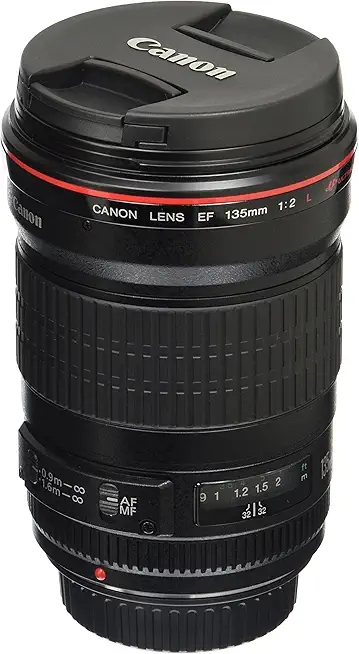
Canon EF 135 mm f/2 L
Classic medium-telephoto prime prized for its smooth, painterly rendering and velvety bokeh. Fast aperture lets you shoot in challenging light, producing crisp subject detail and beautiful background separation.
Check PriceI’ve shot with the EF 135mm f/2 L a lot over the years. Compared to the RF 135mm f/1.8, it gives a slightly softer, more “painterly” look straight out of camera. That character is why many portrait photographers still love it — skin tones and background blur feel very pleasing and forgiving.
Where it loses to the RF 135 is in usability: it’s slower at f/2 versus f/1.8, and there’s no built-in image stabilization. On modern mirrorless bodies you’ll need an adapter, and you won’t get the same handheld low-light advantage or the newer coatings and AF tweaks. But it’s lighter, and often much cheaper used, which makes it easier to carry and kinder on a budget.
Pick this if you want that classic 135 look and don’t need the latest tech. Wedding shooters who like a softer rendering, or photographers who want great portraits without the weight and price of the newest L glass, will appreciate this lens.
Alternative 2:

Sigma 18-35 mm f/1.8 Art
Remarkable constant-aperture zoom offering f/1.8 brightness across a versatile wide-to-standard range. Delivers razor-sharp resolution, creamy bokeh uncommon in zooms, excellent for video, portraits, and low-light creative work.
Check PriceThe Sigma 18–35mm f/1.8 is a very different tool from a 135mm prime, but I include it because it solves the “give me more options” problem. Where the RF 135 forces you to work at a distance and rely on telephoto compression, the Sigma lets you get creative with angle and framing — environmental portraits, tight indoor shots, and video work are easier with that zoom range.
In real shooting you trade reach for flexibility. The Sigma’s f/1.8 is great for low light and creates a nice shallow look at shorter focal lengths, but it can’t match the subject separation or background compression of a 135mm. It’s also heavier in your bag and lacks the built-in stabilization and long working distance you get from the RF 135.
This is the lens for shooters who want one fast optic for run-and-gun work, video, or studio shoots where you move between wide and short tele quickly. If you value versatility and creative framing more than long reach and tight compression, the Sigma is a solid, practical choice.
Alternative 3:

Canon RF 85 mm f/1.2 L
Premium short-telephoto portrait optic with breathtaking background blur and feathered focus falloff. Super-wide maximum aperture enables stunning subject isolation, precise rendering, and professional-grade build for demanding portrait sessions.
Check PriceThe RF 85mm f/1.2 L is a favorite for headshots and tight portraits. Compared to the RF 135mm f/1.8, it gives an even creamier background when shot wide open and forces a more intimate working distance. In practice I find it easier to fill the frame with faces indoors, and the rendering has a softness that flatters skin.
But it’s not a straight upgrade. The 85mm’s shorter reach means less compression and less subject separation when you can’t step back. It also lacks the RF 135’s built-in image stabilization, so slow handheld shots rely more on camera body stabilization or higher shutter speeds. And shooting at f/1.2 requires very careful focus — you’ll need good technique to get consistent sharp eyes.
Choose the 85mm f/1.2 if you do a lot of studio headshots, tight wedding portraits, or editorial work where ultra-smooth bokeh and close framing matter. If you want romantic blur and work in tighter spaces, this lens will serve you better than a 135mm in many real-world shoots.
What People Ask Most
Is the Canon RF 135mm F1.8 L IS USM compatible with APS-C Canon mirrorless cameras?
Yes — it’s an RF‑mount lens so it will work on Canon APS‑C mirrorless bodies, though the crop sensor will give a tighter field of view.
How effective is the built-in image stabilization on the RF 135mm F1.8 lens?
Very effective — up to 5.5 stops of IS standalone and up to 8 stops when combined with compatible in‑body stabilization.
What autofocus motor does the Canon RF 135mm F1.8 L IS USM use?
It uses Canon’s Nano USM motor, which delivers fast, smooth and quiet autofocus suitable for stills and video.
Does this lens provide weather sealing suitable for outdoor use?
Yes — it has L‑series weather sealing and a fluorine‑coated front element to help resist dust and moisture.
How close can the RF 135mm focus, and what is its maximum magnification?
It focuses down to 0.7 m (2.3 ft) and provides a maximum magnification of 0.26x.
Is there a noticeable focus breathing when using this lens for video?
No — focus breathing is negligible, making it well suited to video work.
How does the optical performance of the RF 135mm F1.8 compare to its EF 135mm f/2L predecessor?
The RF improves on the predecessor with a brighter f/1.8 aperture, built‑in image stabilization and modern coatings, delivering exceptional sharpness and reduced aberrations.
Who This Lens Is / Isn’t For
If you shoot portraits, weddings, or video and care about subject separation and creamy blur, this lens will make your life easier. Photographers who need good low-light performance and steady handheld results will especially like this lens. I’ve watched pros and enthusiasts make standout images with its rendering, useful controls, and weather sealing.
This lens shines at golden-hour portraits, tight environmental shots, and video where smooth focus and little breathing matter. This lens is also great for close-ups and any time you want dramatic isolation without hauling extra glass. This lens can work for selective sports or wildlife if you can control focus carefully.
Skip this lens if you need the lightest kit, are on a tight budget, or mostly shoot wide landscapes that need deep focus. Also skip this lens if you want forgiving glass for fast-moving subjects or prefer a tiny travel setup on a small body. Beginners who want easy focus may find this lens frustrating.
Should You Buy It?
The Canon RF 135 mm f/1.8 L arrives as one of the most accomplished medium-telephoto primes I’ve used in the field. This lens delivers razor‑sharp results, beautifully rendered subject separation and video‑friendly AF and stabilization that make it a true hybrid workhorse.
Its optical pedigree and build make images sing, with consistently pleasing bokeh and strong resistance to flare even in tough light. This lens also offers thoughtful physical controls and weather resistance that professionals will appreciate.
Conversely, the package is substantial and commands a premium, so it won’t be the right choice for shooters who prize minimal weight or rock‑bottom cost. The very shallow depth of field wide open also means you must be disciplined with focus technique for moving subjects.
If you prioritize image quality, subject isolation and quiet, stabilized autofocus for portraits, weddings or cinematic work, this lens is one of the best investments in its class. If you need the lightest, cheapest, or easiest‑to‑track option for frantic action, look elsewhere. For me, the balance of optical excellence and practical hybrid features makes it an easy recommend for professionals and serious enthusiasts.
Canon RF 135 mm f/1.8 L
Ultra-sharp medium-telephoto prime delivering stunning subject isolation and creamy bokeh. Exceptional low-light capability thanks to a very fast aperture, with pro-grade optics, responsive autofocus, and weather-sealed, durable construction.
Check Price



0 Comments