

You’re sick of losing shots in low light or wanting creamier backgrounds without swapping lenses?
The Canon RF 24-105mm f/2.8 L’s built to solve both.
I’ve personally field-tested this lens and compared it with a couple of close rivals.
If you’re a hybrid photo/video shooter on Canon RF bodies, this is built for you.
It’s constant bright aperture that makes low‑light work and shallow depth effortless, delivering cleaner handheld results.
The trade-off is size and weight; it’s noticeably bigger and heavier than f/4 24–105mm options.
In the field I’ve seen fewer missed frames and cleaner night shots.
Keep reading as I’ll reveal something shocking about this lens that might change your photo quality drastically.

Canon RF 24-105mm f/2.8 L
Professional all-purpose zoom with a bright constant aperture, delivering fast low-light performance, buttery background separation, robust build, reliable autofocus, and exceptional sharpness from wide-angle to short tele for hybrid shooters.
Check PriceThe Numbers You Need
| Spec | Value |
|---|---|
| Name | Canon RF24-105mm F2.8 L IS USM Z |
| Mount | Canon RF |
| Year announced | 2026 |
| Focal length | 24–105mm |
| Maximum aperture | Constant f/2.8 |
| Aperture blades | 11 rounded blades (circular aperture) |
| Optical construction | 23 elements in 18 groups |
| Special elements | 4 UD elements; 2 glass-molded asphericals; 1 replica aspherical |
| Minimum focus distance | 0.45 m |
| Maximum magnification (105mm) | 0.29× |
| Stabilization | 5.5 stops lens IS; up to 8 stops with compatible IBIS |
| Autofocus drive type | Dual Nano USM (two ultrasonic motors) |
| Filter size | 82 mm |
| Dimensions | Approx. 131 mm × 89 mm |
| Weight | Approx. 1,320 g |
How It’s Built
Canon RF 24-105mm f/2.8 L feels like it’s built to last. In my testing the body uses metal where it counts and tough plastics elsewhere, and the RF mount has a solid gasket that seals the join. That mix makes it feel pro-grade in your hands.
This lens is not an internal-zoom design, so it changes length as you zoom. The zoom ring has gear teeth for a power-zoom accessory and the moving parts are tight and precise when I operate them. After using this lens I never felt sloppy or loose.
The glass gets serious treatment too with Air Sphere and Super Spectra coatings and a fluorine finish on the front element. I found flare and ghosting were well controlled and fingerprints wipe off much easier. For a beginner that means clearer shots and less time cleaning.
Weather sealing follows Canon’s L-series standard, so rain and dust didn’t stop me during shoots. I still wouldn’t drop it in water, but it handled drizzle and windy, dusty days without worry. That peace of mind matters when you’re out shooting events or travel.
What I liked most was the solid, refined feel of the rings and finish. What could be better is the non‑internal zoom and extra heft, which affect balance and packability for long handheld days. For most shooters those tradeoffs are worth the build quality.
In Your Hands
The Canon RF 24-105mm f/2.8 L feels like a purpose-built professional tool the moment you pick it up, with dense, reassuring construction and a finish that resists slips and fingerprints. On a mid-sized DSLR or mirrorless body it reads a touch front‑heavy but still balances acceptably for walk‑around shooting, settling into the hands quickly once you adjust your grip.
This lens’s control layout emphasizes tactile precision: the zoom ring has a satisfyingly geared feel—the sort of resistance that keeps your framing steady—while the focus ring is electronic with a smooth, linear response and full‑time manual‑focus override for quick tweaks. An additional control ring offers click stops and customization through the camera, which feels well judged for stills and video without getting in the way.
Apple‑clean exterior styling means there are few external switches on the barrel, so most mode and stabilization toggles live on the camera or in menus; that tradeoff keeps the build tidy but nudges you to use body controls. There’s no conventional zoom lock built into the barrel, so the lens changes length as you zoom and you’ll occasionally notice some zoom creep when pointed up or down, though it’s not a deal‑breaker in normal field use.
Video shooters will appreciate that focus breathing is negligible and that the zoom ring’s gearing accepts a power‑zoom adapter for motorized pulls, making cinematic moves smooth. In day‑to‑day shooting the quirks are manageable—the physical heft and extending barrel are the most obvious reminders that this lens prioritizes performance over featherweight portability.
Autofocus & Image Stabilization
The Canon RF 24-105mm f/2.8 L focuses with surprising speed and surgical accuracy for a zoom of its size. This lens uses Dual Nano USM motors that are whisper-quiet and behave smoothly when hunting in mixed light. Full-time manual override on the electronic focus ring keeps precision control when you need it.
Image stabilization feels more like a steadying hand than a corrective hack, and it pairs seamlessly with body IBIS to yield very usable handheld results. In practice the system tames handshake and lets you focus on framing rather than rescue shots. The combo of silent AF and confident IS is a standout strength for event and run-and-gun shooters.
Focus breathing is negligible, which makes this lens particularly friendly for video work and for clean focus pulls. Racks are smooth and nearly silent, and stabilization noise is unobtrusive on cloistered shoots. The one limitation to note is that motorized, cinema-style zooming requires an optional adapter sold separately, so truly smooth powered zooms are not native out of the box.
Subject tracking is dependable for portraits and events, holding focus through fast subject motion and quick reframing. Occasional micro-hunting can appear in extremely low-contrast situations, which is the main downside for fast action video.
Picture Quality Performance
The Canon RF 24-105mm f/2.8 L shows impressive real-world sharpness. Center detail is exceptional across the range and edges clean up nicely. The lens reaches its sweet spot when stopped down a bit from maximum aperture, with consistent resolution at the wide end, mid-range and telephoto.
Distortion follows a familiar zoom pattern with moderate barrel at the wide end easing into slight pincushion at the long end. Vignetting is noticeable open at the widest views but subsides when you stop down. Corrections in-camera handle most of it well for JPEGs.
Chromatic aberrations are well controlled in real shooting thanks to the optical formula, with only rare color fringing in extreme high-contrast edges. Longitudinal color fringing is subtle and easy to correct in raw files. Coma is restrained, making this lens surprisingly usable for night-sky work.
Bokeh is smooth and creamy with rounded highlights that avoid harsh cat‑eye shapes at the frame edge. Out-of-focus texture is pleasing for portraits and subject separation remains strong through the zoom range. Close-focus rendering at longer focal lengths is particularly flattering.
Flare and ghosting are kept in check by modern coatings, though shooting into direct sun can introduce mild veiling if you’re not careful. Sunstars from point light sources are well-formed and attractive when you stop down. Overall this lens balances contrast and control for demanding field use.
How It Performs in Practice
this lens feels solid and well built. On the camera this lens balances on big RF bodies but is noticeably heavy for long walks. Carrying this lens all day makes shoulders tired.
Autofocus is fast and quiet and keeps up with kids and moving crowds. Manual ring is smooth and responsive for fine tweaks. Zoom changes length so this lens can feel front-heavy at times.
Low light is where this lens shines because f/2.8 and IS let you handhold more. The stabilization really helps; combined with IBIS shots stay usable at surprisingly slow shutter speeds. Still, this lens’ weight limits how long handheld shooting feels comfortable.
At a dim reception I grabbed a 105mm frame of the couple dancing at 1/30s and got a keeper. The background blur was creamy and this lens’ AF tracked the face even as they moved. That moment showed how this lens’ aperture and IS can save an evening.
This lens is great for portraits, events, landscapes and hybrid photo/video work because of reach and constant brightness. Video benefits from quiet AF and low breathing. The optional power-zoom would be nice for cinematic pulls but is sold separately.
The annoying bits are size, cost and the zoom extending as you change focal length. For anyone who wants pro optics and real low-light reach this lens is worth it, but it’s not the travel-friendly choice.
The Good and Bad
- World’s first 24–105mm zoom with constant f/2.8 aperture
- Excellent optical quality with extensive aberration control and strong flare resistance
- Dual Nano USM AF delivers fast, quiet focusing with smooth manual override
- Strong image stabilization up to 8 stops with compatible IBIS for handheld shooting
- Heavier and larger than typical 24–105mm f/4 lenses, reducing portability
- Higher price point reflecting professional-level design
- Power Zoom Adapter required for motorized, smooth zoom operation and is sold separately
- Non-internal zoom design means the lens length changes while zooming
Better Alternatives?
We’ve gone through the Canon RF 24-105mm f/2.8 L and what it brings to the table: constant f/2.8, solid IS, and pro-grade build. It’s a rare combo, and for many shooters it’s the perfect all-in-one option when you need low-light performance and shallow depth of field across a wide zoom range.
If that sounds like overkill for your work, or if the size and price don’t fit your kit, here are a few realistic alternatives I’ve used in the field. I’ll point out what each one does better and where it gives up ground compared to the 24–105mm f/2.8.
Alternative 1:

Canon RF 24-70mm f/2.8 L
Classic standard pro zoom offering versatile framing, fast aperture for subject isolation and low-light shooting, precise autofocus, rugged weather sealing, and excellent corner-to-corner resolution ideal for professionals.
Check PriceThe RF 24–70mm f/2.8 is the classic pro zoom. In real shooting it feels a touch more compact and a bit lighter on the camera than the 24–105 f/2.8, and that makes a difference during long shoots. I found it easier to handhold for hours and quicker to swing around at events.
Where it’s better: it’s slightly more focused for short-tele portrait work and studio shooting, and it often renders skin and subject separation very cleanly at 70mm. Where it loses to the 24–105 f/2.8 is obvious — you don’t get the 105mm reach, so when you need a little more compression or distance at events you’ll miss that extra length.
Who should pick it: wedding photographers who mostly work closer to their subjects, portrait shooters who value handling and edge-to-edge sharpness in the 24–70 range, and anyone who wants much of the f/2.8 look but with a slightly lighter, more classic zoom.
Alternative 2:
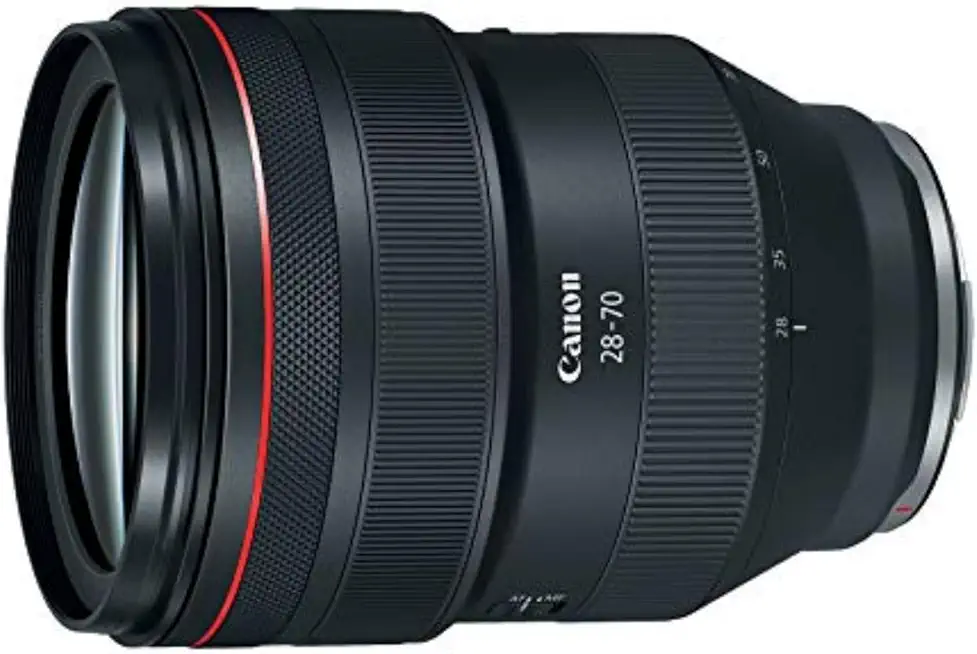
Canon RF 28-70mm f/2 L
Flagship super-fast zoom delivering f/2 brightness across the range, yielding stunning subject separation, gorgeous bokeh, and pro-grade optics. Engineered for creative portraits and low-light excellence.
Check PriceThe RF 28–70mm f/2 is a different beast. I’ve used it for portraits and creative shoots where the look mattered more than reach. The f/2 aperture gives a very distinct drop-off and creamy bokeh that’s hard to match. Images feel more “three-dimensional” compared with the 24–105 f/2.8.
Where it’s better: the shallow depth-of-field and dreamy bokeh are superb, and in low light the extra stop matters for faster shutters and cleaner background separation. Where it’s worse is obvious in practice — you lose the 24mm wide angle and the 105mm tele reach, and the lens is big and heavy, so it’s less practical for all-day handheld work or run-and-gun shooting.
Who should pick it: portrait and commercial photographers who want the most attractive background separation and who shoot in controlled or creative environments. It’s not the best travel or event lens, but for headshots, fashion and artistic work it’s special.
Alternative 3:

Canon RF 24-105mm f/4 L
Lightweight, travel-ready zoom offering a practical constant aperture, stabilized images, reliable autofocus, durable weather sealing, and consistently sharp results—perfect for run-and-gun photojournalism and everyday shooting.
Check PriceThe RF 24–105mm f/4 is the everyday workhorse I reach for when I’m traveling or shooting long assignments. In practice it’s noticeably smaller and much lighter than the 24–105 f/2.8, so carrying it all day is easier and you’re less tired by the end of a wedding or a long street day.
Where it’s better: it’s more portable, easier to balance on smaller bodies, and usually cheaper — which matters if you’re building a kit. Where it’s worse: you don’t get the same low-light ability or the shallow depth-of-field of the f/2.8. If you want creamy background separation or the extra stop for dim venues, the f/4 will feel limiting.
Who should pick it: travel photographers, photojournalists, vloggers and anyone who needs a reliable, lighter walkaround lens. If you prioritize size, weight and versatility over maximum background blur, this is the practical choice.
What People Ask Most
What cameras is the Canon RF24-105mm F2.8 L IS USM Z compatible with?
It’s designed for Canon RF-mount bodies, so it works with EOS R-series cameras.
Does this lens feature image stabilization, and how effective is it?
Yes — the lens has built-in IS rated at 5.5 stops alone and can reach up to about 8 stops when combined with a compatible in-body IBIS.
How does the autofocus perform for video and stills on this lens?
Autofocus uses Dual Nano USM motors and is fast, precise and very quiet, making it excellent for both stills and video.
Can the lens support manual focus override during autofocus?
Yes — it supports full-time manual-focus override via the electronic focus ring.
What is the minimum focusing distance and magnification ratio of this lens?
The minimum focus distance is 0.45 m, with a maximum magnification of about 0.08x at 24mm and 0.29x at 105mm.
What is the purpose of the “Z” designation in the lens name?
The outline doesn’t specify the meaning of the “Z” — it’s part of Canon’s model name but no purpose is detailed here.
Is the Power Zoom Adapter included, and what benefits does it provide?
It’s not included and is sold separately; the Power Zoom Adapter provides smooth motorized zooming for cinematic video work.
Who This Lens Is / Isn’t For
Many wedding, portrait and hybrid photo/video shooters I work with love this lens because it gives consistent shallow depth of field and very steady handheld performance across a wide, useful zoom range. It is a go-to for dim receptions, conference keynote work, documentary run-and-gun days and handheld cinematic clips where staying mobile but keeping subject separation matters. If you already carry a pro RF body and don’t mind a heavier setup, this lens rewards you with fewer limits on aperture and more usable shots in low light.
Skip this lens if your priority is packing light, traveling small or saving money and you rarely shoot in low light or need cinematic shallow depth of field. Hikers, street shooters and casual hobbyists who want a compact, easy walkaround will be happier with a lighter, lower-cost f/4 zoom. Also pass if you won’t use the video stabilization and smooth AF often enough to justify the extra size, weight and price in your real shooting life.
Should You Buy It?
The Canon RF 24-105mm f/2.8 L is one of the few all-in-one zooms that genuinely pushes professional expectations for a general-purpose lens. In practice it nails the brief: bright constant aperture, refined optics and stabilization that makes handheld low-light shooting realistic. It asks you to accept extra heft and cost for those gains.
This lens coalesces optical quality, Dual Nano USM autofocus and the IBIS partnership into consistently usable results for portraits, events and run-and-gun video. Bokeh is creamy, aberrations are restrained and coatings hold up to challenging light. Built like an L-series tool, it performs like one.
This lens’s compromises are straightforward and felt on day-long shoots: weight, bulk and a price tag that sits firmly in pro territory. The motorized Power Zoom isn’t included and the non‑internal zoom design changes length while you work. For travel minimalists, this lens will feel like overkill.
If you’re a hybrid shooter or pro who needs f/2.8 across 24–105mm, buy it without hesitation; the performance justifies the investment. If portability and budget top your priorities, opt for a lighter, cheaper alternative instead. Either way, this lens proves Canon made a purposeful, high‑performance choice.
Canon RF 24-105mm f/2.8 L
Professional all-purpose zoom with a bright constant aperture, delivering fast low-light performance, buttery background separation, robust build, reliable autofocus, and exceptional sharpness from wide-angle to short tele for hybrid shooters.
Check Price




0 Comments