

You want a full-frame zoom that won’t weigh you down on trips. The Canon RF 24-50mm f/4.5-6.3 promises pocketable reach and optical image stabilization.
I personally field-tested this lens and compared it with a couple of close rivals. It’s built for new EOS R owners, travelers, vloggers and casual shooters.
On the street it feels almost invisible in your bag. Optical stabilization and quiet autofocus mean fewer missed shots and steadier video. The payoff is a lighter kit that travels.
There’s a clear trade-off: the aperture gets noticeably slower as you zoom. That limits low-light shooting and shallow background blur.
I’m not going to drown you in specs. You’ll get hands-on impressions, side-by-side comparisons and the practical trade-offs that matter.
I also discovered one surprising trick that can dramatically improve your photos with this lens. For that and a few hard truths, keep reading.
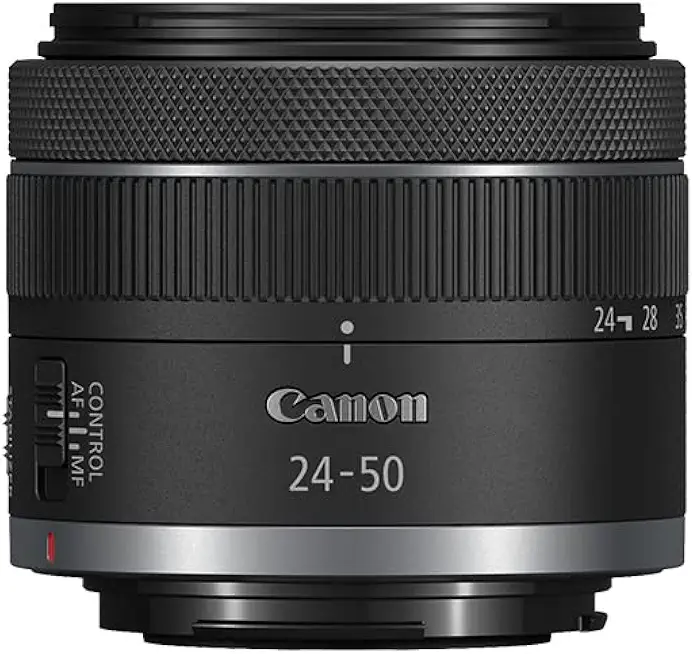
Canon RF 24-50mm f/4.5-6.3
Compact, travel-friendly standard zoom offering sharp imagery and pleasing bokeh in a collapsible, lightweight design. Fast, accurate autofocus and versatile coverage make it ideal for street, landscape, and portrait photography.
Check PriceThe Numbers You Need
| Spec | Value |
|---|---|
| Model | Canon RF 24-50mm f/4.5-6.3 IS STM |
| Mount | Canon RF |
| Announced | 2026 |
| Focal length | 24–50mm |
| Maximum aperture | f/4.5–6.3 |
| Diaphragm | 7 rounded blades |
| Optical construction | 8 elements in 8 groups (including 2 aspherical) |
| Coating | Super Spectra Coating |
| Minimum focus distance | 0.30 m (24mm) / 0.35 m (50mm) |
| Maximum magnification | 0.11× (24mm) / 0.19× (50mm) |
| Image stabilization | Optical IS up to 4.5 stops; up to 7.0 stops with coordinated IBIS on select EOS R bodies |
| Autofocus | STM (stepping motor), internal focus |
| Filter thread | 58mm |
| Dimensions | ~69.6mm × 58mm (collapsed); extends with zoom |
| Weight | 210 g |
How It’s Built
The Canon RF 24-50mm f/4.5-6.3 is made to be feather-light and pocket-friendly. In my testing the barrel and outer parts are mostly plastic, which keeps weight down and makes it easy to carry. This lens uses the RF mount and I found no sealing gasket.
The barrel collapses for storage and extends for shooting. After using this lens I liked that focusing is internal so the barrel doesn’t change length. That keeps the front element and filters safer on the road.
Inside, Canon uses special coatings and aspherical elements to control flare and odd shapes. In my testing those bits helped images look cleaner in tricky light. For beginners this means fewer surprises and easier results.
What I really liked was how tiny and light it feels on small EOS R bodies. One thing that could be better is the all-plastic build and lack of weather protection; it feels less robust than some lenses. That means you should avoid heavy rain and treat it gently.
After using this lens I found the controls are minimal and easy to use, which helps new shooters. Overall the build trades full-on toughness for true portability, and I think that trade is worth it for travel.
In Your Hands
The Canon RF 24-50mm f/4.5-6.3 makes a confident first impression in the hand; this lens feels featherlight, with a mostly plastic build that keeps it portable without feeling flimsy. Its zoom and focus rings turn with minimal resistance and no pronounced detents, delivering a smooth, easy action whether you are cranking focal length or nudging focus. Manual focusing is electronic focus-by-wire, so the MF response isn’t strictly linear, but it’s predictable enough for casual manual tweaks and reliable repeatable AF for stills and video.
Mounted on a mid‑sized mirrorless or DSLR body it sits slightly front‑heavy but remains comfortable for walk‑around shooting, and it balances especially well on smaller EOS R bodies if you prefer a truly compact kit. The barrel collapses for storage, which acts as the practical “lock” for travel, and you won’t find a separate zoom lock; in everyday use that design greatly reduces pocket bulk and keeps zoom creep from becoming a nuisance. Internal focusing means the lens doesn’t extend during AF, which helps keep handling tidy and avoids distracting barrel movement while shooting.
External controls are intentionally sparse and unobtrusive, with any switches and the optional customizable control ring tucked where they’re easy to reach without getting in the way. The quiet STM AF feels composed for run‑and‑gun work, and focus breathing is not an obvious issue in normal shooting scenarios, so overall handling favors portability and simplicity over tactile luxury. For travelers and vloggers who prize lightness and fuss‑free operation, this lens is very pleasant to use.
Autofocus & Image Stabilization
The Canon RF 24-50mm f/4.5-6.3 shows its priorities straight away: quiet, smooth STM autofocus and built‑in optical image stabilization make this lens an appealing travel and vlogging companion. This lens’s combination of silent AF and steadying optics is a clear strength for creators who need unobtrusive operation. It’s designed for everyday shooting rather than high‑speed sports work, which is its main limitation.
In the real world AF speed is brisk for general photography and reliably locks on faces and subjects in decent light. Accuracy is good for run‑and‑gun shooting, though the system can hunt in low‑contrast or very dim scenes. Motor noise is minimal on camera, so you rarely hear focus adjustments in clips.
Stabilization feels reassuring in handheld use and noticeably smooths walk‑and‑talk footage, making handheld stills and casual video easier. When paired with a body that offers in‑body stabilization the result is even steadier, though it won’t replace heavier, gimbal‑level stabilization for complex moves. The built‑in IS does excel for vloggers and travel shooters.
Internal focusing keeps the barrel from creeping during AF and reduces obvious focus breathing, but small focal shifts are still noticeable on critical pull‑focus shots. Manual focus is electronic focus‑by‑wire with no mechanical clutch, so precise, repeatable focus pulls require practice or external aids. Overall, video usability is strong for run‑and‑gun work but less ideal for cinematic manual focus demands.
Picture Quality Performance
The Canon RF 24-50mm f/4.5-6.3 delivers crisp central detail across most of the zoom range even at the largest apertures. Edge and corner softness is noticeable, particularly at the wide end, and only improves somewhat when you stop down.
Distortion is largely handled by in-camera corrections so straight lines look good straight out of the camera, though a touch of residual barrel or pincushion character can appear at the extremes. Vignetting is likewise tamed in processed files but remains visible on raw captures at the wide end.
Chromatic aberration is generally well controlled thanks to the optical design and coatings, with only occasional purple or green fringing in high-contrast edges. This lens tends to let the camera and simple post work clean up what remains.
Bokeh is smooth and pleasing for casual work thanks to rounded diaphragm blades, but the modest maximum apertures limit subject separation and creamy backgrounds. Portraits benefit more at the mid-range than at the tighter or widest settings.
Flare and ghosting are kept in check by the coatings, so backlit scenes remain usable without dramatic haze. Coma is modest for night points and sunstar rendition is subdued rather than punchy, leaving highlights natural but not showy.
How It Performs in Practice
Light and compact, this lens disappears on a small mirrorless body and fits in a jacket pocket for real travel days. The collapsible barrel makes it easy to carry and pull out fast at a market or museum. It rarely gets in the way of shooting all day.
The zoom and focus rings feel light with smooth, quiet AF thanks to the STM motor, which is great for video. Manual focus is electronic and a bit vague at times, so precise focus pulls need patience. Balance on thin bodies is very comfortable.
One night in a busy street market at dusk, I grabbed this lens and steadied a shot at about 1/15s using lens IS and in-body stabilization, and the frame came out usable. I had to boost ISO and accept softer corners. For that grab-and-go shot it really helped.
Center sharpness is good wide open, but corners soften and improve when stopped down, especially toward 50mm. The background blur is pleasant but never dreamy because of the slow aperture. Digital corrections hide some distortion, but you can still see limits in tough light.
It’s perfect for travel, street, landscapes and casual portraits, and decent for vlogging thanks to quiet AF and IS. The annoying bits are the slow aperture, no hood in the box and no weather sealing. Despite that, this lens makes day-to-day shooting lighter and more fun.
The Good and Bad
- Extremely compact and lightweight, ideal for travel and discreet shooting
- Built-in optical IS up to 4.5 stops and up to 7.0 stops with select IBIS bodies
- Silent, smooth STM autofocus suitable for stills and video
- Control ring option for quick exposure/custom control on supported bodies
- Affordable, practical entry to RF full-frame for kit pairings
- Slow maximum aperture (f/4.5–6.3) limiting low-light performance and subject isolation
- Modest 24–50mm zoom range less versatile than 24–70mm/24–105mm alternatives
- Heavy in-camera optical corrections for distortion and vignetting
- Noticeable corner softness compared with center performance
- No documented weather sealing
- Lens hood and pouch not included in the box
- Limited close-up/macro capability (max 0.19x)
Better Alternatives?
We’ve gone over what the RF 24-50mm f/4.5-6.3 does well: tiny size, light weight, steady IS and quiet AF. It’s great when you want the smallest possible full-frame zoom and don’t need long reach or fast apertures.
If you find those limits too tight—if you want more zoom, more pro-level performance, or a lens that’s built for different bodies—there are a few practical alternatives worth considering. Below I’ll walk through three I’ve used in real shoots and how they compare day-to-day to the 24–50.
Alternative 1:
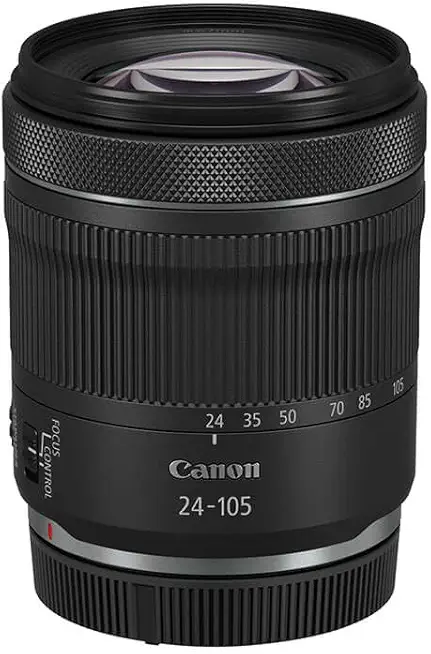
Canon RF 24-105mm f/4-7.1
All-in-one travel zoom with extended reach and optical stabilization for steady handheld shooting. Responsive autofocus and compact form factor suit travelers, content creators, and enthusiasts seeking convenient, consistent image quality.
Check PriceThe RF 24-105mm is the one I reach for when I need more framing options on a trip. Compared with the tiny 24–50, it gives you almost double the reach at the long end. Practically that means fewer lens changes for travel, events, and family shoots—more framing choices without stopping to swap glass.
What it does worse is obvious in the field: it’s bigger and heavier, so you won’t enjoy the same pocketable feel. It’s not as discreet for street or vlogging work where the 24–50’s tiny profile helps. Low-light performance is similar at the long end (both get slow there), but the broader range of the 24–105 lets you stay flexible without changing lenses.
Who should pick it: travelers, content creators and hobbyists who want an all-in-one zoom and don’t mind a bit more weight. It’s the better choice when you need reach and convenience over the absolute smallest kit.
Alternative 2:

Canon RF-S 18-45mm f/4.5-6.3
Ultra-compact wide-to-standard zoom tailored for crop-sensor bodies, perfect for vlogging and everyday photography. Featherlight construction, smooth autofocus, and versatile framing deliver great results for interiors, landscapes, and casual portraits.
Check PriceThe RF-S 18–45mm is aimed at crop-sensor shooters, so on an APS-C body it gives a noticeably wider view than the 24mm on full frame. In real life that wide end is handy for tight interiors, group shots, and run-and-gun vlogging where you want more in frame without stepping back.
Compared to the 24–50, it’s even more compact on its target cameras and feels featherlight. The downside is it’s not a full-frame lens—if you shoot full-frame EOS R bodies you either can’t use it without crop or you lose pixels. Also it won’t give you deeper subject blur or better low-light performance than the 24–50.
Who should pick it: APS-C owners, vloggers and casual shooters who want the widest useful angle in the smallest package. If you mainly shoot interiors, travel with a crop body, or want a tiny everyday zoom, this is a practical, light choice.
Alternative 3:
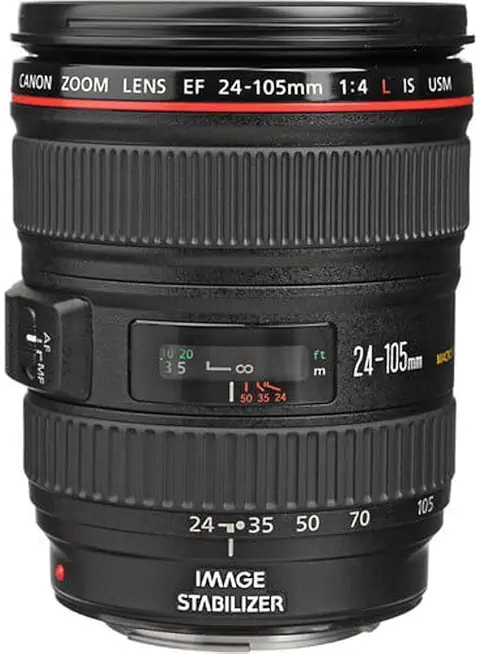
Canon EF 24-105mm f/4 L
Professional-grade constant-aperture zoom featuring premium optics, rugged weather-sealed construction, and dependable image stabilization. Delivers consistent sharpness, creamy bokeh, and reliable performance for weddings, events, portraits, and commercial assignments.
Check PriceThe EF 24–105mm f/4 L is a workhorse I’ve used on countless shoots. Compared with the small RF 24–50 it gives you pro-level build and a constant f/4 through the zoom, so exposure and depth-of-field stay predictable as you zoom. It also handles contrasty light and tough conditions better—colors, micro-contrast and overall image “punch” feel more robust in real shooting.
The trade-offs are weight and size: it’s significantly heavier and you’ll need an adapter to use it on RF bodies, which adds bulk. It’s not as pocketable or as quiet for run-and-gun video as the tiny RF 24–50. But for weddings, events and paid work where reliability and weather sealing matter, it’s higher on my list.
Who should pick it: pros and serious enthusiasts who need a dependable, all-purpose pro zoom—wedding photographers, event shooters and commercial shooters who want consistent image quality and build toughness over ultimate compactness.
What People Ask Most
Is the Canon RF24-50mm weather-sealed?
No — Canon does not list weather sealing and there’s no documented dust/moisture resistance for this lens.
What is the closest focusing distance?
0.30m at 24mm and 0.35m at 50mm.
Does this lens have image stabilization?
Yes — it has built-in optical IS rated up to about 4.5 stops, and can reach up to roughly 7.0 stops when paired with select EOS R bodies with IBIS.
Can I use it on APS-C and full-frame EOS R?
Yes — it’s an RF-mount full-frame lens that fits EOS R cameras, and it can also be used on RF-mount APS-C bodies (with the expected crop factor).
Is autofocus quiet enough for video?
Yes — the STM autofocus is quiet and smooth, making it well suited for video and vlogging.
How does image quality compare to fixed primes?
Centers are strong wide open, but corners are noticeably softer than many fixed primes, and it won’t match primes for low-light or shallow-depth-of-field performance.
Does this lens come with a hood or pouch?
No — the box includes only front and rear caps; the EW-63C hood and a pouch are sold separately.
Who This Lens Is / Isn’t For
From my experience shooting with a wide range of photographers, this lens fits people who want the smallest possible full-frame zoom kit and who value convenience over fussy gear choices. It’s ideal for travelers, new EOS R owners, vloggers and casual shooters who want a light, stabilized and quiet lens that makes shooting easy all day. Budget-conscious photographers who prefer one simple walkaround lens will like how little it weighs and how often they actually use it.
This lens really shines on city streets, vacations, casual landscapes and handheld video where portability and silence matter more than extreme reach or shallow background blur. It pairs perfectly with compact EOS R bodies for run-and-gun shooting and vlog setups, so you can travel light and still get usable, stable footage and photos. If you want one lens that disappears in your bag and gets the job done, this lens will do that well.
Be honest: skip this lens if you shoot low-light events, portraits that need creamy bokeh, sports or wildlife where reach and fast apertures matter. Professional shooters who need weather sealing or rock‑solid corner-to-corner sharpness for paid jobs should look at more robust options. Also avoid it if you prefer carrying a few fast primes instead of a slow zoom.
Should You Buy It?
The Canon RF 24-50mm f/4.5-6.3 arrives as an unapologetically compact, travel-first full-frame zoom that favors size and convenience over maximum performance. If you want small, light, and stabilized optics that whisper through autofocus, this lens delivers a level of practicality few rivals match. It’s an intentionally pragmatic tool rather than a showpiece.
Portability is the headline strength and this lens truly disappears in a bag while balancing nicely on small mirrorless bodies. Built-in stabilization and quiet STM autofocus make this lens a natural for run-and-gun video, vlogging, and street work. In everyday use it reliably trades headline specs for usable, often reassuring results.
Those conveniences come with clear tradeoffs and this lens won’t satisfy shooters who demand fast apertures or long reach. Corners can be noticeably softer than the center and heavy in-camera corrections are part of the workflow. There’s no documented weather sealing, and essential extras like a hood or pouch aren’t included.
As a value proposition this lens is a decisive yes for travelers, casual shooters, and new full-frame owners who prioritize weight and stabilization above all else. Skip it if you need low-light performance, shallow depth of field, or professional corner-to-corner sharpness. For its intended purpose, this lens is one of the smartest, most pragmatic compromises on the RF mount.
Canon RF 24-50mm f/4.5-6.3
Compact, travel-friendly standard zoom offering sharp imagery and pleasing bokeh in a collapsible, lightweight design. Fast, accurate autofocus and versatile coverage make it ideal for street, landscape, and portrait photography.
Check Price

0 Comments