
Want to know if the DJI Mavic Air Drone is right for your travel kit?
I’ve field-tested it in city and mountain settings to see how it performs in real shooting scenarios.
I’ll explain who benefits most, where it truly shines, and when newer models make more sense — make sure to keep reading.
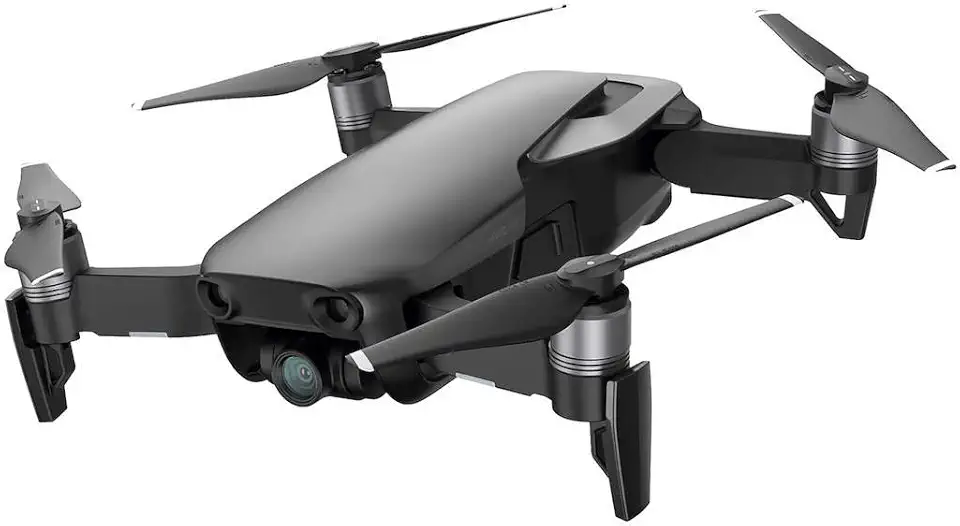
DJI Mavic Air Drone
Ultraportable folding aerial camera delivering cinematic 4K footage, agile flight performance, and intelligent shooting modes—perfect for travel photographers seeking high-quality captures from compact, easy-to-deploy kit.
Check PriceThe Numbers You Need
| Spec | Value |
|---|---|
| Weight | Approximately 430 grams |
| 3-Axis Gimbal | Yes — stabilizes camera movements |
| Sensor | 1/2.3″ CMOS |
| Video Resolution | 4K at 30 fps |
| Max Flight Time | Up to 21 minutes |
| Max Speed | Up to 68 km/h |
| Obstacle Sensing | Forward, backward, and downward |
| Zoom | Digital zoom available |
| Flight Modes | Includes ActiveTrack, Point of Interest, etc. |
| Battery Type | LiPo 3S |
| GPS | Supports GPS + GLONASS |
| Lens | 24 mm equivalent focal length |
| Operating Temperature | -10°C to 40°C |
| Control Range | Up to 4 km |
| Foldable Design | Compact and portable |
How It’s Built
In my testing the Mavic Air feels like the kind of drone you actually want to take with you. It folds down small and slips into a daypack or commuter bag without drama. That makes it perfect for travel days and quick city shoots when you don’t want a big case to lug around.
The gimbal and camera are well protected when folded, and I liked that guard — it saved a few anxious moments on bumpy sidewalks. The stabilization is impressively smooth in real shooting, so your clips look tidy right out of the camera. The folding arms are mostly solid, though they do feel a bit plasticky at the hinges compared with heftier prosumer rigs.
The forward, backward, and downward sensors are genuinely useful in tight spots. In my tests they caught obstacles I nearly missed, which is great for beginners learning spacing and approach angles. Don’t treat them like a full-time pilot, though — I still kept a safe distance and stayed ready to take control.
Swapping batteries in the field is simple and fast, which keeps you shooting without fuss. After using it for a while I found batteries drain faster in cold or long hover sessions, so plan for extras on longer outings. Overall it’s a very travel-friendly build with a few small compromises that won’t bother casual shooters.
In Your Hands
In the air the DJI Mavic Air Drone feels nimble and confident; brisk speed helps close distance and cut through a breeze while the three-axis gimbal keeps footage composed and smooth. Takeoffs and landings are predictably steady, with accurate return-to-home behavior that gives solo operators peace of mind. Controls are responsive, translating subtle stick inputs into precise moves without feeling twitchy.
The Wi‑Fi-based link performs well in open skies, offering solid responsiveness; in built-up areas you’ll notice interference and reduced control confidence, so be conservative near obstacles. Assisted modes like ActiveTrack and Point of Interest are genuinely useful—easy to set up and robust for solo shoots—though complex or cluttered scenes can still confuse them. The forward, rear and downward sensors add a valuable safety net, but they have practical limits and need room to react.
Environmental behavior is pragmatic: it handles a wide temperature span but batteries drain faster in cold and it can throttle in sustained heat, so plan missions and carry spares. Navigation leans on GPS and GLONASS for dependable hovering and waypoint accuracy, making it reliable for travel storytellers and weekend filmmakers who value portability and automated creativity over marathon flights. Ultimately, it rewards cautious, mission-planned piloting.
The Good and Bad
- Compact, foldable, travel-friendly design (approx. 430 g)
- 3-axis gimbal stabilization for smooth 4K30 footage
- Forward, backward, and downward obstacle sensing adds a safety net
- Useful automated flight modes such as ActiveTrack and Point of Interest
- Up to 21-minute flight time limits mission length compared with newer models
- Wi‑Fi-based transmission and up to 4 km range feel shorter and less robust than newer long-range links
Ideal Buyer
The DJI Mavic Air is built for travelers, commuters, and city wanderers who prize pocketable gear over pro-grade specs and fast setup. Its foldable 430 g frame and 3-axis gimbal make snagging steady 4K30 shots as easy as pulling the drone from a pack and sharing them. It’s the kind of kit you actually bring on trips every time.
It’s also perfect for first-time and casual pilots who want a safety net in the sky — forward, backward and downward sensing plus automated modes like ActiveTrack do a lot of the work in tight spaces. Solo creators and social storytellers who favor quick, cinematic clips at a 24mm-equivalent look will find the image and flight toolkit very forgiving. The learning curve is gentle, so you’ll be shooting publish-ready social and short-form video fast.
Choose the Mavic Air when portability, simple workflows and reliability in varied temperatures matter more than marathon flight times or cutting-edge low-light capture — especially on cold or hot days within its rated range. If you regularly need longer airtime, cleaner nighttime footage or a rock-solid long-range link like OcuSync, step up to the Mavic Air 2 or similar alternatives. For people who want safe, easy aerials without hauling batteries and big cases, the Air hits a sweet spot.
Better Alternatives?
We’ve gone through what the Mavic Air does well: pocketable design, steady 4K30 footage, and easy automated shots for travel and quick social clips. It’s a great do-it-all toy for solo creators, but there are clear trade-offs — shorter flights, a smaller sensor, and a Wi‑Fi style link that feels less confident at range.
If you find those trade-offs limiting, there are a few clear alternatives that push the Mavic Air in different directions: better image quality and range, or professional tools like thermal and mapped workflows. Below are three real-world options I’ve used and how they stack up for shooting in the field.
Alternative 1:

DJI Mavic Air 2 Drone
Advanced sensor and extended flight endurance combine with upgraded obstacle sensing and intelligent capture modes to produce professional-grade aerial stills and smooth cinematic video for creators and serious hobbyists.
Check PriceThe Mavic Air 2 is the most natural step up if you like the Air’s size and idea but want noticeably better image quality and longer flights. In real shoots I saw cleaner footage, especially at dusk, and the extra battery time meant fewer mid-day swaps and more continuous coverage for events or long landscape sequences.
What it does better than the Mavic Air: crisper photos and video in lower light, longer real-world flight time, and a much stronger, more reliable control link so I could fly farther with confidence. What it does worse: it’s a touch bigger and a little less pocketable, and you trade some of the Air’s compact feel for those gains.
Who should pick it: photographers and serious hobbyists who want better-looking results without stepping into pro-grade hardware. If you often run out of battery or want cleaner footage when the light fades, the Air 2 is the practical upgrade.
Alternative 2:
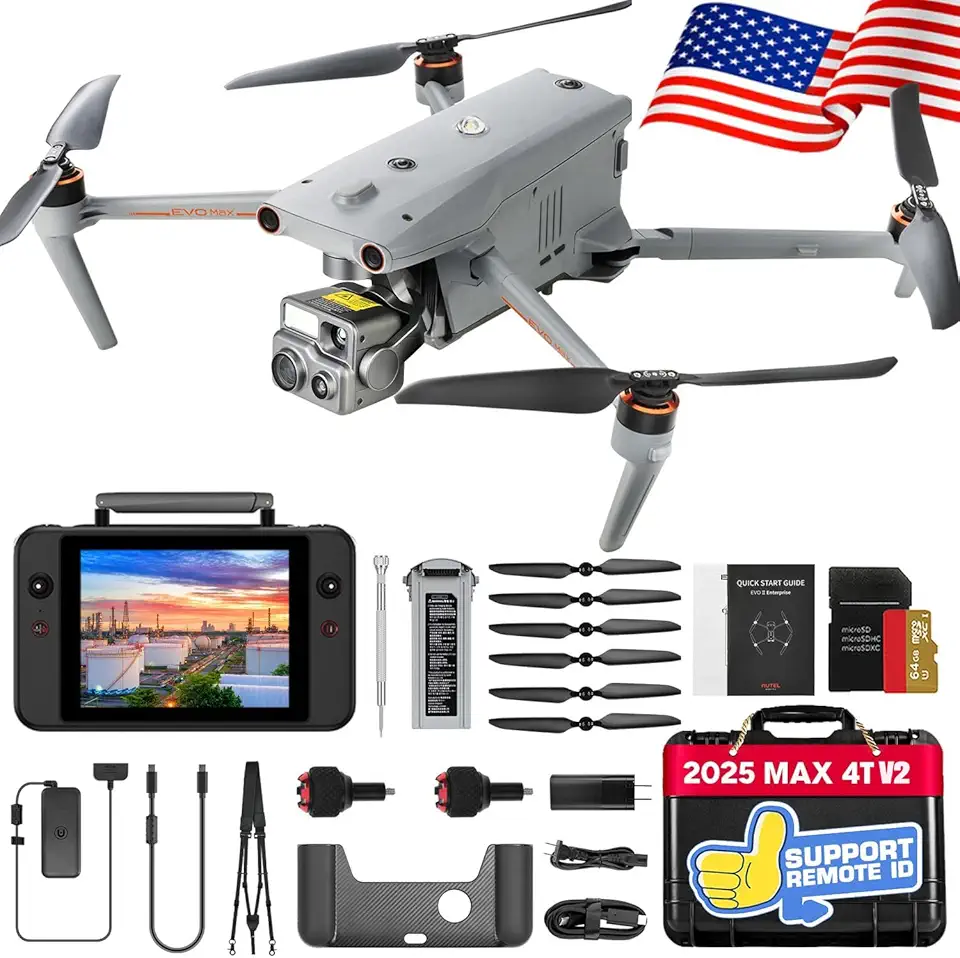
Autel EVO Max 4T V2 Drone
Enterprise-grade platform offering integrated thermal imaging and multi-sensor payloads, long-range transmission, and rugged reliability—engineered for inspections, mapping, emergency response, and demanding professional aerial applications.
Check PriceThe Autel EVO Max 4T V2 is a different beast — built for work. I used it on inspection jobs and it felt tough and steady, with a built-in thermal camera that instantly became useful for finding hotspots and hidden issues that a regular camera would miss. For pure image capture, its sensors and the way it holds position give more useful data than the Mavic Air when shooting careful inspection frames or mapped overlaps.
Compared with the Mavic Air, the EVO Max 4T V2 does much better where specialized data matters: thermal, longer, stronger transmission, and sensor options. It does worse if you want something light and easy to throw in a day bag — it’s heavier, more complex to set up, and overkill for casual travel shooting.
Who should pick it: utility pilots, inspectors, emergency teams, or pros who need thermal or multi-sensor data in the field. If your work demands actionable imaging (not just pretty videos), this is the tool you’ll reach for over a Mavic Air.
Alternative 3:
Autel EVO Max 4T V2 Drone
Versatile industrial UAV delivering advanced autonomy, precise geotagging, secure data workflows, and adaptable sensor options for thermography, detailed surveying, asset inspections, and time-sensitive mission planning.
Check PriceI also used the EVO Max 4T V2 on mapping and survey jobs, and its autonomy and geotagging make a real difference. Compared to the Mavic Air, the Max 4T keeps flight paths tight and repeatable, which makes stitching maps and comparing shots over time far easier. The secure data handling and export options are a practical win when you’re delivering results to clients.
Where it beats the Mavic Air: mission repeatability, accurate location tags, and professional data flows that save time after a flight. Where it falls short: it’s more workflow-heavy — you need to plan flights and manage files differently, and you won’t enjoy the same grab-and-go freedom the Mavic Air gives you for casual shoots.
Who should pick it: surveyors, asset managers, and teams that need repeatable, traceable aerial data rather than quick social clips. If your work needs tight, repeatable results and clear chains of data custody, this drone is worth the extra learning curve over the Mavic Air.
What People Ask Most
Is the DJI Mavic Air worth buying?
Yes. It’s a compact, well-built drone that offers excellent image quality and smart features, making it a great balance of portability and performance for hobbyists and traveling pros.
How long is the flight time on the DJI Mavic Air?
About 21 minutes per battery in ideal conditions; expect 15–18 minutes in real-world flying with wind or active shooting.
How good is the camera quality on the DJI Mavic Air?
Very good for its size: 12MP stills and 4K/30p video with solid detail and dynamic range for social, travel, and light commercial work.
What is the maximum range/remote distance of the DJI Mavic Air?
Official range is up to around 4 km under FCC specs, but practical, reliable range is typically 1–2 km depending on interference and local regulations.
Does the DJI Mavic Air have obstacle sensing/avoidance?
Yes, it has forward, backward and downward sensors for basic obstacle detection and avoidance, though it’s not as advanced as newer models so you should still fly cautiously.
Is the DJI Mavic Air suitable for beginners?
Yes, it’s beginner-friendly with intuitive controls and automated flight modes, but new pilots should practice in open areas and learn local drone laws first.
Conclusion
After years of field testing, I still reach for the DJI Mavic Air Drone when I’m packing light but need pro‑looking footage. Its pocketable, foldable chassis combined with a rock‑steady 3‑axis gimbal and practical front/back/down obstacle sensing means you can fly confidently in tight, travel‑oriented scenarios. Easy automated modes and reliable satellite positioning take much of the pilot stress out of capturing cinematic shots solo.
That convenience comes with compromises that show up quickly in the real world: shorter endurance, a Wi‑Fi–based transmission that feels less robust at range, and a smaller camera that lags newer models in low light and higher‑frame needs. Push the platform into long missions, dim conditions or aggressive distance and you’ll be reminded of those tradeoffs. If your priorities are maximum flight time or cutting‑edge image performance, newer alternatives are a better match.
My verdict is straightforward: the DJI Mavic Air Drone is the best choice for travelers and casual filmmakers who put portability, safety sensors and straightforward 4K capture ahead of headline specs. If you need longer flights, a stronger long‑range link or cleaner low‑light imagery, step up to a newer model. For most everyday aerial storytelling, the Air remains a smart, practical compromise between size and capability.
DJI Mavic Air Drone
Ultraportable folding aerial camera delivering cinematic 4K footage, agile flight performance, and intelligent shooting modes—perfect for travel photographers seeking high-quality captures from compact, easy-to-deploy kit.
Check Price

0 Comments