
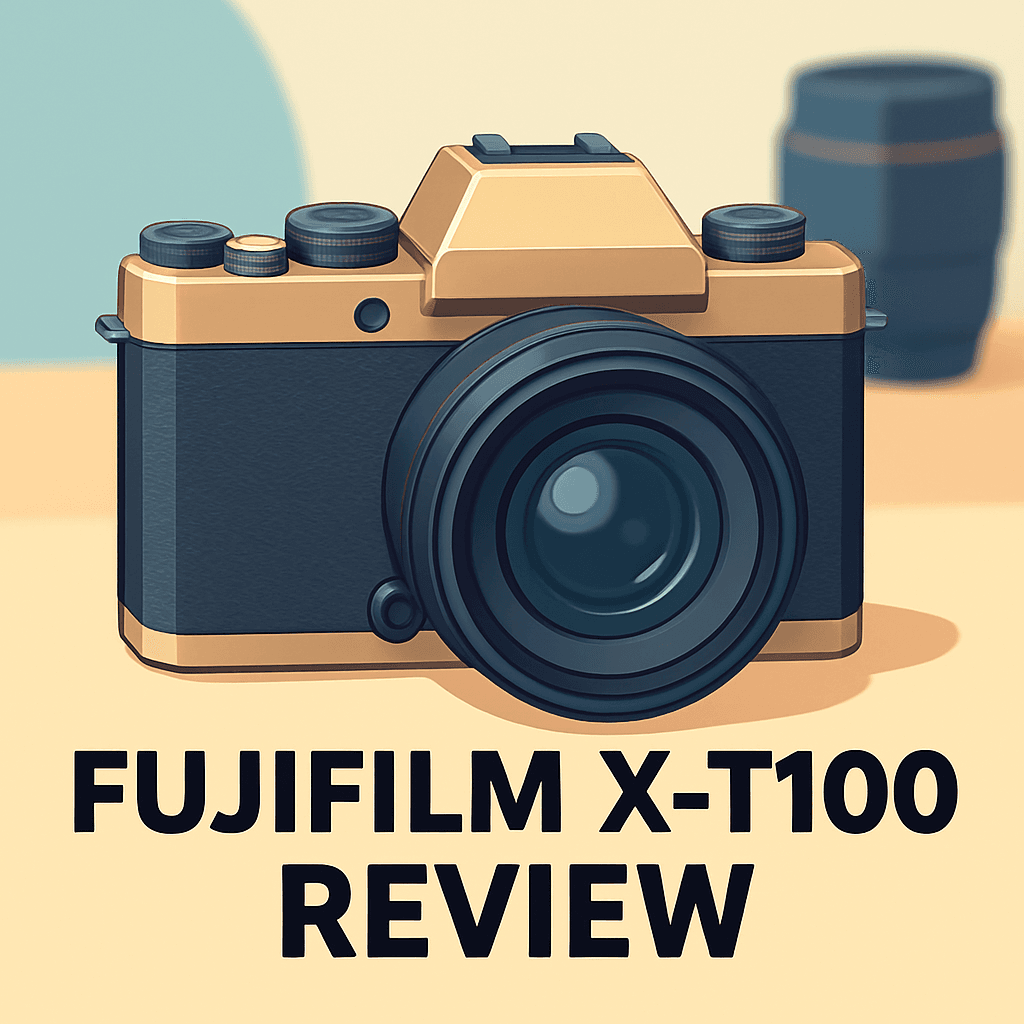
fujifilm x-t100 review — want a compact mirrorless that lifts your everyday image quality without extra bulk?
I took it out on several real shoots to see how it behaves in real life.
It’s an APS-C mirrorless with a 24.2MP sensor and Fujifilm X-mount.
You get a hybrid AF system, 2.36M-dot EVF, vari-angle touchscreen, 1080p/60 video, Wi‑Fi/Bluetooth, and no in-body stabilization.
If you’re a stills-first shooter, traveler, or casual vlogger, you’ll care about the EVF, flip screen, and battery life; I’ll show handling, AF in ordinary light, and where the spec sheet matters — keep reading.
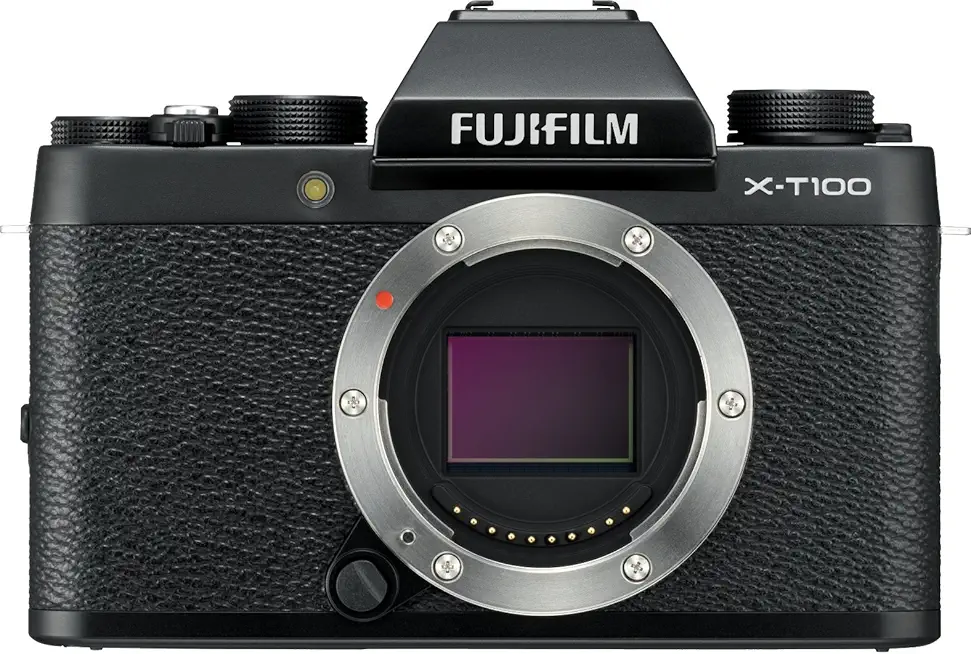
Fujifilm X-T100 Camera
Retro-styled mirrorless delivering vibrant color and sharp detail in a compact body. Intuitive controls, tilting touchscreen and wireless connectivity make it perfect for travel photographers who value style and portability.
Check PriceThe Numbers You Need
| Spec | Value |
|---|---|
| Sensor | 24.2 MP APS-C CMOS |
| Lens mount | Fujifilm X-mount |
| ISO range | 200–12800 (expandable to 100–51200) |
| Autofocus | Hybrid AF with 91 points |
| Viewfinder | 0.39" OLED Electronic Viewfinder, 2.36 million dots |
| LCD | 3.0" Vari-angle touchscreen LCD, 1.04 million dots |
| Continuous shooting | Up to 6 fps |
| Video | Full HD 1080p at 60 fps |
| Image stabilization | None (no in-body stabilization) |
| Shutter speed | 30s to 1/4000s |
| Built-in flash | Yes, pop-up flash |
| Storage media | SD, SDHC, SDXC (UHS-I supported) |
| Connectivity | Wi-Fi and Bluetooth |
| Battery life | Approx. 430 shots per charge (CIPA) |
| Weight | Approx. 448g (body only) |
How It’s Built
In my testing of the Fujifilm X-T100 Camera the first thing that stands out is how compact and light it feels in hand. With a small prime it balances like a dream for one-handed carry, and even with a compact zoom it never feels awkward. For beginners that means less arm strain on long walks and easier shooting on the go.
The viewfinder is surprisingly pleasant to use and the screen is a real winner. I found the EVF clear enough to nail composition, and the vari-angle touchscreen responds well when I tapped to set AF points or swipe through menus. That flip-out screen made low and high angles, plus quick self-shots, much less fiddly in the field.
Controls are straightforward and welcoming for new shooters. The dials give a tactile feel without being intimidating, and the built-in pop-up flash is handy for quick indoor fill. One thing I really liked was how the layout kept everything within reach during a fast street shoot.
After using it for a while I noticed a couple of trade-offs. The body feels a bit plasticky compared with pricier models, and the screen hinge could feel stiffer with heavier lenses. For most beginners this only matters if you plan to mount large glass or rough-handle the camera.
Cards and power behaved well in everyday use. The camera cleared bursts and moved files off the card without drama, battery life easily carried me through a day of mixed stills and vids, and pairing over Wi‑Fi/Bluetooth was painless for quick sharing. One thing that could be better is the lack of built-in stabilization, so plan to use steady hands or stabilized lenses for low-light shots.
In Your Hands
Out of the box the Fujifilm X-T100 feels brisk — quick to power up and responsive to the shutter with short shot-to-shot lag. The electronic viewfinder updates smoothly with only a modest blackout during bursts, and buffer clearing is reasonable when you use faster cards.
Autofocus is confident for everyday work: single-shot portraits lock quickly and street subjects are nailed more often than not. For casual action it keeps up adequately, though you’ll notice the system can hesitate in very low light or when subjects move unpredictably.
On a typical day of mixed shooting and occasional clips the battery carries through comfortably, so you won’t be constantly swapping cells. Wireless pairing and transfers are straightforward and reliable for rapid social sharing, though transfers aren’t instantaneous.
Without in-body stabilization the camera rewards careful technique — higher shutter speeds, braced positions, or lenses with optical stabilization make a real difference. Handheld low-light shooting benefits from faster glass or a tripod if you want crisp, shake-free results.
Full HD video looks clean with usable detail and steady autofocus for vlogs and run-and-gun clips, and the vari-angle screen makes framing yourself easy. For night scenes and long exposures the camera behaves well on a tripod, but wide-open daytime shooting may require neutral-density filtering to avoid blown highlights.
The Good and Bad
- 24.2 MP APS-C CMOS sensor for solid stills resolution.
- 0.39″ 2.36M-dot OLED EVF for precise framing.
- 3.0″ vari-angle touchscreen for flexible angles and self-shooting.
- Approx. 430-shot battery life (CIPA) is strong for its class.
- No in-body image stabilization (IBIS).
- No 4K video listed in specs; video tops out at 1080p/60.
Ideal Buyer
If you’re a stills-first shooter, the Fujifilm X-T100 Camera fits the bill. Its 24.2MP APS-C sensor, EVF and vari-angle touchscreen make framing intuitive and Fuji’s film-simulation JPEGs give images instant character. It rewards photographers who prioritize image quality, compactness, and straightforward connectivity over pro-level video or blazing burst speeds.
Travelers and everyday photographers will appreciate the compact body and roughly 430-shot battery life per charge, which keeps you shooting all day. At around 448 grams body-only, it carries comfortably with a small prime or compact zoom, feels surprisingly balanced in hand, and the pop-up flash is a handy fill light. Wide X-mount lens availability means a serious kit can still live in a small bag.
Photographers comfortable working without IBIS will adapt with faster shutter speeds, steady technique, or stabilized lenses and get pleasing low-light results up to practical ISO limits. In return you get crisp detail, strong micro-contrast, and user-friendly controls that reward thoughtful shooting.
Creators satisfied with 1080p/60 will find the vari-angle screen, touch AF, and wireless pairing make simple vlogging and social workflows painless. It’s a fine choice for self-shooting interviews, travel clips, and lifestyle content where 4K isn’t mandatory. But if your work demands 4K, advanced tracking, or professional video features, this isn’t the camera to grow into.
Better Alternatives?
In this fujifilm x-t100 review we covered how the camera handles, what it shoots well, and where it falls short. The X-T100 is great for photographers who want a sharp APS-C sensor, a clear EVF, and a flip-out screen for selfies and simple video. But every camera has trade-offs, and some shooters will want different strengths.
Below are three real-world alternatives I’ve used in the field. I’ll point out what each one does better and worse than the X-T100 and who would prefer them, so you can match a camera to the kind of shooting you actually do.
Alternative 1:

Canon EOS M50 Mark II Camera
Compact, creator-focused camera offering quick autofocus and a fully articulating touchscreen for easy vlogging. Crisp stills, smooth video capture and seamless streaming tools simplify content creation for beginners and influencers.
Check PriceI’ve used the Canon EOS M50 Mark II for run-and-gun vlogging and casual portraits. Compared to the X-T100 it nails face and eye detection in live view — in real shooting you spend less time hunting focus when you or your subject is moving. The fully articulating screen also makes framing for selfies and vlogs simpler than the X-T100’s vari-angle setup.
Where the M50 Mark II lags behind the X-T100 is in lens choices and certain video limits. Canon’s EF-M lenses are fewer, so you’ll either stick to a small selection or use an adapter to get more glass. Its 4K mode is usable but has compromises in autofocus and crop, so in everyday 1080p work it’s often more convenient, while the X-T100 gives a nicer in-camera JPEG look for stills.
If you make a lot of vlogs, do live streams, or want the easiest autofocus for people and faces, the M50 Mark II is the practical pick. If you care more about Fuji’s color and want a bigger native lens range, you might still prefer the X-T100.
Alternative 2:
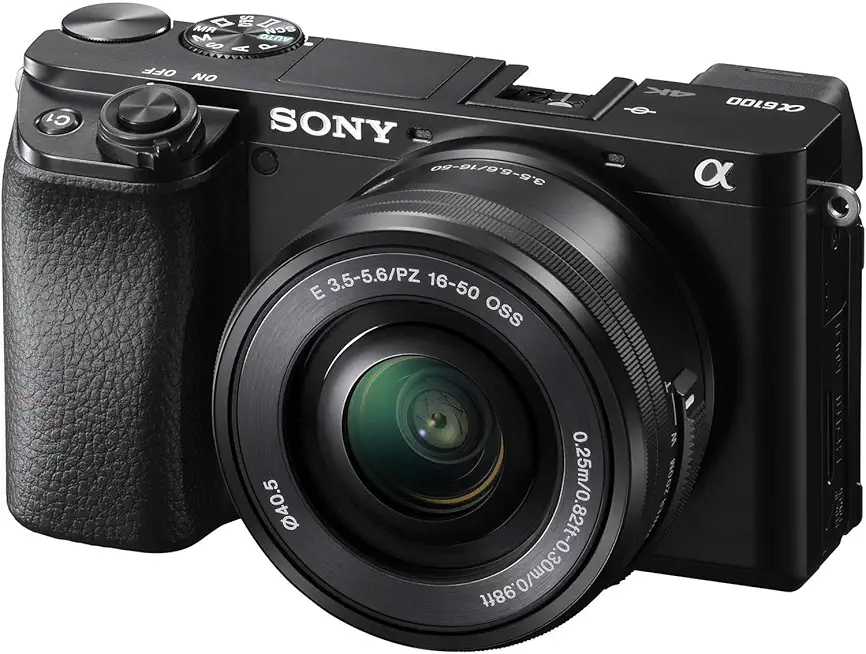
Sony Alpha A6100 Camera
High-speed autofocus with real-time subject and eye tracking delivers sharp results in action and portrait work. Lightweight body, strong low-light performance and 4K video make it a versatile hybrid choice.
Check PriceWhen I switched to the Sony a6100 for sports and street work, the first thing I noticed was how fast and reliable its autofocus is compared with the X-T100. Tracking moving subjects and keeping eyes sharp is something the a6100 does more consistently, so you’ll get a higher keeper rate on action and kid portraits.
For video, the a6100’s 4K footage is a clear real-world win over the X-T100’s 1080p limit — it gives more detail and framing options. The downside is that Sony’s out-of-camera color and JPEGs feel flatter than Fuji’s film-like look, so if you want that instant, pleasing JPEG without editing, the X-T100 still has an edge.
The a6100 is a good fit for hybrid shooters who need fast AF and plan to grow their lens kit. If you shoot lots of moving subjects or want 4K without fuss, choose the a6100. If you prize Fuji’s color or a more classic look straight from the camera, stick with the X-T100.
Alternative 3:
Sony Alpha A6100 Camera
Burst shooting, quick startup and precise tracking let you capture fast-moving subjects with confidence. Compact, lens-interchangeable system ideal for travelers and enthusiasts pursuing both photos and video.
Check PriceI also used the a6100 on trips where I wanted a light kit with quick startup and strong burst performance. Compared to the X-T100 it feels snappier getting ready and filling the frame quickly, which matters when a moment lasts a second. The a6100’s burst and AF tracking help you catch decisive moments more often on the street or at events.
That said, the a6100 shares a practical downside with the X-T100: no in-body stabilization. In low light you still need either a steady hand, stabilized lenses, or higher ISOs. Also, if you’re after warm, film-like colors straight from the camera, the Fuji will give you that look without editing, while Sony often needs a quick color tweak to match.
Pick the a6100 if you travel light and shoot a mix of fast action and video and want reliable autofocus out in the field. If your priority is Fuji’s JPEG color and the feel of the X-mount lens lineup, the X-T100 remains a very good choice for stills-first shooters.
What People Ask Most
Is the Fujifilm X-T100 worth buying?
Yes, if you want an affordable, stylish entry-level interchangeable-lens camera with great JPEG colors and easy controls; not the best choice if you need fast autofocus or modern video features.
How good is the image quality of the Fujifilm X-T100?
Very good for stills thanks to its 24MP APS-C sensor and Fujifilm film simulations, with clean detail at low ISO; high-ISO and dynamic range are decent but not top-tier.
What are the pros and cons of the Fujifilm X-T100?
Pros: attractive retro design, excellent JPEG color, tilting touchscreen and low price; Cons: slow autofocus, limited 4K video, no weather sealing and older performance overall.
Is the Fujifilm X-T100 good for beginners?
Yes—its simple menus, helpful auto modes and film simulations make learning easy, though advanced users may quickly notice its AF and video limits.
Can the Fujifilm X-T100 shoot 4K video?
It can record 4K but only at 15fps with a significant crop, so 1080p is far more practical for smooth footage.
What lenses are recommended for the Fujifilm X-T100?
Start with the XC 15-45mm or XF 18-55mm kit lenses for general use, add an XF 35mm or XF 23mm f/2 for low light and portraits, and consider the XC 50-230mm if you need reach.
Conclusion
After spending time with it in the field, the Fujifilm X-T100 Camera proves itself as a sharply focused stills tool that punches above its compact size. Its APS-C sensor delivers pleasing detail and tonal character, while the EVF and vari-angle touchscreen make framing and shooting instinctive in everyday scenarios. Battery life is reassuring, so it’s easy to take this camera out all day without worry.
That said, the X-T100 wears sensible limits. The lack of in-body stabilization and a modest autofocus implementation keep it from being a go-to for fast action or low-light, handheld videography. Video capabilities stop at full HD and the camera’s top shutter speed and buffering behavior mean you’ll hit practical ceilings in very bright or high-speed shooting situations.
In short, buy the Fujifilm X-T100 Camera if you’re a stills-first photographer who values Fuji’s color, a useful EVF, flexible screen, and reliable daylong battery life. If you need razor-fast AF tracking, 4K video, or the broadest lens choices for action and hybrid work, consider one of the alternative models mentioned earlier instead.
Fujifilm X-T100 Camera
Retro-styled mirrorless delivering vibrant color and sharp detail in a compact body. Intuitive controls, tilting touchscreen and wireless connectivity make it perfect for travel photographers who value style and portability.
Check Price


0 Comments