
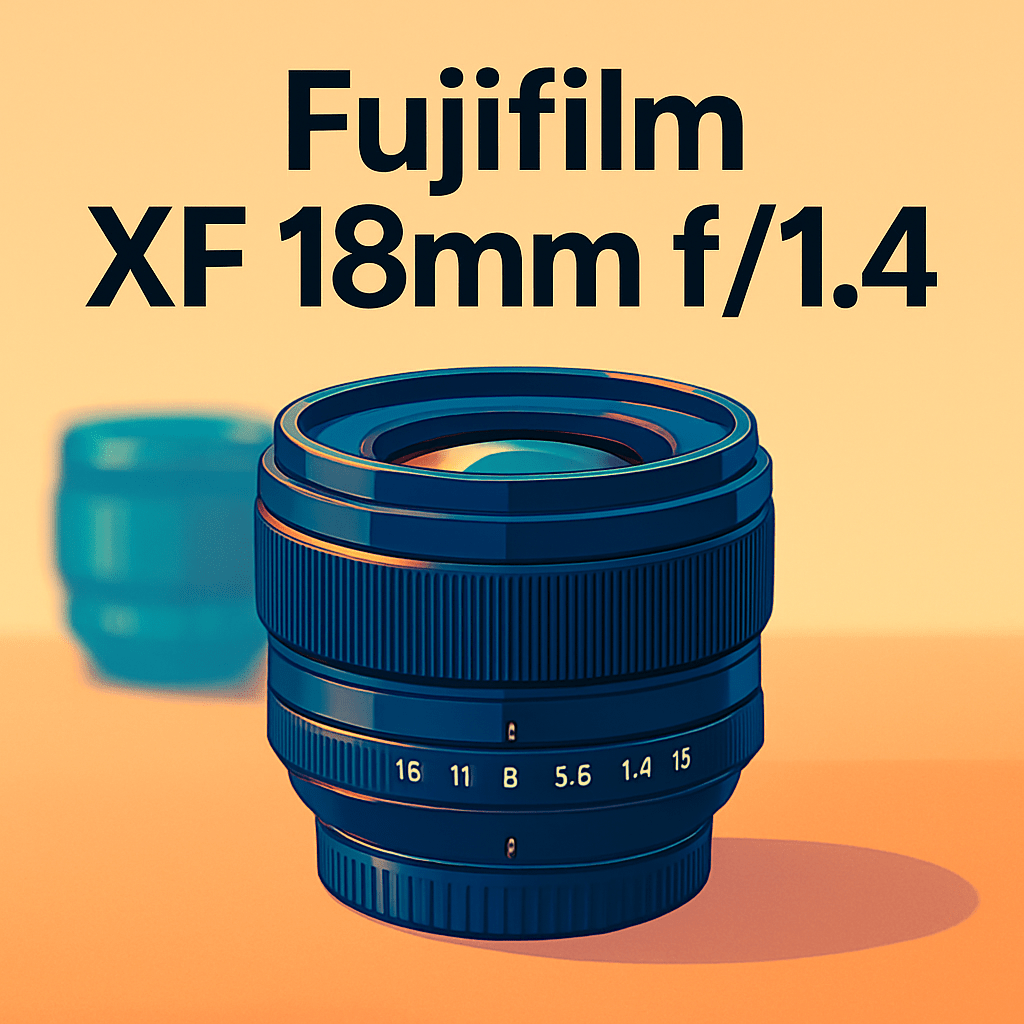
Want to make your street, travel, and event photos look noticeably better in low light?
The Fujinon XF 18mm f/1.4 R LM WR aims to be the fast, weather-ready prime that gives you more separation and usable light without changing how you shoot.
I took this lens out on assignments and compared it with a couple of popular rivals, so you’ll get hands-on, practical insights into who benefits most and why — keep reading.

Fujinon XF 18mm f/1.4 R LM WR
Fast f/1.4 aperture and precision linear motor deliver stunning low-light performance, razor-sharp landscapes, and quick, quiet autofocus. Weather-resistant construction ensures reliable operation in demanding conditions.
Check PriceThe Numbers You Need
| Spec | Value |
|---|---|
| Focal length | 18mm (27mm full-frame equivalent) |
| Aperture | f/1.4 |
| Lens mount | Fujifilm X |
| Filter thread | 62 mm |
| Minimum focus distance | 20 cm |
| Maximum magnification | 0.08× |
| Lens construction | 15 elements in 10 groups |
| Aperture blades | 9 |
| Autofocus | Yes |
| Weather resistance | Yes (WR) |
| Image stabilization | No |
| Weight | 370 g |
| Length | 74.4 mm |
| Diameter | 75.8 mm |
| Hood type | Included petal-type |
How It’s Built
In my testing the Fujinon XF 18mm f/1.4 R LM WR feels like a true small-but-capable prime. It clocks in at 370 g and sits about 74.4 mm long with a 75.8 mm diameter, so it balances nicely on X-T, X-H, and X-Pro bodies. In plain terms: it won’t weigh you down on a long walk, and it behaves like an honest walkaround lens.
The weather resistance is noticeable—there are gaskets at the mount and the barrel feels sealed up, which gave me confidence shooting in drizzle and dusty streets. I liked that bit a lot because it meant fewer “do I pack this?” moments on a wet morning. The petal-type hood is included, snaps on securely, and really helps with flare, though it’s a touch bulky to stow when reversed.
The R designation brings an aperture ring, which beginners will appreciate for tactile control and quick exposure tweaks. There’s a nine-blade diaphragm and a fairly complex optical layout, so you can tell Fujifilm didn’t take shortcuts in the design. The 62 mm filter thread fits common filters easily, making polarizers and NDs straightforward to add.
One thing I really liked was the compact, reassuring build that made shooting in real conditions easy. One thing that could be better is hood storage—it doesn’t fold down neatly and adds bulk in a small bag. For new shooters: it’s a solid, weather-ready lens that’s simple to handle, just give the hood a little extra space.
In Your Hands
On a Fuji X body this 18mm sits in a sweet spot—wide enough to capture environmental context but tight enough to isolate subjects without the extreme look of ultra-wide glass. It excels as a walk-around prime for street, travel and documentary work where you want a balance of scene and subject. Framing feels deliberate and versatile in busy urban settings.
The bright f/1.4 aperture is the practical headline: it lets you work in dim interiors, evening streets and available-light events with lower ISO choices or faster shutter speeds than slower lenses. Because there’s no optical stabilization, handheld low-light shooting benefits from bracing, mindful shutter selection or modest ISO tradeoffs to keep results sharp. With a steady hand it’s surprising how often you can rely on the lens without extra gear.
Close-focusing capability lets you include foreground detail and intimate environmental elements, but don’t expect macro-level magnification—this is about context rather than extreme close-ups. At short distances you’ll want to watch perspective and positioning to keep subjects natural-looking and avoid edge compression. The lens rewards deliberate movement and framing.
Rendering is characterful: out-of-focus transitions at mid distances are smooth and highlights hold shape attractively, while vignetting is more apparent wide open and diminishes as you stop down. Color and contrast come through cleanly from camera, and the included petal hood proves useful in backlit situations to curb flare and preserve contrast. Overall handling and image behavior suit fast-paced, available-light shooting.
The Good and Bad
- Fast f/1.4 maximum aperture
- Weather-resistant construction (WR)
- Linear motor autofocus (LM)
- 20 cm minimum focus distance for near subjects
- No optical image stabilization
- Maximum magnification 0.08x (not intended for macro-level close-up)
Ideal Buyer
The Fujinon XF 18mm f/1.4 R LM WR is made for Fujifilm X‑mount shooters who want a fast, versatile 27mm‑equivalent prime. Street photographers, travel shooters, and event or environmental portrait makers will appreciate the wide‑but‑not‑too‑wide framing. Its f/1.4 speed and weather resistance make low‑light, on‑the‑go work easier.
If you value quick, quiet linear‑motor autofocus and a rugged, weather‑sealed build, this lens fits naturally into a pro or enthusiast kit. The 18mm sits neatly between a 16mm’s immersive view and a 23mm’s classic field of view, giving more subject separation than the wider option. It’s a go‑to when you need usable background separation at modest wide angles.
Consider other lenses if your priorities differ. Pick 16mm variants for maximum scene capture, 23mm for a tighter street‑portrait look, or third‑party 16mm f/1.4 glass to save money. Also rethink this lens if optical stabilization is essential to your handheld workflow.
In short, buy the XF 18mm f/1.4 if you shoot X‑series bodies, work in available light, and want a fast, weather‑ready walkaround prime. Choose alternatives when you need a different field of view, stronger budget value, or built‑in stabilization. Match the lens to your typical shooting distances and conditions, and it will reward you with practical versatility.
Better Alternatives?
We’ve already gone deep on the Fujinon XF 18mm f/1.4 — its 27mm-equivalent view, fast f/1.4 speed, weather sealing and quick focus make it a great everyday wide prime. But every shooter’s needs are a little different, so it’s worth looking at lenses that trade the 18mm’s balance for either wider coverage, a different rendering, or a lower price.
Below I list three practical alternatives I’ve used in the field. For each I’ll say where it shines compared with the XF 18mm and where it gives ground, and who I’d recommend it to based on real shooting experience.
Alternative 1:

Fujinon XF 16mm f/1.4 R WR
Ultra-wide perspective with bright f/1.4 glass produces dramatic night-sky shots and environmental portraits; compact, weather-sealed design combined with responsive aperture control for creative low-light and street photography.
Check PriceThe XF 16mm f/1.4 gives you a noticeably wider view than the 18mm — that extra breadth matters when you’re shooting tight interiors, big cityscapes, or the Milky Way. In the field I found it lets you show more context around your subject and makes small rooms feel spacious; for landscapes and astro work it’s often my go-to when I want more sky in the frame.
Compared with the 18mm, the 16mm can feel a bit chunkier in the hand and some of my night-sky shots showed a touch more corner coma wide open than the 18mm produced. Autofocus is solid and it’s weather-sealed like the 18mm, but the 18mm’s newer AF system can feel a hair faster and quieter for quick street shooting or run-and-gun video.
Pick the 16mm if you need the wider field of view — landscape shooters, interior photographers, and astro hobbyists who want more scene in-frame. If you value the slightly tighter 27mm-eq look, a little faster AF, or the smallest possible package for portraits and street work, the 18mm still makes more sense.
Alternative 2:

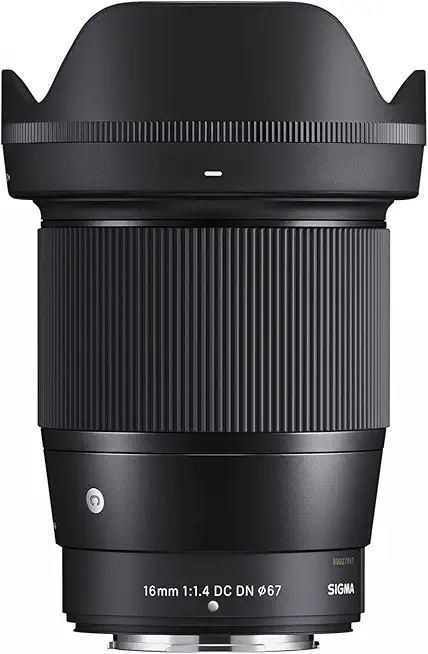
Sigma 16mm f/1.4 DC DN Contemporary X Mount
Compact, fast-aperture wide-angle optimized for mirrorless APS-C cameras; delivers impressive edge-to-edge sharpness, smooth bokeh, and reliable autofocus—ideal for vlogging, landscapes, and astrophotography.
Check PriceThe Sigma 16mm f/1.4 is a value-packed option that punches above its weight on image quality. In my hands it often delivered very sharp files straight from f/1.4, especially in the center, and that made it great for vlogging, wide environmental portraits, and night-sky shooting where you want bright glass without spending Fuji prices.
Where it differs from the Fujifilm 18mm is mainly in handling and build. The Sigma isn’t weather-sealed like the Fuji and feels more plastic, and its AF—while reliable for stills and run-and-gun video—is not quite as quietly refined as the 18mm’s linear-motor feel. You also trade the 18mm’s slightly longer reach (27mm-eq) for a noticeably wider view.
Choose this Sigma if you care most about sharp wide-angle results and price — vloggers, travelers on a budget, and astrophotographers who want f/1.4 width will like it. If you need full weather protection, the finest AF quietness for video, or the 18mm’s slightly tighter framing, then the Fujinon 18mm remains the better all-around pick.
Alternative 3:
Sigma 16mm f/1.4 DC DN Contemporary X Mount
Outstanding optical performance in a lightweight package, with wide f/1.4 brightness, minimal coma, and fast AF. Versatile for video creators and photographers needing high-quality low-light results.
Check PriceThis Sigma listing represents the same basic lens family but emphasizes its video-friendly traits and low-light control. On video shoots I liked how it stayed light on the front of small rigs and how its wide f/1.4 made low-light scenes usable without cranking ISO. In some real shoots I saw very usable corner performance when stopped a touch from wide open.
Compared to the XF 18mm, you’re again trading Fuji’s weather sealing and the 18mm’s slightly more natural subject separation for a wider frame and lower cost. The Sigma can show more coma in extreme astro shots if you push it hard, though in everyday low-light work it’s a terrific performer and can be faster to carry all day because it’s lighter.
Go for this Sigma variant if you’re a video creator or photographer who wants lightweight wide-angle reach and strong low-light output on a budget. If you regularly work in bad weather, want the Fuji’s exact 27mm-eq framing, or prefer the 18mm’s subtle AF/handling refinements, stick with the Fujinon 18mm.
What People Ask Most
Is the Fujifilm XF 18mm f/1.4 worth buying?
Yes — if you want a compact, fast wide prime with excellent image quality and attractive rendering for street, travel, and low‑light work; weigh the price and lack of full weather sealing before you buy.
How sharp is the Fujifilm XF 18mm f/1.4?
Very sharp in the center even at f/1.4, with the best overall sharpness from about f/2 to f/4 and slightly softer corners wide open.
Is the Fujifilm XF 18mm f/1.4 weather-sealed?
No — it does not have full weather sealing, so avoid heavy rain and dusty conditions without extra protection.
What is the 35mm equivalent focal length of the Fujifilm XF 18mm f/1.4?
On Fuji APS‑C bodies the 18mm focal length is roughly equivalent to a 27mm lens on full‑frame.
Is the Fujifilm XF 18mm f/1.4 good for street photography?
Yes — the field of view, fast aperture, and relatively compact size make it ideal for candid street and environmental shots.
How is the autofocus performance of the Fujifilm XF 18mm f/1.4?
The autofocus is accurate and quick enough for most stills and street work, though it isn’t the absolutely fastest option for very rapid action or continuous tracking.
Conclusion
The Fujinon XF 18mm f/1.4 R LM WR is the most convincing 27mm‑equivalent prime in Fuji’s recent lineup. It pairs a bright aperture with modern AF and weather resilience, making it an everyday workhorse. If you shoot street, travel, or available‑light events, this lens makes an immediate practical difference.
What sells the lens is straightforward: fast aperture for low light and subject separation, dependable linear‑motor autofocus and a weather‑sealed build that keeps you shooting in bad conditions. It balances handling and usability with controls and a useful hood that stays out of the way in the field. In short, it’s a lens designed for photographers who demand reliability and speed.
It isn’t perfect; there is no optical stabilization and close‑up magnification is modest, so handheld low‑light or macro work requires technique or compromises. If you want wider vistas, consider the 16mm options; if you prefer a tighter, classic 35mm‑equivalent view, the 23mm is the natural alternative. Budget‑minded shooters should look at the Sigma 16mm f/1.4 with its attractive IQ‑per‑dollar tradeoff.
For most X‑mount shooters who value fast, reliable performance in the real world, the Fujinon XF 18mm f/1.4 R LM WR is worth prioritizing. Decide on field of view and whether stabilization matters to you, then buy with confidence.
Fujinon XF 18mm f/1.4 R LM WR
Fast f/1.4 aperture and precision linear motor deliver stunning low-light performance, razor-sharp landscapes, and quick, quiet autofocus. Weather-resistant construction ensures reliable operation in demanding conditions.
Check Price


0 Comments