
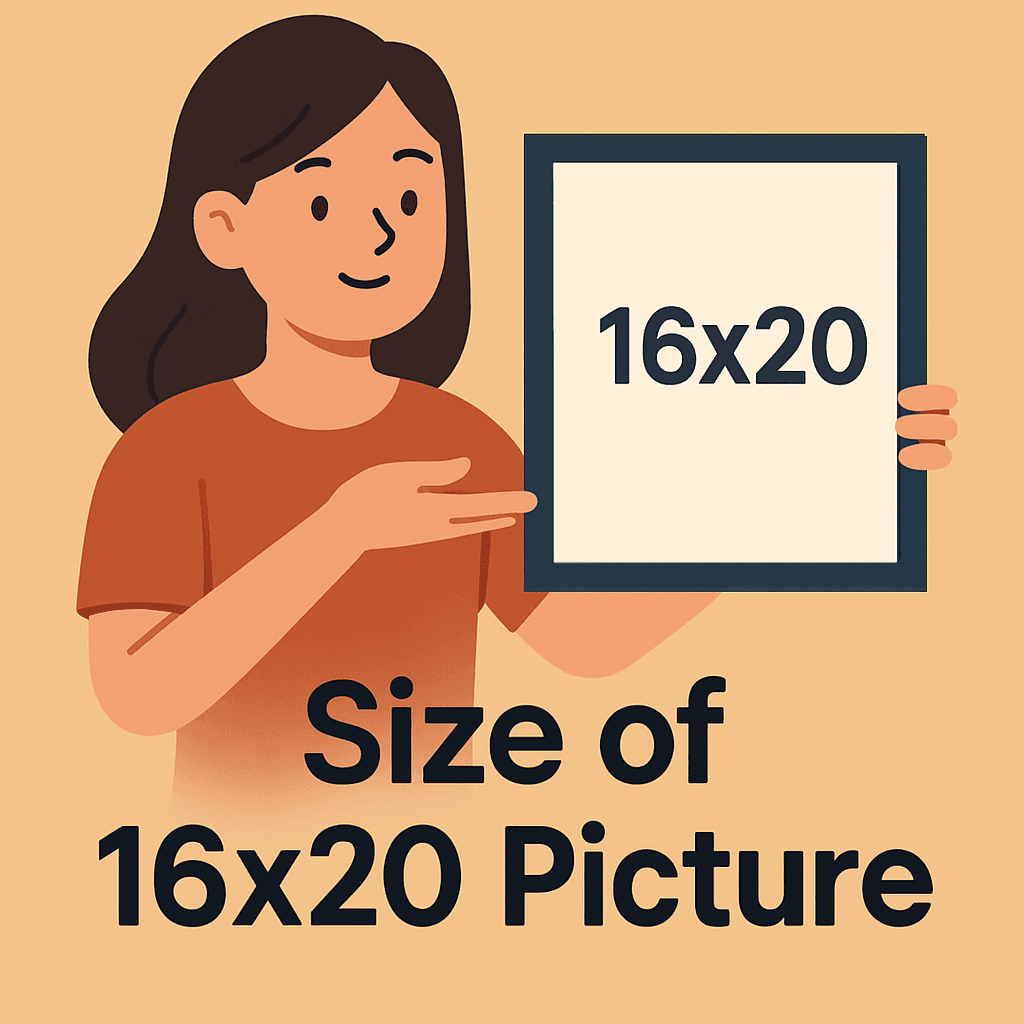
You’ve stood in front of a blank wall wondering if your framed photo will look right or pixelated. You want to know exactly how big is 16×20 picture so it fits the space and stays sharp. This primer clears sizing confusion so your prints match the room and camera intent.
I’ll show the practical payoffs: crisper prints, smarter framing choices, and confident hanging without guesswork. You’ll also learn one surprising mistake many people make with mats and frames. You’ll avoid common resolution and mounting blunders, get fewer distortions, and enjoy a faster workflow.
This guide helps hobbyists, portrait photographers, and anyone prepping prints for walls or small exhibits. Whether you’re framing a portrait, a small poster, or a certificate, you’ll make better placement choices and avoid surprises. If you’re ready to size, frame, and hang with less waste, keep reading because the fix is simpler than you think.
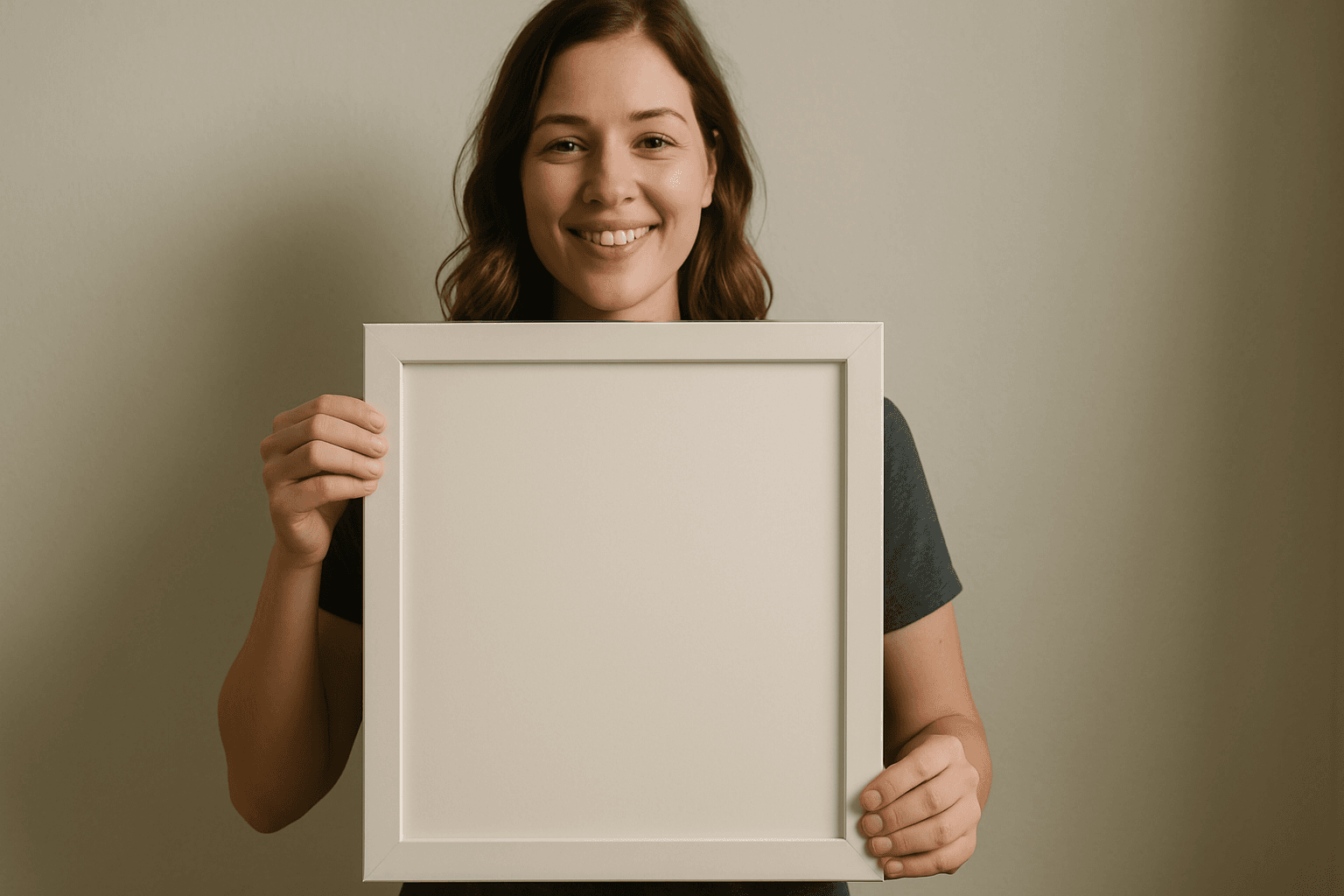
Exact Dimensions & Aspect Ratio of a 16×20 Print
When someone asks how big is 16×20 picture, I start with the literal size: 16 inches wide by 20 inches high. In metric, that’s 40.64 cm by 50.8 cm.
The aspect ratio is 4:5, meaning the long side is one quarter longer than the short side. Aspect ratio is just the relationship between width and height, not the exact measurements.
This 4:5 shape is friendly for portraits and fine art because it leaves comfortable breathing room around a subject. It also crops cleanly from many camera sensors with minimal loss.
Metric Conversion and Diagonal Measurement
If you think in centimeters, a 16×20 measures 40.64 x 50.8 cm. That’s a nice mid-size print that reads clearly from a few steps back.
The diagonal is about 25.6 inches, calculated like a TV screen using the Pythagorean theorem. I use that diagonal to estimate ideal viewing distance.
When you’re weighing how big is 16×20 picture for a space, that 25.6-inch diagonal gives you a quick sense of overall presence on the wall.
Printable Resolution Requirements for High-Quality 16×20 Prints
For razor-sharp output, I aim for 300 PPI, or pixels per inch. PPI describes pixel density in the print, similar to dots per inch in printers.
At 300 PPI, a 16×20 needs roughly 4800 x 6000 pixels, which is about 28.8 megapixels. Many modern cameras and phones can deliver that with careful shooting.
If your file is smaller, don’t panic. Good results are possible at 240 PPI, and gentle upscaling can help, especially for viewing from a step or two back.
Comparison to Common Photo and Poster Sizes
A 16×20 is a big step up from 4×6, 5×7, and 8×10. Compared to 8×10, it doubles both width and height, creating four times the display area.
It’s still smaller than poster staples like 24×36 or 30×40, which dominate large walls. Think of 16×20 as a refined “statement” size rather than a billboard.
If you’re transitioning from desk frames to the wall, 16×20 is that first true gallery-feel size. It catches attention without overpowering a room.
Visual Scale Comparison (practical spatial understanding)
Side by side with a 4×6, the 16×20 looks massive—about 2.7 times wider and 3.3 times taller. It covers roughly thirteen times the area.
Next to an 8×10, the 16×20 is exactly double in both directions. On a wall, that leap feels dramatic but still manageable in apartments or offices.
Against a 24×36, the 16×20 is smaller, covering about 37% of the area. This is helpful when planning gallery walls with a large anchor piece.
Framing Basics: How Matting Affects Final Framed Size
Matting adds a border around the print, visually separating it from the frame. It also increases the total framed size, which affects wall layout.
With a generous mat and a medium frame, a 16×20 often ends up around 18×24 or even 20×28 inches. That extra space makes the artwork breathe.
When planning your wall, account for the mat and frame depth too. If you’re unsure, consult a reliable frame size guide before buying hardware.
Frame Sizes With a Mat
Typical mat openings are cut slightly smaller than 16×20, often around 15.5×19.5 inches, to overlap the print edges. This prevents gaps and keeps the print flat.
Frames like 18×24 are popular companions, providing comfortable borders and a balanced look. Larger choices, such as 20×28, create a more formal, gallery-style presence.
Frame Sizes Without a Mat
Going mat-free keeps the overall footprint close to the print’s 16×20 size. It’s clean, modern, and ideal for tight spaces or gallery walls.
Always confirm the frame’s inner dimensions, called the rabbet. Exact-fit frames should accommodate the full print without trimming or curling edges.
Mounting, Thickness and Ready-to-Hang Considerations
Mounted 16×20 prints are often attached to rigid boards, creating a sturdy, flat presentation. Expect around one inch of total thickness for ready-to-hang pieces.
That thickness suits wire-and-D-ring hardware, which distributes weight evenly. It also helps the piece sit proudly off the wall without warping.
If you plan a float mount, ensure the backing is stiff and the adhesive is archival. It preserves the print and prevents ripples over time.
Viewing Distance and Placement Recommendations
A comfortable viewing distance is about 24 to 30 inches or more for a 16×20. This range feels natural in living rooms and hallways.
For a gallery look, I use 1.5 times the diagonal, which is roughly 38 inches. It’s a great rule of thumb for critical viewing and fine details.
If you’ve wondered how big is 16×20 picture on a narrow wall, stand back three feet. You’ll sense whether it dominates or needs a companion piece.
Practical Uses and Orientation Considerations
I reach for 16×20 for portraits, small posters, certificates, and art prints. It’s substantial enough to honor important work without crowding a room.
Portrait orientation flatters single subjects and tall scenes. Landscape orientation suits sweeping vistas, group portraits, and wider compositions.
When mixing frames, I alternate orientations for rhythm. The 4:5 ratio plays nicely with square and panoramic pieces in gallery walls.
Tips for Framing, Mounting and Hanging 16×20 Prints
Use matting to protect the print surface and enhance contrast. Choose acid-free mats and backers to prevent yellowing over the years.
Always verify the frame’s inner opening before buying. If you need a refresher on dimensions, check more size details while planning.
For hanging, use wall anchors or studs when possible. A 16×20 with glass and mat can be heavier than it appears at first glance.
Large Frame Category & Durability Tips
In framing terms, 16×20 kicks off the large-frame category. From there, sizes scale up to 36×48 and beyond for statement installations.
As you go larger, step up to sturdier backings, thicker mats, and reliable hardware. It keeps everything square, flat, and safe over time.
For planning a series, browse large frame sizes to visualize growth paths. It helps answer how big is 16×20 picture in a broader collection context.
What People Ask Most
How big is a 16×20 picture in centimeters?
A 16×20 picture measures 40.64 cm wide by 50.8 cm high.
What is the aspect ratio of a 16×20 photo?
The aspect ratio is 4:5, meaning the width-to-height proportion is 4:5.
What size frame do I need for a 16×20 print with a mat?
I recommend using a frame slightly larger to accommodate the mat; common finished frame sizes for a matted 16×20 are around 18×24 or 20×28 inches.
Can a 16×20 picture fit on a standard wall space?
Yes — 16×20 is larger than typical small photo prints but smaller than common posters, so it will fit most standard wall spaces; I still suggest measuring your wall and considering orientation before buying.
How far should I stand to view a 16×20 photograph?
I suggest standing about 24–30 inches or more from the print, and a helpful guideline is roughly 1.5× the print’s diagonal (the diagonal is about 25.6 inches) if you prefer a more relaxed viewing distance.
What resolution is needed to print a quality 16×20 photo?
Aim for 300 PPI (pixels per inch) for a sharp print — for 16×20 that’s about 4800×6000 pixels, or roughly 28.8 megapixels; PPI simply means how many pixels are printed per inch.
Is 16×20 considered a large photo print size?
Yes, 16×20 is generally considered the start of the large-print category, so I recommend sturdier backing and stronger hanging hardware for durability.
Wrapping Up: A Clear Sense of Scale and Confidence
If you’ve been asking how big is 16×20 picture, this piece turns that vague question into a clear sense of scale and options you can trust. We’ve taken the guesswork out of sizing, framing, and placement so you’ll know what to expect when you order or hang a print. That clarity is the real payoff—no more wondering whether a piece will overwhelm a wall or vanish on it.
Do keep one realistic caveat in mind: choices like matting, mounting, and file quality will change the final look and may force adjustments before framing. The guidance here is most useful for photographers, designers, and homeowners who want a reliable, gallery-ready result without surprises. If you’re prepping prints or planning a display, this will let you plan smarter and avoid common misfits.
We began with that simple size question and closed by turning it into practical confidence about scale, presentation, and viewing. Put the ideas to use on your next print and see how a properly sized 16×20 elevates the room.



0 Comments