
How to photograph bioluminescence? This guide shows simple, practical steps to find the glow, pick the right gear, set your camera, and edit natural results.
You will learn where and when to find plankton, comb jellies, and bioluminescent mushrooms. It explains why moon phase, tides, weather, and seasonal blooms matter and how to pre-scout safely.
We cover essential gear: cameras, fast wide lenses, tripods, dim red lights, and waterproof protection. You’ll get starting settings for wide seascapes, sparkles, kayak shots, and macro fungi, plus focus tips and noise-control methods.
Finally, learn practical shooting techniques, gentle ways to trigger glow, and post-processing tips like stacking and noise reduction. The article finishes with safety and ethical rules and a short checklist you can use in the field tonight.
Where and when to find bioluminescence (timing & scouting)
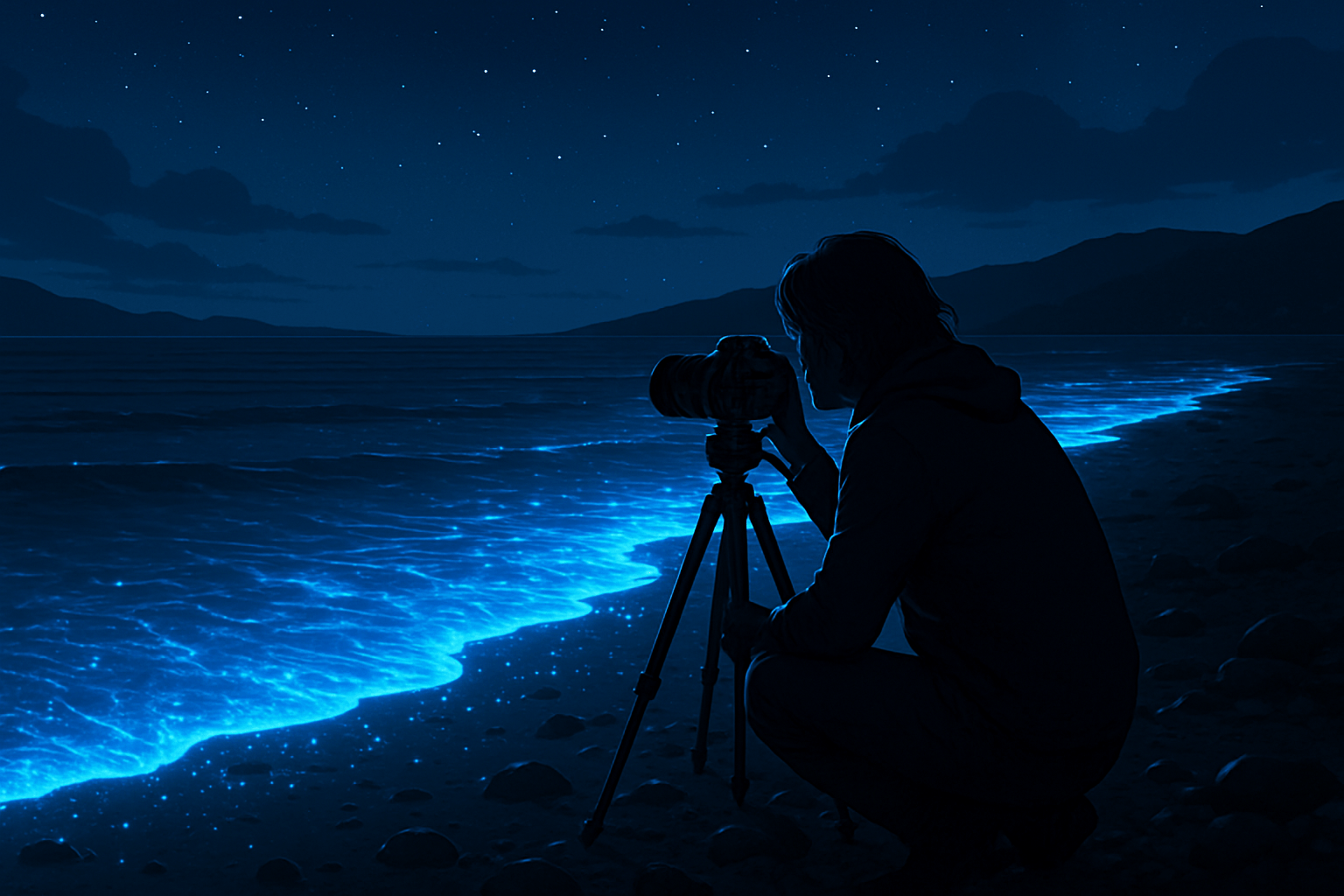
Bioluminescence appears as electric blue surf, glowing footprints, or ghostly mushrooms in the dark. Learning how to photograph bioluminescence starts with finding the right subject and understanding how it behaves. The scene you choose will shape your settings, safety plan, and style.
Photographers most often meet three types in the field. Marine plankton such as dinoflagellates light up when water is disturbed, so waves, wakes, and splashes trigger the glow. Comb jellies emit their own light and drift near the surface, while bioluminescent mushrooms glow steadily in damp forests, demanding long, careful exposures.
Timing is everything. Pick the darkest nights around a new moon, and aim for late evening to pre-dawn when your eyes are fully dark-adapted and crowds thin out. Local bloom cycles matter, as warm, calm periods and weak winds often produce stronger displays, and tides can push plankton into accessible shallows.
Scout at dusk while you can see hazards and routes. Note safe entries, stable rocks, and dry patches above the surf line, and check tide charts to avoid getting cut off. Before heading out, follow local reports, social media groups, and tour operators, and you can also skim a detailed walkthrough to set expectations.
On arrival, watch for glowing wakes from birds or boats, sparkles when waves break, or a faint sheen where water laps sand. Test gently by dragging a stick, tapping the surface with a hand, or taking a slow step, then pause to let the water settle. Disturb as little as you need, and never scoop organisms from the water.
Keep a simple safety checklist. Check tides, currents, and swell forecasts, wear grippy footwear, and bring a buddy with a charged phone. Respect local rules and protected areas, and never trespass for a shot, no matter how bright the glow looks.
Essential gear and camera choices
Full-frame cameras shine here thanks to cleaner high-ISO performance and wider angles. APS-C bodies can still produce excellent results if you expose carefully and shoot RAW for maximum flexibility. Whatever you bring, disable in-camera noise-heavy JPEG styles and keep your files in RAW.
Fast wide-angle lenses are the workhorses for seascapes, with 14–35mm lenses at f/1.4–f/2.8 making the most of faint light. For closer shoreline scenes, 24–35mm primes or zooms help isolate brighter patches of glow without losing context. For mushrooms and other small subjects, a 60–105mm macro lets you fill the frame while controlling depth of field.
A sturdy tripod is essential, and a low-profile model makes setup on rocks or sand easier. Add a remote or cable release, and hang a bag from the weight hook to reduce wind shake. Pack a rain cover or plastic sleeve to shield your camera from spray and mist between shots.
Carry a dim headlamp with a red filter to preserve night vision, plus a small torch with a dimmer to aid focusing. Dry bags protect gear on wet ground or boats, and silica packs help fight humidity. Bring spare batteries, extra memory cards, a towel and lens cloth, a simple cleaning kit for salt spray, and any mounts you need for a kayak or pier railing.
How to photograph bioluminescence: camera setup and suggested settings
Set your camera to manual mode, shoot RAW, and switch to manual focus before you begin. Turn off autofocus and image stabilization when the camera sits on a tripod, and disable flash which will wash out the scene and stress wildlife. These basics are the core of how to photograph bioluminescence reliably.
For static wide seascapes with sky and glow, start around 14–24mm at f/2.8–f/4, 10–30 seconds, and ISO 800–3200. Keep an eye on star trails and shorten the shutter if the stars start to smear, nudging ISO up as needed. For more field context and framing ideas, scan these concise ocean tips before you head out.
To capture sparkles from splashes or footprints, try 1/2 to 3 seconds at f/1.8–f/2.8 and ISO 1600–12800. Shorter exposures freeze individual bursts and shapes, while higher ISO lets you keep the shutter short without going too dark. Expect some noise, and plan to tame it later with stacking or software.
If you are shooting from a kayak or boat, balance sharpness and motion. Start around 0.5–2 seconds at f/2.8–f/4 and ISO 1600–6400, and bracket a few frames to cover movement. Secure the camera, leash everything, and keep a dry cloth handy to wipe spray between takes.
For bioluminescent mushrooms, go slow and patient. Use a 60–105mm macro at f/2.8–f/5.6, 15–120 seconds, and ISO 100–800, often in bulb mode. Consider a whisper of dim light painting on nearby wood to reveal form without drowning the glow.
For focus, shine a dim torch on a rock, shoreline, or mushroom cap, then use Live View at 10x to lock focus. Take a quick test exposure and zoom in to confirm it is tack sharp. Switch to manual focus and tape the ring to prevent sneaky shifts in the dark.
Set white balance cooler to start, around 3200–4000K, which keeps the blue-green tones honest. Because you are shooting RAW, you can fine-tune later without penalty. Avoid auto white balance, which may try to neutralize the color you came to capture.
Manage noise with intent. Stacking many short exposures can reduce noise while preserving detail, and it keeps the sky sharper than a single very long frame. Long-exposure noise reduction removes hot pixels in-camera, but it also doubles your wait time, so use it when you can spare the minutes and battery.
Shooting techniques: stability, focusing in low light, and creative approaches
Place your tripod on solid ground above the wash and bury the legs a little for grip. Hang weight from the hook, use a remote release, and enable electronic first-curtain or a silent shutter to limit vibration. Shield the rig with your body or a bag if wind or spray kicks up.
Focusing in the dark is a simple ritual. Briefly illuminate your subject with a dim torch, magnify Live View, and dial focus until edges snap. Switch to manual, tape the ring, and recheck after temperature shifts or a lens bump.
Decide whether you want smooth, continuous glow or crisp sparkles. Slower shutters around 2–6 seconds will blend wakes into liquid neon, while 0.5–1 second preserves individual stars within the water. Adjust ISO and aperture to hold midtones without clipping highlights in the brightest bursts.
Trigger glow ethically with light and restraint. Drag a paddle once, draw a short line with your hand, or kick a tiny wave and then wait. Avoid constant stomping, do not pour anything into the water, and keep distance from nesting birds, turtles, and sensitive shore life.
Compose with intent and scale. Drop your camera low to amplify the foreground glow, and include reflections, silhouettes, or a human figure to anchor the scene. Leading lines such as a shoreline curve or wake trail guide the eye, and you can blend a separate sky exposure if the foreground needs longer time.
Get creative without going overboard. Use very dim LEDs to paint a rock for context, or blend a burst stack to cut noise while keeping motion texture. Skip flash and steel wool, which ruin color and risk wildfire, and if you are paddling, pre-plan strokes to draw S-curves and spirals you can repeat.
Post-processing, noise management and safety & ethical considerations
Back up and cull RAWs first, then set white balance and exposure to match what you saw. Fix hot pixels and apply moderate noise reduction before gentle capture sharpening. Keep the glow believable by protecting midtone color and avoiding crushed shadows or blown highlights.
For noise, stack multiple aligned frames using mean or median blends to lift signal and smooth grain. Tools like Lightroom, Photoshop, Sequator, StarStax, and Topaz Denoise can help, while single long exposures with in-camera reduction suit very static scenes. If your files are from plankton surf, this concise sea sparkle tutorial clarifies capture choices that affect how you edit.
Enhance glow with a light touch. Use local brushes to raise exposure and clarity in the water while keeping blacks soft, and add only a hint of vibrance. Watch for halos along shorelines and avoid colors that look fluorescent or radioactive.
Document your success so you can repeat it. Note time, tide, moon phase, wind, location, and settings in your metadata or a phone note. These details help you predict when the glow returns and can support local science groups tracking blooms.
Follow strict do-no-harm practices. Do not collect organisms, minimize trampling in dunes and tide pools, and avoid blasting bright lights that disrupt wildlife and other visitors. For safety, wear a PFD for water shoots, tell someone your plan, watch slippery rocks and fast tides, and rinse and dry your gear to prevent salt and condensation damage.
If something goes wrong, triage fast. Soft focus means refocus with a torch and retest at 10x; high noise calls for lower ISO and more frames to stack; fogged glass needs a warm bag and anti-fog cloth. Hot pixels can be mapped or removed in post, and a blurred foreground often needs a faster shutter or a lull between waves.
Here is a quick checklist to pocket. RAW, manual mode, and manual focus on a tripod with a remote; carry a red headlamp, a dim torch, spare batteries, and a lens cloth; start at f/2.8–f/4, 10–30 seconds, ISO 800–3200 for landscapes, 1/2–3 seconds at ISO 1600+ for sparkles, and long, low-ISO exposures for macro. Do not use flash, be gentle with disturbances, and record moon and tide.
What People Ask Most
How to photograph bioluminescence?
Use a stable tripod, long exposure, and low-light settings while avoiding flash, and be patient for the glow to appear.
When is the best time to try photographing bioluminescence?
Go on dark, moonless nights when the water is calm and local reports say the phenomenon is active.
Can I photograph bioluminescence with a smartphone?
Yes, many phones with night or long-exposure modes can capture the glow if you keep the phone steady on a tripod or flat surface.
What common mistakes should I avoid when photographing bioluminescence?
Avoid using flash or bright lights, moving the camera during exposure, and crowding the area which can wash out the glow.
How can I make bioluminescence photos more interesting?
Include foreground elements like the shoreline, rocks, or silhouetted figures, and try low angles and reflections to add depth.
Is it okay to touch bioluminescent organisms to make them glow?
No, do not touch or disturb them—this can harm wildlife and reduce future glow, so observe responsibly.
Do I need permits or special permissions to photograph bioluminescence?
Often no, but check local rules for protected areas and follow any access or conservation guidelines to protect the habitat.
Final Thoughts on Photographing Bioluminescence
Chasing bioluminescence is about turning a fleeting, otherworldly glow into photos you’ll still love weeks later and stories you’ll feel proud to tell. This guide gives a clear plan—when to go, how to scout, and the camera settings that work (I even referenced a quick test labeled 270 to help you get started). With those building blocks, you won’t be guessing in the dark on a cold shoreline.
One realistic caution: tides, slippery rocks, and fragile organisms mean safety and “do no harm” come first, even if the perfect frame is tempting. If your opening question was whether you could capture that strange blue-green light, you now have timing, gear, shooting, and editing steps that make it repeatable and respectful.
Night photographers, kayak shooters, and curious nature shooters will benefit most, because the workflow suits both wide seascapes and close-up fungi. Go gentle, plan well, and expect to return with images that prove the night still holds surprises.



0 Comments