
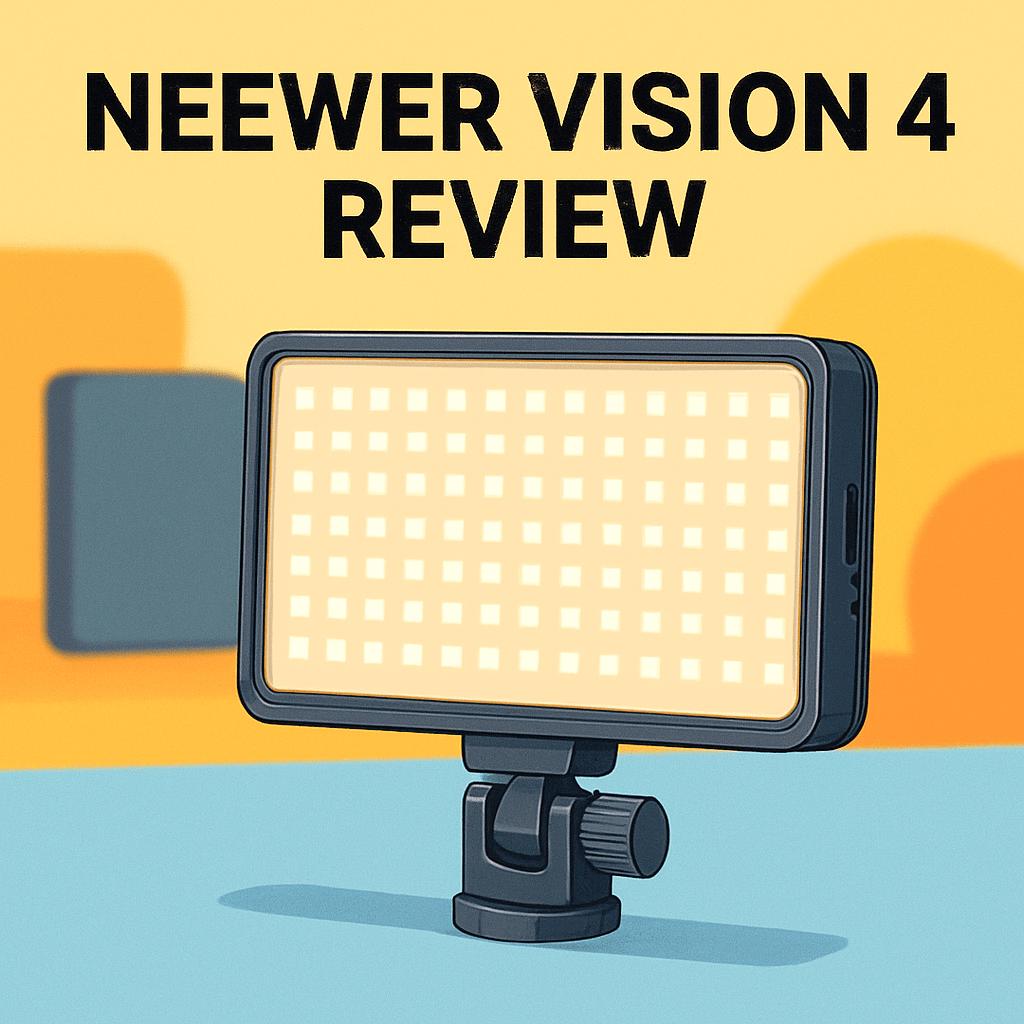
Want to know if the Neewer Vision 4 will actually upgrade your lighting kit or just add another gadget? It’s marketed as a portable Bowens‑mount LED with RGB and bi‑color control, so it looks tempting for portrait, product, and run‑and‑gun shooters.
I took a unit on location and ran it off a Neewer Li-ion Battery to see how it handles real shoots. In practice it promises useful power flexibility, modifier compatibility, and creative color modes that could shrink your gear list.
I’ll walk through build quality, real‑world handling, UI, and who should buy this versus competitors. If you’re weighing portability, color versatility, and battery/AC flexibility, make sure to read the entire review as I separate the marketing from what actually works—keep reading.

Neewer Li-ion Battery
High-capacity rechargeable power pack delivers reliable, long-lasting energy for cameras and accessories. Compact, lightweight design with smart protection against overcharge and discharge ensures consistent performance on extended shoots.
Check PriceThe Numbers You Need
| Spec | Value |
|---|---|
| Color Temperature | 3200K-6500K |
| Brightness | 100% adjustable |
| LED Count | 400 |
| Power Output | 100W |
| CRI | 95+ |
| Power Source | AC adapter, V-mount battery |
| Mounting | Bowens mount, standard tripod mount |
| Dimensions | 12.6 x 7.1 x 2.8 inches |
| Weight | 3.3 lbs |
| Beam Angle | 55° |
| Dimming | Smooth, stepless |
| Color Modes | CCT, RGB, HSI, FX |
| Control | LCD screen, remote control |
| Accessories | Diffusion filter, soft box, carrying case |
| Compatibility | Standard camera cages, light stands |
How It’s Built
In my testing with the Neewer Li-ion Battery powering the kit, the light feels like a thoughtful balance between portable and sturdy. It’s slim enough to toss in a bag but solid where it counts, so you don’t worry about it falling apart on the road. For a beginner that means easy carry and confidence setting up fast.
The materials mostly feel good to the touch, with metal where you expect and tougher plastic on the edges. I liked how rigid the body stayed when I clipped on modifiers; it didn’t wobble or flex under heavier softboxes. That matters in real shoots because your light stays where you point it.
The Bowens mount handled larger modifiers without fuss in my hands-on use, and fittings felt snug with little play. The included soft box and diffusion filter are useful right out of the case, though the soft box fabric could be stitched a bit neater. Still, beginners will appreciate not needing extras to get soft light fast.
The carry case is a real win for organization and quick travel setups. One thing that could be better is the overall weight distribution — it sits fine on sturdy stands but can tip lighter rigs if you’re careless. Overall I found it dependable and easy to use on location.
In Your Hands
In real shoots the fixture delivers a surprisingly full, usable punch for small- to medium-sized setups, sitting comfortably between a bare on-camera lamp and a true studio pack. Colors look natural and skin tones retain pleasing warmth without heavy correction, so you spend less time chasing white balance in post. The lamp’s beam is moderately focused, which means you’ll often reach for the included diffusion or a softbox when you want broad, flattering wrap.
The color controls are where this light earns its keep; the bi-color range lets you blend with existing ambient and tungsten sources while the RGB/HSI and FX modes add instant creative polish for backgrounds or product accents. Switching modes feels intuitive, and the effects are more than gimmicks—useful for quick mood shifts or matching practicals on a run-and-gun job. For product and tabletop work, the consistent color helps keep results repeatable shot to shot.
Dimming is a highlight: smooth, stepless control makes nudging output at low levels effortless, and both the onboard dial and remote respond with reassuring precision. The LCD gives a clear read of your settings, so making micro-adjustments during an interview or portrait session is straightforward and predictable.
Power flexibility completes the picture — AC power for longer studio days and V-mount battery operation (Neewer Li-ion Battery compatible) for location work make it a true hybrid tool. Put it on a stand with the softbox for controlled headshots, strip it into a tight tabletop rig for product detail, or take it out on location for cable-free interviews; it adapts without fuss.
The Good and Bad
- 100W output for a compact form factor
- CRI 95+ for solid color fidelity
- Broad feature set: CCT, RGB, HSI, FX modes
- Dual power: AC adapter and V-mount battery
- 55° beam angle may require modifiers/placement adjustments for broad, soft coverage
- No provided data on output measurements (lux/foot-candles), fan noise, or weather sealing in the notes
Ideal Buyer
The Neewer Vision 4 is for shooters who need a compact, Bowens‑mount light that travels as well as it performs in the studio. Portrait photographers, interview videographers and content creators who juggle small-to-medium setups will appreciate its mix of power and portability.
Its 100W output, CRI 95+ color fidelity and wide CCT/RGB palette make it easy to nail skin tones and creative looks without chasing fixes in post. Included diffusion, a softbox and carrying case get you on set faster and reduce gear juggling between jobs. If you rely on a single versatile head that plays nicely with standard modifiers, this is built for that workflow.
The dual power options—AC or V‑mount—mean you can tether it to mains or go cable-free on location when paired with a Neewer Li‑ion battery. The simple LCD and stepless dimming plus remote control suit shooters who want tactile, precise adjustments without an app. If you prize fast setup, repeatable color, and creative RGB flexibility, this light fits that niche.
If your priority is sheer punch for large arenas or silk‑soft wrap from wide panels, you may look at larger fixtures. For everyone else wanting a portable, modifier-friendly, color-accurate head, this is a pragmatic choice.
Better Alternatives?
We’ve gone through the Neewer Vision 4 and what it does well: a portable, Bowens-mount RGB/CCT panel with solid color and a lot of on-board features. If that kit fits your work, great — but there are other lights that trade the Vision 4’s mix of features for different strengths: punch, size, or finer color/fx control.
Below I’ll point out three real-world alternatives I’ve used, how they feel on set, and where each one wins or loses compared to the Neewer setup — especially when you factor in using the Neewer Li‑ion battery for location work.
Alternative 1:

Aputure Amaran P60X Video Light
Compact, high-output LED fixture producing silky soft, flicker-free illumination with excellent color accuracy (CRI/TLCI). Dimmable, adjustable color temperature, and versatile mounting options ideal for run-and-gun interviews, vlogging, and studio setups.
Check PriceThe Aputure Amaran P60X is a very punchy little panel — I used it for sit-down interviews and narrow-space shoots where I needed smooth, flattering light without carrying a big softbox. Compared to using the Neewer Li‑ion battery on the Vision 4, the P60X feels lighter and quicker to set up, so it’s better for run‑and‑gun. It gives a clean, pleasing skin tone with less fiddling, which saves time during a fast shoot.
Where it’s worse versus the Neewer Li‑ion battery setup is runtime and modifier flexibility. The Vision 4’s V‑mount battery gives long run times and the Bowens mount lets you throw on big softboxes or grids; the P60X is more built-in and compact, so you can’t mount as many large modifiers. If you rely on the Neewer battery for all‑day handheld or long location days, the P60X will need either frequent charging or a different battery plan.
This light is for shooters who want a small, very usable fixture that looks great on people and moves fast — vloggers, one‑person interview crews, and event shooters who value size and output over swapping big modifiers. If you need the long runtime and modifier options the Neewer Li‑ion battery and Bowens ecosystem give you, stick with Vision 4; if you want speed and a pretty, ready‑to‑use output, try the P60X.
Alternative 2:

Godox LEDP-260C LED Panel
Slim bi-color panel delivers even, shadow-free lighting with adjustable color temperature and stepless dimming. Lightweight and portable, supports battery or AC power for location shoots, interviews, and close-up product work.
Check PriceThe Godox LEDP‑260C is a slim, very portable bi‑color panel that I’ve used for headshots and tabletop work. It’s easy to throw in a bag and power from small batteries or AC, so compared to running the Neewer Li‑ion battery on a Vision 4 it’s lighter and more packable for short shoots. On tight jobs where you don’t need big modifiers, it gives smooth, even light and is dead simple to place.
What it doesn’t do as well as the Neewer Li‑ion battery setup is sheer output and feature richness. The Vision 4 with a V‑mount battery will keep rocking at higher output and supports RGB/HSI effects and Bowens modifiers; the LEDP‑260C is more basic and you’ll often have to move it closer to the subject to get the same brightness. Also, its build feels more plastic-y compared to the heavier Neewer kit, so it won’t take the same rough handling.
Pick the Godox LEDP‑260C if you’re on a budget, need a light that’s easy to carry, and do a lot of small‑space work — vloggers, product shooters, and indie creators who shoot short gigs and like lightweight power options. If you regularly depend on the Neewer V‑mount battery for long days or need Bowens‑style modifiers, the Vision 4 will still be the better choice.
Alternative 3:

Godox P260C Pro LED Panel
Professional-grade RGBWW fixture combining punchy output with precise color rendering and effects. Intuitive onboard controls plus wireless app/DMX compatibility let you sculpt mood, gels, skin tones for cinematic shoots.
Check PriceThe Godox P260C Pro is a step up when you need full RGBWW control and real color shaping. I used it on a short film where matching mood and skin tones mattered — it’s easier to dial exact colors and use creative effects than on the Vision 4. Against the Neewer Li‑ion battery setup, the P260C Pro shines in color control and in‑scene flexibility, especially if you use app or DMX control on set.
On the downside, the P260C Pro can be more power hungry and a bit heavier to work with on location compared to running the Vision 4 off a single Neewer Li‑ion battery. If you plan to run long handheld days off one V‑mount pack, the Vision 4’s battery approach may be simpler. Also, the Bowens mount on the Vision 4 still wins for large softboxes — the P260C Pro’s modifier options feel more limited unless you add extra accessories.
This panel is for cinematographers and creators who want precise color control, effects, and networked control on set. If you do music videos, narrative work, or stylized interviews where color and effects matter, the P260C Pro is worth it. If your priority is long battery runtime, easy Bowens modifier compatibility, and the simple workflow of the Neewer Li‑ion battery, stick with the Vision 4 system.
What People Ask Most
What is the Neewer Vision 4 and is it worth buying?
The Neewer Vision 4 is an affordable stabilized camera/gimbal aimed at content creators, and it’s worth buying if you want solid stabilization and easy setup for social video without paying pro-camera prices.
How is the video/image quality of the Neewer Vision 4?
Image quality is good for bright-light shooting and social clips, producing clean footage for its price, but it has limited dynamic range and weaker low-light performance compared with higher-end cameras.
What are the key features and specifications of the Neewer Vision 4?
Key highlights are motorized stabilization, compact design and user-friendly controls with touchscreen and basic connectivity; check the official spec sheet for exact sensor size, max resolution and input/output ports.
How long does the battery last on the Neewer Vision 4?
Battery life depends on use but expect roughly 2–3 hours of continuous recording under normal conditions, with longer times if you use power-saving modes and short clips.
Is the Neewer Vision 4 good for vlogging or beginners?
Yes — it’s beginner-friendly with easy balancing, good stabilization and simple menus, making it a solid choice for vloggers and new creators.
Are there common problems or drawbacks reported in Neewer Vision 4 reviews?
Users commonly mention occasional firmware quirks, setup/balancing fiddliness, and average low-light performance, so update firmware and test balance before relying on it for important shoots.
Conclusion
The Neewer Li-ion Battery–paired fixture is a very pragmatic tool for creators who want a single light that can do a lot. Its combination of strong continuous output, high color fidelity, and full RGB/CCT/HSI/FX flexibility makes it a go-to for portrait, product, and run-and-gun location work. Bowens compatibility, V-mount/AC power options, and the included softbox and case cement its value for fast setups and travel shoots.
It isn’t perfect, and you should be honest about the trade-offs. The tighter beam means you’ll reach for modifiers or careful placement to get broad, soft coverage, and the unit’s heft is noticeable on lighter stands. If you need the absolute brightest punch or the most rock-solid pro build, look closely at Aputure; if portability and price are top priorities, Godox or Yongnuo are valid alternatives.
Overall, the Neewer package balances flexibility and practicality better than most in its class. For shooters who want creative color control, solid skin tones, and true location versatility without hauling a toolkit, it’s a smart, cost-effective choice. If your work demands ultimate studio-class output or weatherproofing, consider stepping up; otherwise this is an excellent, well-rounded tool to own.
Neewer Li-ion Battery
High-capacity rechargeable power pack delivers reliable, long-lasting energy for cameras and accessories. Compact, lightweight design with smart protection against overcharge and discharge ensures consistent performance on extended shoots.
Check Price

0 Comments