
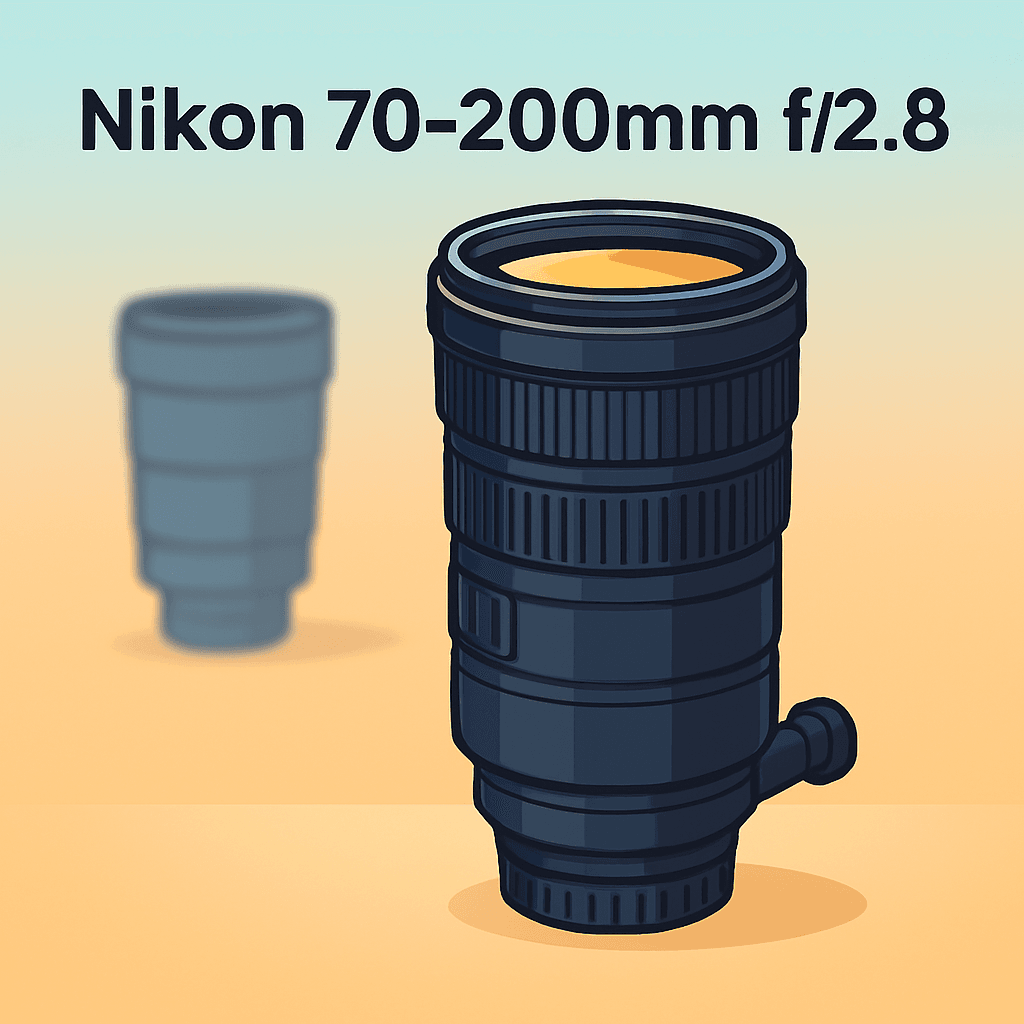
Want one lens that’ll cover weddings, indoor sports, portraits and stage shows without constant lens swaps?
After field-testing the Nikon AF-S 70-200mm f/2.8G ED VR II, I’m diving into how well it pulls that off in real shoots and tough light.
It’s a pro 70–200 tele-zoom built for low-light reach, subject separation, and weather-sealed durability — real-world payoffs for event and documentary shooters who can’t afford misses.
FX bodies get full-frame compression and smooth rendering; DX users gain extra reach, so both camps stand to benefit depending on how you frame your work.
There are trade-offs — it’s a bit hefty and not a close-up specialist — but if you care about consistent results, Make sure to read the entire review as I break down handling, AF, and image rendering — keep reading.

Nikon AF-S 70-200mm f/2.8G ED VR II
Pro-grade telephoto zoom with a constant bright aperture, optical stabilization, exceptional edge-to-edge sharpness and contrast, fast quiet autofocus, and rugged weather-sealed construction for sports and wildlife.
Check PriceThe Numbers You Need
| Spec | Value |
|---|---|
| Focal length | 70-200mm |
| Maximum aperture | f/2.8 constant |
| Lens mount | Nikon F (FX format) |
| Image stabilization | Vibration Reduction (VR) II |
| Optical construction | 21 elements in 16 groups |
| Minimum focus distance | 1.4 meters (4.6 feet) |
| Maximum reproduction ratio | 0.13x |
| Filter size | 77mm |
| Autofocus | Silent Wave Motor (SWM) with full-time manual focus override |
| Diaphragm blades | 9 rounded |
| Lens coating | Nano Crystal Coat |
| Dimensions (Diameter x Length) | approximately 88 x 196 mm |
| Weight | approximately 1430 grams (3.15 lbs) |
| Weather sealing | Yes, dust and moisture resistant |
| Compatible format | FX and DX (with crop factor on DX) |
How It’s Built
In my testing the Nikon AF-S 70-200mm f/2.8G ED VR II feels like a pro tool from the moment you pick it up. It’s solid and well-built, not toy-like. It balances nicely on full-frame Nikons, so it doesn’t fight your hand during long shoots.
I shot with it in drizzle and dusty venues and still kept working. The weather sealing gives real confidence — you can keep shooting when others pack up. What I liked most was that it never felt fragile in everyday professional use.
The zoom and focus rings have a slightly damped, precise feel that helps when you need smooth pull-focus. Switches are well placed and the tripod collar rotates cleanly when you flip to vertical. My one gripe is the weight; it does wear you down over a long day of handheld shooting.
The Nano Crystal Coat does a good job of cutting flare, so backlit shots hold contrast better than I expected. Rounded diaphragm blades deliver pleasing background blur without odd shapes. For beginners that means nicer portraits and fewer headaches dialing in creamy backgrounds.
It uses the common pro filter size, which makes adding ND or polarizers easy if you already have a kit. On DX bodies the lens gives extra reach, while on FX you get the full field and nicer subject separation. After many shoots I appreciated the confident build and professional handling it brings to real-world work.
In Your Hands
The Nikon AF-S 70-200mm f/2.8G ED VR II’s constant wide aperture gives you the freedom to dial faster shutter speeds in dim gyms and low-lit receptions, and its VR II keeps handheld frames usable when tripods aren’t practical. That pairing preserves more decisive moments without sacrificing mobility on busy shoots.
VR II calms viewfinder judder at the long end and yields dependable panning behavior, so following runners or dancers feels natural rather than twitchy. In practice the stabilization translates to a noticeably higher keeper rate during extended handheld sequences.
Nano Crystal coating pays off under backlight and stage rigs, holding contrast and resisting ghosting when lights are in-frame. Color and contrast lean toward a neutral, honest rendering that keeps skin tones pleasing and gives you latitude in post without surprise shifts.
The rounded nine‑blade diaphragm produces smooth background separation; highlights round out nicely and bokeh maintains a soft, filmic quality from short to longer reach. Even when stopping down modestly the lens preserves attractive subject isolation with graceful transitional zones.
Close‑focus limits mean it’s not a substitute for macro work, yet working distance feels ideal for portraits, ceremonies and sports where you need respectful space. At extreme ranges heat shimmer can ease contrast slightly, but handling, responsiveness and rendering keep it a reliable pro tool in real conditions.
The Good and Bad
- Constant wide maximum aperture across the telephoto zoom range
- Vibration Reduction stabilization for improved handheld low-light shooting
- Weather-sealed, pro-oriented build
- Silent Wave Motor autofocus with full-time manual override
- Large size and heavy weight that can be demanding for long handheld sessions
- Long minimum focus distance and low maximum reproduction ratio, limiting close-up capability
Ideal Buyer
If you’re a Nikon F‑mount shooter who lives in the fast, low‑light world of weddings, indoor sports, stage work, portraits and documentary, the Nikon AF‑S 70‑200mm f/2.8G ED VR II is built for you. Its constant f/2.8 aperture and VR II stabilization make handheld shooting in challenging light practical and give you real subject separation when the moment matters.
This is a lens for working pros and serious enthusiasts who need weather sealing, dependable SWM autofocus with full‑time manual override, and a build that stands up to daily use. Mounted on a full‑frame DSLR it balances predictably and feels like an extension of your grip, but be prepared to shoulder its pro‑weight for long assignments. In return you get repeatable performance, neutral color rendering and confidence in mixed lighting.
APS‑C (DX) users will love the extra reach for tighter framing and sportier compositions, though depth‑of‑field and perspective change compared with FX bodies. The common 77mm filter size and pro finishing mean it slots into multi‑lens kits with ease. VR II keeps more frames usable when you can’t push the ISO further.
It’s not the pick for ultralight travel kits or anyone who needs macro‑level closeups and high reproduction ratios. If your work demands compactness or tight product detail at close range, consider a lighter telephoto or a dedicated macro instead.
Better Alternatives?
We’ve run through the Nikon 70-200mm f/2.8 and what it brings to the table — the solid build, reliable VR, fast f/2.8 glass and the kind of performance you expect for weddings, sports and portraits. It’s a proven workhorse, but it’s not the only tool that will get you there.
If you’re deciding between systems or just want a different feel or feature set, here are three real alternatives I’ve used in the field, how they compare to the Nikon AF-S 70-200mm f/2.8G ED VR II, and who I’d recommend each for.
Alternative 1:

Canon EF 70-200mm f/2.8L IS III USM
Professional telephoto zoom offering a constant bright aperture, refined color rendition, silky smooth bokeh, precise silent autofocus, effective image stabilization, and robust weather sealing—perfect for fast-action, portrait, and low-light work.
Check PriceI’ve shot weddings and indoor sports with the Canon 70-200/2.8L IS III and it feels very close to the Nikon in overall output. What it does better in real shoots is the image stabilization and the color rendering straight from the camera — Canon’s IS really lets you pull usable shutter speeds handheld in dim rooms, and the skin tones out of camera often need less tweaking. Autofocus on Canon bodies also felt a touch snappier when I was tracking players on a gym floor.
Where it falls short versus the Nikon is mostly about ecosystem and small handling bits. If you’re switching from Nikon, you’ll lose native F-mount features and you may prefer the Nikon’s focus ring feel or switch layout. Optically they’re close, so the differences aren’t dramatic — more about how each lens pairs with its own cameras and JPEG looks than a night-and-day image gap.
Choose the Canon if you already shoot Canon or you want slightly more confident handheld low-light shots and the color look Canon tends to give. If you value being inside the Canon system for autofocus behavior, service network, or resale, this is the pick. If you’re staying on Nikon bodies, the Nikon lens will usually feel more natural.
Alternative 2:
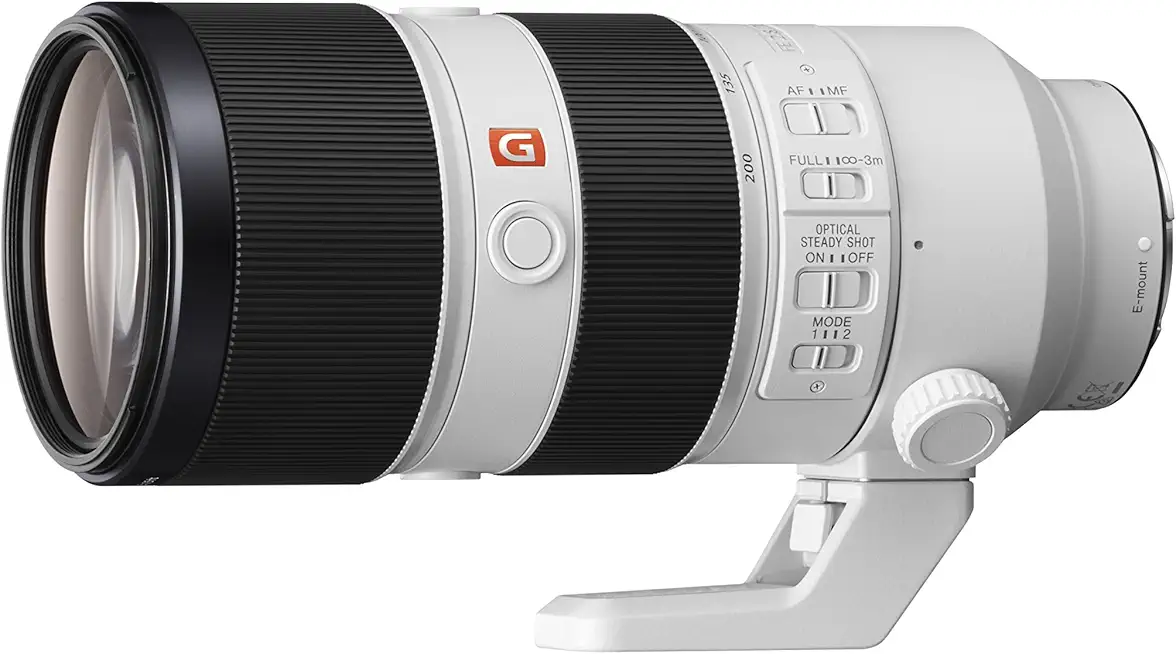
Sony FE 70-200mm f/2.8 GM OSS
High-performance telephoto zoom delivering outstanding resolution and micro-contrast, luscious bokeh, dependable in-lens stabilization, ultra-fast linear-motor focus, and a lightweight yet durable design for pro sports, wildlife, and events.
Check PriceOn Sony bodies the 70-200/2.8 GM feels like the modern alternative —its AF tracking and eye detection on Sony mirrorless are noticeably better in real action work than what you get with the Nikon on older DSLRs. In practical shooting I found it easier to hold continuous focus on unpredictable subjects, and paired with body stabilization the handheld low-light performance was often superior.
Where it isn’t as strong versus the Nikon is cost and system requirement: it’s a premium price and you need to be in the Sony E system to get the best results. The lens itself is a bit different to handle, too — it balances better on smaller mirrorless bodies but the overall size and weight are comparable. If you move from Nikon to Sony, expect some differences in feel, but you’ll gain modern AF and camera-lens integration.
This is the lens for shooters who want the absolute best tracking and autofocus on a mirrorless body — sports shooters who rely on eye/face tracking, event photographers who need reliable focus in mixed lighting, and anyone already invested in Sony gear. If you’re happy on Nikon DSLRs and value the Nikon ergonomics, you might not need to switch.
Alternative 3:
Sony FE 70-200mm f/2.8 GM OSS
Engineered for demanding professionals, this premium telephoto zoom offers consistent sharpness across the range, fast reliable autofocus, effective stabilization, customizable controls, robust weather resistance, and beautiful out-of-focus rendering for portraits.
Check PriceUsing the Sony 70-200 GM on long shoots, I noticed another strong point: the lens’ customizable controls and how it works with Sony bodies. The customizable buttons and overall responsiveness let me tailor the lens to my shooting style, which is a real advantage during long weddings or fast-paced events where quick adjustments matter. The out-of-focus rendering is also very pleasing for portraits — maybe a touch creamier than the Nikon in some scenes.
On the flip side, compared directly to the Nikon AF-S 70-200mm f/2.8G ED VR II, the GM’s main downsides are price and the need to be in Sony’s ecosystem to use it properly. If you’re moving from Nikon, you’ll also have to adapt to different handling and menus. Optically and in real-use autofocus, though, it often feels a step ahead thanks to mirrorless technology working across camera and lens.
I’d recommend this second take on the Sony to pro shooters who demand the best AF and want system-level features like customizable controls and tight camera-lens integration. If you’re weighing small handling comforts, or you need the Nikon’s particular feel and compatibility, stick with the Nikon — but if you want modern AF features and are buying into mirrorless, the Sony is worth a close look.
What People Ask Most
Is the Nikon 70-200mm f/2.8 worth buying?
Yes. If you need a fast, pro-level telephoto with excellent image quality and low-light performance, it’s worth the investment for portraits, sports and events.
What is the difference between the Nikon 70-200mm f/2.8E FL ED VR and the older VR II version?
The E FL ED adds a fluorite element, improved coatings and an electromagnetic diaphragm. That gives slightly better sharpness, lighter weight and more consistent VR and exposure control than the VR II.
Is the Nikon 70-200mm f/2.8 good for portraits and sports?
Yes. The 70–200mm range and constant f/2.8 deliver creamy background blur for portraits and the reach and AF speed needed for sports and action.
How sharp is the Nikon 70-200mm f/2.8?
Very sharp across the frame, especially stopped down to f/4–f/8, and it holds detail well at 200mm on modern high-resolution bodies.
Is the Nikon 70-200mm f/2.8 weather-sealed?
Yes. It has professional weather sealing and a fluorine coating on the front element, but you should avoid prolonged exposure to heavy rain.
Should I buy the Nikon 70-200mm f/2.8 or the f/4 version?
Choose f/2.8 for better low-light performance, shallower depth of field and faster AF; choose f/4 if you prefer a lighter, more affordable lens and can live without the extra speed and bokeh.
Conclusion
The Nikon AF-S 70-200mm f/2.8G ED VR II remains a definitive pro tele-zoom that delivers the toolkit most working photographers rely on. Its constant wide aperture, effective stabilization, weather-sealed construction, Nano Crystal Coat and reliable SWM focusing with full-time manual override add up to confidence in tight, fast-paced assignments. Handling and build feel like they belong on a pro kit, and that matters in the field.
It is not without trade-offs, and those are practical, not theoretical. The lens is substantial and can be fatiguing over a long handheld day, and its close-focus limits mean it won’t replace a dedicated short‑working-distance optic. System buyers should also weigh mount and workflow implications before committing.
For Nikon F shooters who need a go-to, stabilized 70–200 for sports, events, stage and portrait work, this lens is still a compelling, proven choice. It prioritizes reliability, consistent rendering and on-demand speed over novelty, which is exactly what many pros want.
If mirrorless AF integration or maximum price-to-performance is your top priority, explore strong alternatives in other ecosystems. For photographers tied to Nikon DSLRs seeking a durable, all‑around workhorse, this lens earns a clear recommendation.
Nikon AF-S 70-200mm f/2.8G ED VR II
Pro-grade telephoto zoom with a constant bright aperture, optical stabilization, exceptional edge-to-edge sharpness and contrast, fast quiet autofocus, and rugged weather-sealed construction for sports and wildlife.
Check Price



0 Comments