
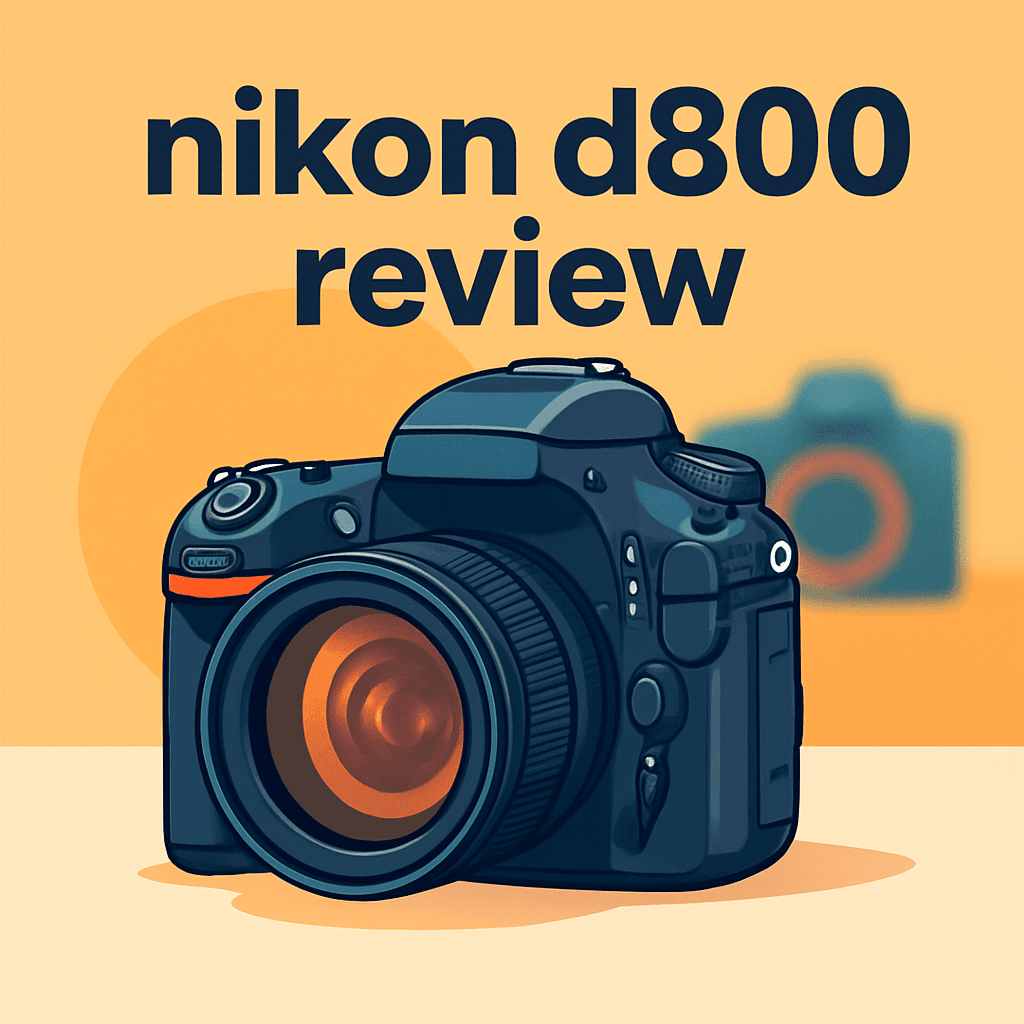
Want to know if the Nikon D800 Camera will actually lift your image quality and fit your shooting style?
This is a hands-on, real-world review from a working photographer’s perspective — I spent days shooting it across varied assignments in the field.
I’ll evaluate how its high-resolution full-frame body handles detail, autofocus and metering reliability, ergonomics, battery stamina and basic video in landscapes, studio portraits, events and low light.
I’ll also point out who benefits most, the practical tradeoffs, and how it stacks up against more modern rivals — Make sure to read the entire review as I break it down for real-world shooters.

Nikon D800 Camera
High-resolution professional DSLR with 36MP full-frame sensor delivering exceptional detail, broad dynamic range and reliable autofocus; rugged weather-sealed body and comprehensive controls tailored for studio, landscape and commercial photography.
Check PriceThe Numbers You Need
| Spec | Value |
|---|---|
| Sensor | 36.3 MP full-frame CMOS |
| ISO range | 100–6400 (expandable to 50–25600) |
| Autofocus points | 51-point AF system with 15 cross-type sensors |
| Continuous shooting speed | 4 fps (up to 6 fps in DX crop mode) |
| Shutter speed range | 1/8000 to 30 sec |
| Viewfinder | Optical pentaprism with 100% coverage |
| LCD screen | 3.2-inch fixed, 921k-dot resolution |
| Video recording | 1080p Full HD at 30 fps |
| Metering system | 91,000-pixel RGB metering sensor |
| Body construction | Magnesium alloy, weather-sealed |
| Storage media | Dual card slots (CF and SD) |
| Weight (body only) | Approx. 900 g |
| Dimensions | 146 x 123 x 81 mm |
| Flash | Built-in pop-up flash and hot shoe for external flash |
| Battery life | Approx. 900 shots per charge (CIPA) |
How It’s Built
In my testing the Nikon D800 feels like a camera you can actually take into the field and trust. The metal, weather-sealed shell gave me confidence shooting through dust and light rain, and it still looks and feels solid after heavy use. I really liked that sense of durability — it makes you shoot with less worry.
I found the D800 sits nicely on a big F‑mount lens and balances in the hand better than you’d expect from something this serious. That said, it’s not featherweight; after a long day on a strap you’ll notice it, so plan a good bag or a quick break between shoots. Beginners should just know it’s built for work, not pocket carry.
The optical viewfinder is bright and shows you exactly what you’re going to get, which makes framing and focus feel immediate. The rear screen is sharp and color-accurate enough to judge exposure, but it’s fixed — I would have preferred a tilting panel for low- and high-angle shots. That fixed screen is the main thing I’d change.
Controls are straightforward in real use, with logical buttons, dials, and useful custom settings that speed up a shoot. White balance options are easy to dial in when light changes, dual card slots let you use a backup or overflow workflow, and the pop-up flash plus hot shoe cover basic fill and trigger setups. Battery life kept me shooting all day in most cases, though I still bring a spare for long events.
In Your Hands
In the field the D800’s high-resolution sensor translates into prints and crops that hold astonishing microdetail, especially for landscapes and studio product work. That pixel density rewards top-tier glass—every lens flaw becomes visible—so lens choice often matters as much as composition and lighting.
Autofocus is dependable in single-shot use, locking crisply for portraits and staged shoots, while continuous tracking performs well for moderate action but won’t match specialist sport bodies for fast, unpredictable subjects. Low-light acquisition is reassuring for evening events, letting you capture usable frames when ambient light is tight.
The metering system rarely surprises and handles tricky backlight and mixed-contrast scenes with a bias toward preserving skin tones, which saves time in the edit bay. With a conservative exposure approach you avoid clipped highlights, and the camera’s exposure behavior is consistent across varied shooting situations.
Sustained shooting feels measured rather than frantic—well suited to weddings, editorial assignments, and thoughtful reportage where precision matters more than brute frame rate—while the shutter and mirror give a tactile confidence that helps when working quickly. Menus and controls respond predictably, keeping workflow interruptions to a minimum.
Auto white balance is solid in daylight and easily corrected for tungsten or LED with a quick manual tweak, producing dependable color in-camera. The optical viewfinder, overall handling, and the character of the RAW files make the D800 a trustworthy tool that grades well in Lightroom or Capture One.
The Good and Bad
- 36.3 MP full-frame sensor for high detail and large prints
- 100% coverage optical viewfinder for precise composition
- 51-point AF with 15 cross-type sensors for flexible focus placement
- Dual card slots (CF + SD) for backup and overflow workflows
- 4 fps continuous shooting (6 fps in DX) can feel limited for action
- 1080p/30 fps video only; no higher frame rates or 4K
Ideal Buyer
If you make your living or reputation on detail — landscapes, architecture, studio product work or giant prints — the Nikon D800 still answers the brief. Its 36.3‑megapixel sensor resolves fine texture and tonal nuance that pay off when you crop or print large.
Field shooters who need a camera that won’t quit in mixed weather will appreciate the D800’s magnesium alloy, weather‑sealed body and reassuring optical viewfinder. Dual card slots and long battery life keep shoots running without surprise stops. The heft and button layout feel familiar and confidence‑inspiring for pros who prefer traditional DSLR ergonomics.
Event and portrait photographers who value reliable AF and steady metering but don’t chase nonstop high‑speed bursts will find the D800 a pragmatic choice. Four frames per second is modest, yet the AF grid and metering deliver consistent keeper rates in real weddings and corporate gigs. You trade a bit of action headroom for far superior resolution and color fidelity.
Hybrid creators who prioritize stills over video and can live with 1080/30p capture will benefit from the D800’s image quality and workflow strengths. If video is central, choose a more modern body; otherwise this camera remains a workhorse for high‑end photography.
Better Alternatives?
We’ve gone through the Nikon D800 in detail and looked at what it does well and where it shows its age. If you liked the idea of a 36MP workhorse but want something a bit newer, faster, or cleaner straight out of camera, there are clear choices that build on the D800’s strengths.
Below are three cameras I’ve used in the field that make different tradeoffs from the D800 — each will suit a different kind of shooter. I’ll point out what they do better, what they give up, and who will be happiest with each one.
Alternative 1:

Nikon D810 Camera
Refined high-resolution DSLR offering improved sharpness from an optical low-pass filter removal, superb low-light performance, enhanced dynamic range and precise metering—perfect for architectural, portrait and fine-art shooters demanding pristine image quality.
Check PriceI’ve shot with the D810 alongside the D800 and the difference in usable image quality is obvious in real pictures. The D810 feels cleaner at base ISO and the files take a little more punch in the highlights and shadows when I’m grading. That extra clarity and lower noise mean I can push shadows more on landscape shoots without introducing ugly grain.
Compared to the D800 the D810 gives slightly faster handling and a firmer shutter that reduces visible vibration on long exposures. You’ll also notice fewer artifacts on detailed textures — the standard model has less of the low-pass blur you’d get from older cameras. What it doesn’t change much is the general shooting pace; it’s still a DSLR you hold and work with, not a speed demon for sports.
This is the camera I’d recommend to studio, portrait and landscape shooters who want better noise performance and cleaner files without changing their workflow. If you care about the sharpest stills and slightly better low‑light latitude than the D800, the D810 is a smooth, familiar step up. If you need very fast burst rates or 4K video, look elsewhere.
Alternative 2:

Nikon D850 Camera
Ultra-high-resolution full-frame body with 45MP sensor, outstanding dynamic range and 4K video; fast continuous shooting, robust autofocus and long battery life make it ideal for commercial, landscape and wildlife work.
Check PriceThe D850 feels like a modern version of the D800 I enjoyed using — only faster and more flexible. In real shoots the autofocus locks on quicker and keeps tracking moving subjects much better than the D800. The higher resolution and cleaner high‑ISO files mean I can crop more or make bigger prints without losing image quality, and the buffer lets me shoot long bursts when covering events or wildlife.
Where the D850 beats the D800 is obvious: speed, tracking, battery life, and modern usability like a tilting screen and 4K video. The D850’s files are bigger and take more space and time to edit, and you’ll want top-tier glass to get the most from the sensor. For low-budget shooters who love smaller files and simpler workflow, that extra resolution can feel like extra work.
Pick the D850 if you’re a pro or an advanced shooter who wants one camera that can do everything — landscapes, studio, weddings, and action. I’ve used it on location where I needed both huge detail and fast response, and it saved me from changing bodies. If you mainly shoot slow studio work and want lower file sizes, the D800 or D810 still make sense.
Alternative 3:
Nikon D850 Camera
Versatile pro-level tool blending medium-format detail with speed: rugged, weather-sealed construction, tilting touchscreen, dual memory slots and advanced connectivity enable reliable high-volume workflow for pros on location or in studio.
Check PriceUsed in a studio and out on long location days, the D850 often felt like the one-camera solution for mixed jobs — it gives the sort of detail you’d expect from larger-format systems but with DSLR speed and handling. In practice I could hold focus on fast-moving subjects, shoot long frame sequences, and still deliver very large, clean files for retouching.
Against the D800 the D850 is better at heavy workloads: longer battery life, faster write speeds, and a deeper buffer so you don’t stop between bursts. The tradeoff is size of files and the need to manage a more demanding workflow — archiving, tethering, and editing take more time. It’s also pricier up front, so there’s real cost to pay for the convenience and performance.
This version of the D850 is for commercial and pro shooters who run a high-volume workflow and need both big files and speed on location or in the studio. If you want “medium-format-like” detail without switching systems, and you’re comfortable with larger files and faster cards, the D850 is a powerful step up from the D800. If you shoot mostly single-subject, quiet studio work and prefer simpler files, the older D800 still serves well.
What People Ask Most
Is the Nikon D800 still worth buying?
Yes, if you prioritize excellent image resolution and dynamic range on a budget; newer bodies have better autofocus and noise performance, but the D800 remains strong for studio, landscape, and portrait work.
How good is the image quality and resolution?
Outstanding — the 36MP sensor delivers extremely sharp files with superb detail and wide dynamic range ideal for large prints and heavy cropping.
How does the D800 perform in low light/at high ISO?
Decent but not class-leading by modern standards; usable up to ISO 1600–3200 with careful processing, but expect more noise than recent full-frame cameras at high ISOs.
Is the autofocus system fast and reliable for action or sports?
Not really — the 51-point AF was good for its time but struggles with fast, unpredictable subjects compared to newer AF systems focused on tracking and eye detection.
Is the D800 a good choice for video?
It can shoot 1080p video with usable quality, but lacks modern video features like 4K, advanced codecs, and clean HDMI output, so it’s better for occasional use than dedicated video work.
How is the battery life and handling for long shoots?
Battery life is solid for a DSLR and the camera feels rugged and well-balanced, though it’s heavier than many current bodies and may tire you on long handheld sessions.
Conclusion
The Nikon D800 remains a photographer’s tool built around high-resolution imaging, metal-clad reliability, and exposure and autofocus behavior you can count on in real shoots. Its strengths are practical and immediate: files that hold up to heavy editing and large prints, a reassuringly robust build, reliable metering and AF, and dual‑card safety that removes a common worry on pro jobs. The compromises are equally clear: a restrained continuous shooting cadence, video features that feel dated for modern hybrid work, a fixed rear screen, and a weight that rewards careful support over impulsive handheld marathons.
Choose the D800 if still-image quality and traditional DSLR ergonomics are your priorities and you shoot at a measured pace rather than chasing every frame. If you want refinements in low‑light behavior and video, the refined successor is worth a look, while those needing a major leap in speed and autofocus should consider the newer flagship. If absolute pixel count within a different system is your top criterion, the high‑resolution Canon alternative remains compelling.
In short, the D800 still excels for landscapes, studio and architecture work, detailed portraits, and event shooting where pace is deliberate. It rewards careful technique and top‑quality glass more than frantic action chasing. For photographers who value image fidelity, durability, and predictable results, it’s a characterful camera that still delivers strong real‑world value today.
Nikon D800 Camera
High-resolution professional DSLR with 36MP full-frame sensor delivering exceptional detail, broad dynamic range and reliable autofocus; rugged weather-sealed body and comprehensive controls tailored for studio, landscape and commercial photography.
Check Price

0 Comments