
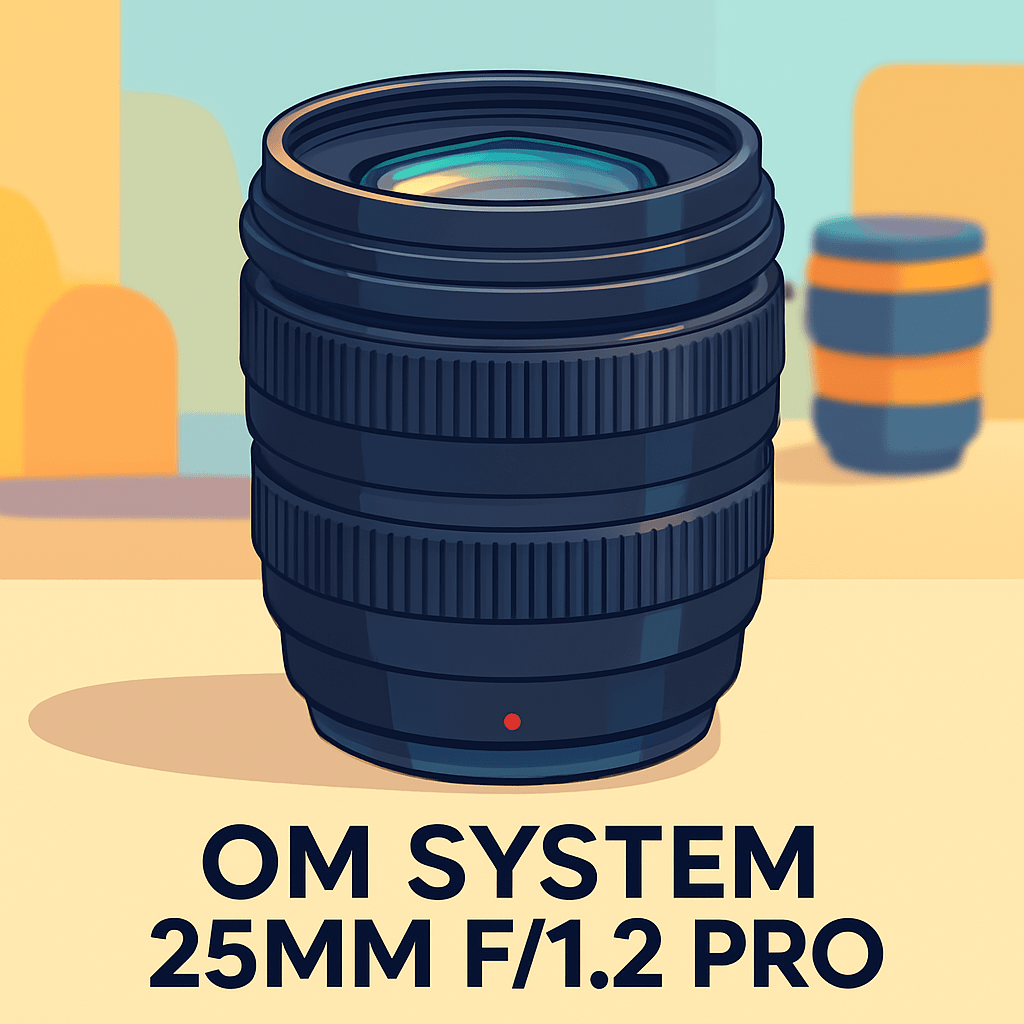
Want to give your portraits and low-light shots a noticeable upgrade?
The Olympus M.Zuiko Digital ED 25mm F1.2 PRO (OM System 25mm f/1.2 Pro) is a fast normal prime for Micro Four Thirds, aimed at pro photographers and hybrid shooters.
Expect pro-oriented build and weather sealing, plus a very bright f/1.2 aperture that’s useful for stills and video in challenging light.
It’s made for low-light work, creamy subject separation in portraits, environmental shooting and event coverage, and I field-tested it across varied shoots against a couple of popular rivals.
This review will cover handling, autofocus behavior, wide-open rendering, practical sharpness, close-focus utility and trade-offs—make sure to read the entire review as I break it down, keep reading.
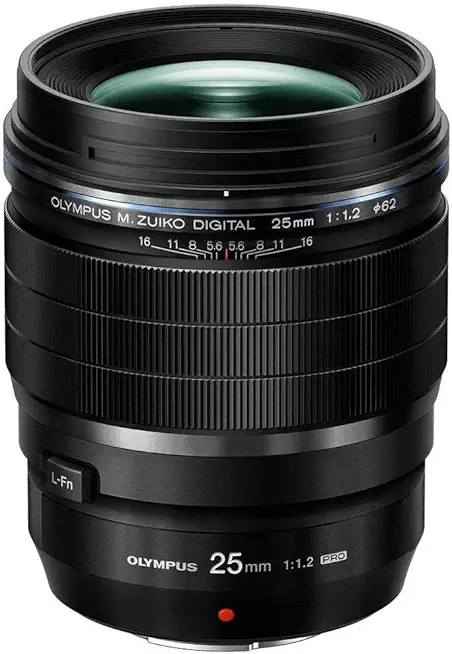
Olympus M.Zuiko Digital ED 25mm F1.2 PRO Micro Four Thirds
Professional-grade 25mm prime delivering stunning edge-to-edge sharpness, creamy bokeh and lightning-fast autofocus. Robust, weather-sealed construction and smooth rendering make it perfect for portraits, events and low-light storytelling.
Check PriceThe Numbers You Need
| Spec | Value |
|---|---|
| Focal length | 25mm |
| Maximum aperture | f/1.2 |
| Lens mount | Micro Four Thirds |
| Lens type | Prime (fixed focal length) |
| Optical construction | 17 elements in 12 groups |
| Angle of view | Approx. 47° |
| Minimum focusing distance | 0.25 m |
| Maximum magnification | 0.15× |
| Autofocus | Yes; high-speed MSC (Movie & Still Compatible) motor |
| Image stabilization | No (lens has no IS; stabilization depends on camera body) |
| Filter size | 77mm |
| Aperture blades | 9 (rounded diaphragm for smooth bokeh) |
| Dimensions (approx.) | 73mm diameter × 94mm length |
| Weight (approx.) | 410g |
| Weather sealing | Yes; dust- and splash-resistant |
How It’s Built
In my testing with the Olympus M.Zuiko Digital ED 25mm F1.2 PRO Micro Four Thirds, the lens feels like something built to be taken seriously. The metal barrel and tight seals give you confidence shooting outdoors, so you can keep working through drizzle, light dust, or a sweaty event without worrying. For everyday use that means less hesitation when the weather turns or when a shoot migrates from street to rain-splattered venue.
It isn’t tiny — you notice the heft when you pick it up and it plays differently on a petite body versus a larger Micro Four Thirds camera. I liked how the rounded diaphragm and solid build translate into creamy backgrounds and a satisfying in-hand feel. What could be better is the size and filter diameter; carrying larger filters and a slightly heavier lens adds weight and expense to a kit for beginners.
The focus ring impressed me: smooth, nicely damped, and precise for both quick manual tweaks and slow focus pulls in video. Filter threads and hood index cleanly and felt robust during real shoots, and I didn’t see any problems from brief rain or dust exposure. Bottom line — it’s a pro-level build you can trust, just be ready for a little extra bulk.
In Your Hands
The Olympus M.Zuiko Digital ED 25mm F1.2 PRO’s bright f/1.2 aperture makes an immediate difference in low-light situations, letting you hold lower ISOs and snare moments that slower normals would miss. That wide aperture also gives tangible subject separation—the background melts away into soft, rounded highlights that flatter portraits and elevate environmental headshots.
Color and contrast feel purposefully tuned for punchy yet natural results; skin tones render without harshness and images pop straight out of camera. I encountered only minor fringing on high-contrast edges at the very widest openings, and the lens generally resists flare well, though very strong backlight can introduce gentle ghosting.
Close-focus capability is genuinely useful for tabletop, food, and detail work, with the shallow depth of field allowing tight subject isolation even at modest working distances. That look rewards careful focusing, because the plane of sharpness can be paper-thin when you’re shooting wide open.
Because the lens forgoes in-lens stabilization, handheld low-light shooting leans on the camera’s sensor stabilization; with IBIS engaged keeper rates increased noticeably, while bodies without stabilization benefit from cranking ISO or bracing. In practice I found the combo of wide aperture and camera stabilization kept most everyday situations very workable.
For portraits this lens excels—creamy backgrounds and pleasant micro-contrast give a professional skin rendition. Street and travel photographers will notice the size but benefit from quick, confident AF for spontaneous moments, while event and video shooters will appreciate smooth focus behavior and usable aperture transitions for a cinematic feel.
The Good and Bad
- Very bright f/1.2 maximum aperture for low light and subject separation
- Weather-sealed, pro-oriented construction
- MSC autofocus motor designed for fast, video-compatible operation
- 9 rounded aperture blades aimed at smooth bokeh
- Larger and heavier than many MFT primes
- No optical stabilization in lens
Ideal Buyer
If you’re a Micro Four Thirds shooter chasing maximum low‑light performance and creamy background separation, the Olympus M.Zuiko Digital ED 25mm F1.2 PRO Micro Four Thirds is made for you. Its f/1.2 speed and pro‑grade handling shine on portraits, events, documentary work and hybrid photo/video shoots, giving a natural “normal” field of view that still feels versatile. Expect reliable AF and weather sealing when conditions get messy, plus enough heft to feel like a pro tool.
This lens suits professionals and serious enthusiasts who put image quality, control and video‑friendly AF ahead of a featherweight kit. Use it when subject isolation, fast apertures and tactile, weather‑sealed build matter more than pocketability, and when you want a predictable rendering for client work. It’s a tool for photographers who need confidence in dim venues and demanding assignments, even if that means carrying a larger 77mm filter thread and a bit more weight.
It’s not the pick for minimalists or travelers who prize the smallest, lightest setup or for shooters who don’t need f/1.2 speed. If you want ultimate convenience, built‑in lens IS, or zoom flexibility you’ll be happier with lighter 25mm options or a versatile zoom. But for those trading compactness for top‑tier low‑light performance, buttery bokeh and rock‑solid pro handling, this is a clear choice.
Better Alternatives?
We’ve looked closely at the OM System 25mm f/1.2 Pro (Olympus M.Zuiko Digital ED 25mm F1.2 PRO Micro Four Thirds) — its big aperture, pro build and hybrid stills/video use. That lens is a powerful tool, but it isn’t the only way to get great 25mm results on Micro Four Thirds.
Below are a few lenses I’ve used in the field that offer different trade-offs: smaller size and Leica-style look, or extreme shallow depth with manual focus. I’ll point out what each one does better and where the Olympus 25mm f/1.2 Pro still has the edge, and who would prefer each option.
Alternative 1:

Panasonic Leica DG SUMMILUX 25mm F1.4 Micro Four Thirds
Compact, Leica-tuned optic offering delicate contrast, exceptional micro-contrast and velvety bokeh at wide apertures. Lightweight handling and precise optics deliver gorgeous color and detail for street, portrait and travel photography.
Check PriceThe Panasonic Leica DG Summilux 25mm f/1.4 is noticeably smaller and lighter in my bag than the Olympus 25mm f/1.2 Pro. On walks and travel days it’s easier to carry all day, and the Leica tuning gives skin tones and mid-tones a very pleasing, film-like look right out of camera. I found it gives beautifully smooth bokeh and contrast that feels a touch more “Leica” than clinical.
What it does worse than the Olympus M.Zuiko Digital ED 25mm F1.2 PRO Micro Four Thirds is low-light reach and absolute subject isolation — f/1.4 isn’t quite as punchy as f/1.2, and the Olympus’ weather sealing and tougher pro build matter if you shoot in rain or rough conditions. Autofocus on the Panasonic is fast and accurate for most work, but in very tight light or when I needed the shallowest focus, the Olympus felt a bit more confident.
If you want a walkaround 25mm that looks great on street and travel shots and fits in a smaller kit, the Panasonic Leica is the one to reach for. It’s for photographers who value smaller size and a classic Leica-ish color and contrast over the last bit of low-light speed and pro-level sealing.
Alternative 2:

Voigtlander 25mm F0.95 Nokton Aspherical Type II Micro Four Thirds
Ultra-fast manual prime with f/0.95 aperture that produces dreamlike, shallow-depth rendering and creamy, characterful bokeh. Solid metal build and smooth focus throw reward careful framing and low-light creativity.
Check PriceThe Voigtländer 25mm f/0.95 does something the Olympus M.Zuiko Digital ED 25mm F1.2 PRO can’t: it pushes background separation to an extreme. Used for headshots or moody low-light portraits, the look is very cinematic and painterly. Its heavy metal build and smooth manual focus throw feel great for careful, deliberate shooting and focus pulls.
But it loses in real-world convenience. Since the Voigtländer is fully manual, I missed the Olympus’ fast autofocus at events and run-and-gun shoots. Wide-open the Voigtländer can be softer and show heavier vignetting or color shifts than the Olympus; you often stop it down a bit for sharper results. There’s also no weather sealing, so I won’t trust it in rough outdoor conditions like I would the Olympus pro lens.
This is the lens for photographers who want a distinct look and don’t mind working manually — portrait artists, filmmakers doing deliberate focus work, or anyone chasing that ultra-shallow separation and character. If you need quick AF, shooting fast-moving scenes, or work in bad weather, the Olympus 25mm f/1.2 Pro is the more practical choice.
Alternative 3:
Voigtlander 25mm F0.95 Nokton Aspherical Type II Micro Four Thirds
Classic manual-focus lens offering insanely fast f/0.95 performance for striking subject separation and painterly out-of-focus highlights. Compact form, precise aperture clicks, and distinctive vintage-inspired tonality make it a favorite.
Check PriceThinking about the Voigtländer in another light, its personality is what sells it. I’ve used it when I wanted images with a vintage, characterful tone — the way highlights roll and edges render is very different from the clean, modern look of the Olympus M.Zuiko Digital ED 25mm F1.2 PRO. The aperture ring clicks and tactile control feel satisfying, which matters if you like a hands-on shooting style.
On the flip side, the Olympus wins where practicality matters: fast AF, consistent wide-open sharpness for portraits, and the confidence of weather sealing. The Voigtländer rewards patience and intention; it won’t give the same keeper rate in fast, changing scenes. If you’re shooting video, the manual focus can be great for controlled pulls but is a drawback for unpredictable shooting.
Choose this Voigtländer again if you’re drawn to a vintage look, manual craft, and extreme shallow depth — it’s a creative tool more than a general-purpose lens. If you want one lens that handles events, portraits, and rainy days with equal confidence, the Olympus 25mm f/1.2 Pro remains the better all-around pick.
What People Ask Most
How sharp is the OM System 25mm f/1.2 Pro?
It’s very sharp in the center at f/1.2 and becomes uniformly excellent across the frame by about f/2–f/2.8, with only minor edge softness wide open.
Is the OM System 25mm f/1.2 Pro good for portraits?
Yes—on Micro Four Thirds it’s about a 50mm equivalent, making it great for head-and-shoulders and environmental portraits with strong subject separation from the f/1.2 aperture.
Does the OM System 25mm f/1.2 Pro have autofocus and fast AF performance?
Yes, it features fast, accurate autofocus with reliable subject/eye detection and performs well in low light for both stills and video.
Is the OM System 25mm f/1.2 Pro weather-sealed?
Yes, it’s built to pro standards with dust and splash resistance and frost protection for use in demanding conditions.
What cameras and mounts is the OM System 25mm f/1.2 Pro compatible with?
It’s a native Micro Four Thirds lens for OM System/Olympus and Panasonic MFT cameras and won’t natively cover full-frame bodies without adapters (and won’t provide full-frame coverage).
Is the OM System 25mm f/1.2 Pro worth the price compared to alternatives?
It commands a premium but is worth it if you need top optical quality, rugged build and true f/1.2 speed on MFT; cheaper alternatives exist but usually compromise on aperture, sharpness, or AF.
Conclusion
The Olympus M.Zuiko Digital ED 25mm F1.2 PRO Micro Four Thirds is a fast, professional normal prime that marries bright aperture, weather‑resistant build and video‑friendly AF into a single go‑to optic. It’s designed to behave like a pro tool for stills and hybrid shooters who demand reliability in the field.
Where it shines is obvious: low‑light reach, subject separation and a bokeh character that elevates portraits and environmental work, paired with autofocus that stays composed under pressure. In real shoots it raised keeper rates and delivered the look you pay a premium for.
The compromises are equally clear — it’s larger and heavier than many Micro Four Thirds primes and you’ll rely on in‑body stabilization and technique for the steadiest results. If size or manual character matter more, consider the Panasonic Leica 25mm f/1.4 ASPH for a smaller footprint, the Voigtländer 25mm f/0.95 for extreme character, or the Olympus 25mm f/1.8 for portability and value.
Overall, I recommend the 25mm f/1.2 PRO to photographers who prioritize low‑light performance, pro build and confident AF over ultimate compactness. After extensive field testing its combination of rendering, handling and reliability earns a clear thumbs up for demanding portrait, event and hybrid video work.
Olympus M.Zuiko Digital ED 25mm F1.2 PRO Micro Four Thirds
Professional-grade 25mm prime delivering stunning edge-to-edge sharpness, creamy bokeh and lightning-fast autofocus. Robust, weather-sealed construction and smooth rendering make it perfect for portraits, events and low-light storytelling.
Check Price



0 Comments