
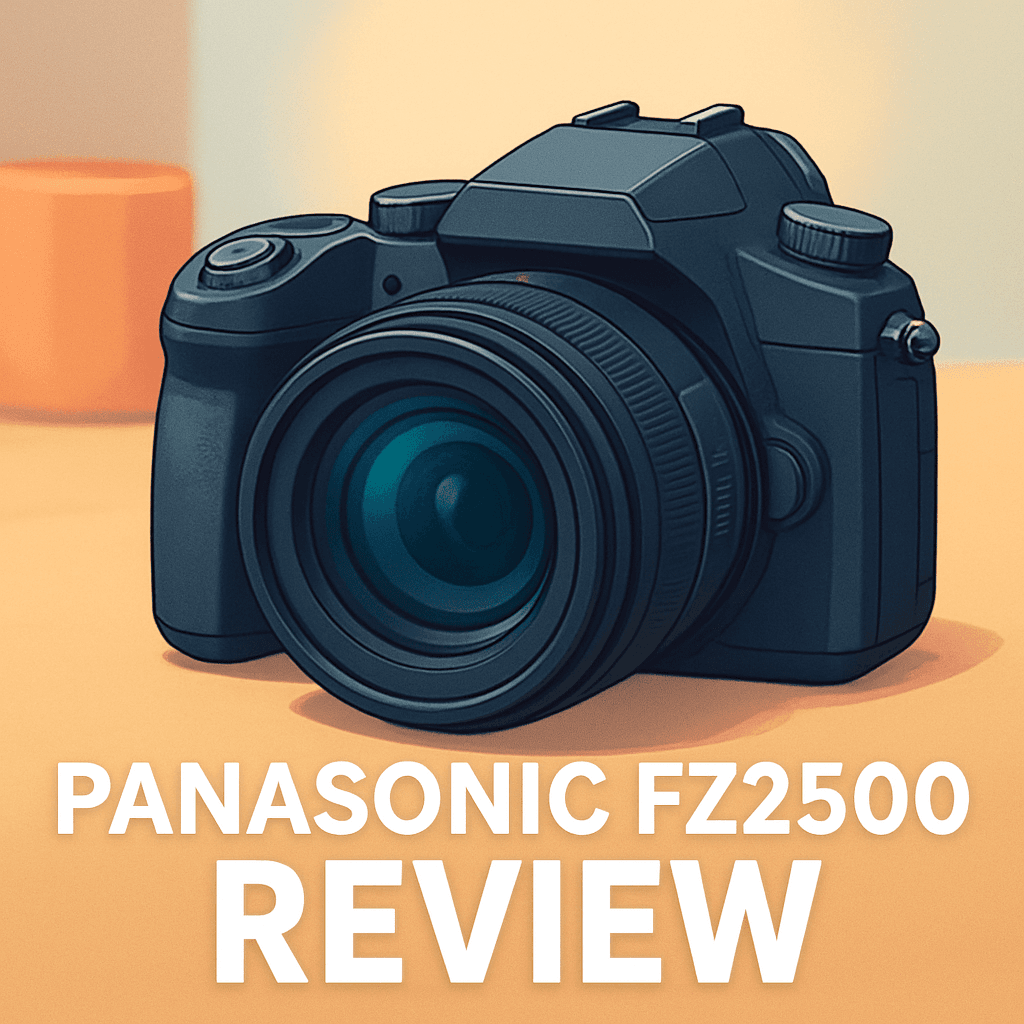
Want a single camera that helps you improve both photos and video without hauling a pile of lenses?
I spent days shooting travel, events and run-and-gun video with the Panasonic LUMIX FZ2500 Camera, and it quickly proved it wasn’t just another bridge camera.
If you’re a hybrid creator or traveler, you’ll like its long reach, steady handheld performance, built-in video tools, and workflow features that actually save time on the road.
This hands-on review breaks down real-world payoffs and tradeoffs so you can tell if it’s right for you—make sure to read the entire review and keep reading.

Panasonic LUMIX FZ2500 Camera
Designed for serious hybrid shooters, this long-zoom bridge camera combines a large 1-inch sensor with a versatile telephoto range, 4K video, manual controls and built-in microphone input for pro-level results.
Check PriceThe Numbers You Need
| Spec | Value |
|---|---|
| Sensor | 1-inch CMOS |
| Resolution | 20.1 MP (effective) |
| Lens | Integrated 20× optical zoom (24–480mm equivalent) |
| Aperture range | f/2.8 to f/4.5 |
| Image stabilization | Optical 5-axis hybrid OIS |
| Video | 4K UHD up to 30fps |
| Built-in ND filter | Yes (3-stop) |
| Viewfinder | 0.39-inch OLED, 2.36M dots |
| LCD screen | 3.0-inch articulated touchscreen, 1.04M dots |
| ISO sensitivity | 125-12,800 (expandable to 80-25,600) |
| Continuous shooting speed | Up to 12 fps (AFS), 7 fps (AFC) |
| Autofocus system | Depth-from-defocus (DFD) contrast-detect AF with face detection |
| Storage | Dual SD card slots (UHS-II compatible) |
| Connectivity | Wi-Fi and Bluetooth |
| Battery life | Approx. 440 shots per charge (CIPA standard) |
How It’s Built
In my testing the Panasonic LUMIX FZ2500 Camera feels like a true all-in-one tool, with that long zoom built into the body so you don’t have to change lenses on the fly. It’s comfortable to hold for hours, but remember it’s not a tiny pocket camera — bring a neck strap or small support for long walks. For travel and run-and-gun work that convenience makes a real difference.
After using it for a while the articulated touchscreen became my go-to for low and high angles, and the touch controls make quick adjustments easy even if you’re new to cameras. The EVF comes in handy in bright sun and is sharp enough for manual-focus checks. Beginners will like how the screen and viewfinder work together to help with composition.
I really liked the built-in 3-stop ND and the 5-axis hybrid OIS, which together keep handheld video and long-tele shots looking steady. At the long end I could handhold shots I wouldn’t normally trust, which is a huge win in the field. One thing that could be better is the ND range — three stops is useful, but I often wanted a bit more in very bright scenes.
Dual UHS-II card slots give solid options for backup or separating stills and video, and Wi‑Fi/Bluetooth made remote control and quick transfers practical on location. Battery life held up for a full day of mixed shooting in my tests, but plan to carry a spare for long assignments. These little workflow touches add up to a camera that’s friendly for beginners and pros alike.
In Your Hands
In everyday shooting the Panasonic LUMIX FZ2500 punches above its class: fine detail and pleasing color rendering at base sensitivity make it a reliable tool for travel and editorial work, and highlights hold up well in contrasty scenes. Shadows get a little grainy as you push sensitivity, but tonal transitions and skin tones remain natural enough for quick turnarounds. Overall image quality feels balanced for hybrid shooters who need one camera to do a lot.
The long zoom is the camera’s real-world advantage — wide framing sings for landscapes and architecture, the middle range is comfortable for environmental portraits, and the far end lets you pick out distant subjects without changing lenses. Expect shallower depth-of-field only at the wider settings and gradual light falloff as you reach for distant subjects, which the camera compensates for with stabilization rather than optical speed.
Stabilization is convincing in hand: the five-axis system keeps stills crisp at reach and tames walk-and-talk video nicely, improving keeper rates when conditions get marginal. It isn’t a replacement for a tripod on the longest or most critical shoots, but it gives you freedom to move and still get usable frames and steady b-roll.
Responsiveness is practical and workmanlike — capture rates and autofocus feel dependable for most documentary and event work, and the buffer clears quickly with fast cards. Dual card slots, a responsive touchscreen paired with the EVF, and straightforward wireless transfer make day-long shoots and mixed stills/video workflows painless in the field.
The Good and Bad
- 1-inch 20.1MP sensor with versatile 24-480mm equivalent 20x zoom
- Built-in 3-stop ND for exposure control in video and bright light
- 5-axis hybrid OIS for steadier handheld stills and video
- Dual UHS-II SD card slots for robust workflows
- 4K limited to 30fps (no higher-frame-rate 4K)
- Contrast-detect DFD AF may be less decisive than phase-detect systems in some scenarios
Ideal Buyer
The Panasonic LUMIX FZ2500 Camera is ideal for hybrid creators who need one body to do it all. Its 24-480mm reach, 4K 30p capability and built-in 3-stop ND make run-and-gun video and quick stills practical. You get fast setup and consistent exposure without swapping glass.
Travel and documentary shooters will appreciate the long zoom and 5-axis hybrid OIS for steady handheld work. Dual UHS-II card slots and a solid battery life mean reliable on-location backups and long days without panic. The articulated touchscreen and bright EVF keep framing flexible in tight, changing environments.
Enthusiasts who want better-than-phone image quality but hate changing lenses will find the 1-inch sensor balance appealing. The camera favors video-friendly controls and workflow features that speed production of interviews, B-roll and event coverage. Expect great versatility, not absolute low-light dominance.
Choose the FZ2500 if you prize all-in-one convenience, video tools and long reach over blistering AF speed or ultra-wide apertures at full tele. If you need 4K at higher frame rates, faster phase-detect tracking, or the shallowest depth of field, consider competitors. For hybrid shooters on the road, it’s a practical, field-ready pick.
Better Alternatives?
We’ve already gone deep into what the FZ2500 does well: the long 24–480mm reach, the built-in ND, solid handheld 4K and the video-oriented controls that make a day of shooting feel smooth. That camera is a great all-rounder, but it’s not the only way to get similar results — and depending on what you shoot most, another camera might be a better fit.
Below are three cameras I’ve used in the field that I often reach for instead of the FZ2500. I’ll point out what each one does better and where the FZ2500 still wins, and who I think would prefer each option.
Alternative 1:

Sony CyberShot RX10 IV Camera
Extreme-speed autofocus and a super-tele zoom deliver decisive action capture, backed by a 1-inch sensor, silky 4K recording, lightning-fast bursts and reliable stabilization for sports and wildlife photography.
Check PriceI’ve used the RX10 IV on wildlife walks and at local sports fields, and the first thing you notice is how fast and sure the autofocus is. It nails moving subjects more often than the FZ2500, and the burst and tracking feel more confident when you need to capture fast action. If your main work is birds, motocross, or fast-paced sports, the RX10 IV gets you more keepers.
Where the RX10 IV loses to the FZ2500 is in video workflow and some practical tools. The FZ2500’s built-in 3-stop ND, very video-friendly controls and dual-card options make long video shoots easier to manage. The RX10 IV is pricier and heavier, and I found myself missing the FZ2500’s quick ND switch and some of its video ergonomics during run-and-gun shoots.
Choose the RX10 IV if you shoot a lot of fast subjects and need speed and tracking above everything else. If you’re a hybrid shooter who leans heavily into video production and likes the convenience of ND and dedicated video controls, the FZ2500 will probably feel more sensible.
Alternative 2:

Panasonic LUMIX FZ1000 II Camera
A travel-ready all-in-one solution with large sensor image quality, extended zoom, 4K video, compact body and fast autofocus; user-friendly controls make it ideal for portraits, landscapes and everyday shooting without swapping lenses.
Check PriceI’ve carried the FZ1000 II on trips where weight and price mattered. In real shooting it gives you much of the same 1-inch sensor image feel as the FZ2500 — good detail, pleasing color and useful reach — but in a lighter, less expensive package. For travel, street and landscapes where you won’t be doing lots of long video takes, it’s a very practical choice.
Compared to the FZ2500, the FZ1000 II isn’t as tailored for long-form video. The FZ2500’s extra video controls, built-in ND and dual cards make a difference when you’re recording a lot of clips or need backup on the fly. AF and tracking are fine for most stills, but they don’t match the RX10 IV’s speed if you chase fast moving subjects.
Pick the FZ1000 II if you want a good all-in-one that’s easier on the back and wallet, and you mostly shoot photos or short video clips. It’s the sensible travel and everyday camera for stills-first shooters who want solid image quality without the added video workflow bells of the FZ2500.
Alternative 3:
Panasonic LUMIX FZ1000 II Camera
Packed with creative tools and a tilting touchscreen, this versatile bridge camera records high-quality 4K clips, offers reliable stabilization and RAW stills, making it perfect for vloggers and on-the-go creators.
Check PriceOn shorter shoots and vlogs I’ve also leaned on the FZ1000 II because the tilting screen and creative menus make getting quick, attractive content easy. It’s friendlier for selfie-style framing and run-and-gun content than the larger FZ2500, and the stabilization plus RAW stills let you get usable images and clips without changing lenses.
That said, the FZ2500 still wins for dedicated video work. Its built-in ND and more video-focused layout mean you can control exposure and framing faster on long takes. The FZ1000 II is great for quick creative work, but for multi-hour interviews, heavy video days or professional client runs the FZ2500’s workflow advantages become more obvious.
Go for the FZ1000 II as a lightweight creator’s tool when you want a camera that’s easy to carry, quick to use and produces solid 4K and RAW stills. If you’re a vlogger, casual filmmaker or content creator who values portability and simple creativity, it’s a nice fit; if you need pro-style video control, stick with the FZ2500.
What People Ask Most
Is the Panasonic FZ2500 worth buying?
Yes — it’s a great all-in-one for travel and video with a 1-inch sensor, long zoom and strong video features, but it won’t beat interchangeable-lens cameras in low light.
How does the Panasonic FZ2500 compare to the Panasonic FZ1000?
The FZ2500 builds on the FZ1000 with better video features (including a built-in ND and improved codecs) and a similar 1-inch sensor, making it the stronger choice for video and telephoto use.
Does the Panasonic FZ2500 shoot 4K video?
Yes — it records internal 4K video (up to 30p) and also offers Panasonic’s 4K Photo modes for extracting stills.
Is the Panasonic FZ2500 good for low-light photography?
It’s decent for a bridge camera thanks to the 1-inch sensor and stabilization, but it lags behind APS-C and full-frame bodies in high-ISO performance.
What is the zoom range/focal length of the Panasonic FZ2500?
The built-in lens covers approximately 24–480mm equivalent (about a 20x optical zoom), which is very versatile for wide to telephoto shooting.
What are the main pros and cons of the Panasonic FZ2500?
Pros: excellent 4K video, long zoom, solid handling and a 1-inch sensor; Cons: middling low-light chops versus larger sensors, somewhat bulky for a compact, and average battery life.
Conclusion
The Panasonic LUMIX FZ2500 Camera is a purpose-built hybrid tool that gives travel and documentary makers an honest, all-in-one shooting kit. Its long-reach zoom, reliable stabilization, built-in neutral density and video-first controls make handheld workday shoots simpler and more consistent. Dual-card flexibility and a thoughtful EVF/touch-screen pairing keep you shooting without fuss.
That practicality comes with tradeoffs. Its contrast-detect autofocus and frame-rate ceiling mean it won’t outpace dedicated action-focused cameras in fast sports or wildlife chores, and the lens loses light and subject separation at the longest reach. For many shooters these are acceptable compromises for the convenience and video ergonomics on offer.
If you’re a hybrid creator who prioritizes reach, steady handheld video, and streamlined field workflow, the FZ2500 is an excellent single-body choice. If you need blistering AF or the widest aperture across the zoom, consider alternatives like the RX10 IV, FZ1000 II, or G3 X depending on budget and priorities. In short, this panasonic fz2500 review: buy it for balanced real-world video/stills value, skip it if peak speed or maximum low-light separation are your deal-breakers.
Panasonic LUMIX FZ2500 Camera
Designed for serious hybrid shooters, this long-zoom bridge camera combines a large 1-inch sensor with a versatile telephoto range, 4K video, manual controls and built-in microphone input for pro-level results.
Check Price



0 Comments