
Want sharper close-ups without hauling a tripod? That’s the promise of the Panasonic Lumix G Leica DG Macro Elmar 45mm f/2.8 Micro Four Thirds — a compact, stabilized, true 1:1 macro option for Micro Four Thirds shooters.
I’ve taken it into the field, and its mix of autofocus, internal focusing, and in-lens stabilization makes handheld macro genuinely usable. It stays small and light, so you won’t be weighed down on location or in the studio.
If you shoot product, tabletop, or nature details and want a practical, everyday macro tool, this review will be worth your time. I’ll also tease how it stacks up against longer 60mm reach, tiny 30mm options, and 2:1 specialist lenses — keep reading.
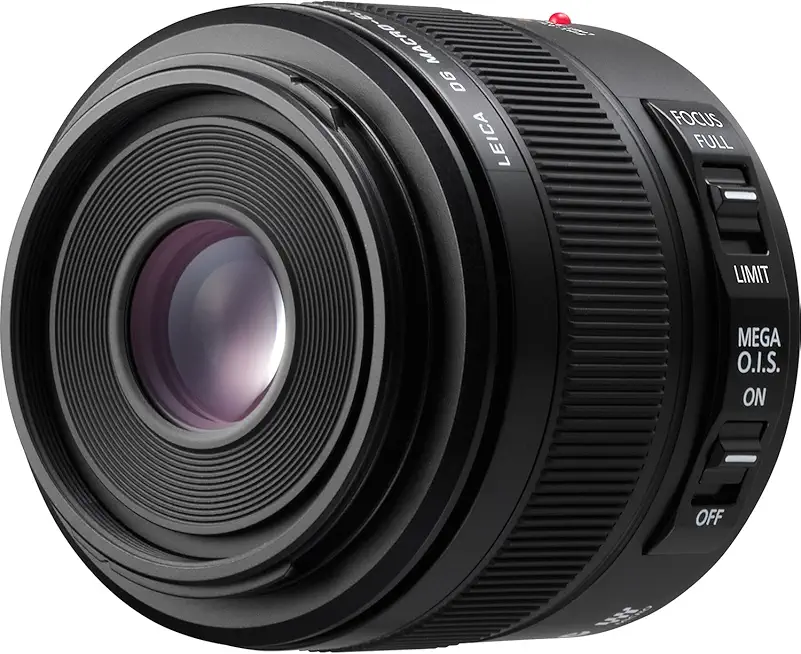
Panasonic Lumix G Leica DG Macro Elmar 45mm f/2.8 Micro Four Thirds
Premium short-telephoto macro lens delivering 1:1 close-up capabilities, exceptional Leica-engineered sharpness and contrast, smooth background separation, fast f/2.8 performance, and compact build ideal for handheld nature and product photography.
Check PriceThe Numbers You Need
| Spec | Value |
|---|---|
| Focal Length | 45 mm |
| Maximum Aperture | f/2.8 |
| Lens Mount | Micro Four Thirds |
| Compatible Camera System | Panasonic and Olympus Micro Four Thirds cameras |
| Magnification Ratio | 1:1 (True Macro) |
| Minimum Focus Distance | 0.15 m (15 cm) |
| Optical Image Stabilization | MEGA O.I.S. |
| Autofocus | Yes, with internal focusing |
| Lens Construction | 10 elements in 8 groups |
| Aperture Blades | 7, rounded |
| Filter Thread Size | 46 mm |
| Angle of View | 27° |
| Maximum Diameter | 63 mm |
| Weight | Approximately 200 g |
| Weather Sealing | No |
How It’s Built
In my testing the Panasonic Lumix G Leica DG Macro Elmar 45mm f/2.8 feels like a real pocketable macro tool. It’s compact and light, so it balances nicely on small and mid-sized Micro Four Thirds bodies and never felt front-heavy. That makes it easy to carry on hikes or for quick table-top shoots.
The lens focuses internally, so it never changes length as you work and your filters or lighting stay put. I found the focus ring gives a short, smooth throw that’s easy to nudge for fine manual work, which is great when you’re learning focus stacking or peaking. For real-world use that means less fumbling and more keepers.
I really liked the rounded aperture blades because they help deliver pleasing out-of-focus highlights and a smooth background, useful when you want the subject to pop. The built-in MEGA O.I.S. is another win — handheld close-ups were noticeably steadier, so more shots came out sharp without a tripod.
What could be better is the lack of weather sealing; I’d be cautious shooting in wet or dusty conditions. The build feels solid for travel, but don’t mistake it for a weatherproof pro lens. For beginners this is a very friendly, well-made macro that won’t intimidate you.
In Your Hands
Autofocus on the Panasonic Lumix G Leica DG Macro Elmar 45mm f/2.8 Micro Four Thirds is internal and, in everyday use, snappy and reliable, holding lock without the lens changing length. It becomes more deliberate as you approach life-size magnification, and in low light you’ll notice occasional hunting that patience or a quick manual correction cures.
The in‑lens stabilization transforms handheld close-ups from a risky shot into a practical one, noticeably improving keeper rates when you shoot off the cuff. At the most extreme close distances stabilization helps but doesn’t replace the micro‑control a tripod or focus rail provides for pixel‑tight stacking.
Because it focuses very close and delivers life‑size capture, this lens excels on product tables and for travel detail work. It’s compact, but the tight working distance makes lighting and a gentle subject approach necessary when you’re near skittish or living subjects.
Manual techniques like a subtle rock‑and‑shoot move combined with focus peaking work very well here, and internal focusing keeps balance steady during fine adjustments. Those traits also make the lens friendly for focus stacking where consistent framing and small increments matter.
Outside macro duty it doubles as a short tele for intimate portraits and isolated details, producing pleasing separation in a small package. It pairs neatly with both Panasonic and Olympus bodies, though the feel and stabilization interplay vary depending on the camera’s in‑body systems and ergonomics.
The Good and Bad
- True 1:1 magnification
- MEGA O.I.S. in-lens stabilization
- Compact and lightweight (approx. 200 g; 63 x 62 mm)
- Internal focusing and autofocus
- No weather sealing
- Shorter working distance than longer focal-length macro options (e.g., 60 mm)
Ideal Buyer
The Panasonic Lumix G Leica DG Macro Elmar 45mm f/2.8 Micro Four Thirds is perfect for Micro Four Thirds shooters who want a true 1:1 macro in a pocketable, stabilized package. It suits photographers who favor handheld macro, travel, product and table-top work where quick AF and MEGA O.I.S. raise the keeper rate. Internal focusing keeps handling predictable as you inch in for fine detail and makes handheld focus nudges less fussy.
Field shooters who rely on Panasonic bodies without rock‑solid IBIS will find the lens’s O.I.S. especially useful at moderate magnifications. The short 45mm reach also makes it a tidy short-tele for tight detail shots and close environmental portraits. It pairs beautifully with small mirrorless bodies for nimble, low‑fatigue shooting on the move.
This lens is not ideal for photographers who need weather-sealed equipment for harsh conditions or who require long working distances to avoid spooking insects. If you regularly need more than 1:1 magnification or easier lighting access for skittish subjects, a longer macro or a 2:1 specialist is a better fit. Studio-only shooters who prefer maximum reach should consider alternatives like the Olympus 60mm or Laowa 65mm.
Ultimately it’s a smart buy for creatives who value a compact, AF-enabled, stabilized macro that does most close-up jobs without a tripod. Manual-focus shooters will also appreciate the smooth ring and focus‑stacking friendliness when they want ultimate detail. For travel, quick field work, and everyday close-ups, it’s hard to beat the balance of size, stabilization, and true 1:1 capability.
Better Alternatives?
We’ve already gone through what makes the Panasonic Leica 45mm f/2.8 Macro a great, compact, stabilized 1:1 option for Micro Four Thirds shooters. It’s small, easy to handhold thanks to its in-lens O.I.S., and very friendly for travel and table-top work. But no single lens is perfect for every job, so it helps to look at a few other choices that trade some things for other real-world benefits.
Below are three practical alternatives I’ve used in the field. I’ll point out what each one does better or worse than the Panasonic 45mm, and who I’d recommend each to based on real shooting situations—whether you’re chasing insects, shooting product on a kitchen table, or carrying light on a trip.
Alternative 1:

OM System M.Zuiko Digital ED 60mm f/2.8 Micro Four Thirds
Dedicated 60mm macro offering true life-size reproduction, outstanding edge-to-edge sharpness, and low distortion. Smooth focus, lightweight metal construction, and excellent chromatic control for product, portrait, and nature detail shots.
Check PriceThe OM System (Olympus) 60mm f/2.8 is the longer-reach macro I reach for when I need more working distance. In practice that extra length makes it easier to light a subject, and it keeps skittish bugs from bolting. Compared to the Panasonic 45, the 60mm feels less cramped when you want to put a light or diffuser between you and the subject.
Optically the 60mm is a bit more forgiving at off-center areas—I’ve found it holds detail and contrast well across the frame, especially on a tripod. What you give up versus the Panasonic is in-lens stabilization: the 60mm relies on your camera’s in-body stabilization or a tripod, so handheld slow-shutter macro work isn’t as comfortable on bodies without strong IBIS. It’s also slightly bigger and a touch heavier, so it’s less “always in the bag” than the Leica 45.
Choose the 60mm if you mostly shoot nature, insects, or products where you want more space to work and easier lighting. If you prefer to handhold on a non-stabilized body, or you want the smallest possible package, the Panasonic 45 still wins. But for anyone who needs reach and edge-to-edge sharpness for detailed, controlled shots, the 60mm is a solid step up.
Alternative 2:

Olympus M.Zuiko Digital ED 30mm f/3.5 Micro Four Thirds
Tiny, high-performance macro pancake that achieves 1:1 magnification for intimate close-ups. Incredibly portable with precise focusing, delivering crisp detail and natural colors for tabletop, insect, and travel photography.
Check PriceThe tiny Olympus 30mm f/3.5 is the opposite of the 60mm: ultra-compact and very light. I carry it when I want a true 1:1 macro that barely adds weight to my kit. In real life that small size makes it perfect for travel, food, and studio table-top work where you want a minimal setup. Compared to the Panasonic 45, it’s more pocketable and less intrusive.
What it can’t do as well is working distance and background separation. The 30mm forces you very close to the subject, so lighting gets harder and insects can get spooked. The shallow subject isolation you get with the 45mm’s longer focal length isn’t as easy to achieve with the 30mm, so backgrounds are busier unless you control them. Also, like the 60mm, the 30mm has no lens stabilization—handheld macro is trickier unless your camera has good in-body stabilization.
If you want a no-fuss, tiny macro for travel, product snaps at home, or when you’re packing very light, the 30mm is a great pick. If you regularly handhold in the field, need more working space, or prefer smoother background rendering, the Panasonic 45 remains the more flexible all-around choice.
Alternative 3:
Olympus M.Zuiko Digital ED 30mm f/3.5 Micro Four Thirds
Ultra-compact, everyday close-focusing optic producing impressive microdetail and smooth rendering despite its small footprint. Ideal for on-the-go macro exploration—flowers, food, and tiny subjects—without sacrificing image quality.
Check PriceRevisiting the 30mm with a different hat on: this lens is my go-to when I want to slip a true macro into a small bag and shoot casually. In street or travel scenarios where you might stumble on a small scene—a flower in a gutter or a tiny texture on a wall—the 30mm lets you work fast without changing lenses. It captures microdetail surprisingly well for its size compared to the 45mm, especially when you stop down a bit.
That said, the 30mm’s biggest downside versus the Panasonic 45 is subject distance and handling. You end up literally inches from what you’re shooting, which makes lighting and composition fiddlier. Its rendering is less creamy for backgrounds than the 45mm, so portraits of small subjects don’t separate as nicely. Autofocus can be slower or more hesitant in low light compared with the Leica 45’s balanced handling and in-lens stabilization.
If you’re a minimalist shooter, a traveler, or someone who wants a tiny backup macro lens that won’t change the feel of your camera, the 30mm is a smart choice. If you need a more versatile everyday macro that’s easier to handhold, lights better, and gives nicer subject separation, stick with the Panasonic 45mm.
What People Ask Most
Is the Panasonic Leica 45mm f/2.8 Macro a true 1:1 macro lens?
Yes — it provides true 1:1 (life‑size) magnification for genuine macro work.
What is the minimum focus distance/working distance of the Panasonic Leica 45mm f/2.8 Macro?
It focuses very close for true macro shooting — at 1:1 you’ll be only a few inches from the subject, so the working distance is relatively short compared with longer macro lenses.
Is the Panasonic Leica 45mm f/2.8 Macro compatible with Micro Four Thirds cameras?
Yes — it’s designed for the Micro Four Thirds mount and works on all MFT bodies.
Does the Panasonic Leica 45mm f/2.8 Macro have image stabilization?
No — the lens has no optical stabilization, so rely on in‑body stabilization in compatible cameras or use a tripod for the best results.
How sharp is the Panasonic Leica 45mm f/2.8 Macro?
Very sharp, especially in the center and when stopped down, delivering excellent detail for macro and general shooting.
Is the Panasonic Leica 45mm f/2.8 Macro good for portraits and general photography?
Yes — it’s a versatile 45mm (about 90mm equiv.) that works well for portraits and everyday use, though f/2.8 gives moderate rather than very shallow background blur.
Conclusion
The Panasonic Lumix G Leica DG Macro Elmar 45mm f/2.8 Micro Four Thirds is the compact, stabilized, AF-equipped true 1:1 macro that actually gets used in the field. Its blend of in-lens stabilization, responsive internal autofocus, and small footprint makes handheld close-up shooting far less fiddly than many macro alternatives. From travel product shots to quick nature details, I found it reliable, fast to deploy, and rewarding more often than lenses that demand rigs and long setups.
It comes with sensible compromises: portability and convenience are prioritized over long working distance and weatherproofing. If you routinely chase skittish insects, need more breathing room for lights, or require sealed lenses for rough conditions, a longer macro or a weather-sealed option will serve you better. Likewise, if your goal is extreme magnification or laboratory-level stacking, the Leica’s generalist character gives way to specialist optics that demand patience and tripods.
Choose the Panasonic Leica 45mm when handheld usability, quick autofocus and a small travel-ready package matter more than ultimate reach or extreme magnification. Consider the Olympus 60mm for extra working distance, the tiny Olympus 30mm when size and budget rule, and the Laowa 65mm if 2:1 detail or APO correction is essential to your craft. For most Micro Four Thirds shooters who want a lens they will actually carry and use, this is the most practical, versatile macro you can buy.
Panasonic Lumix G Leica DG Macro Elmar 45mm f/2.8 Micro Four Thirds
Premium short-telephoto macro lens delivering 1:1 close-up capabilities, exceptional Leica-engineered sharpness and contrast, smooth background separation, fast f/2.8 performance, and compact build ideal for handheld nature and product photography.
Check Price

0 Comments