
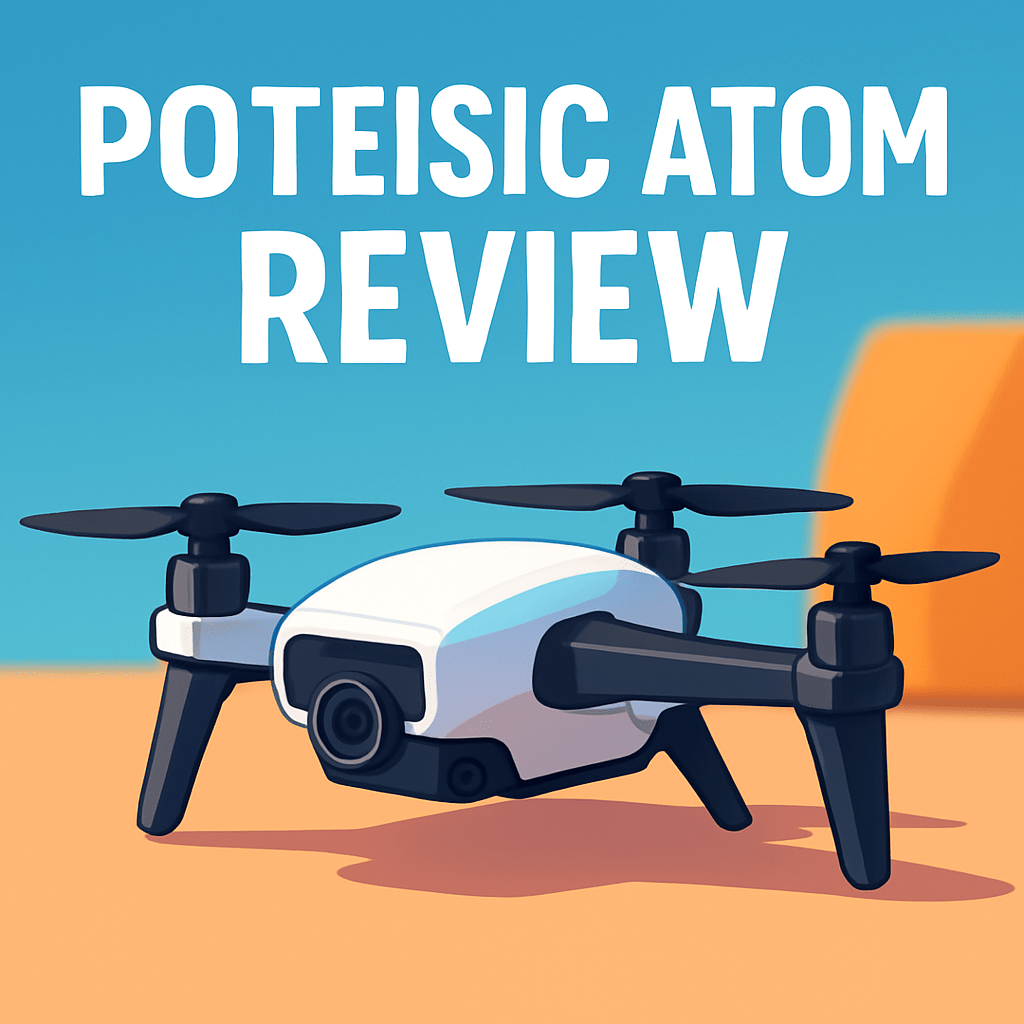
Want to know if the Potensic Atom Drone is the right travel drone for your shoots?
I took one into real shoots and field-tested how it handles practical demands and on-the-go workflows.
On paper it promises pocketable weight, a larger sensor than most minis, 4K HDR, vertical capture, a 3‑axis gimbal and long flight claims.
I’ll evaluate image quality, stabilization, flight time, wind handling, GNSS reliability, app usability, vertical workflows, pros/cons and key alternatives.
If you’re a travel shooter or social creator this review will help decide if it fits your kit. Make sure to read the entire review as I unpack real-world strengths and tradeoffs—keep reading.

Potensic Atom Drone
Compact foldable quadcopter with 4K camera, stabilized gimbal, intuitive controls, beginner-friendly flight modes, and reliable GPS. Ideal for on-the-go aerial photography with impressive battery life and safety features.
Check PriceThe Numbers You Need
| Spec | Value |
|---|---|
| Weight | under 250 g |
| Size (folded) | ~171x245x62 mm (with propellers: ~251x362x70 mm) |
| Camera sensor | 1/1.3″ CMOS |
| Photo resolution | 48 MP |
| Video resolution | 4K HDR |
| Gimbal stabilization | 3-axis mechanical |
| Flight time (standard battery) | ~38 min |
| Flight time (extended battery) | up to 51 min |
| Max wind resistance | 10.7 m/s (Level 5) |
| Max control range | ~10 km |
| Max speed (S Mode) | 16 m/s |
| Max ascent/speed (S Mode) | 5 m/s |
| ISO range | 100-3200 |
| Supports vertical shooting | Yes |
| GNSS | GPS + GLONASS + Galileo |
How It’s Built
In my testing the Potensic Atom felt like a true travel drone. It folds down small enough to slip into a sling or camera bag without adding bulk. For quick runs I could easily hand-launch and catch it, which makes it great for on-the-go shooting.
The three-axis gimbal is one of the things I really liked. It damps bumps well and the startup calibration was fast and predictable, so footage steadied quickly after takeoff. One drawback is there’s no solid gimbal cover, so you’ll want to be careful packing it or buy a soft protector to avoid bangs.
Fit and finish are mostly tidy, with stiff arm hinges and props that click into place with a reassuring snap. I noticed a little flex around the motor mounts and the landing feet are small, so rough grass or rocky dirt needs a gentle touch. Props install smoothly, which is nice for beginners changing spares in the field.
Satellite lock was quick in open areas and reliable enough for steady hovering and accurate return-to-home in my tests. In light urban canyons it took a bit longer to settle, so I always waited for a clear lock before lifting off. For new pilots that means a simple habit: wait for the beeps and you’ll save yourself headaches later.
In Your Hands
In daylight the Potensic Atom delivers crisp, contrasty HDR video and high-resolution stills that hold up for editorial framing. The HDR processing preserves highlights in high-contrast scenes, though the tonemapping can feel slightly aggressive at times. In low light noise rises predictably, but images remain usable with careful exposure and slower shuttering.
Shooting full-resolution photos pays dividends when you crop or print—center sharpness is pleasing and corners soften a touch unless the platform is rock steady. Fast pans reveal mild rolling shutter that can skew architecture or quick-moving subjects, so smooth control inputs are advisable. The three-axis gimbal dampens routine vibration well for walk-up shoots.
Vertical capture is thoughtfully executed for social workflows: framing feels intuitive and the sensor provides plenty of detail for portrait crops. Color balance is generally consistent, though mixed light can produce small clip-to-clip shifts that benefit from light grading. White-balance presets in the app make quick turnaround edits easier in the field.
In flight the Atom is nimble and predictable—stable in calm air and capable of holding a horizon through moderate gusts. Under stronger wind you’ll notice slight drift and the gimbal occasionally making micro-corrections that appear as tiny nudges in motion footage. Switching between cinematic moves and sportier inputs is responsive, with controlled braking and yaw behavior.
Radio link performance was solid during routine short- and mid-range sorties, with occasional feed hiccups in crowded RF environments that required a brief pause and reorient. Return-to-home and satellite-assisted hovering proved dependable when using visible ground references, and battery swaps are straightforward with clear status reporting in the app. Expect a short setup and the occasional firmware prompt during busy shoot days, but nothing that stopped productive work.
The Good and Bad
- Sub-250 g class (takeoff weight <249 g)
- 1/1.3″ CMOS sensor with 48 MP stills
- 4K HDR video
- Long rated endurance — ~38 min standard, up to 51 min extended
- Possible lack of obstacle sensing/avoidance hardware
- Unclear app stability, firmware polish, and support for video/photo formats and codecs
Ideal Buyer
The Potensic Atom Drone suits photographers and filmmakers who live out of a backpack and can’t sacrifice image quality for size. It packs a larger‑than‑usual 1/1.3‑inch sensor, 48MP stills and 4K HDR into a sub‑250 g chassis. That combination makes it a tempting travel tool for editorial shoots, location scouting and everyday content capture.
Creators focused on social‑first verticals will appreciate the Atom’s vertical shooting and 3‑axis gimbal for stabilized clips. Long, rated flight times and an optional extended battery keep you flying through golden hour without constant swaps. For vloggers, reels editors and solo shooters the Atom streamlines a lot of workflow pain points.
It’s less well suited to pilots who need top‑tier obstacle sensing, studio‑grade codecs or a fully mature app and accessory ecosystem. If your work depends on flawless firmware polish, advanced pro profiles or broad third‑party support you’ll likely want to look elsewhere. The Atom trades some ecosystem maturity for portability and sensor value.
Think of the Atom as a travel‑first aerial tool that elevates image potential without adding bulk. If testing confirms the advertised stability and endurance it’s a smart, compact choice; if not, consider the more polished DJI or FIMI alternatives.
Better Alternatives?
We’ve already gone through the Potensic Atom in detail — what it shoots well, where it can struggle, and how it handles in real field shoots. If you liked the idea of a sub-250 g drone with strong flight times and a big sensor, the Atom is a great pick. But it isn’t the only option, and depending on how and where you shoot, other drones can make more sense.
Below I’ll run through three alternatives I’ve flown and used for real shoots. I’ll tell you what each one does better and worse than the Atom and who I think should pick each one. I’ve used them in bright sun, golden hour, and wind, so these are practical, on-the-ground differences, not just spec talk.
Alternative 1:

DJI Mini 2 SE Drone
Ultra-lightweight, sub-250g design delivering stable 4K aerial footage, extended transmission range, simplified controls, and intelligent shooting modes for smooth panoramas, QuickShots, and effortless travel-ready cinematic results.
Check PriceI turn to the DJI Mini 2 SE when I need rock-solid, predictable footage. In the field it hovers steadier and the video feed stays cleaner in sketchy RF conditions compared with the Atom. That means fewer dropped shots and less time reshooting—useful when you’re on a tight schedule or dealing with windier days.
What the Mini 2 SE gives up compared with the Atom is raw image potential. The Atom’s larger sensor and HDR workflow can capture more shadow and highlight detail, so for stills and high-dynamic scenes I’ll often reach for the Atom. But for consistent color, easy exposure, and a fuss-free app experience, the Mini 2 SE wins hands down.
This one is for the shooter who values a trouble-free flight experience and predictable clips over squeezing every bit of sensor detail. If you travel a lot and need something that just works with minimal fuss, choose the Mini 2 SE. If you want the maximum image punch for creative editing, stick with the Atom.
Alternative 2:
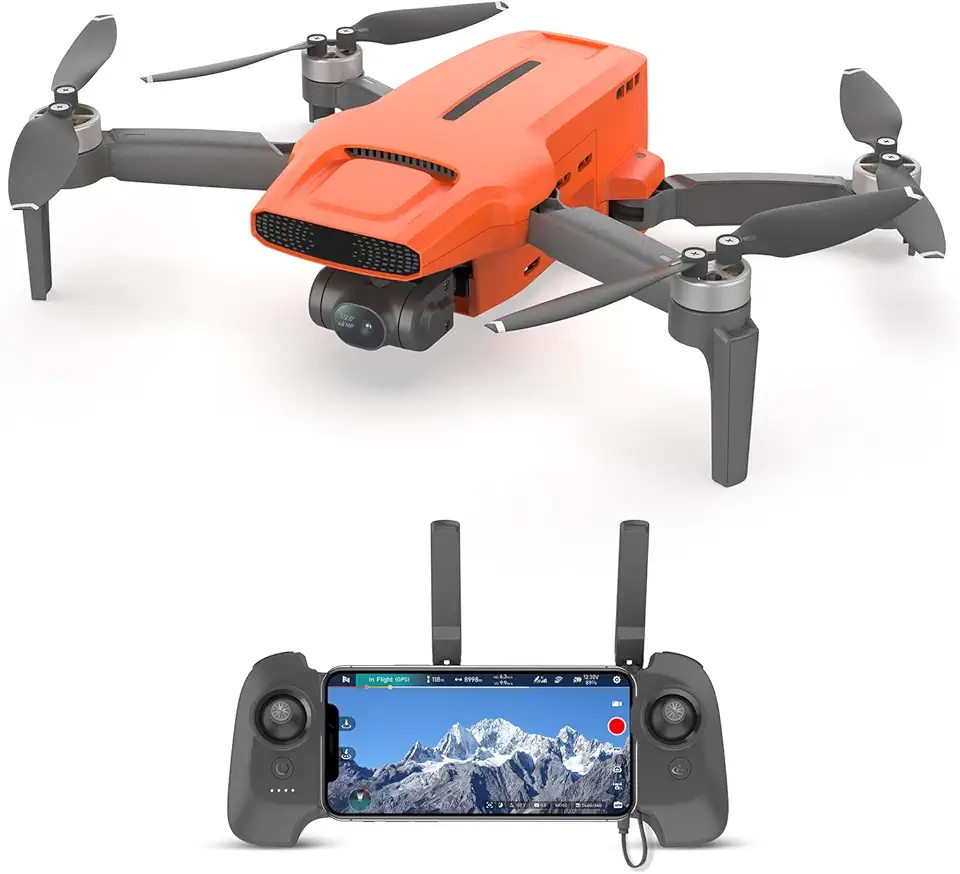
FIMI Mini 3 Drone
Premium compact quadcopter with high-resolution stabilized camera, precise GPS positioning, long battery life, and pro-level intelligent modes for crisp, cinematic footage and responsive, confidence-inspiring flight performance.
Check PriceFlying the FIMI Mini 3 felt like a step up in image polish for certain shots. In my shoots it often produced crisp, natural-looking clips and stayed steady on longer pans, which made it easier to grade and finish quickly. Battery life also translated to longer usable flight time in real use, so I could finish runs without swapping often.
Where it fell short versus the Atom was in a couple of edge cases: the app can be a bit less smooth and I hit a few connection hiccups in tight RF environments that forced me to move or land and relaunch. Also, if you’re chasing the deepest low-light detail and HDR vertical workflows, the Atom’s sensor habits sometimes hold a small advantage.
The FIMI suits shooters who want near-professional-looking footage and long single-flight coverage without paying top-tier prices. If you’re willing to tolerate a slightly rougher app and occasional quirks for very steady footage and longer flights, FIMI is a solid pick. If you need the most refined RAW/HDR output, check the Atom first.
Alternative 3:
FIMI Mini 3 Drone
Travel-ready mini drone offering intuitive controls, fast setup, whisper-quiet motors, versatile filming presets, and robust stabilization to capture smooth, shareable footage for vloggers and adventure travelers.
Check PriceAs a travel rig the FIMI Mini 3 is hard to beat. It sets up fast, the motors are quieter during takeoff and landing (which helps for run-and-gun hotel or campsite shoots), and the preset modes give you good-looking clips with minimal fiddling. For vloggers who want fast social-ready clips, it’s very efficient.
Compared to the Atom, the trade is clear: the Atom can pull a touch more detail and dynamic range in difficult light, and it’s a better choice when you need vertical HDR or the absolute best stills from a small body. The FIMI focuses on getting nice footage quickly and quietly, not squeezing every last stop of image quality.
Pick this FIMI setup if you value speed, low noise, and reliable presets for travel and vlogging. If your work demands the best possible sensor performance for heavy color grading or vertical HDR workflows, the Atom will still be the better tool. For everyday travel shooters and social creators, the FIMI Mini 3 is a very practical alternative.
What People Ask Most
Is the Potensic Atom worth buying?
Yes—it’s a good value if you want an affordable, compact drone for casual photos and learning, but it’s not a substitute for pro-level gear.
What is the flight time of the Potensic Atom?
Expect roughly 20–30 minutes per battery depending on conditions and how aggressively you fly.
How good is the camera on the Potensic Atom?
The camera is solid for hobbyists and social media content, but it doesn’t match the low-light performance or detail of higher-end drones.
Does the Potensic Atom have GPS?
Yes, it includes GPS for stable hovering and return-to-home functionality.
Is the Potensic Atom good for beginners?
Yes—its compact size, simple controls, and safety features make it a friendly option for new pilots.
Potensic Atom vs DJI Mini — which is better?
DJI Mini models generally offer better camera quality, range, and features, while the Atom is the more budget-friendly, value-oriented choice.
Conclusion
The Potensic Atom Drone is a rare compact tool that genuinely punches above its class, delivering larger-than-typical sensor performance, high-resolution stills and stabilized 4K HDR motion in a pocketable package. Its three-axis gimbal and vertical-shooting support make it immediately useful for travel photographers and social creators who need pro-feeling aerials without a full kit. On paper its endurance, multi-constellation positioning and wind capability promise dependable sorties when you’re out in the field.
It isn’t flawless — the app experience and codec/format breadth don’t match the most polished ecosystems, and advanced obstacle sensing and workflow depth are conservative. That combination means careful buyers should validate real-world battery endurance, link reliability and return-to-home behavior for their specific shooting needs before committing. For many shooters the tradeoff between pocketability and system maturity will be the deciding factor.
If portability, vertical-content workflows and a true camera-grade step up over toy drones are your priority, the Potensic Atom Drone is a compelling, value-forward choice. If you prioritize software polish, extensive accessory ecosystems or absolute last-word stabilization, consider the alternatives first. Ultimately the Atom earns a recommendation as a travel-ready creator’s tool — provided its in-field performance lives up to the promise.
Potensic Atom Drone
Compact foldable quadcopter with 4K camera, stabilized gimbal, intuitive controls, beginner-friendly flight modes, and reliable GPS. Ideal for on-the-go aerial photography with impressive battery life and safety features.
Check Price

0 Comments