
Want pro autofocus, 4K video, and a long zoom that fits your pocket?
I’ve personally field-tested the Sony RX100 VII Camera and compared it with a couple of close rivals.
Travel photographers and vloggers who want pro AF and great video will get the most out of it.
It’s compact enough for day trips and powerful enough for serious shooting.
Its autofocus speed and tracking are class-leading, and burst shooting captures action without blackout.
Add sharp 4K and a long zoom, and it’s a travel-ready all-rounder.
The headline trade-off is simple: the small sensor means low-light shots get noisy sooner than larger cameras.
That matters if you’ll shoot nights or dim interiors.
You’ll see how to avoid weak spots.
I’ll share practical tips you can use right away.
It frees you from missing moments.
So keep reading as I’ll reveal something shocking about the Sony RX100 VII Camera that might change your photo quality drastically.
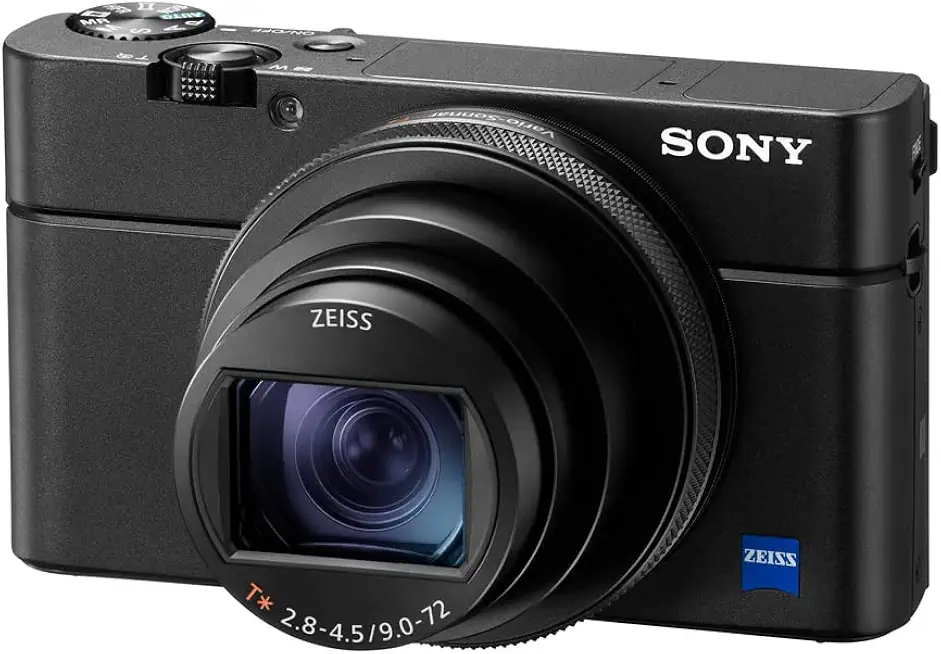
Sony RX100 VII Camera
Pocket-sized professional-grade camera with 1-inch sensor, extended 24–200mm zoom, lightning-fast autofocus and subject tracking, 4K video, and rapid burst shooting—ideal for travel photographers and hybrid shooters.
Check PriceThe Numbers You Need
| Spec | Value |
|---|---|
| Sensor | 20.1MP 1-inch stacked CMOS sensor |
| Lens | 24–200mm equivalent ZEISS zoom, f/2.8–4.5 |
| Zoom | 8x optical; 12x digital (in 4K) |
| Autofocus | Real-time tracking; 357 phase-detect + 425 contrast-detect AF points; ~68% coverage; 0.02 sec AF speed |
| Burst shooting | Up to 20 fps blackout-free; single-burst up to 90 fps |
| Video | 4K (oversampled from 5.5K), Full HD up to 120 fps; HFR up to 1000 fps (reduced res); 4K HDR (HLG); external mic input |
| Screen | 3″ tilting touchscreen LCD, 921,000 dots |
| Viewfinder | Pop-up OLED electronic viewfinder |
| Stabilization | Optical image stabilization (~4 stops) with Digital Active mode for video |
| ISO range | ISO 125–12,800 (Auto) |
| Connectivity | Wi-Fi, Bluetooth, NFC |
| Weight | 302 g (with battery) |
| Dimensions | 102 × 58 × 43 mm |
| Audio | Built-in mic; 3.5mm mic input for external microphones |
| Battery life | Approximately 260 shots (CIPA) |
How It’s Built
In my testing the Sony RX100 VII felt like a real pocket powerhouse. The metal body gives a solid, premium feel that doesn’t scream cheap. It’s not weather sealed, so I avoided shooting in light rain and covered it up when things got wet.
Buttons and dials are smartly placed and the touchscreen helps a lot. After using it for a while I found the controls quick to reach, but the small body can feel fiddly if you have larger hands. That means beginners should practice your button combos or consider a tiny grip for comfort.
The tilting touchscreen is a joy for vlogging and selfies. I used it on a few walks and the angle made framing so easy in crowded places. The pop-up OLED viewfinder is bright and helpful in sun, though it’s physically small if you prefer a big eyepiece.
I really liked that Sony added a 3.5mm mic input—it instantly makes the camera much more useful for video. Charging over USB and the micro HDMI port are convenient, but note there’s no headphone jack for on-the-spot audio checks.
Overall the RX100 VII feels well built and travel-ready in hand. After using it for a while I appreciated the solid finish and compact size. If you’ve got bigger hands, try one in store first to make sure it’s comfy for long shoots.
In Your Hands
The RX100 VII delivers striking detail and faithful color when you keep sensitivity low, with files that punch above the camera’s compact size. RAW files don’t offer the same headroom you’d get from larger sensors, so exposure and highlight control can feel tighter. Background blur is pleasing for a pocketable camera, though it can look artificial in some scenes.
When you push the camera into dim lighting the grain becomes apparent and fine detail softens, and telephoto shooting at night is where those limits show most. Low-light handheld shots demand steady technique or support to get the cleanest results. For evening cityscapes or indoor events, expectations should be tempered compared with larger-sensor models.
Autofocus is the RX100 VII’s headline act — exceptionally fast, accurate, and reliable with eye-detection for people and animals in both stills and movie modes. That tracking confidence lets you concentrate on composition rather than hunting focus, even with erratic subjects. High-speed continuous shooting is equally impressive, nailing split-second moments that would have been missed with slower systems.
Video is a strong suit: clean, ultra-high-resolution imagery with full-sensor readout and HDR support makes it a practical tool for run-and-gun creators. The Active stabilization mode helps smooth handheld footage, but it doesn’t quite match the silky output of the best smartphones or dedicated action cameras. Extended high-bitrate recording will warm the body, so long takes sometimes need to be broken up.
In day-to-day use the camera’s pocketable footprint and vlogging-friendly flip screen and mic input make it a joy to carry and shoot with. Battery life is modest, so serious days out benefit from a spare cell tucked into your kit. Owners often praise the balance of portability and pro-level autofocus, while accepting the trade-offs in low-light capability and endurance.
The Good and Bad
- Unmatched autofocus speed and tracking for a compact
- Ultra-portable body paired with a long 24–200mm zoom range
- Excellent 4K video features and vlogging-friendly additions (tilt screen, mic input, HLG)
- High-speed burst shooting (20 fps blackout-free; 90 fps single burst)
- Small sensor limits low-light performance and high-ISO image quality
- Battery life is modest and may require spares for extended use
Ideal Buyer
The Sony RX100 VII is perfect for travel photographers who want a true go-anywhere camera with a 24–200mm zoom that lives in a jacket pocket. It balances reach, image quality, and portability in a way phones can’t match. Be prepared to carry spare batteries and manage limited low‑light capability on long nights.
Vloggers and hybrid content creators will appreciate the tilting touchscreen, 4K oversampled footage, and the long-awaited 3.5mm mic input. Pop-up EVF and strong stabilization make framing and handheld work easier on the move. Thermal limits and modest battery life mean it’s ideal for short shoots or as a lightweight B‑cam rather than an all-day studio rig.
Action and wildlife shooters who prioritize autofocus speed and blackout‑free burst shooting get industry-leading performance in a compact shell. Real‑time tracking, eye AF for humans and animals, and 20 fps (with single bursts up to 90 fps) nail split‑second moments. If you demand best-in-class low‑light performance, huge prints, or the lowest price, consider a larger‑sensor alternative instead.
Budget-conscious buyers or photographers who need the cleanest high‑ISO files will find better value in larger-sensor compacts or mirrorless cameras. But for anyone wanting pro-level AF, 4K video, and uncompromised portability, the RX100 VII is hard to beat. It’s a specialist pocketable tool for creatives who accept sensible trade-offs.
Better Alternatives?
We’ve gone over the Sony RX100 VII and what makes it a go-to pocket camera for fast autofocus, long zoom reach, and strong 4K video. It’s a hard act to follow, but not every shooter needs the same mix of features. Sometimes you want an easier flip-out screen, better built-in audio, a simpler streaming setup, or more tactile controls.
Below are three compact cameras I’ve used in the field that make different trade-offs from the RX100 VII. I’ll point out where each one wins, where it falls short, and what kind of buyer would prefer it.
Alternative 1:

Sony ZV1 Camera
Creator-focused compact offering a flip-out screen, optimized background defocus and product showcase modes, built-in directional microphone, and 4K capture—streamline vlogs and social videos with effortless shooting and great audio.
Check PriceI’ve used the ZV1 for run-and-gun vlogs and it shines because it’s built for talking-to-camera work. The fully side-flipping screen makes framing yourself easy, and the built-in directional mic captures better voice sound than most pocket cameras without extra gear. In short, it’s simpler to use for quick social videos than the RX100 VII.
Compared to the RX100 VII, the ZV1 trades away the long zoom and the ultra-fast tracking AF. The Sony RX100 VII will follow moving subjects better and gives you a much longer focal reach when you need it. But if you rarely use long telephoto and you want a ready-to-go vlogging tool, the ZV1 saves time and hassle.
If you’re a content creator who shoots a lot of selfies, unboxings, or talking-head clips and you want better on-board audio and a fully articulating screen, pick the ZV1. If you need peak autofocus for sports, wildlife, or a long zoom range, stick with the RX100 VII instead.
Alternative 2:

Canon PowerShot G7 X Mark III Camera
Compact vlogging powerhouse with 1-inch sensor, bright lens and stabilized video, vertical format support, clean HDMI/USB output for livestreaming, and responsive autofocus—perfect for creators who need portability without sacrificing quality.
Check PriceThe G7 X Mark III is what I reach for when I need a simple pocket camera that makes people look good on video. Its color tone and skin rendering are pleasing straight out of camera, and the vertical video and clean output options make streaming and social uploads easier. For live streams and quick edits, it gets the job done with less fuss than the RX100 VII.
Against the RX100 VII, the G7 X III lacks the RX100’s advanced autofocus tracking and the longer zoom range. You’ll notice the RX100 VII locks onto moving subjects more reliably and gives you more reach for travel shots. On the other hand, the G7 X III feels friendlier for straight-up vlogging and livestreaming thanks to its simple workflow.
Choose the G7 X Mark III if you’re a solo creator who streams, posts vertical clips, and wants pleasing skin tones without a steep learning curve. If you shoot fast action, need strong AF tracking, or want that extra telephoto reach, the RX100 VII still has the edge.
Alternative 3:

Canon PowerShot G5 X Camera
Premium compact with integrated electronic viewfinder, 1-inch sensor and fast zoom lens delivering sharp images, tactile controls for enthusiast shooters, and solid low-light performance in a pocketable body.
Check PriceThe G5 X feels more like a little camera for people who like to shoot properly. The built-in viewfinder and the physical controls make composing in bright sun and dialing exposure quicker in real life. I’ve used it for street shooting and travel when I wanted more manual feel without lugging a bigger camera — it’s a nice balance.
Compared to the RX100 VII, the G5 X gives you a better handling experience and the viewfinder is a real plus in harsh light. But it doesn’t match the RX100 VII’s autofocus speed or the reach of its zoom. If you rely on super-fast subject tracking or need that 24–200mm range, the RX100 VII will serve you better.
Pick the G5 X if you value a proper viewfinder, simple dials, and a more tactile shooting feel in a pocketable body. If your work demands top-tier AF performance, long zoom flexibility, or very high-speed burst shooting, you’ll be happier with the RX100 VII.
What People Ask Most
Is the Sony RX100 VII good for travel photography?
Yes—its pocketable body, 24–200mm zoom and class-leading AF make it ideal for travel, though you should carry spare batteries and expect limited low-light performance.
How is the low-light performance of the RX100 VII?
Limited by the 1-inch sensor and telephoto aperture; noise becomes noticeable above ISO 1600 and degrades significantly at ISO 3200 and higher.
Does the RX100 VII have a microphone input?
Yes, it includes a 3.5mm mic jack for external microphones, but it does not have a headphone jack.
How good is the autofocus and burst shooting?
Excellent—real-time tracking with hundreds of AF points and ~0.02s AF speed, plus up to 20 fps blackout-free and 90 fps single-burst for fast action.
Can it shoot 4K video and is it suitable for vlogging?
Yes—4K is oversampled from 5.5K, supports HLG HDR, and the tilting touchscreen plus mic input make it vlogging-ready, though long 4K sessions can risk overheating.
Is the RX100 VII worth the high price compared to other compact cameras?
If you prioritize unmatched AF, a long 24–200mm zoom and pro-level 4K/video features in a pocketable body, yes; otherwise the small sensor, low-light limits, and modest battery life may not justify the cost.
Conclusion
The Sony RX100 VII squeezes pro-level autofocus, blistering burst performance, and a long, versatile zoom into a genuinely pocketable body. It’s a rare balance of speed, video-ready features, and portability that will satisfy travel shooters and busy content creators who need one camera to carry everywhere on trips and shoots. Handling and ergonomics are surprisingly good for such a small camera for its size.
That said, it isn’t without trade-offs. The small sensor and relatively slow telephoto aperture limit low-light flexibility, high-ISO files lose fidelity sooner than larger-sensor rivals, and background rendition can sometimes feel artificial in pursuit of greater reach, which is an honest trade-off. Battery life and thermal limits also mean you should plan for spare power and shorter chops between charging on long shoots and carry spares when you travel.
In short, I recommend it for photographers and vloggers who prioritize autofocus, tracking and travel-ready versatility over ultimate low-light image quality. If you value portability and pro-level AF/video features and can live with shorter battery life and occasional thermal pauses, this compact is hard to beat for travel and street work. Otherwise, consider larger-sensor alternatives that favor image quality over pocketability before committing.
Sony RX100 VII Camera
Pocket-sized professional-grade camera with 1-inch sensor, extended 24–200mm zoom, lightning-fast autofocus and subject tracking, 4K video, and rapid burst shooting—ideal for travel photographers and hybrid shooters.
Check Price

0 Comments