
Want to improve your wide‑angle low‑light images without lugging a whole kit? If you shoot nightscapes, tight interiors, or dramatic environmental portraits, this question matters.
The Sigma 14mm f/1.8 Art Canon EF is an ultra‑wide, fast prime that’s aimed at demanding shooters, offering 14mm coverage, an f/1.8 aperture, full‑frame reach and HSM autofocus. I had the chance to field‑test it and put it through real shoots.
In the pages that follow I’ll show how that speed and field of view translate to real payoffs for astro, landscapes, architecture and events in tight spaces. You’ll see where it shines and where practical trade‑offs crop up.
There’s a clear theme to this review: optical ambition and low‑light speed versus size, weight and handling — and whether that trade‑off is worth it for your work. Make sure to read the entire review as you decide.

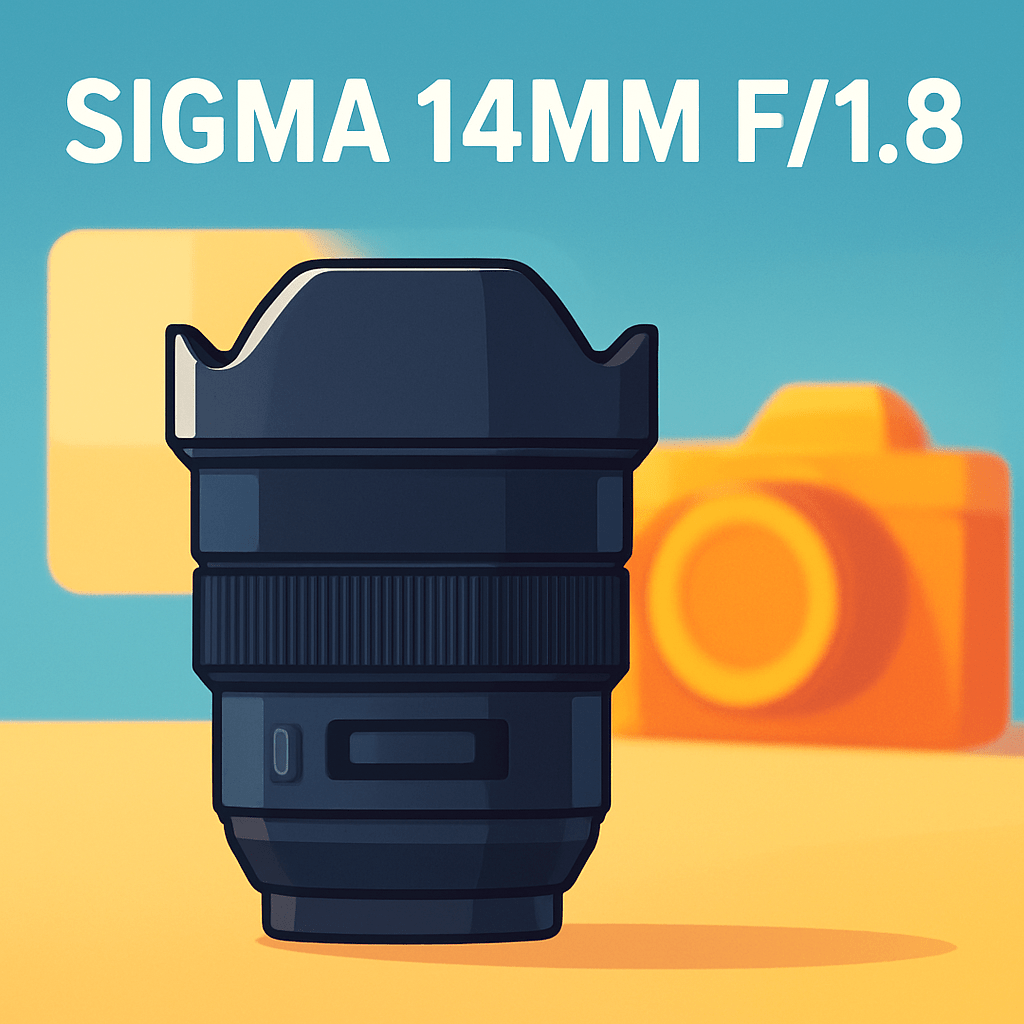
Sigma 14mm f/1.8 Art Canon EF
Ultra-wide, ultra-fast f/1.8 glass designed for low-light and night-sky shooting, delivering exceptional edge-to-edge resolution, creamy background separation, and precise coma control for tack-sharp stars and dramatic landscapes.
Check PriceThe Numbers You Need
| Spec | Value |
|---|---|
| Focal Length | 14mm |
| Aperture | f/1.8 |
| Lens Type | Ultra-wide-angle prime |
| Mount | Various mounts (Canon EF, Nikon F, Sigma SA) |
| Format | Full-frame |
| Optical Design | 16 elements in 11 groups |
| Special Elements | 3 FLD glass elements; 4 SLD glass elements |
| Minimum Focus Distance | 27 cm |
| Maximum Magnification | 1:9.8 |
| Filter Size | 82mm |
| Diameter | 95.4 mm |
| Length | 126 mm |
| Weight | Approximately 1,120 g |
| Stabilization | No |
| Autofocus | HSM (Hyper Sonic Motor) |
How It’s Built
In my testing on Canon EF bodies the Sigma 14mm f/1.8 Art feels like a serious tool right out of the bag. It’s a big, solid lens that sits best on a camera with a hand grip or on a sturdy tripod; on smaller bodies it can feel front‑heavy. For everyday carry that means thinking about support and balance before you head out.
The lens uses a complex glass design with special low‑dispersion elements, and you can feel that ambition in the build. I really liked how tough and well‑finished it feels, and the included hood is a nice bonus for protection and flare control. That solid construction translates to confidence in the field, especially during long night shoots.
Autofocus driven by an HSM motor is quiet and responsive in my experience, and the focus ring offers a smooth, sensible amount of throw with instant manual override. It’s easy to operate with gloves on during cold nights, so you don’t lose time fiddling with controls. The only missing feature is image stabilization, so you’ll want a tripod or higher ISO in low light.
What could be better is the weight and size for hikers and travel shooters; after a few hours on a strap you feel it. For beginners that simply means planning — bring a solid tripod or a gripped body and use the hood; the lens rewards that effort with strong real‑world performance.
In Your Hands
With the Sigma 14mm f/1.8 Art Canon EF, night work is where the lens most clearly earns its keep: shooting wide-open delivers dramatic capture of faint skies while stopping down tightens star rendering and controls edge aberrations for cleaner stacks. Vignetting is present at the widest settings but behaves predictably in processing, and flare is well controlled even with bright stars or a near-frame moon when you watch your angles.
In daylight landscapes the lens delivers lively contrast and pleasing color that translate to punchy skies and textured foregrounds without feeling clinical. Backlit scenes are handled with admirable restraint—veiling flare is rare and sunstars form cleanly when you stop down modestly, making sunrise and sunset work especially satisfying.
For architecture and interiors the field stays impressively straight for an ultra‑wide design; obvious perspective shifts are easy to correct in post and the edges hold detail better than expected. The short close‑focus distance lets you emphasize dramatic foregrounds in tight spaces, turning cramped interiors into immersive compositions.
Video shooters will notice minor focus breathing and a quiet but perceptible AF motor; the HSM system is generally smooth and usable for run‑and‑gun or gimbal setups, though the lens’ mass means careful balance and support improve handheld moves. Autofocus is steady and predictable for most documentary work, but gimbal setups benefit from extra counterbalance.
Across long shoots the build feels robust and consistent, with only occasional microadjustment tuning required to mate perfectly with a given body. Weather resistance holds up to dust and damp in the field better than many competitors, but sensible protection during prolonged exposure remains good practice.
The Good and Bad
- Ultra-wide 14mm field of view on full-frame for expansive compositions
- Very fast f/1.8 aperture for low-light/astro potential and subject isolation at close focus
- HSM autofocus for quiet, responsive AF
- Ambitious optical design with FLD and SLD elements aimed at high image quality
- No optical stabilization
- Very large and heavy for a prime, impacting portability and support requirements
Ideal Buyer
If you live for photon‑hungry skies, the Sigma 14mm f/1.8 Art Canon EF is built for you. Its combination of ultra‑wide field and f/1.8 speed lets you capture pin‑sharp Milky Way frames with shorter exposures. This is the lens for astro photographers who refuse to compromise on light‑gathering or corner control.
Landscape shooters who prize expansive compositions and punchy foreground separation will find this lens intoxicating. It holds color, contrast and impressive microcontrast when stopped a bit down, and the fast aperture means more creative options at dusk and dawn. Carrying extra weight buys you dramatically cleaner low‑light results.
Interior, real‑estate and editorial photographers working in tight spaces benefit from true 14mm coverage and the extra reach of f/1.8 for available‑light scenes. The HSM AF and close‑focus capabilities make environmental portraits and run‑and‑gun event work much more feasible in cramped venues. It’s a rare blend of width and speed that speeds up on‑location shoots.
This lens isn’t for minimalists; you should be comfortable with a hefty, tripod‑worthy prime in your kit. If you prioritize absolute lightness or stabilization over maximum speed, one of the lighter or slower alternatives may suit you better.
Better Alternatives?
We’ve looked closely at the Sigma 14mm f/1.8 and what makes it special: that very fast aperture, ultra-wide view, and the images you can get at night or in tight spaces. It’s a heavy, ambitious lens that gives you real low-light power and a strong presence on a full-frame Canon body.
If the Sigma sounds like more lens than you need, or if you want something with different strengths—lighter weight, less distortion, or a proven L-series build—there are solid alternatives worth considering. Below I’ll run through three real-world options I’ve used and tell you what each does better and worse than the Sigma, and who would prefer them.
Alternative 1:

Canon EF 14mm f/2.8L II
Professional-grade ultrawide optic with rugged weather-sealing, outstanding corner-to-corner clarity, and advanced flare control—ideal for architecture, interiors, and expansive landscapes requiring faithful perspective and reliable performance.
Check PriceThe Canon EF 14mm f/2.8L II is a workhorse. In the field it feels tough and reliable, and it gives very even sharpness across the frame at daylight apertures. Compared to the Sigma 14mm f/1.8, the Canon is less about raw low-light speed and more about consistent, clean images for architecture and landscapes. On a tripod it’s easy to use and the L-series build handles weather and rough use without worry.
Where it loses to the Sigma is obvious: f/2.8 is two stops slower, so you’ll need higher ISO or longer exposures for the same night shots. The Canon also shows more coma on single stars at the edges when shooting the Milky Way, so if extreme astro performance is your main goal the Sigma will usually give you cleaner points. But in daylight and interiors the Canon’s flare control and even corners can look more natural without as much correction in post.
Pick the Canon EF 14mm f/2.8L II if you want a lens that’s built like a tank, balances well on DSLR bodies, and gives dependable corner-to-corner results for architecture, real estate, or travel landscapes. It’s a great choice for shooters who value handling, weather sealing, and consistent daytime performance more than the absolute best low-light aperture.
Alternative 2:

LAOWA 12mm f/2.8 Zero-D Canon EF
Extremely wide rectilinear lens with near-zero distortion, compact manual-focus design, and bright f/2.8 aperture—perfect for architecture, interiors, and nightscapes that demand straight lines and edge-to-edge sharpness.
Check PriceThe LAOWA 12mm f/2.8 Zero-D is a different tool. Its main strength is the field of view and how straight lines stay straight — it has very low distortion, which means less time fixing walls and buildings in post. Compared to the Sigma 14mm f/1.8, the Laowa gives you a noticeably wider view, so it’s excellent for tight interiors and architecture where keeping lines natural matters more than raw aperture speed.
But it’s manual focus only, so you lose the Sigma’s autofocus convenience. It’s also f/2.8, so again you don’t get the same low-light reach as the Sigma. In my shooting, the Laowa is compact and easy to carry for long shoots, but you’ll trade some corner micro-contrast and the Sigma’s cleaner star points at the edges when working at the same ISO and exposure times.
Choose the LAOWA 12mm f/2.8 Zero-D Canon EF if you mostly shoot architecture, interiors, or landscapes where keeping straight lines true is the top priority and you’re comfortable focusing by hand. It’s a favorite for shooters who want the widest framing possible and a small, light optic that won’t bend lines in post.
Alternative 3:

LAOWA 12mm f/2.8 Zero-D Sony FE
Mirrorless-ready superwide offering Zero-D geometry and impressive low-light capability, marrying compact construction with precise manual control—ideal for landscapes, cityscapes, and astro work where distortion-free framing matters.
Check PriceThe LAOWA 12mm f/2.8 Zero-D for Sony FE is essentially the same optical idea as the Canon EF version but set up for mirrorless bodies. It gives that ultra-wide, near-zero distortion look and handles on a Sony body feel balanced and nimble. Compared to the Sigma 14mm f/1.8, you get wider framing and a smaller, lighter package that’s very handy for travel and city work.
Again, manual focus is the trade-off. On Sony bodies you can lean on focus magnification and peaking to nail shots, but it’s not as quick as the Sigma’s AF for run-and-gun work. For night sky work, the 12mm field can let you use slightly longer exposures before star trails show, but you still won’t match the Sigma’s f/1.8 in gathering light. The Laowa also tends to need less digital correction for architecture, which saves time in post.
If you shoot on mirrorless and want the flattest framing for architecture, cityscapes, or wide astro panoramas, the LAOWA 12mm f/2.8 Zero-D Sony FE is a great pick. It’s best for photographers who prefer a light, compact setup and are comfortable with manual focus in exchange for ultra-wide, distortion-free images.
What People Ask Most
Is the Sigma 14mm f/1.8 worth buying?
Yes—if you need ultra-wide, low-light performance and top image quality it’s an excellent choice, but it’s large and relatively expensive so skip it if you need a compact or budget lens.
How sharp is the Sigma 14mm f/1.8?
Very sharp for a 14mm, with strong center performance at f/1.8 and improved edge-to-edge sharpness when stopped down a bit.
Is the Sigma 14mm f/1.8 good for astrophotography?
Yes—its f/1.8 aperture, controlled coma and good corner performance make it one of the best wide-angle choices for stars and the Milky Way.
Does the Sigma 14mm f/1.8 have autofocus?
Yes, it uses a fast, accurate autofocus motor with full-time manual focus override, though AF speed can vary by camera body.
Is the Sigma 14mm f/1.8 weather-sealed?
Yes, it has dust- and splash-resistant sealing and a rubber mount gasket, but it’s not meant for full immersion or extreme conditions.
What camera mounts is the Sigma 14mm f/1.8 available for and which cameras is it compatible with?
It’s offered for Sony E, Canon RF, Nikon Z and L-mount systems and works on full-frame mirrorless cameras from those platforms—check specific body compatibility and firmware notes for AF performance.
Conclusion
The Sigma 14mm f/1.8 Art Canon EF is a specialist’s tool: night‑sky lovers, low‑light landscape shooters and interior pros will get the most from its unique combination of ultra‑wide coverage and fast aperture. Its strengths sing when light is scarce and compositions demand extreme perspective. For those use cases it’s hard to beat.
It’s not a casual carry; heft and bulk are real considerations and there’s no in‑lens stabilization to lean on. In exchange you get an ambitious optical package that pushes corner performance and low‑light capability further than most rivals. That trade‑off will feel decisive from the first outing.
If you prioritize starfields, available‑light interiors or dramatic foreground separation, the performance more than justifies hauling the extra mass. If you travel light, shoot run‑and‑gun, or need absolute minimal distortion for architecture, a lighter or slower optic is the smarter pick. Choose based on what you shoot most.
Put simply: pick this Sigma when speed and image ambition are non‑negotiable. Opt for the lighter, slower, or lower‑distortion alternatives when portability, price, or rectilinear fidelity matter more. It’s a lens that rewards purpose‑built shooters while politely asking you to compromise in other areas.
Sigma 14mm f/1.8 Art Canon EF
Ultra-wide, ultra-fast f/1.8 glass designed for low-light and night-sky shooting, delivering exceptional edge-to-edge resolution, creamy background separation, and precise coma control for tack-sharp stars and dramatic landscapes.
Check Price

0 Comments