
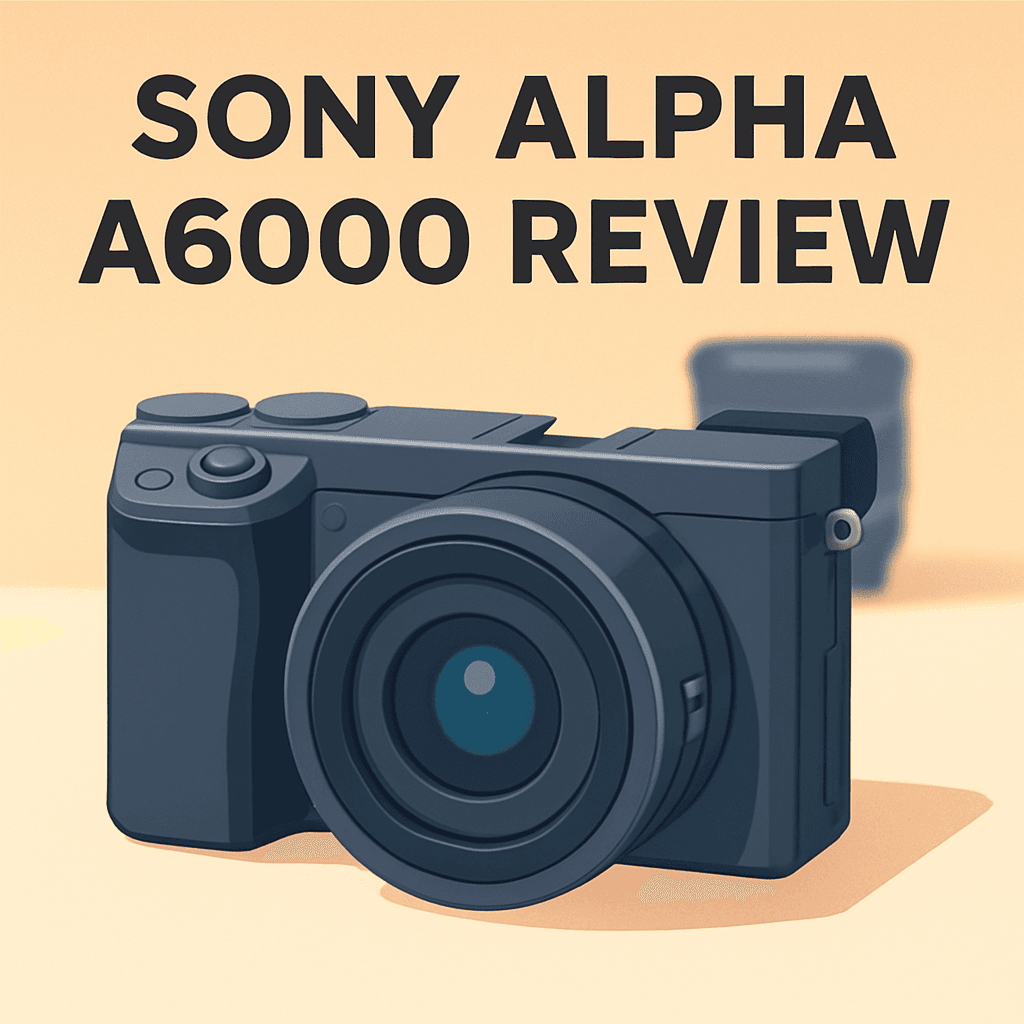
Want better photos without lugging around a bulky rig?
If you’re wondering whether the Sony Alpha A6000 Camera still makes sense, I took it on street, travel, and family shoots to see how it behaves in the real world.
I’ll cover handling, autofocus, burst performance, image quality, video usability, and day-to-day endurance so you’ll know what to expect — make sure to read the entire review as I dig into what still makes this compact camera compelling, keep reading.

Sony Alpha A6000 Camera
Compact mirrorless powerhouse with a 24MP APS-C sensor, lightning-fast bursts, reliable autofocus, and a sharp electronic viewfinder—ideal for enthusiasts seeking DSLR performance in a travel-friendly, versatile package.
Check PriceThe Numbers You Need
| Spec | Value |
|---|---|
| Sensor | 24 MP APS-C CMOS |
| Lens Mount | E-mount |
| Continuous Shooting | Up to 11 fps |
| Autofocus | Fast Hybrid AF |
| ISO Range | 100–25,600 (expandable to 51,200) |
| Video Recording | 1080p at 60 fps |
| Viewfinder | 0.39″ 1,440,000‑dot OLED |
| LCD Screen | 3.0″ 921,600‑dot tilting |
| Image Stabilization | In-body stabilization not available |
| Memory Slots | One SD card slot |
| Battery Life | Up to 310 shots |
| Dimensions | 120 × 67 × 45 mm |
| Weight | Approximately 344 g |
| Wi-Fi and NFC | Yes |
| RAW Image Capture | Yes |
How It’s Built
In my testing the Sony Alpha A6000 Camera’s small body felt like a secret superpower for street and travel days. It’s light enough to carry all day and really works best with compact primes; slap on a big zoom and it starts to feel off-balance. I loved the stealthy footprint for candid shots, but wish the grip was a touch deeper for longer handheld sessions.
In my hands the EVF is sharp enough to trust in bright sun and the tilting LCD saved me on low-angle shots. The buttons and dials are simple and straightforward, which is great for beginners learning where everything lives. One downside I noticed is the single memory card slot — it’s fine for everyday shooting, but I always made a habit of backing up sooner on trips.
The lack of in-body stabilization means I reached for stabilized lenses or bumped up shutter speeds when light got tricky. For video I relied on lenses with steady elements or a small gimbal when I wanted smoother movement. Battery life is modest in real use, so I recommend carrying a spare and turning off wireless when not sharing photos.
In Your Hands
Out in the field the A6000 feels nimble and responsive; its compact footprint makes it easy to carry all day and to raise for fleeting photo opportunities. Continuous bursts are brisk and practically useful for capturing moments with kids, pets, and on the street. The buffer clears quickly enough that you rarely miss the decisive frame, though it’s not built for marathon pro sports runs.
Autofocus is one of the camera’s best practical strengths; the hybrid AF snaps to subjects with confident speed in good light and locks onto faces reliably. In dim interiors the system becomes more deliberate — it will find and hold moving subjects, but you’ll notice the occasional hesitation compared with newer AF designs. For most everyday shooting the AF inspires confidence and keeps the workflow moving.
Video shooters get a solid full‑HD experience that handles everyday social clips and “slow‑motion‑lite” needs without fuss, and the sensor renders pleasing detail for handheld work when paired with a steady lens. Lack of sensor stabilization means handheld video benefits from stabilized glass or a gimbal to avoid unwanted motion. For hybrid shooters who prioritize stills, the video capabilities are more than adequate for casual projects.
Wireless pairing and image transfer are straightforward, making quick sharing and on-the-go selects painless, while RAW capture preserves the latitude you’ll want for editing. Real-world endurance is conservative — plan spares and a card‑rotation/offload habit for longer days to avoid a single‑slot bottleneck. Those small rituals keep the camera trustworthy on extended trips and events.
The Good and Bad
- 24 MP APS-C sensor delivers solid stills detail
- Up to 11 fps continuous shooting for action moments
- Fast Hybrid AF for quick focusing
- Compact and lightweight body
- No in-body image stabilization
- 1080p-only video (no 4K)
Ideal Buyer
The Sony Alpha A6000 Camera is ideal for photographers who prize compact size and all‑day portability. Its light body and small-lens balance make it a natural travel and street companion. Toss in a fast prime and you’re set for lengthy walks and impromptu shoots.
Fast stills capture—up to 11 fps—combined with quick hybrid AF suits families, pets and casual action shooters. Beginners stepping up from phones or compact cameras will appreciate the responsive feel without a steep learning curve. It’s a great bridge into interchangeable-lens photography.
Filmmakers comfortable with Full HD will like 1080/60 for smooth, social-ready clips. If you don’t need 4K and can work around the lack of IBIS by using stabilized glass or faster shutter speeds, the A6000 keeps things simple. Hybrid shooters who favor stills first will find that trade-off acceptable.
Bring spare batteries and an extra card if you plan long days or events. Photographers who shoot RAW and want the editing latitude of a 24MP APS‑C sensor will get great value here. If you want affordable speed in a compact package, this camera still makes sense.
Better Alternatives?
We’ve already walked through what makes the Sony Alpha A6000 a solid little camera: great 24MP stills, fast bursts, and a compact body that’s easy to carry. But it’s an older design now, and some shooters want newer autofocus, 4K video, or a different handling feel.
Below are three cameras I’ve used in the field that make sense if you’re thinking beyond the a6000. I’ll point out what each one does better and where it falls short compared to the a6000, and who is most likely to prefer each option.
Alternative 1:

Sony Alpha A6100 Camera
Modern hybrid camera featuring advanced real-time eye autofocus, crisp 4K video, and improved low-light performance. A responsive touchscreen and rapid continuous shooting make it perfect for creators and on-the-go storytellers.
Check PriceI’ve shot weddings, kids’ parties, and street scenes with the a6100, and the most obvious difference from the a6000 is the autofocus and 4K video. In real life that means I missed fewer quick-focus moments, and face/eye detection locks on and stays on much better when people are moving. The touchscreen is handy for quickly changing focus points or using touch-to-track when you’re juggling gear or shooting fast.
Compared to the a6000, the a6100 is better at reliable AF and gives you 4K if you want crisper video. It’s not magic everywhere though — battery life is still modest and it doesn’t add in-body stabilization, so you’ll still want steady hands or stabilized lenses for low light and gimbal-free video. Also, if you loved the raw look of Sony files, the a6100 keeps that style rather than switching to film-like colors.
If you shoot a lot of moving subjects, vlog, or want 4K without a big learning curve, the a6100 is an easy upgrade from the a6000. It’s ideal for content creators, traveling photographers who want more modern AF, and anyone who wants better video while keeping a small, light kit.
Alternative 2:

Fujifilm X T30 II Camera
Stylish retro-bodied compact with a 26MP X-Trans sensor, beautiful film-simulation colors, and 4K video capability. Fast autofocus and tactile controls enable expressive street, portrait, and travel photography.
Check PriceUsing the X-T30 II feels different right away — the dials and layout invite you to shoot more deliberately. I loved the film simulations for straight-out-of-camera color when I needed fast turnarounds, and the JPEGs often needed less editing than Sony’s. For portraits and travel shots where color and mood matter, the Fuji look is something I reached for on purpose.
Against the a6000, the X-T30 II gives nicer out-of-camera color and a more tactile shooting experience. Where it can lag is in continuous tracking for very fast action — I’ve found Sony’s tracking holds up better when subjects sprint or change direction quickly. Fuji’s overall AF is fast, but in tough light or chaotic movement the a6000 (and newer Sonys) can be the safer bet.
Choose the X-T30 II if you want beautiful JPEGs without heavy editing, enjoy manual dials, and shoot portraits, street, or travel work where color and feel matter more than chasing fast sports action. It’s great for photographers who love a classic camera feel and want images that look pleasing straight away.
Alternative 3:
Fujifilm X T30 II Camera
Refined image processor delivers richer tones and faster subject detection in a pocketable body. Intuitive dials, versatile autofocus, and class-leading color profiles make it a favorite for enthusiasts and content creators.
Check PriceOn another shoot with the X-T30 II I noticed the refined image processing gives richer mid-tones and skin rendering that often looks more pleasing without tweaks. The camera feels small but capable — I carried it all day on a city walk and liked how the controls let me react quickly to scenes without digging through menus.
Compared to the a6000, this Fuji is stronger on color rendition and creative in-camera looks, and it nudges autofocus speed in many normal shooting situations. It still falls short of the a6000’s raw burst-and-track confidence for very fast-moving subjects, though, and like the a6000 it doesn’t have in-body stabilization so low-light handheld work still needs care.
If you’re an enthusiast or content creator who values tone, skin color, and a camera that feels pleasing to use, the X-T30 II is a great pick. It’s for photographers who prefer images with character straight away and who prioritize the shooting experience as much as technical speed.
What People Ask Most
Is the Sony Alpha A6000 still worth buying?
Yes — if you want a compact, capable APS-C camera at a low price it still offers excellent value, though it lacks newer features like 4K and advanced tracking.
Is the Sony Alpha A6000 a good camera for beginners?
Yes — it’s easy to learn, has fast autofocus and good image quality, and there’s a large, affordable lens selection for growth.
How is the image quality of the Sony A6000?
Very good for an APS-C sensor: sharp files with solid dynamic range and usable high-ISO performance up to around ISO 1600–3200.
How good is the autofocus on the Sony A6000?
Autofocus is fast and accurate for stills thanks to 179 phase-detect points, though it’s less capable at continuous subject tracking than newer models.
Can the Sony A6000 record 4K video?
No — the A6000 records up to 1080p (Full HD) only, with up to 60fps depending on settings.
What are the pros and cons of the Sony A6000 compared to newer Sony models?
Pros: affordable, compact, strong still-image performance and lens ecosystem; Cons: no 4K, older tracking and features, and generally shorter battery life than newer bodies.
Conclusion
The Sony Alpha A6000 remains a compelling, compact stills machine that punches above its age. Its sensor and shooting speed deliver clean, detailed images and confident burst performance. The hybrid AF and tilting LCD make it a lively tool for street, travel, and family work.
That said, it shows its age in a few clear ways. Lack of in-body stabilization, 1080p-only video, a single card slot, and modest battery life limit its versatility for modern hybrid shooters and long events. Those compromises matter if you expect contemporary video features or extended, card-redundant workflows.
If your priority is lightweight portability, fast autofocus, and straightforward stills-first performance, the A6000 still represents excellent value. It rewards photographers who prioritize image quality and portability over the latest video bells and whistles. For many shooters it’s a practical, no-nonsense camera that gets the job done.
If you need 4K, more advanced tracking, tactile controls, or a more modern interface, look to newer options like the a6100, a Fujifilm X-series, or Nikon Z50. Test the A6000 against those alternatives first, and choose it when compact speed and image quality outweigh the missing modern conveniences.
Sony Alpha A6000 Camera
Compact mirrorless powerhouse with a 24MP APS-C sensor, lightning-fast bursts, reliable autofocus, and a sharp electronic viewfinder—ideal for enthusiasts seeking DSLR performance in a travel-friendly, versatile package.
Check Price


0 Comments