
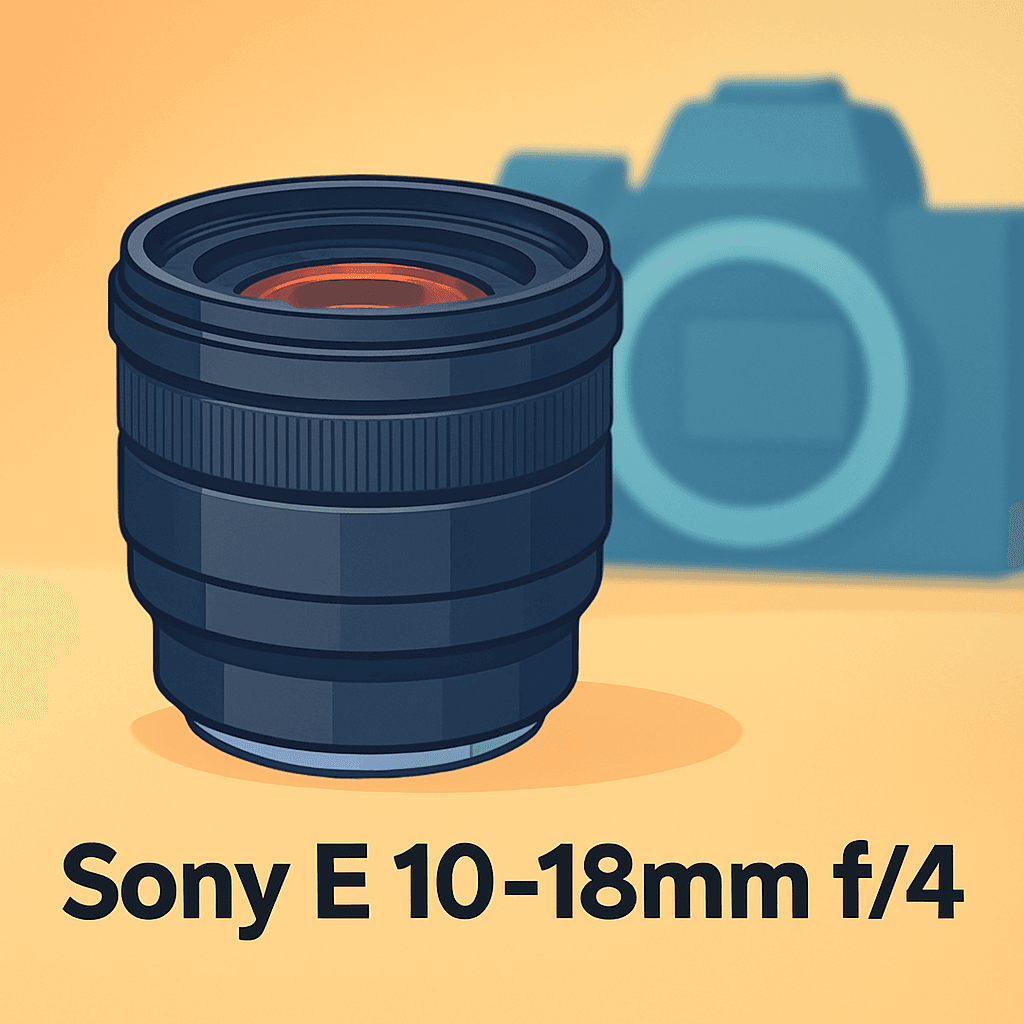
Want to capture sweeping interiors and dramatic landscapes without lugging heavy gear? If you’re shooting Sony APS-C, the Sony E 10-18mm f/4 OSS promises ultra-wide reach in a travel-friendly package.
It’s a compact, stabilized zoom with a constant f/4 aperture and built-in OSS, and I’ve field-tested it on assignments and road trips to see how that translates in real shoots.
This review will show who benefits most—real estate shooters, travelers, vloggers, and architecture photographers—and what trade-offs to expect in the field, so make sure to read the entire review as I unpack when this lens shines and when another option might suit you better—keep reading.

Sony E 10-18mm f/4 OSS
Ultra-wide zoom for APS-C cameras delivering steady handheld shots with built-in optical stabilization, consistent f/4 sharpness edge-to-edge, minimal distortion, and a compact lightweight design perfect for landscapes and interiors.
Check PriceThe Numbers You Need
| Spec | Value |
|---|---|
| Lens type | Ultra-wide-angle zoom |
| Mount | Sony E-mount (APS-C) |
| Focal length | 10-18mm |
| Maximum aperture | Constant f/4 |
| Image stabilization | Optical SteadyShot (OSS) |
| Minimum focusing distance | 0.25 m |
| Filter diameter | 62 mm |
| Lens construction | 12 elements in 9 groups |
| Angle of view | Approx. 109°–76° (diagonal) |
| Autofocus | Yes, with Silent Wave Motor (SSM) |
| Aperture blades | 7 (rounded) |
| Dimensions (diameter x length) | Approx. 65.6 x 72 mm |
| Weight | Approx. 225 g |
| Weather sealing | No (not weather resistant) |
| Compatible sensor format | APS-C (crop factor 1.5x) |
How It’s Built
In my testing the Sony E 10-18mm f/4 OSS feels like a perfect little travel companion on Sony APS-C bodies. It’s compact and light in the hand, and it balances nicely on smaller cameras so you don’t get arm fatigue on long shoots. That makes it easy to carry all day for travel, interiors, or walk-and-talk video.
Despite the small size, the build feels properly solid rather than toy-like. I really liked the built-in optical stabilization — it gives steadier handheld framing when you need it most. The zoom and focus rings are smooth and responsive, so dialing in a composition is simple even if you’re new to ultra-wide lenses.
One thing that could be better is the lack of weather protection. After using it in windy, dusty conditions I treated it like any non-sealed lens: keep it under a jacket, use a simple rain cover, and avoid changing lenses outdoors. Those small habits go a long way for beginners who want to protect their gear.
The front thread accepts common screw-in filters, which makes using a polarizer or ND far less painful than on some ultra-wides. For anyone starting out, that means easier control over reflections and exposure without packing bulky filter holders.
In Your Hands
In the field the Sony E 10-18mm f/4 OSS immediately delivers the ultra-wide perspective you expect — tight interiors open up, city blocks feel cinematic, and sweeping landscapes gain dramatic foreground context. At the widest end you’ll notice the characteristic stretching of perspective that can exaggerate lines, while the longer end tightens that view and makes architectural lines easier to manage with minimal correction. That behavior is predictable and, with a careful eye, becomes a creative advantage rather than a surprise.
The constant aperture keeps exposure behavior steady as you zoom, and the in-lens stabilization meaningfully steadies hand-held work in dimmer light and during walking shots. Autofocus is quiet and smooth, tailored for both stills and run-and-gun video, so focus transitions don’t call attention to themselves in clips. For fast-moving subjects you’ll still want a faster aperture or higher shutter speeds, but for interiors and twilight cityscapes the combination is very practical.
Close-focusing lets you place contextual foregrounds in the frame but don’t expect macro performance — it’s better suited to environmental details than tiny subjects. You’ll see some vignetting and slightly softer corners wide open that improve when stopped down, while flare control is competent if you watch sun angles; color and contrast are consistent throughout the range, producing pleasing JPEGs and robust RAW files.
Practically, this lens excels for real estate walkthroughs, travel city shots, handheld vlogging, and golden-hour landscapes where portability and steadiness matter. OSS helps steady composition and smooth pans, but it complements rather than replaces good technique or a tripod for critical architectural or long-exposure work. For photographers who prioritize compact, stabilized ultra-wide coverage on an APS-C body, its real-world balance of handling and imagery is hard to beat.
The Good and Bad
- Ultra-wide 10–18 mm coverage on APS-C
- Constant f/4 aperture
- Optical SteadyShot (OSS)
- Compact and very lightweight (approx. 225 g)
- No weather sealing
- f/4 not as bright as f/2.8 options for low-light/subject isolation
Ideal Buyer
If you shoot on a compact Sony APS‑C camera and want an unobtrusive ultra‑wide that tucks into a travel kit, the Sony E 10‑18mm f/4 OSS is aimed squarely at you. Its 10–18mm coverage, constant f/4 and in‑lens OSS make it a workhorse for handheld stills and run‑and‑gun video.
Real‑estate agents, interior shooters, and architecture photographers will appreciate the field of view for tight rooms and dramatic lines. Travel photographers and vloggers will like the pocketable weight and stabilized framing for walk‑and‑talk sequences.
Landscape shooters who favor portability over extreme low‑light speed will find it fits in a lightweight kit for blue‑hour vistas and sweeping foregrounds. The lens is also a smart pick for hybrid shooters who prefer a predictable constant‑aperture workflow across photo and video.
It’s not for photographers who need f/2.8 performance, heavy subject separation, or pro‑grade weather sealing. If you expect to move to full‑frame bodies soon, consider whether lack of full‑frame compatibility will complicate future lens plans.
In short, choose this lens if you prize stabilization, true ultra‑wide framing on an E‑mount APS‑C body, and a carry‑everywhere attitude. It rewards photographers who trade a stop of aperture for simplicity, mobility, and steady handheld results.
Better Alternatives?
We’ve spent time with the Sony E 10-18mm f/4 OSS and seen why it’s such a handy ultra-wide for Sony APS-C shooters: solid wide coverage, constant f/4, built-in OSS, and tiny size that makes it great for travel, interiors, and run-and-gun video. It’s a great all-rounder, but not every shooter has the same priorities—some want more light, some want tougher build or even a different rendering.
Below are a few real-world alternatives I’ve used that highlight those different needs. I’ll point out what each one does better and worse than the Sony, and who I’d recommend it to based on actual shooting experience.
Alternative 1:

Tamron 11-20mm f/2.8 Di III-A RXD Sony E
Bright ultra-wide zoom with constant f/2.8 aperture for low-light shooting and creative background separation, fast quiet autofocus, close focusing for dramatic perspectives, and a compact build ideal for travel and night skies.
Check PriceWhat it does better: The Tamron 11-20mm f/2.8 is the one to reach for when you need more light. Shooting at f/2.8 compared to the Sony’s f/4 is a noticeable jump—lower ISO for handheld night cityscapes, easier star capture for night skies, and a touch of subject separation when you want it. Autofocus is quiet and quick in my experience, and the lens feels modern in handling. I also liked the closer close-focus for dramatic foregrounds in tight interiors.
What it does worse: It gives up the Sony’s built-in OSS, so if your camera body doesn’t have good IBIS you’ll feel that on slower shutter speeds. It’s also a bit bigger and heavier than the Sony 10-18, so it’s not as pocketable for all-day travel. In bright backlight the Tamron resists flare well, but I’d still say the Sony remains slightly handier for quick gimbal work because of the in-lens stabilization.
Who should buy it: Choose the Tamron if you shoot a lot in low light (nightscapes, indoor events, or run-and-gun evening shoots) and want the extra speed and shallower depth look. If you have a Sony body with IBIS the lack of OSS is less of an issue; if you value low-light performance over ultimate compactness, this is the better pick.
Alternative 2:
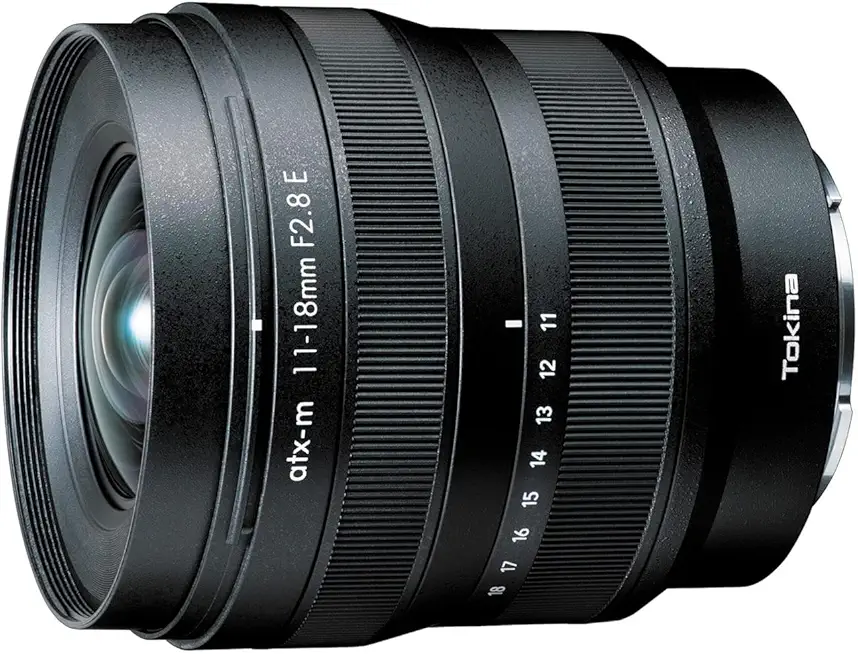
Tokina ATX-m 11-18mm f/2.8 Sony E
Fast, edge-to-edge sharp ultra-wide zoom offering constant f/2.8 performance, durable metal construction, smooth manual control, and corrected optics that reduce coma and distortion—great for architecture, interiors, and astrophotography.
Check PriceWhat it does better: The Tokina ATX-m 11-18mm shines when you need strong edge-to-edge detail and a rugged build. In my architecture and landscape work it held lines well and delivered solid corner sharpness when stopped down. The constant f/2.8 helps for night sky work, and the lens felt very sturdy in hand—good if you’re out in the field and want something that won’t feel fragile.
What it does worse: Like the Tamron, the Tokina doesn’t have OSS, so handheld low-light without IBIS is harder than with the Sony 10-18. Autofocus on the Tokina can feel less smooth and a touch slower compared with the Sony and Tamron on some bodies, which matters if you do a lot of run-and-gun video or fast-moving subjects. It’s also heavier and less travel-friendly than the tiny Sony.
Who should buy it: The Tokina is a good fit if you shoot architecture, interiors, or astrophotography and want a tough, sharp lens with an f/2.8 aperture. Pick it if edge sharpness and build quality matter more than compact size or in-lens stabilization.
Alternative 3:
Tokina ATX-m 11-18mm f/2.8 Sony E
Versatile ultra-wide performer with consistent f/2.8 brightness, reliable autofocus, and compact form factor delivering cinematic perspectives, strong low-light capability, and corner-to-corner sharpness for landscapes, vloggers, and indoor shooting.
Check PriceWhat it does better: Used as a run-and-gun lens, the Tokina still gives you that f/2.8 advantage over the Sony—cleaner low-light frames and a more “cinematic” look when you want some subject separation. On vlog-style shoots the wider end and the solid build made it easy to hold and frame; I found colors and contrast pleasing straight out of camera.
What it does worse: Again, no OSS means you lose the Sony’s built-in stabilization benefit for handheld video and slow-shutter stills. If you’re after the absolute smallest, lightest setup for travel vlogging, the Sony 10-18 is noticeably easier to carry and balance on a gimbal. Also, depending on your camera body, AF feel can be a hair less refined than native Sony glass.
Who should buy it: This Tokina suits vloggers and landscape shooters who want the brighter f/2.8 look and a robust feel without stepping up to a much larger lens. If you value a little more punch in low light and don’t need in-lens stabilization, it’s a strong, more affordable alternative to the Sony 10-18.
What People Ask Most
Is the Sony E 10-18mm f/4 worth the money?
Yes—if you shoot on an APS-C Sony and want a compact, constant f/4 ultra-wide with good optics and OSS, it’s excellent value; skip it if you need faster glass or full-frame coverage.
Does the Sony E 10-18mm f/4 have image stabilization (OSS)?
Yes, it features Sony’s Optical SteadyShot (OSS) which helps handheld video and low-light stills.
Is the Sony E 10-18mm f/4 weather-sealed?
No, it isn’t fully weather-sealed, so use caution in heavy rain or dusty conditions.
Can the Sony E 10-18mm f/4 be used on full-frame Sony cameras?
Technically yes, but it’s designed for APS-C and will heavily vignette on full-frame unless you use crop mode or accept severe edge darkening.
Is the Sony E 10-18mm f/4 good for landscape and architecture photography?
Yes—its ultra-wide coverage, low distortion and good edge-to-edge performance when stopped down make it ideal for landscapes and architecture.
How sharp is the Sony E 10-18mm f/4?
Sharpness is very good in the center across the range, with edges a bit soft wide open but improving when stopped down to f/5.6–f/8.
Conclusion
The Sony E 10-18mm f/4 OSS is a tidy, purpose-built ultra-wide for APS-C shooters. It pairs a constant aperture with in-lens stabilization and genuinely pocketable size.
That combination makes it an unusually practical tool for interiors, architecture, travel and run-and-gun video. OSS gives real confidence handheld where tripods are impractical. It shines where agility matters and packing space is at a premium.
Trade-offs are real and clear. There’s no weather sealing, and the maximum aperture isn’t as fast as competing f/2.8 choices. Close-focus and subject isolation are modest, and it’s an APS-C-only commitment.
I’d buy it if you prioritize compactness and steady handheld performance over outright optical speed or future full-frame reuse. If you need faster low-light performance look toward the f/2.8 zooms. If you want the highest edge-to-edge optics and rugged build, consider a full-frame alternative.
In short, it’s a highly usable, no-nonsense ultra-wide that delivers maximum real-world value for a certain photographer. For travel and interiors on Sony APS-C, it’s one of the most sensible buys you can make. Buy it for sensible, everyday ultra-wide work; skip it if you’re chasing the absolute fastest aperture or planning an immediate jump to full-frame.
Sony E 10-18mm f/4 OSS
Ultra-wide zoom for APS-C cameras delivering steady handheld shots with built-in optical stabilization, consistent f/4 sharpness edge-to-edge, minimal distortion, and a compact lightweight design perfect for landscapes and interiors.
Check Price

0 Comments