
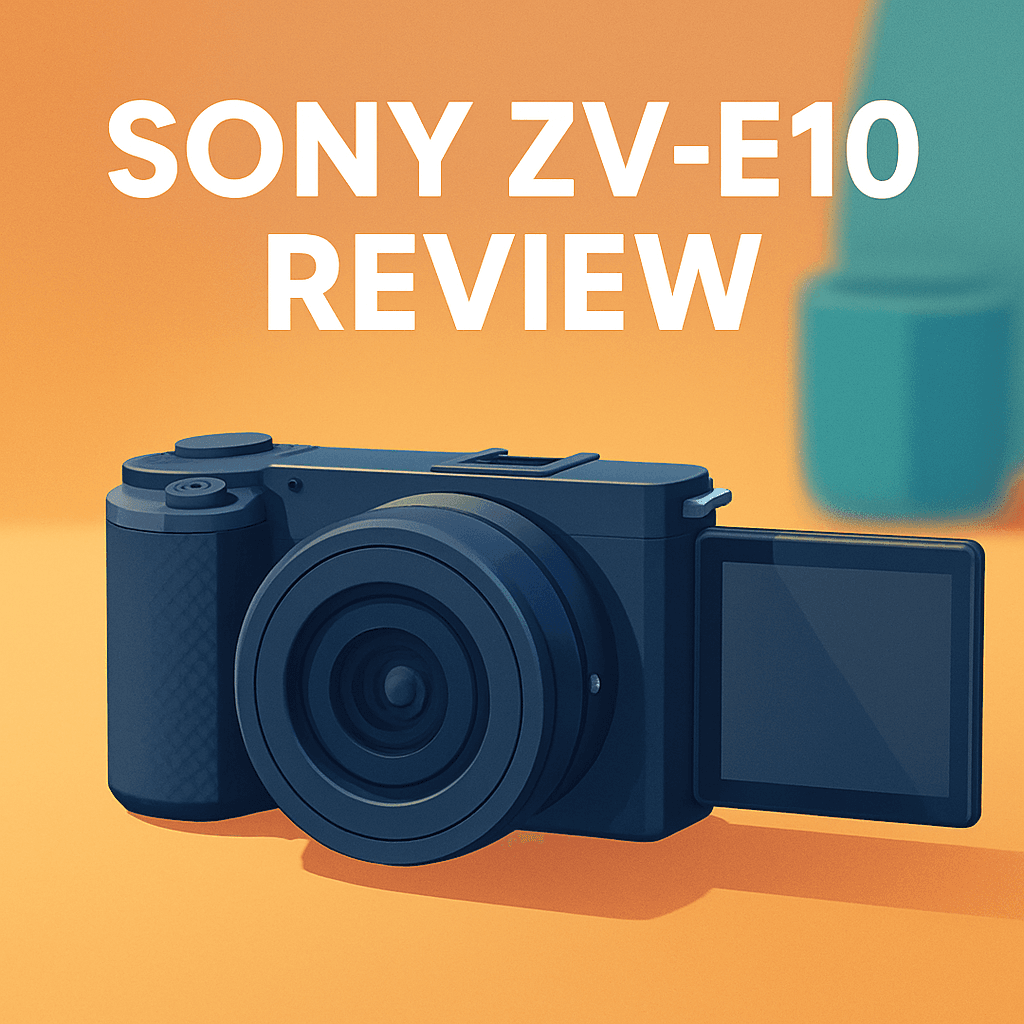
Want to improve your image and video quality without hauling a full pro rig?
The Sony ZV-E10 Camera packs an APS-C sensor, 4K/30p video, fast hybrid autofocus, a vari‑angle touchscreen and a mic input into a tiny, travel‑friendly body.
It doesn’t have in‑body stabilization, so you’ll lean on OIS lenses or a gimbal for the steadiest handheld footage, but it does offer log/HLG options and surprisingly good battery life for its size.
Having taken it on a few real shoots, I’ll show who benefits most from its creator‑friendly features and where you might compromise for portability — keep reading.

Sony ZV-E10 Camera
Lightweight mirrorless kit tailored for solo creators, delivering fast autofocus, a flip-out touchscreen, excellent low-light performance, and clean audio input — ideal for vlogs, product demos, and social content.
Check PriceThe Numbers You Need
| Spec | Value |
|---|---|
| Sensor | APS-C |
| Resolution | 24.2 MP |
| Lens Mount | Sony E-mount |
| Autofocus | Fast Hybrid AF |
| Video Resolution | 4K at 30p |
| Continuous Shooting | Up to 11 fps |
| ISO Range | 100–32000 (expandable to 51200) |
| Image Stabilization | None (dependent on lens) |
| Screen Type | Vari-angle touchscreen |
| Microphone Input | Available |
| Video Modes | S-Log, HLG, S-Log2 |
| Burst Mode | Yes |
| Weight | Approximately 343 g |
| Dimensions | 115.2 × 64.8 × 44.8 mm |
| Battery Life | Up to 440 shots |
How It’s Built
In my testing the Sony ZV‑E10 Camera feels like a small, friendly camera. It’s light and compact, easy to carry all day without getting tired. That makes it a great choice for travel, street work, or long run‑and‑gun days.
The E‑mount gives you tons of lens choices, which I loved when switching between wide and tele for different shots. The flip‑out touchscreen made framing and self‑shooting a breeze during my shoots. And the mic jack lets you capture much better audio without dragging a big rig around.
One thing I really liked was how easy the camera was to hold and use straight away. One thing that could be better is the lack of in‑body stabilization — in my shooting that meant relying on lenses with OIS or a small gimbal to keep footage steady. That’s an important real‑world tradeoff to plan for.
The grip is comfortable with lightweight lenses and buttons fall naturally under my fingers, though bigger lenses or gloves might feel fiddly. Battery life easily covers a full day of mixed photo and video work in my experience. For beginners it’s forgiving and quick to learn without feeling like a toy.
In Your Hands
The Sony ZV‑E10’s APS‑C sensor delivers crisp stills with the kind of detail and latitude that make cropping and moderate enlargements forgiving and enjoyable. Its rapid continuous shooting is genuinely useful for catching fleeting expressions and peak-action moments, and in real-world use the burst behavior felt reliable enough for event coverage and street work.
In mixed lighting the camera holds up well — noise control is tidy at everyday sensitivities and highlights retain recoverable tone when you expose thoughtfully. As with any compact mirrorless, lens choice matters: brighter glass noticeably improves low‑light usability and subject isolation, so pairing the body with the right optics makes a big difference.
Video is a strong suit for creators: the camera produces detailed UHD footage with a smooth, natural cadence and the inclusion of log and hybrid picture profiles gives ample headroom for grading. Because there’s no in‑body stabilization, handheld shots benefit from lenses with optical stabilization, in‑camera/post stabilization tools, or a simple gimbal to keep motion feeling professional.
The vari‑angle touchscreen and mic input make single‑operator workflows painless, enabling clean audio and confident framing for vlogs and interviews. Lightweight and compact, the ZV‑E10 comfortably handles full‑day mixed photo/video shoots, and in my hands it proved a dependable run‑and‑gun tool for solo creators.
The Good and Bad
- 24.2 MP APS-C sensor
- 4K video at 30p
- Fast Hybrid AF
- Vari-angle touchscreen
- No in-body image stabilization (IBIS)
- 4K frame rate capped at 30p
Ideal Buyer
The Sony ZV‑E10 is for creators who prize a small, nimble kit they can carry all day. Its lightweight APS‑C body and E‑mount flexibility make it a perfect travel companion. You get pro features without a heavy rig.
Video creators who want clean 4K/30p with S‑Log and HLG will appreciate the grading headroom. The vari‑angle touchscreen and on‑camera mic input speed up solo shoots and vlogs. Fast Hybrid AF keeps faces and subjects locked in while you move.
Hybrid shooters who still value quality photos benefit from the 24.2MP sensor and up to 11 fps burst. It’s ideal for street, events, and candids where portability outweighs IBIS. The Sony E‑mount also opens lots of glass for creative looks.
Buyers should be comfortable planning for stabilization with OIS glass or a gimbal. If you need higher 4K frame rates or in‑body stabilization, look elsewhere. But if you can work within those limits, the ZV‑E10 is tightly focused and efficient.
In short, this camera suits entry‑to‑intermediate solo creators, vloggers, and hybrid shooters already invested or willing to invest in E‑mount lenses. It rewards mobility, fast AF and clean video pipelines. For anyone chasing a compact, capable creator rig, it’s a smart choice.
Better Alternatives?
We’ve gone through what the Sony ZV‑E10 does well: a light, easy body for vloggers, strong 24MP stills, decent 4K/30p video, great AF, and that handy vari‑angle screen. But not everyone needs the exact same mix — some shooters want an EVF, different color rendering, or built‑in stabilization. Those needs point you to a few solid alternatives worth trying in real life.
Below are three cameras I’ve used in real shoots that give a different feel on the street, at events, or when you’re recording yourself. I’ll say what each does better than the ZV‑E10, where it falls short, and which buyer will get the most from each option.
Alternative 1:

Nikon Z30 Camera
Compact mirrorless geared toward vloggers and streamers, featuring smooth autofocus, silent shooting, a vari-angle screen, and reliable video quality for on-the-go content capture and live broadcasting.
Check PriceThe Nikon Z30 feels very much built for solo creators — the vari‑angle screen and clean video workflow make it simple to set up and record. In my hands the skin tones and color straight out of the camera often looked a bit warmer and more pleasing for talking‑head videos, which saved time on color tweaks. Autofocus for faces and eyes is solid for vlog shots, and the camera is light and easy to hold for long handheld takes.
What it doesn’t do better than the ZV‑E10 is AF performance in very tricky motion — Sony still wins in the hardest tracking situations. The Z30 also lacks an EVF and, like the Sony, doesn’t have in‑body stabilization, so you’ll still want OIS lenses or a gimbal for smooth walking shots. The Z‑mount DX lens range is getting better, but it’s not as wide as Sony’s E‑mount, so I noticed fewer budget lens choices when I swapped lenses on a shoot.
If you prefer Nikon’s color and a camera that just makes vlogging fast and easy, the Z30 is a nice alternative. Pick it if you mostly shoot talking‑head videos, live streams, or you like Nikon ergonomics and color straight out of camera — but know it won’t cure the stabilization gap compared to cameras with IBIS.
Alternative 2:

Canon EOS M50 Mark II Camera
Versatile hybrid camera perfect for creators wanting easy vertical video, improved autofocus, and simplified live streaming; offers clear stills, intuitive controls, and quick connectivity for sharing across social platforms.
Check PriceThe Canon EOS M50 Mark II brings a handy EVF that I miss on the ZV‑E10 when shooting in bright daylight or when I want more precise framing for stills. Canon’s Dual Pixel AF is very reliable in 1080p video and feels smooth for solo creators doing run‑and‑gun content or live streaming. The camera’s handling and color tend to make skin tones look good straight away, which is great when you want quick uploads without heavy grading.
Where the M50 Mark II falls behind the ZV‑E10 is in 4K video. In real shooting I noticed the 4K mode is more limited and less flexible than Sony’s — it can come with a crop and loses some of the smoother autofocus that makes the ZV‑E10 so easy to use for sharp 4K talking heads. The M50 II also sits in a smaller lens ecosystem, so if you like swapping lenses often you may feel constrained compared to Sony’s E‑mount options.
The M50 Mark II is a good pick for casual creators who want an EVF plus easy, reliable 1080p streaming and Canon’s color look. Choose this if you value framing with a viewfinder and simple out‑of‑camera colors, and if your main focus is streaming or 1080p content rather than uncropped 4K work.
Alternative 3:

Canon EOS M50 Camera
User-friendly interchangeable-lens camera providing sharp images, bright EVF, and a compact body that fits everyday shooting; great for beginners learning composition, travel photography, and casual video recording.
Check PriceThe original Canon EOS M50 is very user‑friendly and was my go‑to for travel and quick street shoots because it’s small, has a bright EVF, and gives consistently pleasing stills. For buyers coming from phones, the handling and autofocus for everyday shooting feel familiar and forgiving. The camera makes it easy to get good photos without overthinking settings.
Compared to the ZV‑E10, the M50’s video side is more limited — the 4K mode has constraints and the autofocus behavior in higher‑resolution modes is not as strong as Sony’s, so if you need reliable 4K with smooth subject tracking the ZV‑E10 is the steadier choice. The M50 also shows its age in some features and the lens lineup for EF‑M is smaller, so long‑term growth is more limited if you plan to expand lenses frequently.
Pick the original M50 if you want a simple, compact camera that’s easy to learn on and great for travel or casual shooting where an EVF helps in bright light. It’s a fine option for beginners or people who prioritize portability and easy stills over advanced 4K video or the broad lens choices offered by Sony’s E‑mount.
What People Ask Most
Is the Sony ZV‑E10 worth buying?
Yes — it’s a great value if you want an affordable, compact APS‑C interchangeable‑lens camera for vlogging and hybrid photo/video work; avoid it if you need in‑body stabilization or top-tier low‑light performance.
Is the Sony ZV‑E10 good for vlogging?
Yes — the flip screen, good mic input, product showcase setting and easy-to-use video features make it ideal for solo creators and vlogging setups.
What are the pros and cons of the Sony ZV‑E10?
Pros: large APS‑C sensor, interchangeable lenses, strong autofocus and vlogger‑friendly controls; Cons: no IBIS, modest battery life and some rolling‑shutter in certain 4K modes.
How is the autofocus performance on the Sony ZV‑E10?
Very good — Sony’s Real‑time Eye AF and subject tracking are reliable for both photos and video, especially for people and pets.
What lenses should I get for the Sony ZV‑E10?
Start with a compact wide‑to‑normal zoom (around 16–50/18–55 equiv.) for general use, add a fast 24mm/35mm prime for low light and background blur, and consider a 70–200/55–210 equivalent for reach.
Can the Sony ZV‑E10 shoot 4K and what video features does it have?
Yes — it records sharp 4K (up to 30p) and includes picture profiles like S‑Log, clean HDMI out, microphone/headphone jacks and useful vlogging modes.
Conclusion
The Sony ZV-E10 Camera is a compact, creator-first APS-C mirrorless that delivers a lot of practical performance in a small package. Its fast autofocus, vari‑angle touchscreen and on‑camera mic input make solo shooting simple and productive. It’s designed for creators who want fewer compromises on mobility.
You get clean 4K capture and flexible log/HLG profiles for grading, plus a sensor that handles everyday stills and run‑and‑gun work. Battery life and real‑world ergonomics suit daylong shoots. The E‑mount ecosystem means lenses and accessories scale with your ambitions, which is a tangible long‑term advantage.
The true trade-offs are clear and fixable. There’s no in‑body stabilization and 4K tops out at 30p, so handheld video benefits from OIS lenses or a gimbal. If steady, high‑frame handheld footage is your priority, plan for that extra kit.
If you’re a vlogger, traveler, or hybrid creator who values size, AF reliability, and workflow flexibility, the Sony ZV-E10 Camera is an easy recommend. For many creators this balance of features and footprint offers the best practical value. If IBIS or different color/handling is must‑have, look toward alternatives such as the Fujifilm X‑S10.
Sony ZV-E10 Camera
Lightweight mirrorless kit tailored for solo creators, delivering fast autofocus, a flip-out touchscreen, excellent low-light performance, and clean audio input — ideal for vlogs, product demos, and social content.
Check Price

0 Comments