
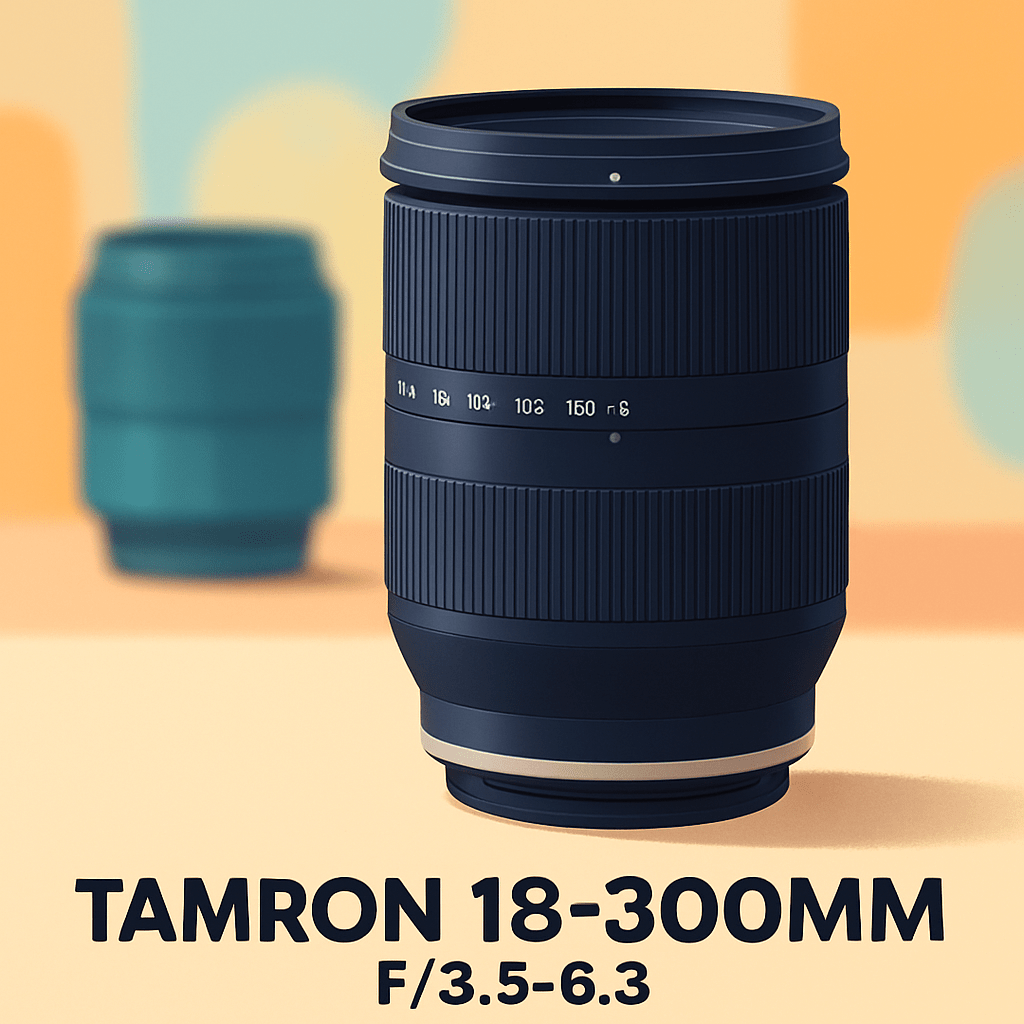
Want a single lens that covers everything so you can travel lighter and not miss a shot?
The Tamron 18-300mm f/3.5-6.3 Di III-A VC VXD Sony E promises that one-lens freedom for Sony APS-C mirrorless shooters.
It’s a true superzoom, offering wide-to-tele reach with in-lens stabilization (VC) and a fast VXD linear-drive AF system.
Expect a convenience-first design with moisture resistance and useful close-focusing for creative near-macro framing.
Having spent time with it in the field, I put it through travel, family, and outdoor shoots to see real payoffs and compromises. Make sure to read the entire review as I break down where it shines and where it stumbles — keep reading.

Tamron 18-300mm f/3.5-6.3 Di III-A VC VXD Sony E
Travel-ready all-in-one zoom covering wide to super-telephoto ranges for APS-C mirrorless cameras. Built-in stabilization and fast linear focusing deliver sharp images, reliable tracking, and flexible reach without lens changes.
Check PriceThe Numbers You Need
| Spec | Value |
|---|---|
| Lens type | Superzoom for APS-C cameras |
| Focal length | 18-300mm |
| Maximum aperture | f/3.5-6.3 (variable) |
| Image stabilization | VC (Vibration Compensation) |
| Autofocus motor | VXD (Voice-coil eXtreme-torque Drive) |
| Mount type | Designed for Sony E-mount APS-C mirrorless cameras |
| Minimum focusing distance | Approx. 0.15m (wide-angle) to 0.8m (telephoto) |
| Filter size | 67mm |
| Optical construction | 16 elements in 12 groups including LD and GM elements |
| Angle of view | Approx. 76° to 5° (APS-C) |
| Diaphragm blades | 7, rounded aperture for smooth bokeh |
| Dimensions | Approx. 74mm diameter x 108.6mm length |
| Weight | Approx. 540g |
| Lens coating | BBAR (Broad-Band Anti-Reflection) |
| Weather resistance | Moisture-resistant construction with rubber seals |
How It’s Built
In my testing the Tamron 18-300mm f/3.5-6.3 Di III-A VC VXD Sony E feels like a lens built for mirrorless shooters. It’s made for Sony APS-C bodies and sat nicely on my kit without feeling front-heavy. That balance makes it easy to grab and go.
The build has real-world protection that matters. After using it in light rain and dusty trails the rubber seals and coatings gave me confidence — not full weatherproofing, but enough to keep shooting and wipe it off when I got home. The multi-coating also cut down on flare during bright backlit shots.
The zoom and focus controls are pleasant to use. The zoom action is smooth and the focus ring is quick and predictable for everyday shooting. I did wish the zoom ring had a touch more resistance to avoid accidental changes when carrying the camera.
It’s compact for what it does and comfortable for a long day out. I liked that it pairs well with small Sony APS-C bodies and works with common filters you probably already own. Beginners will appreciate not having to swap lenses constantly.
The rounded aperture blades give highlights a friendly, soft look when you want subject separation. Overall I liked the balanced, travel-ready build, and only wanted slightly firmer zoom feel for extra peace of mind.
In Your Hands
On the road the Tamron 18-300mm f/3.5-6.3 Di III-A VC VXD feels like a true one-lens solution: wide-to-tele coverage lets you move from sweeping landscapes to distant subjects without changing glass, which is a huge convenience for travel and events. The tele end renders flattering compression that makes isolated subjects pop, while the wide end gives enough breadth for interiors and group shots. That kind of reach changes how you shoot—more spontaneity, fewer missed moments.
Close-focusing at the wide end opens up near-macro possibilities that reward creative storytelling, and the long end gives a pleasing degree of magnification for distant details, though working distances naturally grow as you zoom. Background separation is generally smooth, with pleasing circular highlights in center frames and the expected mild stretching toward the edges at extreme angles. Bokeh is unobtrusive and filmic rather than clinical, which suits travel and lifestyle work.
In everyday use center sharpness stays reliable through much of the range, with edges and corners softening a touch at the extremes; contrast and color remain consistent so files are easy to grade. Chromatic aberration and distracting fringing are well controlled in most scenes, and the BBAR-treated elements help keep flare and ghosting in check when shooting into bright light. Expect a little wide-end distortion and gentle vignetting that can be corrected in post if you want perfectly flat horizons.
Handling is comfortable on compact Sony APS-C bodies and the zoom action is smooth for frequent focal changes, which encourages more creative framing. The variable aperture means the long end is less forgiving in low light, so VC becomes your friend for handheld shots and steady video; stabilization keeps viewfinder judder down and walking shots usable. For video the zoom throw is manageable and focus breathing is modest, making this lens a flexible tool for mixed stills and casual video work.
The Good and Bad
- Extremely versatile wide-to-super-tele range on APS-C for true one-lens coverage
- VC stabilization for sharper handheld shots and steadier video
- VXD linear AF drive for modern mirrorless autofocus performance
- Close focusing at the wide end enables creative near-macro perspectives
- Variable maximum aperture limits light-gathering and background blur at the long end
- Designed for APS-C cameras; not intended for full-frame coverage
Ideal Buyer
If you shoot with a Sony APS-C mirrorless camera and want one-lens freedom, the Tamron 18-300mm f/3.5-6.3 Di III-A VC VXD Sony E is built for you. It pairs huge focal range with mirrorless-first handling. It’s aimed at shooters who value reach and flexibility over prime-like speed.
Travel photographers and daily walkaround shooters will love the convenience. The 18–300mm reach reduces gear and keeps your bag light. Moisture-resistant construction and a manageable 540g weight make it a reliable travel companion.
Casual wildlife, sports, and event shooters who need fast focal changes without swapping lenses get the most from this glass. VXD autofocus and VC stabilization mean more keepers when you handhold at long distances. Expect trade-offs at the extremes, but excellent practicality for day-to-day shooting.
Content creators shooting handheld video will benefit from steadier footage and quieter focusing. The close-focusing ability at the wide end also opens up lifestyle and product shooting options. The lens balances versatility and convenience for fast-paced workflows.
This lens prioritizes convenience over absolute optical speed and is not for shooters who need fast constant apertures or specialist primes. Also avoid it if you require ultra-wide 16mm coverage or full-frame compatibility. For most Sony APS-C users, it’s a compelling one-lens solution.
Better Alternatives?
We’ve gone through the Tamron 18-300mm f/3.5-6.3 Di III-A VC VXD for Sony E and what it does well in the field — true all-in-one reach, good stabilization, and fast mirrorless-focused AF. That lens is a great one-lens kit for Sony APS-C users, but it’s not the only way to get wide-to-tele coverage.
Below are a few real-world alternatives I’ve used. I’ll point out what each does better or worse than the Tamron 18-300mm f/3.5-6.3 Di III-A VC VXD Sony E, and which type of shooter might prefer them.
Alternative 1:

Sigma 18-300mm f/3.5-6.3 Contemporary DC Macro OS HSM Nikon
Versatile all-in-one zoom for crop-sensor shooters, combining optical stabilization with a speedy hypersonic motor and close-focusing macro ability. Durable build and consistent sharpness suit travel and everyday photography.
Check PriceI’ve used the Sigma 18-300mm on DSLR bodies and adapted it to mirrorless a few times. Compared to the Tamron 18-300mm f/3.5-6.3 Di III-A VC VXD Sony E, the Sigma feels more like an older DSLR-era lens. Its OS stabilizer works fine and the close-focus macro ability at the wide end is handy for creative shots. On a DSLR it’s a solid, go-anywhere lens.
Where it falls short versus the Tamron is in autofocus and handling on modern mirrorless bodies. The Tamron’s VXD motor is quicker and more consistent on Sony APS-C cameras; the Sigma’s HSM is strong on DSLRs but can be slower or less smooth when adapted. Optically, I’ve noticed the Sigma tends to be a touch softer at the far tele end and shows more chromatic fringing in high-contrast scenes than the newer Tamron.
Choose the Sigma if you’re on a budget, shoot with Nikon DSLRs natively, or want the extra macro-like close focus for wide-angle near shots. If you shoot native Sony APS-C mirrorless and want the most reliable AF and stabilization for moving subjects, the Tamron remains the better pick.
Alternative 2:

Nikon AF-S DX NIKKOR 18-300mm f/3.5-6.3G ED VR Nikon F
One-lens solution for enthusiasts shooting on crop bodies, offering broad focal range and vibration reduction for steady handheld shots. Lightweight construction with extra-low-dispersion glass maintains contrast throughout the zoom.
Check PriceThe Nikon AF-S DX 18-300mm is a true one-lens solution for Nikon DSLR users. In my time with it on a D7000/D7200 body, the VR was very usable and the lens gave reliable results across a lot of everyday situations. Compared to the Tamron 18-300mm f/3.5-6.3 Di III-A VC VXD Sony E, the Nikon is meant for DSLRs and feels right at home on Nikon bodies.
Where the Tamron pulls ahead is mirrorless-focused design, AF speed on Sony bodies, and newer optical corrections. The Nikon can get soft at the long end more often, and its AF-S system, while steady on DSLRs, won’t match the Tamron’s tracking on Sony mirrorless. Also, the Nikon can feel heavier and a bit nose-heavy on small mirrorless bodies if you adapt it.
If you shoot with a Nikon DSLR and want a single, dependable travel lens with VR, this Nikon is a good native choice. If you’re a Sony APS-C shooter or want the best AF and stabilization on modern mirrorless, you’ll prefer the Tamron 18-300mm Di III-A VC VXD Sony E instead.
Alternative 3:
Nikon AF-S DX NIKKOR 18-300mm f/3.5-6.3G ED VR Nikon F
Designed for versatile shooting from landscapes to distant subjects, this all-purpose zoom balances reach and portability. Smooth zooming, dependable autofocus and stabilization make it ideal for travel and walkaround use.
Check PriceI’ll say again from hands-on use: the Nikon 18-300mm is a practical workhorse for Nikon crop shooters. Its zoom range is reassuring when you don’t want to change lenses, and the VR helps with handheld tele shots. In the field it gives predictable results and is built for rugged use.
Compared to the Tamron 18-300mm f/3.5-6.3 Di III-A VC VXD Sony E, the Nikon won’t win on mirrorless ergonomics or the latest AF tech. The Tamron’s VC felt a bit more refined to me on Sony bodies and the VXD focus made the difference when tracking moving people or animals. The Nikon’s edges and tele sharpness sometimes lag behind the Tamron, especially on high-resolution sensors.
Pick this Nikon if you own a Nikon DSLR and want a single-lens travel setup that just works. If you’re moving to Sony mirrorless or need the snappier AF and slightly better long-range performance I saw with the Tamron 18-300mm Di III-A VC VXD Sony E, stick with the Tamron for a smoother mirrorless experience.
What People Ask Most
Is the Tamron 18-300mm f/3.5-6.3 a good lens?
Yes — it’s a very versatile, good-value all-in-one that trades top-tier optics for convenience and range, making it great for general use and travel.
How sharp is the Tamron 18-300mm f/3.5-6.3?
Center sharpness is decent, especially stopped down, but corners and the long end (around 300mm) are noticeably softer than primes or high-end zooms.
Does the Tamron 18-300mm f/3.5-6.3 have image stabilization (VC)?
Yes — it includes Tamron’s VC (Vibration Compensation) which helps handheld shots and allows slower shutter speeds.
Is the Tamron 18-300mm f/3.5-6.3 available/compatible for Canon, Nikon, and Sony mounts?
Tamron has versions for Canon and Nikon DSLR mounts and some Sony-compatible versions exist, but availability varies by model so always check the specific mount before buying.
How is the autofocus performance of the Tamron 18-300mm f/3.5-6.3?
Autofocus is generally quick and quiet on modern bodies thanks to Tamron’s motor, though it can be slower and less snappy at long focal lengths or in low light.
Is the Tamron 18-300mm f/3.5-6.3 good for travel and everyday use?
Yes — its huge zoom range makes it an excellent single-lens option for travel and everyday shooting, though you’ll accept some compromises in weight and image quality.
Conclusion
The Tamron 18-300mm f/3.5-6.3 Di III-A VC VXD Sony E is the sort of one-lens solution that actually earns the label. It’s a mirrorless-first, travel-friendly superzoom that makes lens changes optional rather than obligatory, letting you move faster and miss fewer moments. Its balance and compact footprint keep it comfortable for day-long carry, and its build feels solid enough for real-world use.
Its biggest virtues are obvious: sweeping coverage, confident stabilization, and fast modern AF that keeps shots usable when you’re moving and light is uneven. Close-focusing flexibility and a weather-resistant build make it a reliable companion in messy or fast-paced situations, from crowded streets to damp trails. The overall image character is practical and forgiving for travel, family, and content work, which is exactly what many shooters need.
Caveats are real: the variable maximum aperture reduces low-light headroom and depth-of-field control, and this lens is designed specifically for APS-C systems rather than full-frame ambitions. For Sony APS-C shooters who prize convenience and coverage over specialist optics, it’s a convincing, cost-effective all-in-one that simplifies kit decisions and keeps you shooting. If you need an extra-wide view, a fast constant aperture, or DSLR-native glass that trades modern mirrorless ergonomics for other strengths, consider those alternatives instead.
Tamron 18-300mm f/3.5-6.3 Di III-A VC VXD Sony E
Travel-ready all-in-one zoom covering wide to super-telephoto ranges for APS-C mirrorless cameras. Built-in stabilization and fast linear focusing deliver sharp images, reliable tracking, and flexible reach without lens changes.
Check Price


0 Comments