
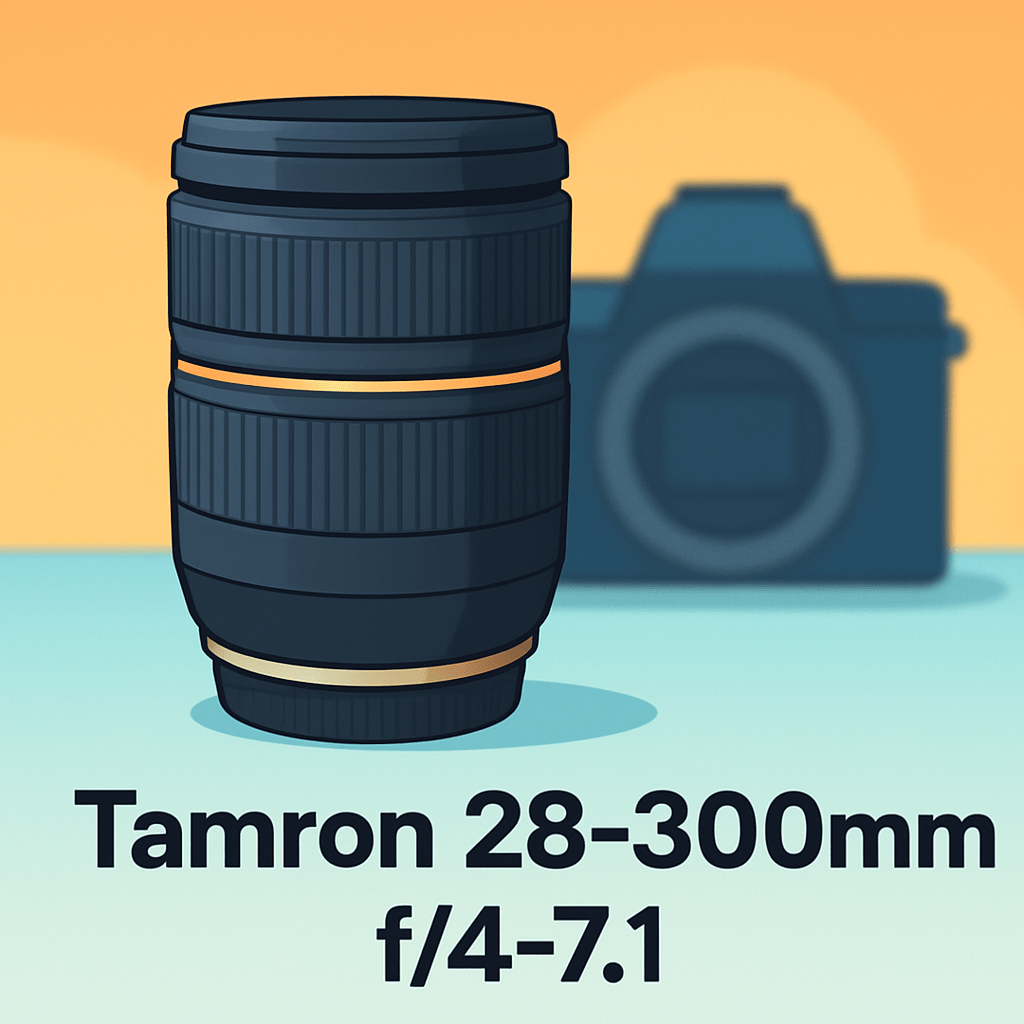
Looking for a single lens that’ll let you travel light without sacrificing reach?
The Tamron 28-300mm f/4-7.1 Di III VC VXD Sony E Mount promises a true 28–300mm superzoom for travel, walkaround, and single-lens kits. It combines a variable-aperture zoom with built-in VC stabilization, a VXD linear AF drive, and moisture-resistant sealing in a compact, relatively lightweight body you’ll actually want to carry.
If you’re after reach without swapping glass—wide vistas, distant details, and close-up versatility—this one’s aimed at travel shooters and everyday photographers who value simplicity. I took it into the field to see how it performs; I’ll dig into handling, stabilization, AF, image quality, and macro use so you can decide, so keep reading.

Tamron 28-300mm f/4-7.1 Di III VC VXD Sony E Mount
Ultra-versatile all-in-one zoom for mirrorless photographers, combining fast, precise autofocus and effective stabilization to cover wide-angle to telephoto needs. Lightweight, high-resolution optics make it ideal for travel and wildlife shoots.
Check PriceThe Numbers You Need
| Spec | Value |
|---|---|
| Focal length | 28–300mm |
| Maximum aperture | f/4–7.1 |
| Mount | Sony E-mount (for mirrorless full-frame cameras) |
| Optical image stabilization | VC (Vibration Compensation) |
| Autofocus motor | VXD (Voice-coil eXtreme-torque Drive) linear motor |
| Lens construction | 19 elements in 15 groups |
| Minimum focusing distance | Approximately 0.15 m (wide) to 0.8 m (telephoto) |
| Maximum magnification ratio | 1:2 (macro mode) |
| Filter diameter | 67 mm |
| Weight | Approximately 540 g |
| Angle of view | 75°23′ – 8°15′ |
| Diaphragm blades | 7 (rounded for smooth bokeh) |
| Weather sealing | Moisture-resistant construction |
| Compatible sensor format | Full-frame and APS-C (with crop factor) |
| Dimensions (Diameter x Length) | Approximately 75 mm x 115 mm |
How It’s Built
In my testing with Sony E-mount bodies, the Tamron 28-300mm feels compact and surprisingly light for such a long-range zoom, so it’s an easy pick for travel bags. It sits nicely on full-frame cameras without pulling forward or tipping the setup. The moisture-resistant construction gave me real confidence shooting in drizzle and dusty conditions.
The housing feels solid and well put together, and it even feels like it can take everyday knocks. The manual focus ring is nicely damped and precise for quick touch-ups. The zoom ring has a slightly stiff resistance and a short throw — great for fast framing but not ideal when you want tiny, deliberate adjustments.
The seven rounded aperture blades help produce a pleasant background blur at wider settings, though highlights get less rounded when you stop down. I liked that the lens lets you get surprisingly close for detailed shots without swapping glass. For a beginner that means fewer lens changes and less gear to manage in the field.
Balance-wise it was comfortable on mid-sized Sony bodies and I didn’t notice any annoying lens creep during normal use on hikes or in the city. Filters are a common size and easy to source when you’re packing light. One thing I really liked was the overall build confidence on day trips, and one thing that could be better is a smoother zoom action for finer framing.
In Your Hands
This lens feels like a true all-in-one in the field — its wide end gives room for sweeping landscapes and environmental context, the mid-range suits portraits and street details, and the long end lets you tighten composition on distant subjects without changing glass. Zooming through the range is surprisingly coherent, with framing shifts that feel intuitive for run-and-gun travel work. On a compact full-frame body it balances well, making single-lens outings genuinely practical.
The built-in VC stabilization is one of the real-world enablers here, turning many handheld shots that would have needed a tripod into keepers and smoothing out casual video pans. At the long end stabilization noticeably improves keeper rates for handheld sideline and travel shooting, though it’s no substitute for a tripod in very slow-shutter situations. For mixed stills-and-video days it reduces post-production headaches and lets you rely less on high ISO.
Close-up performance is one of the pleasant surprises — the lens focuses close enough for convincing macro-style images of flowers, food and small details, though working distance varies across the zoom. That versatility means you can capture a table of dishes, a street vendor’s wares and a distant detail without swapping lenses. Focus feel and precision when creeping in for a tight shot are reassuring for candid and documentary work.
Expect some trade-offs from the variable aperture in low light and for background separation at long reach, so plan exposure and use stop-downs when you need more depth control. On APS-C bodies the lens behaves as an even more reach-oriented tool and balances nicely on smaller cameras, making it a go-to for travel, family events and hikes where changing lenses is a nuisance. In short, it’s a practical, do-it-all performer for photographers who prioritize versatility and portability in real-world shooting.
The Good and Bad
- Massive 28–300mm focal range in a compact, lightweight package (approx. 540 g)
- Built-in stabilization (VC) for improved handheld results
- VXD linear AF motor
- Up to 1:2 maximum magnification for close-up/macro work
- Variable and relatively slow maximum aperture (f/4–7.1), especially at the long end
- Starts at 28mm, not as wide as some 24mm rivals
Ideal Buyer
If you’re a Sony E‑mount shooter who hates swapping glass, the Tamron 28-300mm f/4-7.1 Di III VC VXD is a compelling single‑lens solution. Its true all‑in‑one reach covers landscapes to distant subjects without extra baggage. Compact weight and native mount make it ideal for travel and everyday carry.
Photographers who value reach to 300mm—travelers, parents, casual sports shooters—will appreciate telephoto latitude without a second body. Built‑in VC keeps handheld shots usable at longer focal lengths. The lens’s close‑focus and up to 1:2 magnification also make it a handy macro‑style tool for detail work.
APS‑C shooters gain practical extra reach while full‑frame users keep framing flexibility in a compact package. Native E‑mount integration, VXD linear AF and moisture resistance mean it plays well with Sony bodies on real assignments. The common 67mm filter thread keeps travel kit simple.
Skip this lens if low‑light speed or ultra‑wide 24mm coverage are your top priorities. Fast primes or brighter wide zooms will serve those needs better.
Content creators and travel vloggers will like the stabilized, quiet AF for run‑and‑gun shooting. The Tamron simplifies packing for hikes, family trips and street work while still delivering usable tele reach. It’s a pragmatic pick for photographers who prioritize versatility and minimal gear over absolute low‑light performance.
Better Alternatives?
We’ve already gone deep on the Tamron 28-300mm f/4-7.1 Di III VC VXD for Sony E — what it offers, how it handles, and where it shines as a single-lens travel and walkaround setup. It’s a great choice if you want native E-mount integration, light weight for the range, built-in stabilization, and that unusual 1:2 close-focus ability.
Still, that doesn’t mean it’s the only way to get a wide-to-telephoto one-lens kit. Below are a few real-world alternatives I’ve shot with, how they feel compared to the Tamron, and what kind of shooter would prefer each one.
Alternative 1:

Canon EF 28-300mm f/3.5-5.6L USM
Professional-grade superzoom with rugged build and premium optics, delivering reliable AF performance and consistent image quality across focal lengths. A convenient single-lens solution for weddings, travel, and event photographers.
Check PriceOn a Canon body the EF 28-300mm L feels built for heavy use. I liked how the lens handled on a professional DSLR — the focus is quick and confident, IS does a solid job, and that slightly brighter max aperture (f/3.5–5.6) gives you more holdable shutter speeds and a bit better subject separation than the Tamron’s f/4–7.1. For event work and weddings where you need reliability and a bit more light, this lens gave me fewer exposure compromises.
Where it loses to the Tamron is in size and weight and in native compatibility with mirrorless Sony bodies. That L-series build makes it bulkier and tiring to use handheld for long walks. Also, if you try it on Sony with an adapter, autofocus and handling don’t feel as slick as the Tamron which was made for E-mount from the start. Optically, it’s similar in that both superzooms trade some corner sharpness and contrast at the extremes, but the Canon has a slight edge in mid-range low-light handling.
Who should pick this? Canon DSLR shooters and pros who need a rugged, all-in-one lens and value the extra stop or so of light. If you shoot weddings, events, or heavy-duty travel on Canon bodies and don’t mind the extra bulk, this lens is a sensible one-body, one-lens choice.
Alternative 2:

Nikon AF-S NIKKOR 28-300mm f/3.5-5.6G ED VR F Mount
All-purpose telephoto zoom designed for DSLR users, featuring vibration reduction and advanced glass for crisp, contrast-rich images. Smooth autofocus and broad focal coverage make it a dependable travel and everyday lens.
Check PriceThe Nikon 28-300mm on an F-mount body gives you a similar all-in-one idea but with Nikon-style handling. I found VR to be effective and AF-S focusing quiet and reliable for stills. Compared to the Tamron 28-300mm f/4-7.1 Di III VC VXD on a Sony mirrorless, the Nikon delivers a bit more light at the wide end (f/3.5) which helps in dim scenes and gives slightly nicer backgrounds in mid-tele shots.
In practice the Nikon is heavier and feels like an older design — you notice it on long walks. On Nikon DSLRs it’s fine, but on mirrorless bodies it’s not native and you’d need an adapter, which affects balance and sometimes AF speed. Optically it behaves like most superzooms: useful reach, decent center sharpness at many focal lengths, and the usual softness at the far ends compared with primes. The Tamron is usually easier to carry and offers better close-up reach with that 1:2 macro-ish capability.
Who should pick this? Nikon DSLR users who want a simple one-lens kit and value the built-in VR and reliable AF on Nikon bodies. It’s a good choice if you’re not switching to mirrorless yet and want a single lens for travel, family photos, or casual wildlife at a distance.
Alternative 3:
Nikon AF-S NIKKOR 28-300mm f/3.5-5.6G ED VR F Mount
One-lens solution offering extensive reach and image stabilization, engineered to balance performance with portability. Quick, quiet focusing and robust optics simplify shooting in changing conditions — perfect for explorers and content creators.
Check PriceUsed slightly differently, the same Nikon 28-300mm becomes a true “take-it-all” lens for longer outings. I’ve taken it on hikes and city days where swapping lenses wasn’t an option, and the VR kept shots usable at slower speeds. Compared to the Tamron 28-300mm f/4-7.1 Di III VC VXD, the Nikon gives comparable reach and stabilization but feels less modern and more front-heavy on smaller bodies.
Where it really falls behind the Tamron is in size, weight, and the Tamron’s better fit for mirrorless systems. The Tamron is easier to handhold for long periods, focuses well on Sony bodies, and has that handy close-focus advantage that the Nikon doesn’t match in the same way. In image quality both show the usual superzoom trade-offs at 300mm — useful but not as crisp as a prime.
Who should pick this? Explorers and content creators who shoot on Nikon DSLRs and want a single-lens kit with solid stabilization and quiet AF. If you value reach and don’t mind the extra weight, or if you’re tied to the Nikon F system, this lens is a practical compromise between flexibility and convenience.
What People Ask Most
Is the Tamron 28-300mm f/4-7.1 a full-frame lens?
Yes — it’s designed for full-frame cameras (Di designation) and also works on APS-C bodies with the usual crop factor.
Does the Tamron 28-300mm f/4-7.1 have image stabilization (VC)?
Yes, it includes Tamron’s VC (vibration compensation) to help keep images steady at long focal lengths.
How sharp is the Tamron 28-300mm f/4-7.1 at different focal lengths?
Center sharpness is decent in the short-to-mid range when stopped down, but the wide and long ends show softer corners and less micro-contrast than primes.
Is the Tamron 28-300mm f/4-7.1 a good lens for travel photography?
Yes — the extreme zoom range and VC make it a very convenient travel walkaround, though you accept some compromise in image quality and size.
How does the autofocus perform on the Tamron 28-300mm f/4-7.1?
Autofocus is generally quick and quiet for everyday shooting and travel, but it’s not as fast or reliable for demanding sports or low-contrast subjects as modern camera-native systems.
What camera mounts and systems is the Tamron 28-300mm f/4-7.1 compatible with?
Tamron has offered this lens for Canon EF and Nikon F and some Sony DSLR mounts; it also works on APS-C bodies — check Tamron’s current listings for exact mount availability for your camera.
Conclusion
The Tamron 28-300mm f/4-7.1 Di III VC VXD Sony E Mount is the kind of single‑lens solution that removes gear anxiety for travel and everyday work. It blends astonishing reach, effective stabilization, quick linear AF, and a surprising close‑focus ability into a compact, well‑built package. In the field it behaves like a capable generalist that lets you shoot more and change lenses less.
Those strengths come with obvious trade‑offs: the variable aperture favors convenience over low‑light speed and ultimate subject isolation. Optically it never quite matches prime‑level sharpness or the edge‑to‑edge perfection of specialized zooms, especially when pushed to extremes. If you demand the widest view or the fastest glass, there are better single‑purpose options.
For many Sony shooters the Tamron is a pragmatic, high‑utility compromise that answers the age‑old question of what one lens should do on the road. Buy it if your priority is reach, portability and do‑it‑all versatility; pass if you prize low‑light speed or ultra‑wide framing above all else. In short, it’s an excellent travel companion and a smart choice for photographers who want maximum coverage with minimal fuss.
Tamron 28-300mm f/4-7.1 Di III VC VXD Sony E Mount
Ultra-versatile all-in-one zoom for mirrorless photographers, combining fast, precise autofocus and effective stabilization to cover wide-angle to telephoto needs. Lightweight, high-resolution optics make it ideal for travel and wildlife shoots.
Check Price

0 Comments