
What camera has the most megapixels? This short guide will tell you which models top the list and why those numbers matter.
You’ll get a clear one-line answer up front and a simple comparison table. We also explain the difference between native single-shot sensors and multi-shot or pixel-shift systems.
We’ll cover what megapixels measure and why more MP does not always mean better photos. Expect plain tips on pixel pitch, lenses, workflow, and real use cases.
We include real crop examples and a quick buying checklist so you can choose the right camera. Read on to find the highest-megapixel cameras and pick what fits your work.
What Are Megapixels?
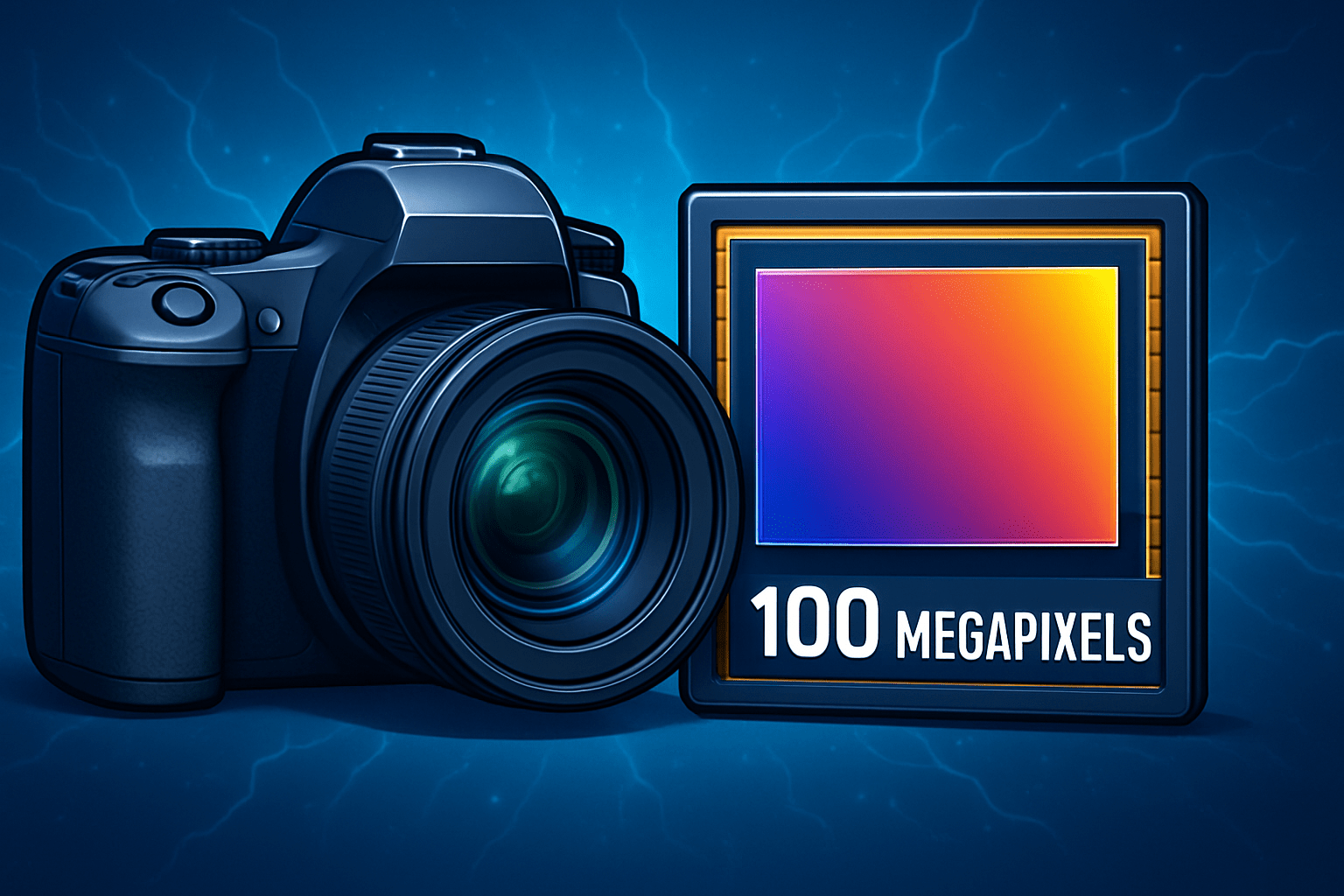
A megapixel is one million tiny picture elements, or pixels, that together make up a photograph. When people ask what camera has the most megapixels, they are asking which camera records the most individual points of detail in a single image. It is a measure of resolution, not a guarantee of overall quality.
You can estimate megapixels by multiplying the width and height of a photo in pixels and dividing by one million. For example, 8000 by 6000 equals 48,000,000 pixels, or about 48 megapixels. A 14204 by 10652 file works out to roughly 151 megapixels.
Two cameras can share the same megapixel count but behave very differently because of pixel pitch. Pixel pitch is the physical size of each pixel on the sensor, usually measured in micrometers. Larger pixels gather more light, which can reduce noise and improve dynamic range, especially in low light.
Sensor size also matters because it sets how large those pixels can be at a given resolution. A 50MP full-frame sensor stuffs the same number of pixels into a smaller area than a 50MP medium-format sensor, so the medium format usually has larger pixels and cleaner files at high ISO. The same megapixels on a bigger sensor often deliver smoother tones.
The most common misunderstanding is thinking megapixels equal image quality. Megapixels define how much detail you can potentially resolve and how large you can print at a given DPI. They do not tell you about color accuracy, dynamic range, noise performance, autofocus, or lens sharpness.
Imagine a simple grid of tiny squares that together form a picture. More squares mean more potential detail, but you still need a sharp lens, steady technique, and enough light to fill that grid well. Resolution is the canvas size; quality is how cleanly and accurately you paint on it.
Highest Megapixel Cameras Available (Which camera has the most megapixels?)
As of 2025, the highest single-shot resolution you can buy is the Phase One IQ4 150MP digital back at about 151MP. If you allow multi-shot modes that combine several frames, the Hasselblad H6D-400c MS and some medium-format and mirrorless systems can create files in the 240–400MP range, but only with static subjects and a tripod.
Native single-shot resolution is what the sensor records in one exposure. Multi-shot, also called pixel-shift, moves the sensor a fraction of a pixel between frames and merges the captures into a super-resolution file. Computational stitching is different again, combining overlapping images, usually of a panorama, into a larger composite.
Phase One IQ4 150MP digital back, used on the XF, XT, or compact XC systems, is the current single-exposure king with around 14204 by 10652 pixels. It uses a large medium-format sensor and approximately 3.76 micrometer pixels. The files are huge, the dynamic range is excellent, and the system is aimed at commercial, archival, and fine-art photographers who need uncompromising detail and color.
Hasselblad H6D-400c Multi-Shot records a 100MP image in a single shot but can shift the sensor across multiple exposures to build a 400MP file. In practice, that means an incredibly detailed, moiré-free result for studio subjects that do not move. It is fantastic for fine art reproduction and product photography, but the camera is heavy, expensive, and absolutely requires locked-down setups.
Fujifilm GFX100 II, and its siblings in the GFX line, capture 102MP in one frame and can produce around 400MP pixel-shift images from a tripod. The native resolution is roughly 11648 by 8736 pixels, which already supports very large prints at 300 DPI. Many landscape and studio shooters choose GFX because it balances medium-format quality with a more approachable body size and price.
Hasselblad X2D 100C offers 100MP with elegant color and a minimalist design. While it does not chase extreme multi-shot numbers like the H6D-400c, its single-shot detail, dynamic range, and leaf-shutter lens ecosystem make it a favorite for editorial and portrait work where tonal transitions matter as much as sheer resolution.
Sony A7R V brings 61MP in a compact full-frame body and can deliver up to 240MP using pixel shift on a tripod. The native file of 9504 by 6336 pixels already prints roughly 32 by 21 inches at 300 DPI without upscaling. It targets landscape, studio, and architectural shooters who want very high detail with top-tier autofocus and a versatile lens library.
Leica SL2 and Panasonic S1R both provide around 47MP native and can output roughly 187MP in high-resolution multi-shot mode. These systems show how modern stabilization can raise effective resolution well beyond the sensor’s native count, though the best results still demand static scenes, excellent lenses, and careful assembly in software.
OM System OM-1 Mark II illustrates the computational side from a smaller sensor. It is a 20MP Micro Four Thirds camera that can produce 50MP handheld high-res images and 80MP from a tripod. The trick works wonderfully for static scenes with fine detail, though low-light and moving subjects still favor larger sensors or faster native pixel counts.
When you ask what camera has the most megapixels, think about whether you need a single-shot native sensor or can live with the tripod-heavy, multi-exposure approach. Single-shot 150MP from Phase One is the ceiling for pure, one-click resolution today, while various pixel-shift systems reach much higher numbers in controlled conditions. For a quick scan of systems, curated lists of highest resolution cameras and field-tested picks of high-resolution cameras are helpful starting points.
In practical terms, a 151MP file can print about 47 by 35 inches at 300 DPI without upscaling. A 100MP file is roughly 38 by 29 inches, while a 61MP file is about 32 by 21 inches. High-quality upscaling and viewing distance often allow even larger prints, but lens sharpness and camera stability quickly become the limiting factors at these resolutions.
Types of High Megapixel Cameras
Medium-format digital backs and integrated medium-format systems deliver the highest native megapixels. Digital backs like Phase One IQ4 can be mounted on different bodies and technical cameras, while integrated systems such as the Fujifilm GFX or Hasselblad X series package the sensor in a conventional body. These cameras typically span 100 to 150MP and are favored in studio, landscape, and high-end commercial work.
High-resolution full-frame mirrorless and DSLRs currently range from about 45 to 61MP. They offer a mix of portability, fast autofocus, and deep lens ecosystems, and they are far less expensive than medium format. For most photographers, a 45–61MP full-frame body paired with superb glass is the best balance of detail, speed, and cost.
Multi-shot and pixel-shift systems create even higher effective resolution by moving the sensor and stacking several captures. The payoffs are extreme detail and reduced color moiré, but you need a tripod, a static subject, and time to process. File sizes grow dramatically, and the workflow becomes more complex, especially when assembling 16-shot or 32-shot sequences.
Computational and multi-frame approaches in smartphones push big numbers with tiny sensors. They use clever demosaicing, multi-frame noise reduction, and sometimes sub-pixel alignment to lift apparent detail. The results can look fantastic on screens, but they do not replace the clean, flexible, and lens-limited resolution a large sensor and high-quality optics provide.
Industrial and scientific cameras are a separate category with extreme resolutions or specialized readouts. These can exceed consumer megapixel counts but often require custom mounts, software, or scanning mechanisms. They are not practical still cameras for photographers and usually sit outside normal buying decisions.
Across all types, your choice affects more than resolution. Medium format leans into tonality and dynamic range, full frame balances speed and detail, and multi-shot adds complexity in exchange for more pixels. The right answer depends on what you shoot, where you shoot, and how you deliver the final image.
Why More Megapixels Don’t Always Mean Better Quality
Smaller pixels can increase noise because each pixel collects less light. Pack too many pixels into a small sensor and the shadows can get gritty, especially at higher ISO. Larger pixels on a bigger sensor usually give cleaner files and smoother gradations at the same megapixel count.
Sensor size and megapixels work together. A 50MP medium-format sensor typically has larger pixels than a 50MP full-frame sensor, which helps low-light performance and dynamic range. That is why two cameras with the same resolution can deliver very different-looking files in difficult light.
Lens resolving power and diffraction also set hard limits. High-MP sensors show every weakness of your optics, so you need lenses that stay sharp across the frame. Diffraction softening creeps in earlier as pixel pitch shrinks; on a 61MP full-frame body you will often see it by f/11, and on 150MP medium format you may prefer to stay at or below f/11 for maximum crispness.
Dynamic range and bit depth are about tonal fidelity, not pixel count. Adding more pixels does not increase the number of stops you can capture, though it can help you render edges and micro-detail more finely. If your work needs deep shadow recovery, look at sensor tests and real-world raws rather than the spec sheet headline.
There are workflow trade-offs with higher resolution. RAW files balloon in size, your catalog grows quickly, and editing demands a faster CPU, GPU, and plenty of RAM. Backups take longer and storage costs rise, which matters a lot on multi-shot workflows where each final image may be assembled from a dozen or more frames.
Multi-shot and pixel-shift add their own constraints. You need a rock-steady tripod, a static subject, and still air if you are outdoors. Moving leaves, rippling water, or a fidgety model can break the composite and force you back to the single-shot file.
If you primarily shoot action, low light, or fast-paced events, prioritize sensor size, AF performance, and frame rate over raw MP. In those cases, a lower-MP camera with cleaner high-ISO files and better autofocus tracking can easily outperform a higher-MP body. When resolution is not the bottleneck, speed and reliability win the day.
To see how these trade-offs play in real gear choices, shortlists of the best high-end cameras are handy companions to spec sheets. They factor in autofocus, stabilization, ergonomics, and lens ecosystems, which matter as much as resolution for most photographers. Specs start the conversation; handling and results finish it.
Choosing the Right Camera for Your Needs
Start by defining how the images will be used, how large you plan to print, and how complex a workflow you will accept. If your work lives mostly online or in modest prints, you probably do not need more than 24–36MP. If you deliver wall-sized prints or tight crops in commercial work, step up accordingly.
Decide whether you need a native high-MP sensor or if pixel-shift and stitching fit your subjects. If your scenes are static and studio controlled, multi-shot systems offer remarkable detail for the money. If you shoot moving subjects or handheld, prioritize the best single-shot files you can afford.
Match your lenses to the sensor. High megapixels expose field curvature, corner softness, and chromatic aberrations, so budget for sharp primes and top zooms. Check MTF charts and user tests, and remember that focus accuracy and technique matter more as resolution climbs.
Include storage, backup, and computing power in the budget. High-MP RAW files and multi-shot composites require fast cards, ample SSD space, and a capable computer. Plan for long-term archiving, because client libraries and personal projects grow faster than you expect.
Try before you buy if you are moving into medium format or 100MP and above. Renting for a weekend will expose any workflow bottlenecks and show you whether the handling and file characteristics fit your style. That small test is the simplest way to confirm what camera has the most megapixels for your needs, not just on paper but in the field.
As a practical guide, 12–24MP is enough for web and casual use, 24–36MP suits most enthusiasts, and 36–100MP serves professional landscape and commercial printing very well. For archival, fine art reproduction, or extreme crops, 100MP and above or multi-shot solutions make sense. Pick the path that balances detail with reliability, speed, and the way you actually work.
What People Ask Most
What camera has the most megapixels?
High-megapixel cameras exist and are useful for big prints and heavy cropping, but megapixels alone don’t guarantee better photos.
Do more megapixels always mean better photos?
No, more megapixels can capture more detail but image quality also depends on sensor size, lenses, and processing.
Is a high-megapixel camera necessary for printing large photos?
High megapixels help for very large prints, but viewing distance and overall image quality are also important.
Will a camera with the most megapixels improve low-light performance?
Not necessarily; low-light results depend more on sensor sensitivity and noise control than just megapixel count.
Can I crop more when using a camera that has the most megapixels?
Yes, higher megapixels let you crop more while keeping detail, which is handy for tight compositions.
Are high-megapixel photos harder to store and edit?
Yes, they make larger files that need more storage space and stronger computer hardware to edit smoothly.
Should a beginner choose the camera that has the most megapixels?
Not always; beginners should weigh ease of use, lens choice, and budget along with megapixel needs.
Final Thoughts on what camera has the most megapixels
You came here wondering what camera has the most megapixels, and this guide walked through the market leaders, explained sensor math, and showed where extra resolution actually helps. We even used a simple figure—270—to remind readers that a single number doesn’t define image quality, and that sensor size, pixel pitch, lens quality and real shooting needs matter far more. Photographers who print large, do commercial product or archival work, or need extreme cropping will get the biggest payoff from high-resolution systems.
A realistic caution: chasing megapixels can bring heavier files, slower editing, tougher lens demands, and unexpected workflow headaches. We pointed out how pixel-shift, multi-shot modes and medium-format backs can deliver astonishing detail but usually at the cost of speed, mobility and budget. Armed with the comparisons, types, and practical tips in this article, you’ll be ready to choose a camera that matches your shooting style without surprises—keep testing, learning, and your images will only improve.

0 Comments