
What cameras are allowed in concerts in 2026? Can you bring a big DSLR or is your phone the safest option?
Short answer: most venues allow smartphones and compact point-and-shoots; many ban interchangeable-lens DSLRs and mirrorless cameras unless you have accreditation. Rules change by venue and promoter, so always check the event policy before you go.
This guide shows which cameras are usually allowed, top compact models for low light, and common size and lens limits. You’ll also get tips on how security enforces rules, how to avoid confiscation, a printable day-of checklist, and a copy-paste email to request press access.
Read on for quick recommendations and simple steps to keep your gear safe and your entry drama-free. We don’t recommend sneaking gear in — this guide shows how to follow the rules or get proper access instead.
Best Cameras Allowed at Concerts
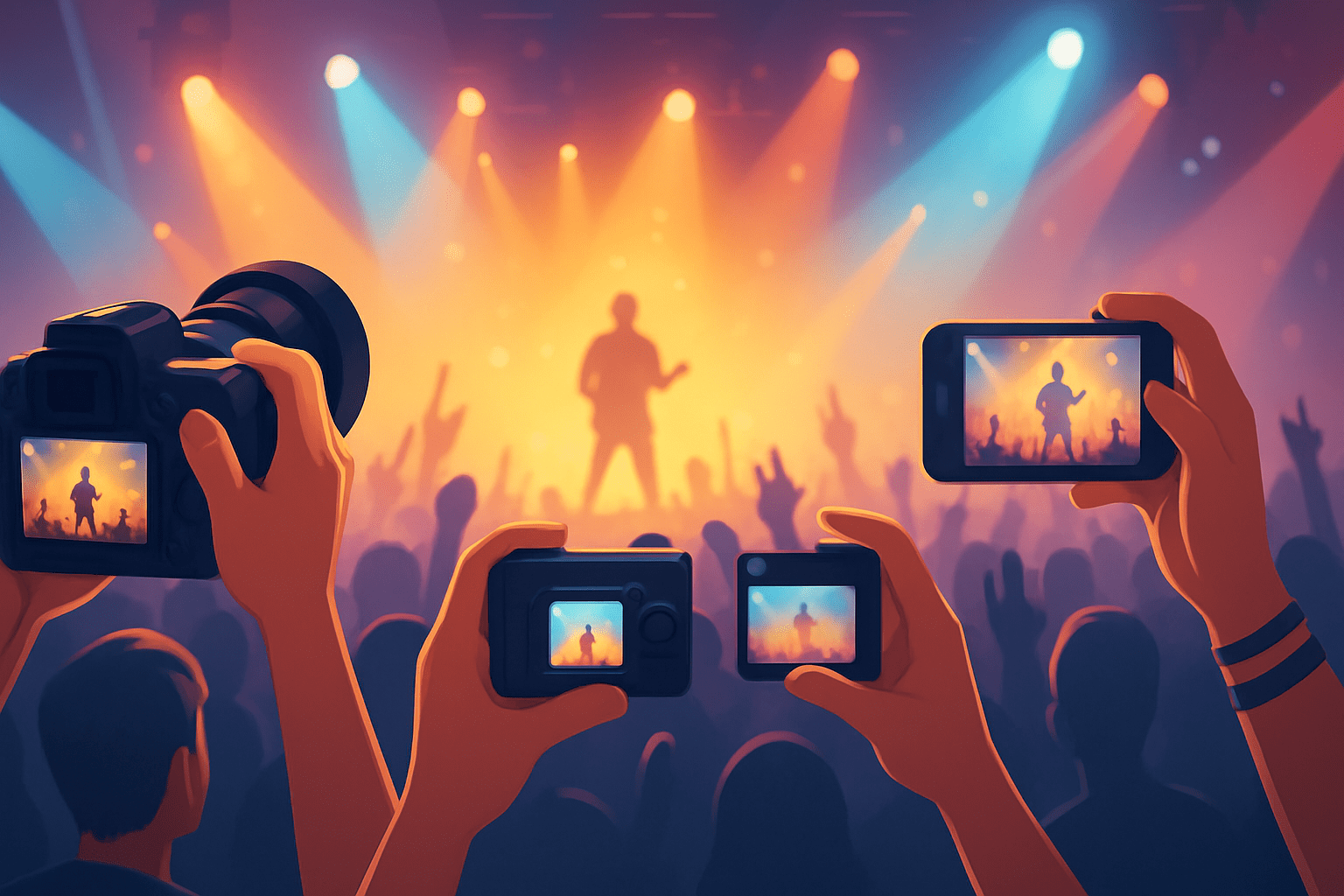
Short answer: most venues allow smartphones and compact fixed‑lens point‑and‑shoot cameras, while many restrict interchangeable‑lens DSLRs and mirrorless systems unless you have official photo access. There is no universal rule, so always check the specific venue or promoter policy before you go.
If you are wondering what cameras are allowed in concerts, think small, quiet, and fixed‑lens. Smartphones are almost always fine, and advanced compacts with fast lenses are commonly accepted, while cameras with detachable lenses tend to be flagged as “professional” at the door.
Here is how venues often think about categories in practice: smartphones are okay; advanced compact or fixed‑lens cameras like the Sony RX100 or Canon G7 X are usually okay; Fujifilm X100‑series fixed‑lens cameras are often okay but can look “pro” to some staff; bridge or superzoom compacts are sometimes allowed, yet a long extending lens can draw attention; mirrorless and DSLRs are often restricted to accredited shooters. Film cameras are generally treated like their digital counterparts, with lens type and size being what matters to security.
Look for features that help in dim light without appearing intrusive. A fast aperture around f/1.8–2.8, strong high‑ISO performance, and in‑body or optical stabilization are your friends, and a silent or electronic shutter setting is a big plus. Leave the flash off, because flash is almost always banned during shows.
Five compact recommendations that balance image quality with venue friendliness are easy to shortlist. Sony RX100 VII offers excellent autofocus and a versatile 24–200 mm equivalent zoom in a pocketable body, while Canon G7 X Mark III provides a bright f/1.8–2.8 lens that suits dark venues. Fujifilm X100V brings an APS‑C sensor with a sharp 23 mm f/2 lens and a leaf shutter that stays quiet, Ricoh GR IIIx hides an APS‑C sensor in your pocket with a natural 40 mm equivalent view, and Panasonic Lumix LX10/LX15 pairs a fast f/1.4–2.8 lens with a crisp 1‑inch sensor.
If you can bring only one camera, prioritize a larger sensor for cleaner high‑ISO files, the fastest lens you can get, and some type of stabilization. Keep the camera small enough to fit in a jacket pocket, switch on a silent or electronic shutter, and make sure you know how to lock out the flash. That simple checklist will keep you shooting and out of trouble at the door.
If you are new to this, this beginner’s guide lays out basic settings and etiquette so you can focus on the moment. Ask your editor or designer to include a simple comparison photo of an allowed compact next to a pro DSLR to show the difference at a glance. A small infographic with “three quick checks before you bring a camera” also helps readers prepare fast.
Camera Size Restrictions at Venues
Most venues publish rules like “no professional cameras,” which often means no interchangeable‑lens bodies, and “no lenses longer than X,” which can vary from about two to four inches. Tripods and monopods are almost always banned, and many policies add “no video cameras,” even though short phone clips are commonly tolerated.
How a venue measures size can surprise you, so read the exact wording. Some define “professional” as any camera with a detachable lens, while others go by physical length measured from the lens mount to the front of the lens at its longest extension, not including hoods or caps.
Policies can shift with venue scale and artist preference. Small clubs may be relaxed unless the artist requests a strict rule, theaters are mixed but often enforce no ILCs, and arenas and festivals usually run the tightest policies with clear lens‑length limits and “no pro gear” language.
Measure your lens at home and compare it to the posted policy so there are no surprises. To security, a short prime looks harmless, while a long extending zoom screams telephoto, even if it is a compact, so keep your kit visually low‑key.
Before you leave, ask the venue these simple questions by phone or email and save the replies: do you allow interchangeable‑lens cameras, is there a maximum lens length, is flash allowed, and do you have a camera or coat check if my gear is not allowed. Always verify the current wording on the official venue or promoter policy page and keep a screenshot with the date.
Request a simple lens measurement diagram from your designer if you are creating a guide for your readers. Pair it with a one‑page “policy decoder” graphic that translates common phrases into what you can actually bring, and an at‑a‑glance “three quick checks before you bring a camera” reminder.
Security Policies on Cameras at Concerts
At the door, expect signs that summarize the camera rules, bag checks, and questions from ticket or security staff. If your camera is not allowed, they may offer a coat‑check style hold, ask you to return it to your car, or refuse entry if you cannot comply.
Rules are enforced by venue security, promoter staff, or festival marshals, and interpretation can vary by shift or event. Stay calm and assume good intent, because being polite and prepared is the fastest route to a smooth entry.
Remember that a concert is private property, so the venue sets the rules and can decide who enters with what. If you have approval, bring printed or digital proof, the contact name who granted it, and a screenshot of the current policy page in case staff need to verify.
Arrive early, carry your ID, and have any press pass visible but stowed until asked, then follow instructions. For a wider primer on etiquette and technique once you are inside, consult this clear concert photography overview and adapt the advice to the specific show.
If they ask you to surrender your camera, keep it simple and factual: ask whether there is a coat‑check hold, request a numbered receipt, and verify the pickup location and closing time. Politely note the staff member’s name and position, and if needed ask for a supervisor while stepping aside so the line can move. Do not argue, and never try to conceal gear once you have been told it is not allowed.
Tips for Avoiding Confiscation of Cameras at Concerts
The easiest way to keep your camera is to bring one that fits the posted rules, set it up for low light, and behave like a respectful fan. The more your kit looks like a quiet compact and the less you draw attention, the smoother your night will be.
Do your prep the day before by reading the venue policy, checking the show page again the morning of, and calling the box office if any wording is unclear. Choose one small, fixed‑lens camera, leave long lenses and supports at home, and pack only what you will actually use.
Keep your gear out of sight while queuing, answer security’s questions honestly, and present any press confirmation when asked, not before. Use a plain strap or wrist loop, avoid giant brand logos, and never try to sneak gear past staff because deception will get you turned away.
Set your camera to succeed inside by disabling flash, enabling silent or electronic shutter, and choosing an auto‑ISO range that handles dim scenes. Pre‑assign a custom button for exposure compensation, and practice with the camera in a dark room so you can operate it by feel.
Here is a compact day‑of checklist you can save and follow: charged batteries, spare memory card, photo ID, screenshot of the current policy page, and any approval email. Add a tiny microfiber cloth, a small zippered pouch or jacket pocket for the camera, ear protection, a charged phone for tickets, and a clear backup plan if your camera is denied.
Plan B keeps your creativity alive even when security is strict. Shoot the energy with your phone, consider purchasing official photos after the show, or politely ask the merch or PR table after the set about future opportunities to request permission and shoot properly next time.
Handle security encounters with simple do’s and don’ts that protect your night. Do stay polite, show proof quickly when asked, and ask calm clarifying questions about the policy, then follow the instructions you are given. Do ask for a receipt if your camera is held and step aside to resolve issues, and do thank staff even if you are disappointed.
Do not argue in the line or try to sneak back in later with the gear, do not block other guests, and do not use flash inside the venue. Do not attempt to hide your camera, because being caught will usually end your night, and do not record video where it is explicitly banned.
How to Get Photography Access at Concerts
If you want to move from audience shooting to accredited work, you will need the right pass and a clear plan. Access types range from general admission with personal cameras, to press or photo‑pit passes, to very rare artist or backstage passes, and most come with a “first three songs, no flash” rule.
Start by identifying the correct contact, which might be the venue’s media team, the promoter’s press office, or the band’s publicist, and reach out a week or more in advance. Share a tight portfolio that proves you can work safely and deliver, and keep your email short; this portfolio guide can help you curate a focused gallery that loads fast.
A successful approval usually includes a wristband or photo pass, a printed or emailed rule sheet, and a contact person or pit marshal at the venue. Expect a limited shooting window, restricted angles, and instructions about where to stand and when to exit the pit.
Subject line for your pitch can be short and clear: Photo Request – [Artist] – [Venue] – [Date]. Copy this into your email client and paste the body below it so everything stays together.
Here is a simple body you can copy and tweak: Hello [Name], I am [Your Name], a photographer for [Outlet or “independent portfolio”], and I would like to request a photo pass for [Artist] at [Venue] on [Date], with images delivered within [X hours] for editorial use only. You can view my work here: [link], and I will follow all house rules, including the three‑song, no‑flash policy; if approved, please confirm check‑in time and contact person. My phone is [number] and I am happy to provide any additional details you need.
Know what you are offering in return, because promoters often expect a small set of web‑ready files within 24 hours along with a few high‑resolution images later. Rights are typically editorial only unless negotiated, so do not license commercial use without written permission.
If access is denied, partner with a local blog or paper that can sponsor your request next time, offer to shoot smaller venues to build a track record, or volunteer for community events and festivals. Those steps teach you the rhythm of the pit, put names in your contacts list, and make future approvals more likely when you ask about what cameras are allowed in concerts for professional coverage.
What People Ask Most
What cameras are allowed in concerts?
Rules vary by venue and artist, but most allow small personal cameras and smartphones while banning professional gear; always check the event policy before you go.
Can I bring a smartphone to a concert?
Yes—smartphones are usually allowed and are the most accepted option for photos and videos, though some shows may restrict recording during performances.
Are professional cameras like DSLRs or mirrorless allowed at concerts?
Many venues ban professional-looking cameras with detachable lenses, so assume they are not allowed unless the event policy explicitly permits them.
Is using flash or a tripod allowed during a concert?
Flashes and tripods are commonly prohibited because they disturb performers and other fans, so expect them to be banned unless stated otherwise.
Do I need a photo pass or permission to take pictures at a concert?
For professional photography you usually need a photo pass or written permission from the promoter or artist, while casual personal photos are often allowed without a pass.
What should I do if the venue rules are unclear about cameras?
Contact the venue box office or check the event’s official website or social media for clear camera and recording policies before attending.
What happens if I bring a prohibited camera to a concert?
Staff may ask you to leave, store the camera, or delete photos, so it’s safest to follow the posted rules to avoid losing your gear or missing the show.
Final Thoughts on Bringing Cameras to Concerts
Remember the opening question about what cameras are allowed at concerts? You now have clear, practical rules and checklists so you can pick gear that performs in low light and avoids trouble; some venues even set hard numbers like 270 for lens length, so a compact can be a safer choice. This piece turned vague signage into a simple plan you can use before the show.
The core payoff is confidence: you’ll know which camera to bring, how to measure lenses, and what to show security instead of guessing at the gate. Keep in mind policies vary and venues may still refuse lenses or ask you to check gear, so stay flexible — this is most useful to casual concertgoers, hobbyists, and early‑career press.
Treat the checklists and email template as your pre‑show ritual so you arrive calm and ready to shoot responsibly. Enjoy the music and the frames you’ll capture — you’ve got sensible tools and the right approach.




0 Comments