
Wondering what is ev camera and why it matters for modern driving? This short guide explains how cameras help with safety, parking and driver assistance in electric vehicles.
We define EV cameras in plain language and show how they fit into ADAS and vehicle electronics. You will find a quick TL;DR, clear examples, and the main camera types used on EVs.
We cover hardware, software, sensor fusion, common failure modes and real-world limits like low light or dirt. You’ll also get buying tips, installation advice, checklists and images to guide your choice.
Ready for a fast answer or a deeper dive? Read on to learn everything about what is ev camera and how to pick the right one for your EV.
What is an EV Camera?
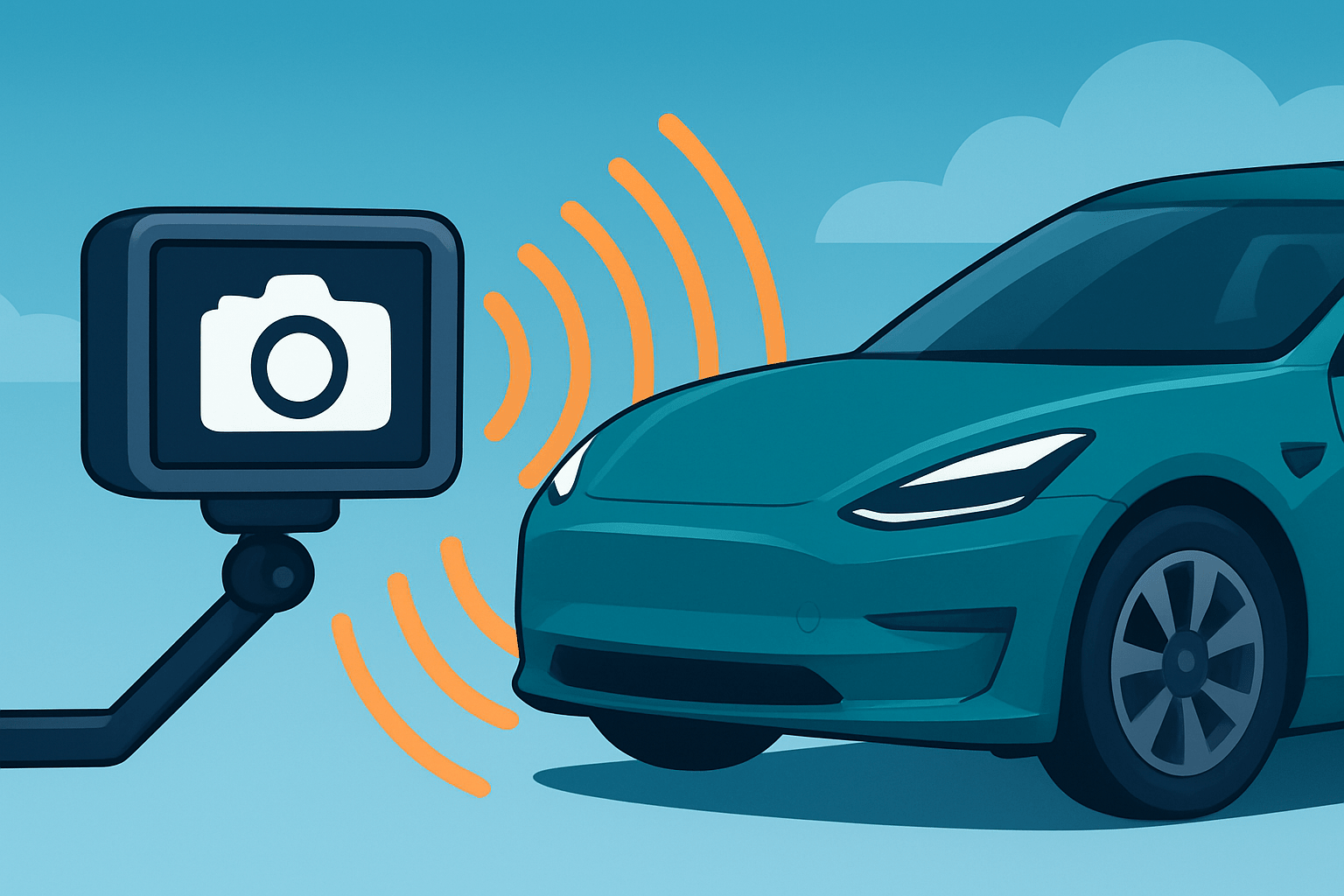
If you are wondering what is ev camera, it is the set of vehicle-mounted cameras on an electric vehicle that help with driving safety, recording, parking, and autonomy. They watch the road and surroundings, and sometimes the cabin, turning images into useful guidance and evidence.
Note that EV in photography can mean exposure value, a metering concept. In this article EV stands for electric vehicle, and the focus is on cameras built into or added to EVs.
Compared with “generic” car cameras, the hardware is often similar, but the difference is deep integration with the EV’s electronics, software, and power system. EV cameras plug into the ADAS stack, the autonomy computer, and over-the-air updates that tune image processing over time.
Some automakers use a camera-first approach to driver assistance, with multiple lenses covering front, sides, rear, and cabin. Others mix cameras with radar or LiDAR, yet cameras remain the most detailed and cost-effective sensors for lanes, signs, and pedestrians.
Quick answer: an EV camera is any built-in or add-on electric vehicle camera used for seeing the road, avoiding collisions, assisting parking, recording incidents, and feeding assisted or autonomous driving features.
How EV Cameras Work
An EV camera starts with optics and a CMOS image sensor tuned for automotive use. Typical fields of view run from 90 to 180 degrees, with resolutions from 1 to 8 megapixels and frame rates around 25–60 fps to capture motion cleanly. Wide dynamic range or HDR helps balance bright skies and dark shadows, while IR LEDs or NIR sensors improve night performance, and rugged housings carry IP67 or higher weather ratings.
The image must travel reliably to a recorder or ECU despite heat, vibration, and electrical noise. Short runs may use MIPI CSI-2, while longer runs use LVDS links such as FPD-Link or GMSL, or even automotive Ethernet; for a deeper dive, see camera link tech. Power usually comes from the 12V bus via the EV’s DC-DC converter, with careful grounding and shielding to prevent interference.
Processing can happen in the camera module or centrally in a powerful ECU. Codecs like H.264 or H.265 compress video for storage, while image signal processors denoise, sharpen, and balance color before edge AI models detect lanes, vehicles, signs, and vulnerable road users. For surround view, software stitches multiple feeds into a seamless top-down image.
To get robust driver assistance, cameras are fused with other sensors and vehicle data. Radar estimates speed and range, ultrasonic helps at close range, and LiDAR (on some models) adds precise depth, while CAN or Ethernet provides steering, speed, and yaw inputs so the system understands context.
Reliability depends on keeping the lens clean and the system calibrated. Dirt, rain, snow, and sun glare can cause missed detections, while vibration can shift alignment and produce false positives or negatives. Good EV designs add heaters, hydrophobic coatings, and calibration routines to keep performance consistent.
Types of Cameras Used in Vehicles
It helps to categorize EV cameras by where they mount and what they do. Each type has typical specs that match its job, from ultra-wide parking views to narrower, high-resolution forward sensing.
A backup or reverse camera usually mounts near the license plate or tailgate. A very wide lens, often 130–180 degrees, exposes obstacles as you reverse, and 720p or 1080p with good low-light performance works well for parking lines and cross-traffic aids.
A front-facing camera sits high near the windshield behind the mirror. It often uses a 100–120 degree lens with 2–8 MP resolution and strong HDR to read lanes, signs, and lights, enabling lane keeping, traffic sign recognition, and forward collision warnings.
Side-view or blind-spot cameras live under mirrors or on fenders and see alongside the vehicle. With 90–120 degree views and decent night sensitivity, they assist blind-spot detection, lane-change views, and curb protection.
Dash cams, which can be front-only or dual-channel front and rear, mount inside the cabin near the mirror. They record incidents in 1080p to 4K, offer parking mode, and lock clips during impacts so you have clear evidence if something happens.
360-degree or surround-view systems use four or more calibrated cameras to build a stitched top-down view. They are great for tight urban spaces and automated parking, and they benefit from matched sensors and consistent white balance to make the composite image look natural.
In-cabin cameras monitor driver attention and sometimes occupancy. IR or NIR illumination lets them see eyes at night or behind sunglasses, supporting driver monitoring systems that can reduce drowsy or distracted driving.
Stereo or dual forward cameras mount in a matched pair for depth estimation. The spacing gives direct range data that improves distance measurement for adaptive cruise and obstacle detection.
Thermal or night-vision cameras see heat signatures beyond visible light. They help detect pedestrians or animals in darkness or bad weather where regular cameras struggle.
High-autonomy EVs multiply these cameras and add redundancy, so if one view is blocked or fails, others cover the gap. The market is moving this way, with more sensors and higher resolution, as shown by EV camera trends.
Benefits of Using EV Cameras
The most important benefit is safety. Cameras reduce blind spots, warn of pedestrians or cyclists, and work with braking systems to avoid or lessen impacts in common crashes like rear-ends and parking mishaps.
They also make daily driving easier. Parking lines, 360-degree views, lane-keeping cues, and guided or automated parking shrink the stress of tight city spaces and narrow garages.
Recording brings accountability and clarity after an incident. A well-placed dash cam can capture what happened at an intersection or in a lot, which helps with insurance and with protecting your EV when you cannot be there.
Cameras are the visual core of many ADAS and autonomy stacks. They feed detailed scene understanding for lane planning, sign reading, and path prediction, while other sensors add range and redundancy.
For fleets and businesses, cameras support coaching and risk reduction. Driver monitoring and incident review improve training and can lower downtime and claims over time.
There are trade-offs to consider, including privacy with in-cabin views, the need to clean lenses and update firmware, and cybersecurity and storage management. These are manageable with good policy, secure devices, and regular maintenance.
Choosing and Installing EV Cameras
Start by matching the camera to your vehicle and goals. Confirm interface compatibility, pick an IP67 or better housing for exterior use, choose resolution and HDR that fit your roads, and decide on FOV and night performance; for advanced features, look for units tested or certified for ADAS.
Plan power and wiring with the EV’s 12V system and DC-DC converter in mind. Hardwiring with a fuse tap gives a clean install, while parking mode needs constant power and a low-voltage cutoff so you do not drain the 12V battery.
Placement matters as much as the camera you buy. Mount the front camera high and centered behind the mirror, the rear near the vehicle centerline, and side cameras where mirrors or fenders give a clear view without picking up too much bodywork.
Calibration is essential for surround view, stereo, and ADAS functions. After mounting, run the calibration routine and test with a short drive to verify lane, sign, and obstacle detection are accurate.
DIY can work for simple dash cams and rear cameras. Use a professional installer when integrating multiple cameras, tying into the vehicle CAN or Ethernet, or when calibration demands special targets and tools.
Maintain performance with simple habits. Clean lenses regularly, update firmware, manage storage with quality memory cards, and check seals and connectors after heavy rain or washing.
Here is a quick mental checklist at purchase or install time. Confirm the interface, IP rating, resolution and HDR, FOV, low-light specs, power management for parking mode, and calibration support for your model.
Expect a wide price range that depends on features and labor. Good dash cams typically cost $100–$400, multi-camera systems run about $250–$800 for hardware, 360-degree kits can reach $400–$1,500, and professional installation and calibration often add $150–$600 or more depending on vehicle complexity.
What People Ask Most
What is EV camera?
An EV camera is a vehicle-mounted camera used on electric vehicles for views like rear, side, or surround vision to help with driving and parking.
How do EV cameras help drivers while parking?
They give a clear view of obstacles and lines, making it easier to park accurately and avoid bumps.
Can an EV camera improve road safety?
Yes, EV cameras reduce blind spots and support driver-assist systems to help prevent collisions.
Are EV cameras difficult to install?
Many EVs come with cameras preinstalled, and aftermarket options are available with professional or DIY installation depending on the model.
Do EV cameras work in low light or bad weather?
Many cameras are designed to work in low light and light rain, but extreme conditions can still limit visibility so drivers should stay cautious.
Are EV camera recordings private and secure?
Manufacturers usually include privacy safeguards, but you should check settings and permissions to control who can access recordings.
What common mistakes do people make with EV cameras?
Common mistakes are relying only on the camera instead of checking mirrors, not cleaning the lens, and skipping software updates.
Final Thoughts on EV Camera Systems
Whether you’re considering a 270-degree surround system or a single rear-view camera, EV cameras give cars electronic eyes that turn raw images into timely safety and assistance. We opened by asking what an EV camera is, and this article showed how vehicle-grade optics, onboard processing, and ADAS integration make driving safer and easier for commuters, fleet managers, and tech-minded owners.
They improve situational awareness and provide incident records, but they aren’t foolproof — dirt, glare, low light, or calibration drift can cause missed detections or false alerts. So schedule cleaning and calibration, follow maker guidance, and don’t over-rely on vision alone in poor conditions.
If you’re buying or spec’ing systems for a fleet or personal EV, pick cameras and installs that match the vehicle’s electrical and ADAS setup so they can do the job you expect. Tech will keep improving, and with sensible upkeep and smart choices you’ll find these systems make the road feel safer and more navigable.




0 Comments