
What iso are disposable cameras, and will your photos come out bright or grainy?
This article gives a clear answer up front and then shows why it matters. We explain common speeds like ISO 400 and ISO 800, how to check the ISO on the camera or packaging, and simple shooting tips.
You will see side-by-side scans, 100% grain crops, and flash vs no-flash examples. You’ll learn when to pick an ISO 400 disposable or an ISO 800 disposable and how scanning affects the final look.
Start with the quick answer, then try the practical tests and the cheat-sheet to pick the right disposable for your shoot. Ready to see which ISO fits your photos? Let’s dive in.
What ISO Are Disposable Cameras?
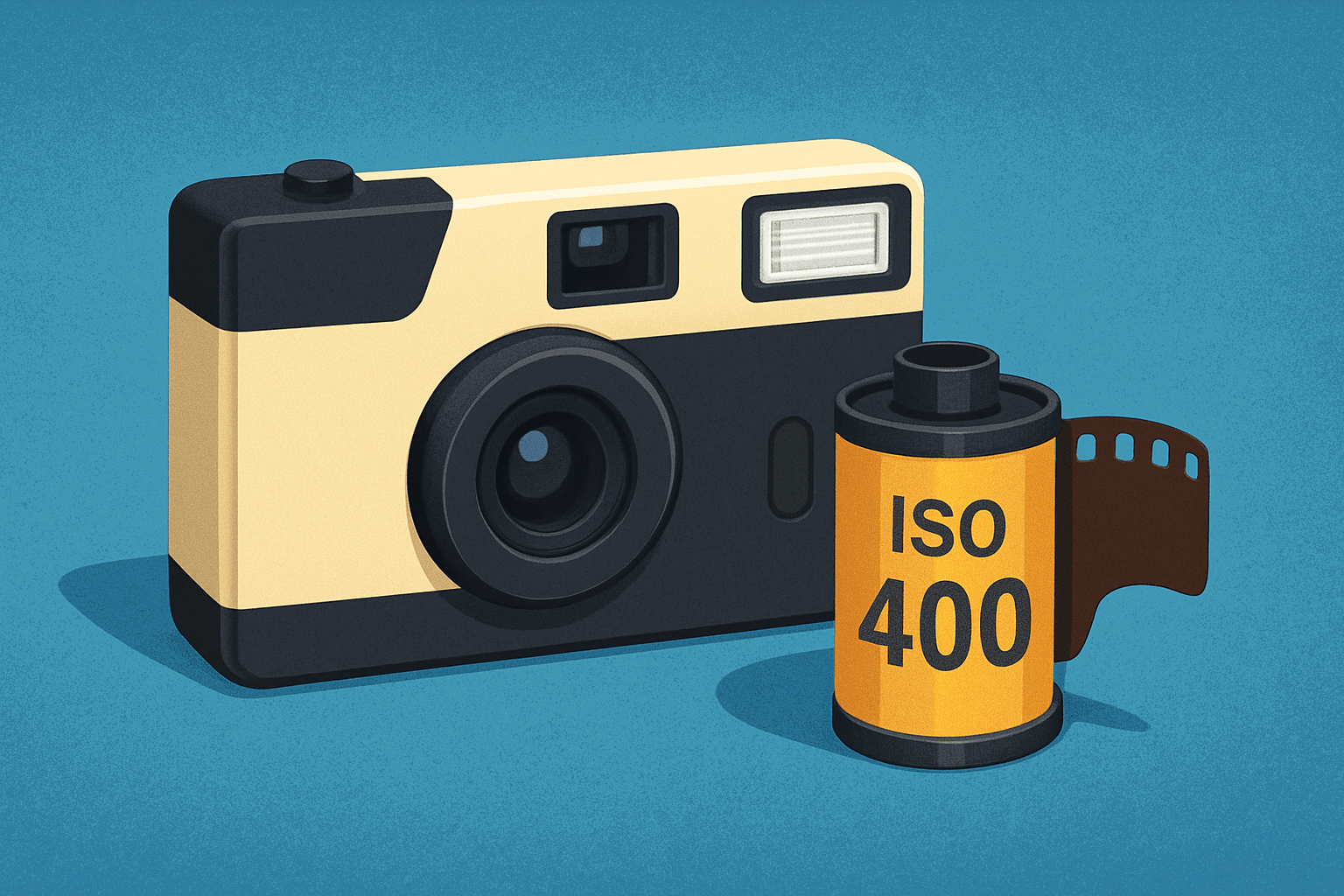
Most disposable cameras ship with ISO 400 film, some use ISO 800, and a few use ISO 200 or other speeds. That is the direct answer to what iso are disposable cameras, and it matters because you cannot change ISO in a disposable once you start shooting.
ISO is baked into the film, so it controls low‑light ability and grain from the first frame to the last. Higher ISO gives more flexibility in dim rooms, but grain gets stronger and highlights blow faster.
You can confirm the ISO by checking the outer box, the printed wrapper, or the small label on the camera body near the flash symbol. If you found a loose camera, check the back sticker or any tiny print around the lens, and if the wrapper is gone, a lab can often identify the film after developing by the edge codes.
Most disposables use color negative C‑41 film, which is easy to develop at most labs. A few are black and white, and their ISO is also printed on the body and on the film edge after processing.
Quick take: ISO 400 is the safe, all‑round choice; pick ISO 800 if you expect dim rooms, night streets, or fast action under poor light.
Fact-check note for shoppers: Kodak FunSaver carries ISO 800 color negative film, Fujifilm QuickSnap Flash is ISO 400, and Ilford HP5 Single Use is ISO 400 black and white. Always confirm the printed ISO on your specific unit, as packaging can vary by region.
Common ISO Speeds in Disposable Cameras
ISO 100–200 disposables are uncommon today, but you will still see them in beach or daylight bundles. They shine in bright sun with fine grain and gentle color, yet they struggle indoors without a strong flash.
ISO 400 is the most common disposable speed for a reason. It handles outdoor light, shade, and indoor snapshots with flash while keeping grain moderate and colors balanced.
ISO 800 disposables are often sold as “party” or “low‑light” cameras. They catch more light in dim rooms and on night streets, but grain becomes more visible and highlights can clip sooner.
Specialty single‑use cameras faster than ISO 800 are rare, and those stocks are harder to find and pricier. For most beginners, 400 or 800 will cover almost every casual situation.
In daylight, ISO 200 offers the smoothest grain and crisp detail. ISO 400 still looks clean and gives you leeway for clouds or shade, while ISO 800 outdoors can look punchy but grainier and more contrasty.
In shade, ISO 400 pulls ahead because it holds exposure without forcing the flash every time. ISO 800 makes shade easy but can increase contrast, especially with small fixed lenses.
Indoors without flash, ISO 800 is your best bet, though disposable shutter speeds are still limited. ISO 400 can work if there is strong window light or bright ambient bulbs, but motion blur is more likely.
At night, both 400 and 800 benefit from flash at people distances. ISO 800 extends reach a bit, yet do not expect the small flash to light a whole street or wide hall.
Color negative film at ISO 400 tends to have smooth grain and wide exposure latitude. Black and white ISO 400 disposables show more pronounced grain structure with classic contrast, which many people love for portraits.
If you want a primer that goes beyond speeds and into parts, development, and handling, skim these disposable basics. It pairs well with the guidance here when you decide which ISO to pick.
Cheat sheet: choose ISO 400 for general travel, daylight, and mixed light with flash; choose ISO 800 for dim bars, indoor parties, and night walks. When in doubt, carry one of each if you can.
Comparative example suggestion: one street scene framed identically at ISO 200, 400, and 800 in open shade to compare grain, shadow detail, and highlight roll‑off.
ISO 400 vs ISO 800 Disposable Cameras
Low‑light is the headline difference, and ISO 800 gives you a bit more forgiveness. It lets the tiny lens and fixed shutter gather enough light to stabilize hand‑held shots in dim rooms.
Grain and texture are where ISO 400 often wins for clean scans. ISO 800 shows chunkier grain that can soften fine texture, yet that grit can look cinematic on prints and social posts.
Dynamic range favors ISO 400, with slightly better highlight retention and smoother tonality. ISO 800 can clip bright windows and neon sooner, especially with underpowered flash fill.
Color saturation and contrast on common ISO 400 stocks tend to be balanced and forgiving. ISO 800 often looks a touch punchier and can shift slightly cooler under certain indoor bulbs.
Flash behavior changes because higher ISO increases the effective flash reach. With ISO 800, be careful with very close subjects, as faces can overexpose more easily compared to ISO 400.
Choose ISO 400 if you want versatility, calmer grain, and reliable outdoor results. Pick ISO 800 if most of your frames will be indoors at night, at concerts, or at lively parties where light is scarce.
If you are unsure which path to take, default to ISO 400 and work with flash for people shots. Carry ISO 800 only when you know the light will be dim for most of the roll.
Try a simple test when you can to see the difference for yourself. Shoot the same scene with a 400 disposable and an 800 disposable from the same distance, with flash on one frame and off on the next.
Keep the framing identical and note the room light source and your distance to the subject. When you scan or receive lab scans, compare grain, highlight detail, and skin tone side by side.
If you plan to develop at home or want a deeper dive into what the lab does, these developing tips will help. They also explain how single‑use cameras meter and fire the flash internally.
How ISO Affects Image Quality
ISO is the film’s sensitivity to light, and higher ISO uses larger, more reactive grain crystals. Those crystals create the visible grain we associate with high‑speed film.
Grain in film is not the same as digital noise; it has shape and structure that many people find beautiful. Still, strong grain can cover the tiniest details and soften fine textures like hair or fabric weave.
With color negative film, latitude is generous, especially in the highlights. ISO 400 stocks often handle bright skies and white shirts better than ISO 800 under the same conditions.
At higher ISO, the image can look punchier but less subtle in the highlights. You may see slightly cooler shadows or shifts under fluorescent and mixed light, depending on the emulsion.
Scanning and printing change how grain looks more than you might expect. Higher scan DPI reveals more grain and micro‑contrast, while smaller prints hide grain and favor perceived sharpness.
If you want smoother results, choose ISO 400 and expose to protect highlights, letting labs recover shadow detail. Ask your lab for a “normal” or slightly soft contrast scan if you dislike crunchy grain.
At home, scan at a sensible resolution for your output and avoid aggressive sharpening. Gentle noise‑reduction in the scanning software can tame gritty fields without smearing edges.
Labs can push film one stop if requested, which increases contrast and grain and changes color. Pushing is a separate paid service and should be reserved for special situations, not everyday rolls.
All of this circles back to the core question, what iso are disposable cameras, because the built‑in speed sets your look. The choice shapes grain, highlight roll‑off, and how much the tiny flash can do.
ISO and Flash Usage in Disposable Cameras
Disposable cameras use a fixed aperture lens and a simple shutter, and the built‑in flash is small. ISO is the main variable you “choose” by the camera you buy, so it controls how far that flash seems to reach.
With ISO 800, the flash can light subjects a bit farther than ISO 400, but power is still limited. Keep people close and centered, and do not expect it to fill a distant background.
For daylight portraits, ISO 400 is ideal and you can add fill flash to soften shadows. Indoors at parties, ISO 800 with flash helps freeze faces and cut the blur from hand shake.
If the room is large or the subject is far away, even ISO 800 will not carry the flash. In that case, lean on ambient light, find a lamp, or move closer so the flash can do its job.
Avoid overexposure on very close subjects by stepping back a bit or placing a thin tissue over the flash as a quick diffuser. Ask people to look slightly off lens to reduce red‑eye and harsh shadow under the nose.
Older disposables may have weaker flash due to battery age, so test the charge light before important shots. Hold the camera steady, breathe out, and press the shutter smoothly to keep frames sharp.
If you are shopping and want suggestions on models at each ISO, skim this concise list of best disposables. It pairs the speed with use cases so you can match it to your trip or event.
One more practical nudge for skimmers asking what iso are disposable cameras: 400 for everyday and travel, 800 for night and indoor fun. If you will shoot both, carry one of each and label them clearly.
Before you head out, double‑check the printed ISO on the camera body and note it on your phone. That quick habit will save you from guessing later and answers what iso are disposable cameras in your bag today.
What People Ask Most
What ISO are disposable cameras?
Most disposable cameras use around ISO 400 film, which works well for everyday outdoor and indoor lighting.
How does knowing what ISO are disposable cameras help me choose one?
Knowing the ISO helps you pick a camera that matches the light conditions you’ll be shooting in, so your photos aren’t too dark or too grainy.
Can I change the ISO on a disposable camera?
No, disposable cameras have a fixed ISO, so you can’t change it; choose the right ISO before you buy.
Will the ISO on a disposable camera affect low-light photos?
Yes, a higher ISO makes low-light scenes brighter but can add noticeable grain to the image.
Are disposable cameras with higher ISO better for parties and evenings?
Yes, higher ISO disposable cameras are better for dim events because they capture more light, but expect more graininess.
Do I need to do anything different when shooting if I know what ISO are disposable cameras?
Since ISO is fixed, focus on steadying the camera and using brighter light or flash to improve results.
Is it a mistake to assume all disposable cameras have the same ISO?
Yes, disposable cameras can vary in ISO, so check the ISO before buying to match your shooting needs.
Final Thoughts on What ISO Are Disposable Cameras
Most disposable cameras come with ISO 400 film; some models use ISO 800 and a few use ISO 200. We also covered how to verify the film speed on the camera or box, why it matters for flash and grain, and what to expect when you scan your negatives — even when a stray code like 270 appears on old packaging. That opening promise — a quick, clear answer followed by practical checks and comparisons — is what we kept throughout.
Knowing the ISO gives you predictable results: you can match the camera to the light, get cleaner scans with lower speeds, or embrace the grainy character of faster film. A realistic caution is you can’t change film speed mid-roll, and built-in flash power or old batteries can still limit low-light shots; this guide is especially useful for casual shooters, travelers, and party photographers who want dependable, no-fuss results. Good shots and pleasant surprises await on your next roll.


0 Comments