
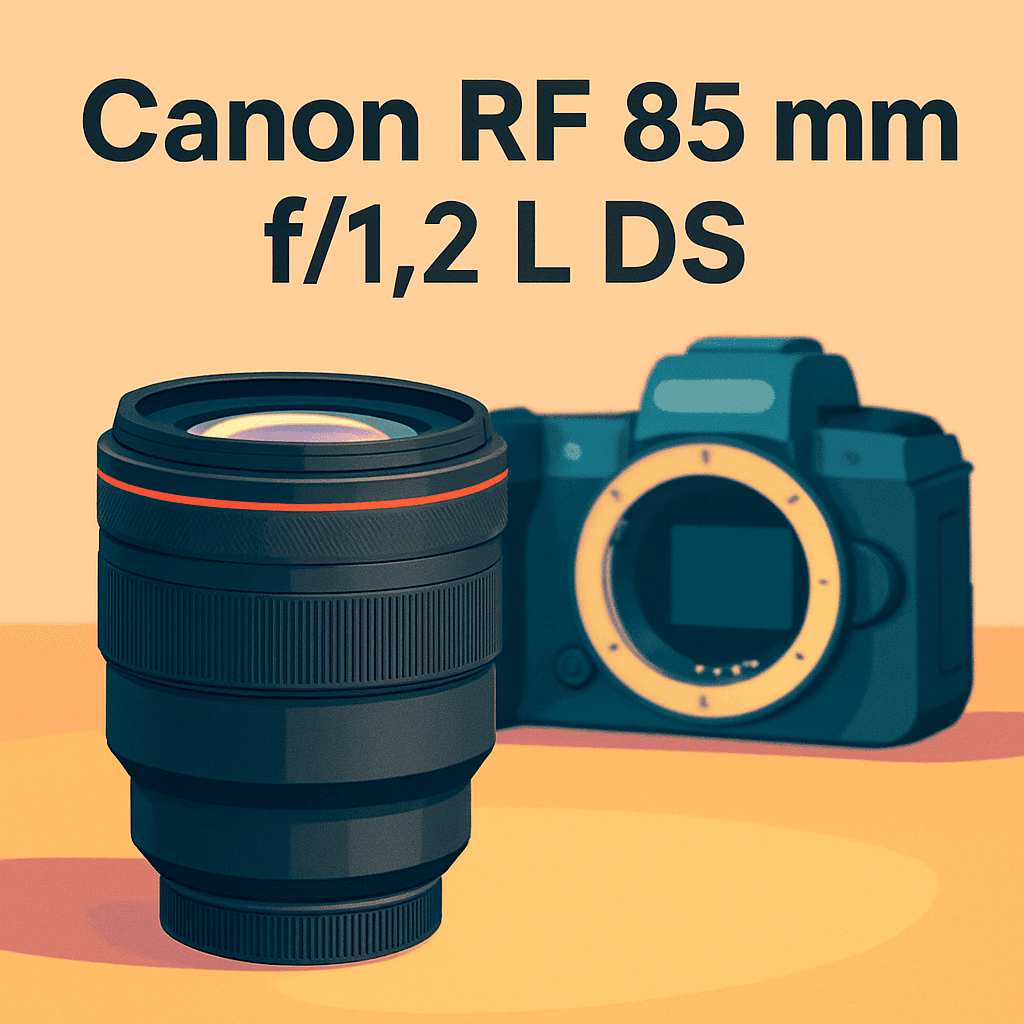
You want creamy portrait bokeh that makes subjects pop and hides messy backgrounds. The Canon RF 85 mm f/1.2 L DS promises that buttery look and it’ll give dreamy separation.
I’ve personally field‑tested this lens and compared it with a couple of close rivals. My hands‑on use exposed real tradeoffs beyond the marketing gloss.
It’s aimed at portrait, wedding, and fashion shooters using Canon EOS R full‑frame bodies. These pros will value subject isolation, creamy backgrounds, and reliable sharpness where it counts.
Top strengths are ultra‑smooth bokeh, tight isolation, and clean color control. The headline compromise is it’s losing some light because of the DS coating.
In practice you’ll get fewer missed shots and faster culling because subjects pop in busy scenes. That dreamy look often saves time and helps win clients.
I’ll show one quirk I found that can alter your images. keep reading as I will reveal something shocking about this lens that might change your photo quality drastically.

Canon RF 85 mm f/1.2 L DS
Ultra-fast portrait prime delivering creamy, ethereal background separation and velvety highlights. Combines advanced coatings and premium optics for sublime skin rendering, superb low-light capability, and pro-grade weather-sealed construction.
Check PriceThe Numbers You Need
| Spec | Value |
|---|---|
| Model | Canon RF 85mm F1.2 L USM DS |
| Mount | Canon RF |
| Focal length | 85mm (prime) |
| Maximum aperture | f/1.2 |
| Diaphragm | 9‑blade circular |
| Optical design | 13 elements in 9 groups |
| UD element | One UD element |
| Ground aspherical element | One ground aspherical element |
| Blue Spectrum Refractive optics | Included (BR optics) |
| Defocus Smoothing (DS) coating | Yes — reduces effective transmission by about 1⅓ stops |
| Minimum focus distance | 0.85 m / 2.79 ft |
| Maximum magnification | Approx. 0.12× |
| Image stabilization | None (relies on in‑body stabilization) |
| Filter size | 82 mm |
| Weight | Approx. 1195 g |
How It’s Built
In my testing the Canon RF 85 mm f/1.2 L DS feels like a professional tool right away. It’s built from metal and quality composite with a solid metal mount and tight fit. It gives you confidence when you’re shooting.
This lens has a smooth programmable control ring on the barrel that makes changing settings fast. The glass gets coatings to cut flare and make out‑of‑focus areas creamier. There’s also a water‑resistant seal and a protective layer that helps repel fingerprints.
After using this lens in light rain and dusty gigs I found the sealing and coatings work — it wipes clean and keeps shooting. I loved how solid and precise it felt in my hands, but it could be lighter. The front‑heavy balance tires you on long handheld days.
For beginners this means the lens will survive real shoots and keep working for years. The control ring and weather protection let you keep shooting in messy conditions, and the creamier bokeh from the coatings is why many pros pick it. If you want easy handling and lasting build, this lens pays off.
In Your Hands
The Canon RF 85 mm f/1.2 L DS feels like a serious tool the moment you pick it up, with a dense, professional heft and a front‑heavy bias that settles naturally on a mid‑sized mirrorless or DSLR body without feeling awkward. Because it’s a prime there’s no zoom ring to fight, and the electronic focus ring is notably smooth and linear in response—firm enough to avoid accidental adjustments but refined for delicate, portrait‑style pulls. Handling is unapologetically substantial, which reinforces confidence during deliberate shooting sessions.
Controls are sensibly laid out: a tactile, programmable control ring sits where you can reach it with your thumb and index finger, and the AF/MF switch is easy to flip without shifting your grip, making quick changes in the field painless. The control ring’s click stops are useful for tactile feedback, and can be silenced by service if you prefer a quieter, continuous feel. There’s no zoom lock on this lens, which is unsurprising and harmless given the prime design.
In everyday use the focus‑by‑wire system delivers predictable manual overrides, though it requires the camera or a half‑press of the shutter to enable full‑time manual focus behavior, so expect a slightly different feel than a mechanical ring. You may notice modest focus breathing during dramatic focus pulls, but for portrait and wedding work it’s largely inconsequential; importantly, there’s no zoom creep to worry about. Overall the in‑hand experience is about controlled, tactile precision rather than featherlight portability.
Autofocus & Image Stabilization
The Canon RF 85 mm f/1.2 L DS brings quick, lock‑on autofocusing for a large‑aperture portrait optic. On EOS R bodies this lens focuses fast with reliable eye‑detect and subject tracking. Its standout strength is that speed and accuracy in practical shooting.
The AF mechanism is not silent; you’ll occasionally hear soft clicking and a quiet shhhh that can show up on in‑camera audio. Video AF tracking is smooth and steady, but the audible drive means you’ll want an external mic for serious work. Full‑time manual override is available through the camera when activated.
This lens lacks built‑in image stabilization and therefore relies on in‑body systems for handheld steadiness. With IBIS it feels controlled for portraits and short handheld clips, yet the absence of optical IS is a clear limitation for extended handheld work. For tripod or static use stabilization is not an issue.
Focus breathing is modest and rarely distracts in portrait work, though it can be noticeable in tight video pulls. Overall this lens delivers excellent AF for stills and usable video tracking, balanced by audible AF noise and no lens‑based stabilization as its main tradeoffs.
Picture Quality Performance
The Canon RF 85 mm f/1.2 L DS shows the character many portrait shooters want: punchy center sharpness and strong microcontrast right at its widest aperture. This lens holds fine detail for skin and fabric at short‑telephoto working distances. Edges and corners clean up noticeably when you stop down a bit.
Distortion is essentially negligible, so straight lines stay honest and framing feels predictable. Vignetting is visible wide open but clears up quickly as you stop down, so it’s easy to manage in RAW or in‑camera. Lateral and longitudinal color fringing are very well controlled thanks to the optical corrections, and coma is kept in check so night‑sky points stay tidy for occasional astro shots.
Bokeh is the real headline: the Defocus Smoothing treatment produces very creamy backgrounds, round highlights and minimal onion‑ringing or cat’s‑eye stretching toward the edges. Flare and ghosting are restrained by the coatings, though extremely harsh backlight can introduce a mild veil. Stopped down, sunstars are pleasing and well formed, leaving the overall rendering more flattering than clinical. Overall strengths are subject isolation and rendering; the only real tradeoffs are softer edges and visible falloff at the widest aperture.
How It Performs in Practice
This lens feels substantial on the camera. This lens is heavy and a bit front‑heavy, but it stays balanced on a full‑frame body. This lens is not fun to carry all day without a strap or shoulder bag.
This lens shines in low light, even though the DS coating steals about a stop of effective light. This lens has no optical stabilization, so you rely on in‑body IS or faster shutter speeds. With IBIS this lens forgives handheld work more than you’d expect.
This lens focuses fast and locks onto eyes reliably, which makes shooting people much easier. This lens’s AF can make a soft clicking sound that shows up on camera audio. This lens’s manual focus is smooth but electronic, so it never feels as direct as a mechanical ring.
At a dim wedding first dance I opened this lens wide and raised ISO to compensate. The couple’s faces were sharp and the background turned into a creamy, painterly blur that everyone loved. I did notice a little vignetting at f/1.2, so I stopped down a hair for group shots.
This lens is perfect for portraits, wedding and fashion work where dreamy bokeh matters most. This lens is not ideal for fast action or long handheld hikes because of the weight and lack of optical IS. This lens is great for subject isolation and background separation, but it demands respect.
The Good and Bad
- Exceptional sharpness and microcontrast wide open at f/1.2
- Blue Spectrum Refractive Optics and DS coating greatly reduce chromatic aberration and improve bokeh quality
- Fast and accurate USM autofocus with reliable eye detection and tracking on EOS R bodies
- Comprehensive weather sealing and durable L‑series build with a programmable control ring
- Heavy and front‑heavy, impacting handling comfort for extended use
- Focus‑by‑wire manual focus can feel less direct and requires camera activation for FTM use
- DS coating reduces effective light transmission by about 1⅓ stops, affecting exposure at f/1.2
- Lacks optical image stabilization, limiting handheld low‑shutter use and video stability
Better Alternatives?
We’ve talked a lot about what makes the Canon RF 85mm f/1.2 L DS special — that dreamy bokeh, the BR optics and the DS coating that smooths backgrounds like nothing else. It’s a lens I reach for when I want portraits with a very soft, painterly look and tight subject isolation.
But not everyone needs (or wants) that exact look, the extra weight, or the slight light loss from the DS coating. Below are some practical alternatives I’ve used in real shoots, what each one does better or worse compared with the RF 85mm f/1.2 L DS, and the kind of photographer who’ll prefer each one.
Alternative 1:

Canon RF 85 mm f/1.2 L
Signature high-speed portrait lens offering razor-sharp central detail, rich contrast, and powerful subject isolation. Exceptional low-light performance and quick autofocus make it a favorite for professional portrait and editorial work.
Check PriceThe non-DS Canon RF 85mm f/1.2 is the most direct swap if you like the RF mount and build but want the full light the lens can give. In practice it feels a touch “punchier” than the DS version — highlights and contrast are slightly stronger and you don’t lose that ~1⅓ stop the DS coating introduces. That makes it easier to handhold in very low light or keep faster shutter speeds for moving subjects.
Where it loses to the DS model is the background look: bokeh is still excellent but not as velvety-smooth. If your priority is the softest possible out-of-focus rendering the DS wins; if you want maximum transmission and a bit more micro-contrast, the non-DS wins. Handling and AF feel nearly identical on EOS R bodies, so switching is more about look and light than ergonomics.
Who’ll like it: wedding and editorial shooters who need the full f/1.2 brightness and a slightly crisper look, or anyone who wants the RF 85mm character without the DS smoothing or exposure compromise.
Alternative 2:
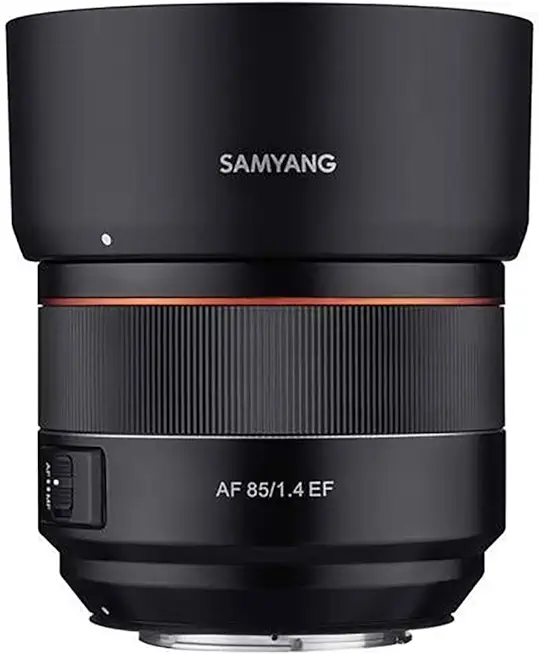
Samyang Canon EF 85 mm f/1.4
Check PriceThe Samyang 85mm f/1.4 is a very different proposition: much more budget-friendly and noticeably lighter on a shoot. I’ve used it for quick engagement sessions and travel portraits when I needed a flattering short telephoto but didn’t want to lug a heavy L-series lens. It gives pleasant bokeh and good sharpness for the price, but the background smoothing isn’t as refined as the Canon DS coating.
Compared to the RF 85mm f/1.2 L DS it loses on build, autofocus speed/consistency in challenging situations, and the absolute creaminess of out-of-focus highlights. But it wins on value, portability, and plain old practicality—especially when you don’t need the ultra-dreamy look. If you shoot mirrorless RF bodies you’ll likely use an adapter for EF lenses, which adds a little bulk and sometimes changes AF behavior.
Who’ll like it: hobbyists, beginners, or traveling portrait shooters who want a classic 85mm look on a budget and prefer a lighter, easier-to-handle lens over the last bit of bokeh perfection.
Alternative 3:

Sigma Canon EF 85 mm f/1.4 Art
Flagship art-series portrait optic engineered for supreme resolution, edge-to-edge clarity, and silky smooth background blur. Robust build, precise focusing, and studio-level rendering satisfy demanding portrait and commercial photographers.
Check PriceThe Sigma 85mm f/1.4 Art is a workhorse I’ve used for studio and client portrait days. Its look is more clinical and ultra-sharp across the frame than the Canon DS — that makes it fantastic when you need tack-sharp detail, consistent rendering from center to edge, and a strong “finished” files feel straight out of the camera. The bokeh is smooth, but it’s a different character: less smeared and more classic Art-series blur than the DS’s dreamy smear.
Compared with the RF 85mm f/1.2 L DS the Sigma loses the super-wide f/1.2 opening and the DS-specific smoothing. It’s also an EF lens so you’ll likely adapt it on RF bodies. Where it wins is cost-to-image-quality ratio, consistent sharpness even wide open at f/1.4, and a solid, reliable rendering that many commercial portrait shooters prefer for client work.
Who’ll like it: studio and commercial portrait photographers who want top image quality and consistency without paying RF L-series prices, and those who value edge-to-edge sharpness and a more traditional bokeh character over the ultra-ethereal DS look.
What People Ask Most
Is the Canon RF 85mm F1.2 L USM DS compatible with Canon APS‑C EOS R cameras like the EOS R10?
Yes — it’s an RF‑mount lens and will mount on APS‑C EOS R bodies like the R10, but you’ll get the cropped field of view of an APS‑C sensor.
What is the difference between the Canon RF 85mm F1.2 L USM and the DS version?
The DS version adds a Defocus Smoothing coating for creamier bokeh and slightly reduced light transmission, while otherwise sharing the same high‑end RF 85mm design and BR optics benefits.
Does the DS coating affect exposure and how much light loss does it cause?
Yes — the DS coating reduces effective light transmission by about 1⅓ stops compared with the standard version.
Can this lens be used with Canon teleconverters or DSLR bodies?
This outline only confirms it’s an RF‑mount lens for EOS R mirrorless bodies; teleconverter and DSLR compatibility aren’t specified here.
How quiet is the autofocus of the RF 85mm F1.2 L USM DS for video recording?
Autofocus is fast and accurate but does make light clicking/”shhhh” noises that can be audible on in‑camera audio.
Does the lens have optical image stabilization?
No — the lens has no optical stabilization and relies on in‑body stabilization where available.
What is the minimum focusing distance and maximum magnification of this lens?
The minimum focus distance is 0.85 m (2.79 ft) and maximum magnification is about 0.12×.
Who This Lens Is / Isn’t For
If you shoot portraits, weddings, or fashion and chase creamy background separation, this lens will be a tool you reach for when you want dreamy subject isolation and flattering compression. Studio shooters and wedding photographers who can control pacing will love how it makes faces and fabrics stand out and how it holds up in tough weather. Pros and enthusiasts who don’t mind carrying a heavier prime and want the best bokeh and rendering from a single 85mm will get a lot of use from this lens.
Skip this lens if you mostly shoot fast action, sports, or run‑and‑gun travel where lightness, speed and stabilization matter more than shallow depth of field. If your work needs long handheld video takes, quiet autofocus or the lightest possible kit, you’ll be frustrated by the weight and operational quirks. Also think twice if you’re on a tight budget or need a versatile, all‑day walkaround lens rather than a specialist portrait tool.
Should You Buy It?
The Canon RF 85 mm f/1.2 L DS is the portrait lens many photographers buy for its near‑dreamlike bokeh and resolute sharpness wide open. This lens produces creamy background separation, tight subject isolation and impressive control of color fringing that keeps highlights clean and pleasing. Its build and autofocus behavior feel professional and dependable on EOS R bodies, reinforcing confidence in critical shoots.
But the tradeoffs are real and tangible in day‑to‑day work—this lens is heavy and noticeably front‑heavy, which alters handling and shooting stamina. The DS coating that crafts the signature bokeh also reduces effective light transmission, and there’s no optical stabilization to lean on for handheld low‑light video or slower shutter speeds. Manual focusing follows focus‑by‑wire conventions that some photographers will find less tactile, and AF noise can intrude on on‑camera audio.
If your priority is the most luscious, film‑like portrait rendering and you accept the weight, light loss, and handling compromises, this lens rewards with distinctive, hard‑to‑replicate results. If you need a lighter, stabilized, or action‑oriented tool, look elsewhere; the value here is specialist, not universal. For wedding, fashion and portrait pros who place bokeh quality above all, this lens is a worthy, decisive investment.
Canon RF 85 mm f/1.2 L DS
Ultra-fast portrait prime delivering creamy, ethereal background separation and velvety highlights. Combines advanced coatings and premium optics for sublime skin rendering, superb low-light capability, and pro-grade weather-sealed construction.
Check Price



0 Comments