
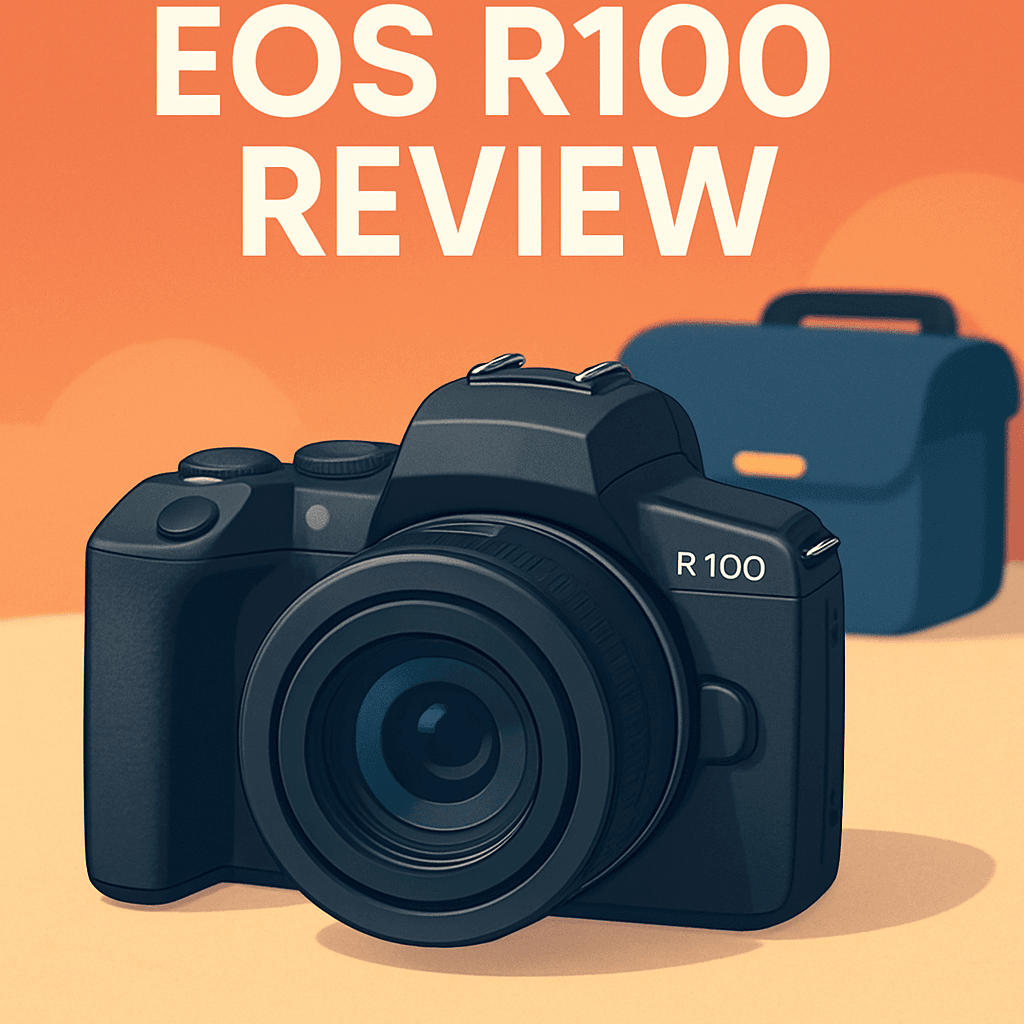
Want better photos than your phone without a steep learning curve?
I’ve personally field-tested the Canon EOS R100 Camera and compared it with a couple of close rivals. I’ll show who it’s for, what it does wonderfully, the one big trade-off to watch, and whether it’s truly worth your money.
If you’re a beginner, traveler, or family shooter, this camera’s compact weight and easy controls make shooting enjoyable. Its autofocus and stills quality are real-world standouts, and the creative-assist modes get you good results fast. That said, its 4K video is cropped and limited, so it’s not the pick for serious videography.
On the upcoming pages you’ll see real-world shots, battery life on a day trip, and how it handles moving kids and low light. Keep reading as I’ll reveal a surprising tweak for the Canon EOS R100 Camera that could change your photo quality drastically.

Canon EOS R100 Camera
Compact, user-friendly mirrorless designed for beginners and vloggers. Delivers vivid images, reliable autofocus, and creative shooting modes in a lightweight body—perfect for everyday photography and sharing on social media.
Check PriceThe Numbers You Need
| Spec | Value |
|---|---|
| Sensor | 24.1 MP APS-C CMOS (22.3 x 14.9 mm) |
| Image processor | DIGIC 8 |
| Continuous shooting | Up to 6.5 fps (One Shot AF); 3.5 fps (Servo AF) |
| Autofocus | Dual Pixel CMOS AF with Eye Detection; ~88% horizontal / 100% vertical coverage; 143 selectable AF zones |
| 4K video | 4K UHD up to 24 fps; heavy crop (~2.56×); contrast AF |
| Full HD video | 1080p up to 60 fps with Dual Pixel AF |
| ISO range | 100–12800 (expandable to 25600) |
| Electronic viewfinder (EVF) | 0.39″ EVF, 2.36M dots, ~0.95x magnification |
| Rear LCD | 3.0″ fixed, non-touch LCD; 1.04M dots; 3:2 aspect ratio |
| Image stabilization | No in-body image stabilization (IBIS) |
| Flash & hotshoe | Built-in pop-up flash; standard hotshoe |
| Audio I/O | Built-in mono microphone and external mic input; no headphone jack |
| Video output | HDMI Micro (video output only) |
| Battery life | Approximately 340 shots per charge (no flash); ~1h50m 4K recording |
| Weight (with battery & kit lens) | Approximately 506 g |
How It’s Built
In my testing the Canon EOS R100 Camera felt compact and easy to carry. The mostly plastic body didn’t feel flimsy and stood up to daily use, and the grip was comfortable enough for long walks. That made it a comfortable travel and family camera.
Canon uses physical buttons and dials, which I liked because changing settings is fast. There’s no touchscreen, so you can’t tap to focus, but the controls are simple for people upgrading from phones. The electronic viewfinder was handy in bright sun and made composing landscapes and fast moments easier.
I really liked how friendly the control layout is for beginners and I could hand it to family and get usable photos back. What could be better is the fixed LCD and no USB charging — vloggers and travelers may miss selfie framing and easy top-ups. The standard hotshoe is fine but not as flexible as higher-end models.
After using it for a while I found it reliable for stills and casual video. It’s easy to hold, quick to operate, and forgiving when you’re learning. If you want a no-fuss grab-and-go camera for everyday shooting, this fits the bill — just don’t expect advanced vlogging features.
In Your Hands
The Canon EOS R100 delivers exactly what its design promises: punchy, natural-looking stills with pleasing detail and restrained noise for an entry-level APS-C. Images feel like a clear step up from smartphone snaps, especially in well-lit and mixed-light scenes where colors and tonal transitions stay honest. The overall rendering is forgiving and flattering for family albums and travel photography.
Autofocus is one of the camera’s standout user-facing strengths — its phase-detection-driven system locks quickly and tracks subjects confidently for everyday shooting. Eye detection is dependable for portraits and keeps up with people on the move in Full HD clips, which makes capturing fleeting expressions much less stressful for newcomers. For handheld stills the system rarely forces a second take.
Video is a mixed bag: Full HD performance is smooth and benefits from the camera’s autofocus, but when switching to 4K you’ll notice a crop, softer detail and more frequent focus hunting due to the different focusing method used. The lack of in-body stabilization shows up in handheld footage, so rely on lens stabilization or digital IS if you want steadier results.
Battery life and continuous shooting are perfectly serviceable for day trips and family moments, though they don’t push photographic boundaries. The fixed, non-touch LCD and simple control layout suit newcomers but can frustrate vloggers who want a selfie-friendly workflow. Built-in Wi‑Fi and Bluetooth make image sharing and remote control straightforward.
The Good and Bad
- Lightweight and compact entry-level mirrorless body
- Excellent Dual Pixel AF with people and eye tracking in photos and 1080p video
- Good image quality from 24MP sensor and DIGIC 8 processor
- User-friendly creative assist and scene modes for beginners
- 4K video is heavily cropped, lacks Dual Pixel AF, and limited to 24fps
- No in-body image stabilization
Ideal Buyer
If you’re moving up from a smartphone and want noticeably better image quality without a steep learning curve, the Canon EOS R100 is for you. Its 24MP sensor and Dual Pixel AF make framing and sharp portraits easy. Menus and Creative Assist keep settings straightforward while you learn.
Families and travelers will appreciate the camera’s compact, lightweight body and reliable autofocus. It fits in a day pack and handles kids and candid moments with confidence. Great for quick sightseeing shots and museum days.
Hobby photographers who prioritize stills and everyday Full HD video will find the R100 satisfying. Creative Assist modes speed up learning while producing pleasing color and low noise. It also holds up reasonably well in low light within its ISO range.
Choose this camera if you favor simplicity and straightforward operation over video bells and whistles. Battery life and ergonomics are tuned for casual shooting, not longform cinema work. The physical controls make the switch from smartphone shooting painless.
Skip the R100 if you need uncropped 4K, IBIS, a flip-out touchscreen, or advanced continuous AF for fast-action video. Vloggers who want selfie shooting and headphone monitoring should look elsewhere. If you want more hybrid power, consider stepping up to models aimed at hybrid shooters.
Better Alternatives?
We’ve gone over the EOS R100 and what makes it a great, simple camera for people moving up from a phone. It’s compact, easy to use, and very good for stills and casual Full HD video.
If you’re thinking about stepping up from the R100, there are a few common choices photographers reach for. Below I’ll talk about three real-world alternatives, what they do better or worse than the R100, and who I’d recommend each to based on actual shooting experience.
Alternative 1:
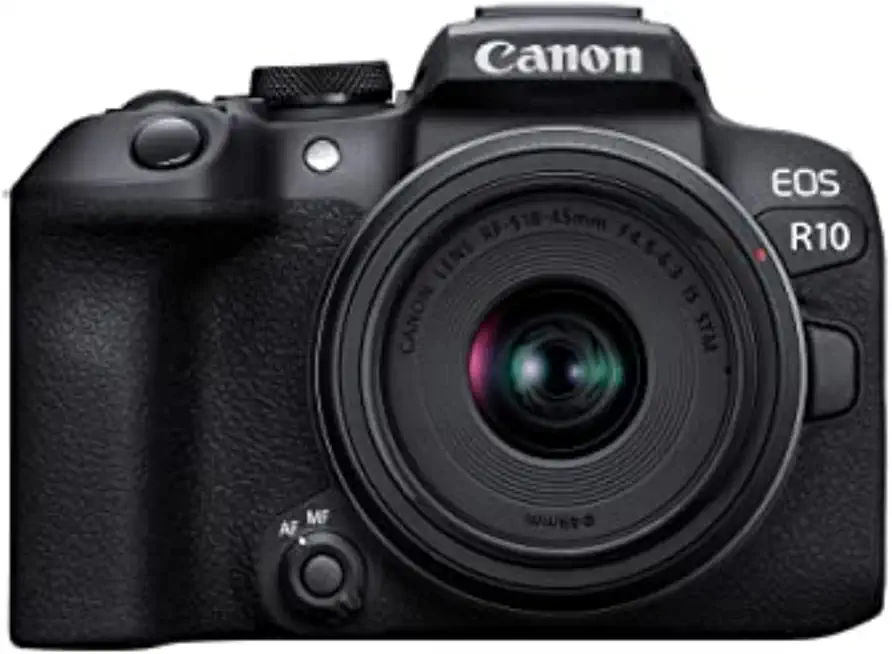
Canon EOS R10 Camera
Advanced APS-C mirrorless built for enthusiasts: rapid continuous shooting, sophisticated subject-tracking autofocus, and high-resolution video capabilities. Rugged handling and versatile lens support capture fast-paced action and travel.
Check PriceThe R10 is the closest step-up from the R100 in real shooting. Compared to the R100 it gives you much faster burst shooting and better uncropped 4K with Canon’s good subject tracking. In the field I noticed it holds focus better on moving kids and pets, and the flip touchscreen makes framing for video and vlogs far easier than the fixed screen on the R100.
Where it’s worse is that the R10 is a little bulkier and a bit more complex to use if you just want a no-fuss camera. It also costs more, so it’s a bigger commitment. Battery life and lenses are similar, but you’ll trade some of the lightweight simplicity of the R100 for more speed and features.
If you’re someone who shoots sports, action, or wants better 4K video for trips and projects, the R10 is the camera I’d pick over the R100. I’ve used it on family outings and short events where the faster burst and flip screen made the shots easier to get—just expect a slightly bigger bag and a steeper learning curve.
Alternative 2:
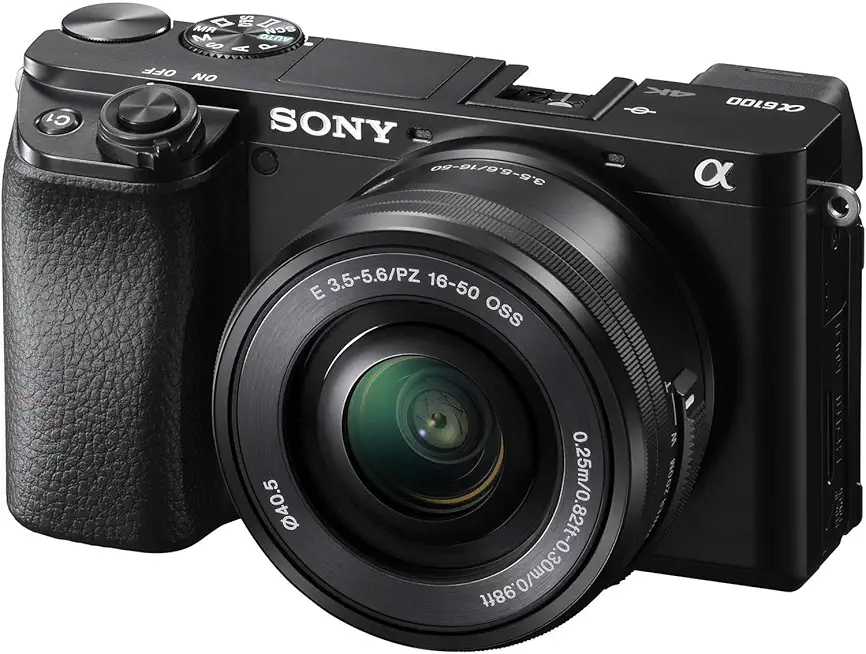
Sony Alpha A6100 Camera
Hybrid camera delivering responsive autofocus and crisp stills for photographers and content creators. Lightweight body, quick start-up, and clear 4K video capture make it ideal for everyday shooting and travel.
Check PriceThe Sony a6100 is a very light, travel-friendly camera that I’ve taken on hikes and quick trips. Against the R100 it feels snappier to start up and the flip-up screen is great for selfies and casual vlogging. The Sony’s autofocus and tracking are reliable in many real-world situations, and it’s easy to carry all day without fatigue.
Where it falls short versus the R100 is mostly in user feel and color. Sony’s menus and default color look different from Canon’s, so you might spend more time tuning the files to taste. Also, some of Canon’s friendly creative modes and the overall simplicity of the R100 are nicer for absolute beginners who don’t want to tweak settings.
If you want a very portable camera for travel, street shooting, and quick video clips, the a6100 is a great pick. I’ve used it as a lightweight backup body and it’s easy to grab when I don’t want a big kit—just know you’ll trade a bit of Canon’s out-of-the-box ease for Sony’s compactness and speed.
Alternative 3:

Nikon Z50 Camera
Compact mirrorless that balances image quality with intuitive controls. Offers impressive low-light performance, reliable autofocus, and solid build—great for beginners, vloggers, and photographers seeking a portable, capable system.
Check PriceThe Nikon Z50 feels solid in the hand and I like its grip for longer shoots. Compared to the R100 the Z50 gives cleaner results in low light and has a fully tilting screen that’s helpful for vlogging and awkward angles. In real shoots I found it comfortable for long walks and indoor events where the extra handling matters.
On the downside, the Z50’s autofocus and face/eye tracking can be a touch less consistent than Canon’s Dual Pixel AF in some moving-subject situations, at least in my experience. Also, Nikon’s menu flow and the look of its JPGs differ from Canon, so there’s a small adjustment if you’re used to the R100’s output and simplicity.
Choose the Z50 if you value a nicer grip, better low-light shooting, and a camera that feels more like a traditional DSLR in use. I’ve used it for weddings and small events where the handling and battery comfort mattered—photographers who shoot longer sessions or want a comfortable second body will like the Z50 over the R100.
What People Ask Most
Is the Canon EOS R100 good for beginners?
Yes — it’s compact, lightweight and designed with easy controls and Creative Assist modes, making it a solid step up from a smartphone for beginners focused on stills.
Does the EOS R100 have a touchscreen or flip screen?
No, it uses a fixed, non-touch 3.0″ LCD and does not have a flip-out or selfie/vlog screen.
How is the autofocus performance on the R100?
Very good for stills and Full HD video — Dual Pixel CMOS AF with eye detection is reliable, covering most of the frame with 143 selectable AF zones.
Can the R100 shoot 4K video without crop and with good AF?
No — 4K is heavily cropped (about 2.56x), limited to 24fps, and uses contrast AF which can cause focus hunting and softer results.
Does the R100 have in-body image stabilization (IBIS)?
No, there’s no IBIS, so handheld video relies on lens IS or digital stabilization and will show noticeable handshake in some situations.
Is the battery life good for a day of shooting?
Yes for casual use — about 340 shots per charge (without flash) and roughly 1 hour 50 minutes of 4K recording, making it solid for day trips but average among mirrorless cameras.
Conclusion
The Canon EOS R100 is a compact, no-nonsense entry-level mirrorless that earns its keep as a stills camera. Its color rendition and autofocus behavior feel mature for the price and make step-up shooters comfortable right away. Handling and creative-assist features lower the learning curve without dumbing things down.
Where it shines is obvious: lightweight portability, reliable subject and eye detection, and image quality that clearly outpaces a smartphone. Where it falters is equally clear — video capabilities are compromised by a heavy crop and simplified autofocus, and the lack of a flip or touch screen and in-body stabilization limits vloggers and hybrid creators. Those compromises are real, not subtle.
For casual photographers, families, and travelers who value straightforward controls and dependable stills performance, the R100 represents smart, practical value. For anyone prioritizing advanced video, in-body stabilization, or a selfie-friendly screen, it’s worth stepping up to a different model.
In short, buy the Canon EOS R100 if you want an affordable, easy-to-use camera that dramatically improves photographs over a phone. Skip it if your ambitions include serious video or content creation that demands modern video ergonomics.
Canon EOS R100 Camera
Compact, user-friendly mirrorless designed for beginners and vloggers. Delivers vivid images, reliable autofocus, and creative shooting modes in a lightweight body—perfect for everyday photography and sharing on social media.
Check Price



0 Comments