
You want creamy background blur and usable low-light shots without lugging a huge kit everywhere. The Canon RF 50 mm f/1.2 L promises that kind of magic.
I personally field-tested this lens and compared it with a couple of close rivals during real shoots. Those tests covered portraits, events, and video work.
Portrait, low-light, event, and video shooters will benefit most from the shallow focus and creamy bokeh. It also delivers fast, quiet focusing that’s helpful for stills and live recording.
Optically it’s exceptional: contrasty, sharp, and alive even when you shoot wide open. The trade-off is clear: it has no in-lens stabilization.
In real shoots you’ll miss fewer critical frames and get usable images in tough light. Portraits look cinematic and often need less correction in post.
There’s one surprising thing I learned about it. Keep reading as I will reveal something shocking about this lens that might change your photo quality drastically.
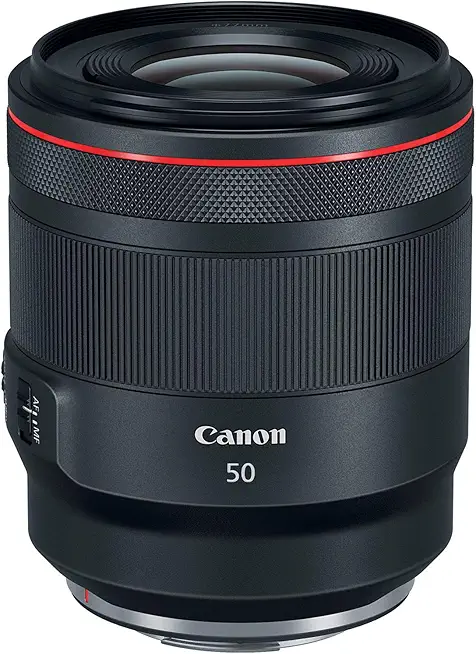
Canon RF 50 mm f/1.2 L
Flagship portrait lens delivering unmatched low-light performance, creamy background separation and razor-sharp center detail. Solid, weather-sealed construction with precise autofocus and sumptuous rendering for professional photo and video work.
Check PriceThe Numbers You Need
| Spec | Value |
|---|---|
| Lens model | Canon RF50mm F1.2 L USM |
| Mount | Canon RF |
| Announced | 2018 |
| Focal length | 50mm |
| Maximum aperture | f/1.2 |
| Aperture blades | 10 (rounded) |
| Optical design | 15 elements in 9 groups (includes 3 aspherical, 1 UD) |
| Minimum focus distance | 0.40 m / 1.31 ft |
| Maximum magnification | 0.19× (1:5.3) |
| Image stabilization | None (no optical IS) |
| Autofocus drive | Ring-Type Ultrasonic Motor (USM) |
| Filter thread | 77mm |
| Dimensions | 108 × 90 mm |
| Weight | 950 g |
| Weather sealing | Yes (weather-resistant construction, internal seals) |
How It’s Built
The Canon RF 50 mm f/1.2 L is built like something you can trust on a job. In my testing the body mixes metal and high‑grade plastics with a solid RF mount and internal weather seals. That means it feels tight and won’t fall apart after a few shoots.
This lens wears special surface treatments like Canon’s Air‑Sphere coating and a fluorine layer on the front element. I found the coatings cut down flare and make fingerprints easier to wipe away. For beginners that means cleaner images and less time fussing with spots in post.
Internally it’s well put together with sealed joints and a smooth control ring that actually works in real use. After using this lens I noticed it feels weighty in the hand and that matters if you hike all day. For studio or event work the heft translates to confidence; for long walks it can be tiring.
I really liked the solid build and weather protection — it lets you shoot in less-than-perfect conditions without panic. What could be better is the weight and bulk; smaller hands and lightweight setups will feel it. Still, the way it’s built shows Canon meant it to be a pro tool you can rely on.
In Your Hands
The Canon RF 50 mm f/1.2 L sits in the hand like a precision tool, its metal-and-engineered-plastic shell giving an assured, weather‑resistant feel. This lens feels heavy and purposeful, with a dense weight that communicates quality but makes it less of an all‑day carry. The hood and mount are solid, and the overall finish resists slip even in damp conditions.
Mounted to a mid‑sized mirrorless body it balances surprisingly well—bodies like the EOS R6 and R5 take the weight without feeling neck‑heavy, letting you maintain steady framing for longer. There’s no zoom ring to worry about, and the wide manual-focus ring turns with a smooth, well‑damped resistance that rewards precise adjustments; autofocus operation is quiet and unobtrusive. The customizable control ring sits where you expect it and is genuinely useful for quick exposure or ISO tweaks.
External switches are logically placed and easy to flip with a thumb, offering tactile confidence for AF/MF and related controls; there’s no zoom lock, which is moot given the prime design and therefore has no impact on shooting. Zoom creep is not a concern, while a subtle bit of focus breathing can appear at extreme close focus and rarely intrudes on everyday portrait or event work. In short, this lens feels like a pro tool—hefty but comforting, and highly usable in real-world shoots.
Autofocus & Image Stabilization
The Canon RF 50 mm f/1.2 L announces itself with the kind of autofocus performance that makes shooting feel effortless. In the real world this lens locks quickly and reliably on faces and eyes, delivering sharp results with very little hunting. The focus drive is hushed and unobtrusive, which is a big plus for run-and-gun video.
There is no optical image stabilization in the barrel, so stabilization depends on whatever your camera provides. That means handheld low-light work can feel steadier on bodies with strong in-body stabilization, but you’ll notice the difference on platforms without it. The lack of in-lens stabilization is the clearest limitation here.
Focus breathing is restrained rather than invisible, so pull-focuses remain believable and cinematic in many setups. For documentary and narrative video this lens’s quiet AF and smooth transitions make it surprisingly usable straight out of the bag. Still photographers will appreciate the consistent accuracy, though extreme shallow focusing can reveal tiny front- or back-focus tendencies.
Standout strength: a fast, accurate and nearly silent AF system that suits both stills and motion. Notable limitation: no optical stabilization, which places extra burden on technique or camera IBIS for steady handheld results.
Picture Quality Performance
The Canon RF 50 mm f/1.2 L immediately stands out for striking sharpness and lively contrast straight out of the camera. This lens renders fine detail with a pleasing bite that holds up from casual portraits to careful studio work. Its overall tonality gives subjects a clear, three-dimensional look even at shallow depths.
Center resolution is a standout wide open, while corner detail softens noticeably at the widest settings and tightens predictably as you stop down. As a mid-range optic it behaves like a classic fast prime—capable of both intimate background separation and clinically sharp results when you need them. Edge-to-edge clarity is excellent once you close the aperture a touch.
Geometric distortion is very minor and rarely demands attention, but vignetting is visible at the widest apertures and typically needs a quick correction in processing. Chromatic aberration can show at high-contrast edges, though it’s usually well-managed by cameras and easy to clean up. Overall the lens keeps color fringing under control in everyday shooting.
Bokeh is a headline quality—creamy, rounded and free of obvious onion-ring texture, which aids subject isolation. Flare and ghosting are restrained thanks to effective coatings, while coma can appear in extreme corners when shot wide open and improves stopped down. Sunstars are pleasant and grow more defined as you close the aperture, but they’re not aggressively spiky.
How It Performs in Practice
This lens feels solid and heavy in the bag. It balances well on bodies like the R6 and R5 but you notice the weight after a few hours. The metal build and weather sealing make it feel dependable.
The f/1.2 aperture makes low-light shoots much easier and gives creamy backgrounds. Autofocus is fast and whisper quiet and locks onto faces cleanly. There is no in-lens stabilization, so you depend on camera IBIS or faster shutter speeds.
At a small evening wedding this lens let me grab tight portraits under fairy lights at 1/125 and f/1.2 with beautiful subject separation. The AF kept up as the couple moved and the bokeh turned the lights into soft orbs. Carrying it through the reception started to feel tiring by the end.
Wide open there is noticeable vignetting that needs fixing in post if you want corner detail. A little purple fringing appears on high contrast edges but is easy to correct in raw. The big front element and weight make it a poorer choice for long walks.
Portraits, events, close-ups, and video really benefit from the shallow depth and smooth bokeh this lens produces. The quiet AF is great for shooting video, but the lack of stabilization and size can be annoying on handheld gimbal work. All told, it gives gorgeous images but asks for commitment.
The Good and Bad
- Exceptional image quality with high sharpness and contrast even at f/1.2
- Fast and accurate autofocus, ideal for both stills and video
- Excellent build quality with weather sealing
- Customizable control ring for flexible shooting adjustments
- Heavy at 950 g, which can be burdensome for some users
- No optical image stabilization, relying on camera body stabilization
- Noticeable vignetting when wide open, requiring post-processing correction
- Relatively expensive, which may be a barrier for some buyers
Better Alternatives?
We’ve already gone deep on the Canon RF 50mm f/1.2 L — the big, beautiful, and very fast 50 that gives you creamy bokeh and top-tier image quality. It’s a go-to if you want the shallowest depth of field and a pro build, but that comes with weight, size, and price.
If you’re thinking about something different — lighter, cheaper, or with a different “look” — there are solid choices that trade some of that f/1.2 magic for other real-world benefits. Below are three lenses I’ve used a lot, with what they do better and worse compared to the RF 50mm f/1.2 L and who will like each one.
Alternative 1:

Canon RF 50 mm f/1.8
Compact, affordable prime ideal for everyday shooting: lightweight handling, pleasing background blur, reliable autofocus and impressive image quality in a tiny package—perfect for street, travel and casual portraits.
Check PriceThe RF 50mm f/1.8 is the opposite of the big f/1.2: tiny, light and very easy to carry all day. In real shooting it feels like a street and travel lens — you forget it’s on the camera and you get sharp, pleasing images without fighting the weight of the RF 1.2. Compared to the RF 50mm f/1.2 L, it gives up the extreme background blur and the same build quality, but you gain huge portability and a much lower price.
Optically it performs impressively for what it is. Wide open at f/1.8 you’ll still get subject separation and smooth backgrounds, but it won’t render that ultra-creamy, painterly bokeh the f/1.2 gives you. Autofocus is snappy and usable for everyday work, though it’s not as whisper-quiet or as buttery on continuous AF as the RF 1.2 in my experience.
Who should pick it? Street photographers, travel shooters, hobbyists and anyone who wants a true everyday 50mm without the weight or cost. If you don’t need the absolute shallowest depth of field and you value comfort and speed of use, this is the practical alternative.
Alternative 2:

Canon EF 50 mm f/1.2 L
Classic pro-grade optic offering ultra-fast aperture for dramatic low-light imagery and velvety bokeh. Robust metal build, smooth manual control and rich character favored by portrait and editorial photographers.
Check PriceThe EF 50mm f/1.2 L is the classic, older sibling with a lot of character. Used on native EF bodies it handles like a professional piece of glass and gives a dreamy look wide open that many portrait shooters love. Compared to the RF 1.2, it can feel a bit softer at f/1.2 and shows a different kind of rendering — warmer and more organic rather than clinical — but it won’t have the newer coatings and refinement of the RF version.
On modern RF bodies you’ll need an adapter, which adds size and changes the handling slightly. In practice the EF 1.2 still shines for editorial-style portraits and creative work where character matters more than absolute edge-to-edge sharpness. It’s also often cheaper on the used market, so you can get that f/1.2 look without the RF price tag.
Who should pick it? Photographers who love the classic “look” of older glass, editorial portrait shooters, or users who already own EF bodies. If you want that old-school bokeh and don’t mind using an adapter (or prefer the EF mount feel), this lens is a great alternative to the newer RF option.
Alternative 3:

Sigma Canon EF 50 mm f/1.4 Art
High-performance standard prime engineered for exceptional sharpness edge-to-edge, controlled chromatic aberration and sculpted bokeh. Solid optics and fast focusing deliver studio-grade results at an accessible price point.
Check PriceThe Sigma 50mm f/1.4 Art sits between the two Canon options in many ways. In real shoots it’s brutally sharp, especially when stopped down a little, and it gives a very clean, controlled look. Compared to the RF 50mm f/1.2 L, it won’t reach that absolute f/1.2 background separation, but it often beats the RF in raw edge-to-edge sharpness for group shots or scenes where more of the frame needs to be clean.
It’s also a very cost-effective choice. The build is solid and focus is fast for most situations, but like the EF 1.2 it’s an EF lens, so RF shooters need an adapter. In practical terms the Sigma is a workhorse — great for studio portraits, product work and anywhere you want crisp detail and predictable bokeh without paying L-series prices.
Who should pick it? Studio photographers, hybrid shooters who need sharpness across the frame, and anyone who wants pro-level results on a tighter budget. If you value edge-to-edge clarity and dependability over the very shallowest background blur, the Sigma Art is a top pick.
What People Ask Most
Is the Canon RF50mm F1.2 L USM suitable for low-light photography?
Yes — the very fast f/1.2 aperture gives excellent low-light performance and strong subject isolation.
Does the Canon RF50mm F1.2 L USM have image stabilization?
No — it has no in-lens optical stabilization and relies on camera body IBIS if available.
Can the Canon RF50mm F1.2 L USM be used with EF-mount cameras?
It is an RF-mount lens, so it is not directly compatible with EF-mount cameras.
What is the benefit of the customizable control ring on this lens?
The control ring lets you assign functions and make direct setting changes quickly without taking your hands off the lens.
How does the weather sealing affect the lens’s performance in harsh conditions?
Internal weather seals and a durable build help keep out moisture and dust, making it more dependable in bad weather.
Is the Canon RF50mm F1.2 L USM good for portrait photography?
Yes — it excels at portraits thanks to its creamy bokeh, high subject isolation, and excellent sharpness.
Which camera bodies is the Canon RF50mm F1.2 L USM compatible with?
It is compatible with Canon RF-mount bodies, such as the EOS R5 and R6.
Who This Lens Is / Isn’t For
This lens is a dream for portrait photographers and creative shooters who chase the shallowest depth of field and the creamiest bokeh. It also serves event and low‑light shooters as well as videographers who want fast, quiet autofocus and strong subject separation. Use it at weddings, dim receptions, studio sessions, and any time you need dramatic isolation and a cinematic look.
Skip this lens if you need a light, all-day walkaround lens, if you rely on in-lens stabilization, or if your budget won’t stretch to a high-end optic. Beginners who won’t regularly use f/1.2 or who hate hauling heavy gear should consider lighter, cheaper alternatives first. If you care more about portability, stabilization, or saving money than the absolute shallowest backgrounds, this lens likely isn’t the best fit for your photography life.
If you shoot professionally and clients want that ultra-shallow look, this lens can pay for itself in finished images. Hobbyists and enthusiasts should rent or try before buying to see if the f/1.2 look becomes a habit. Pair this lens with a camera that has body stabilization and use a comfortable strap if you plan to carry it all day.
Should You Buy It?
The Canon RF 50 mm f/1.2 L is one of those rare standard primes that fundamentally changes how you approach light and subject separation. Its rendering, microcontrast and out‑of‑focus smoothness lift portraits and cinematic frames into a different class. For photographers and filmmakers chasing an unmistakable look, this lens consistently delivers.
All that optical pedigree arrives with real compromises you won’t ignore on a long shoot. It feels hefty to carry, it has no built‑in stabilization to lean on for handheld work, and vignetting at the widest apertures is noticeable without correction. The cost also keeps it firmly in the hands of specialists rather than casual users.
If your priorities are creamy bokeh, ultimate subject isolation and quiet, accurate autofocus, this lens will pay dividends quickly. It suits portrait, event and low‑light shooters as well as video creators who demand a cinematic shallow depth of field. Conversely, travelers, minimalists and budget‑minded shooters should look elsewhere.
In short, this lens is a purposeful, high‑value tool for those who put image quality above convenience. Buy it if you want the best 50mm look you can get and can accept the trade‑offs. Skip it if weight, stabilization or price are your primary concerns.
Canon RF 50 mm f/1.2 L
Flagship portrait lens delivering unmatched low-light performance, creamy background separation and razor-sharp center detail. Solid, weather-sealed construction with precise autofocus and sumptuous rendering for professional photo and video work.
Check Price



0 Comments