
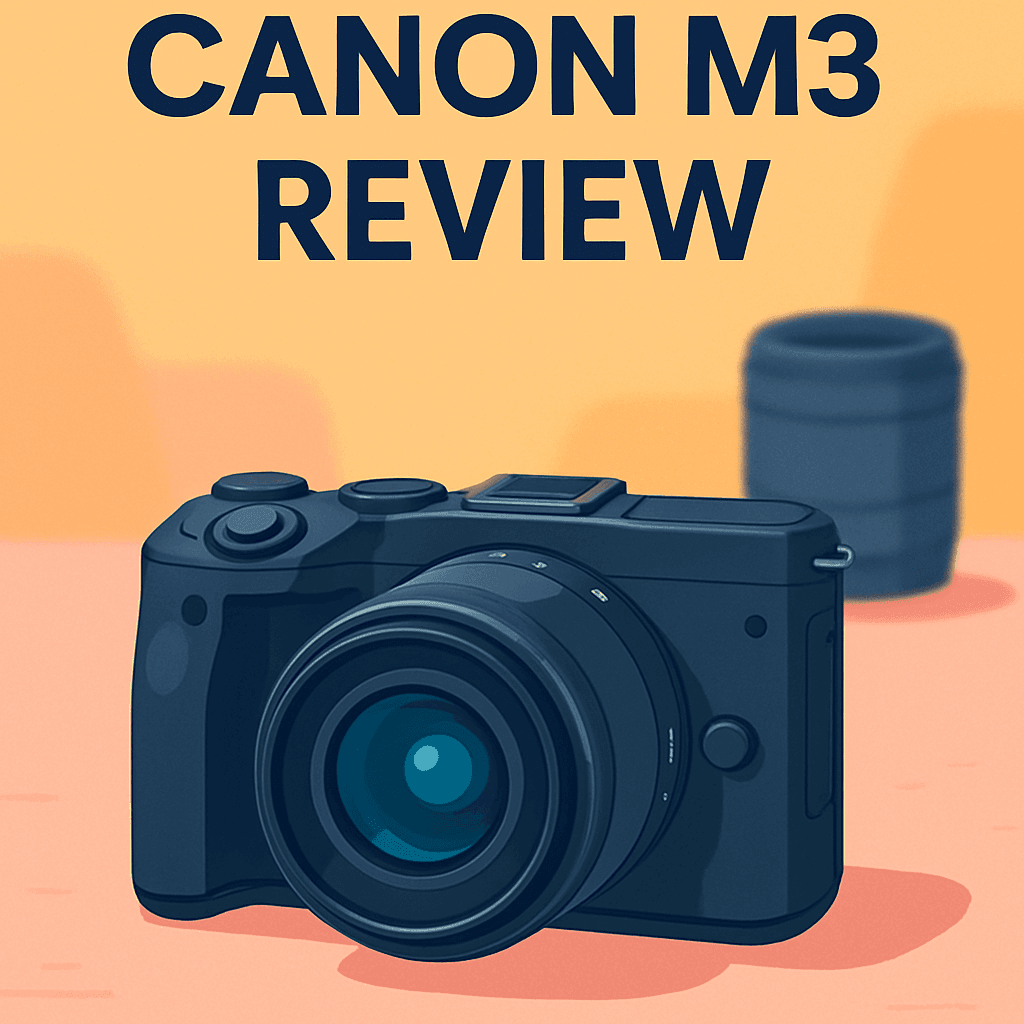
Wish your DSLR-quality photos could travel with you without the bulk? The Canon EOS M3 Camera promises that compact freedom with familiar image quality. It’s smaller than you expect, honestly.
I personally field-tested the Canon EOS M3 Camera and compared it with a couple of close rivals. It’s ideal for enthusiasts and travelers who value image quality over size, often.
You’ll notice pleasing color, easy handling, and a tilting touchscreen that makes tricky angles simple. Sharing and remote shooting get a lot easier with built-in wireless. It’s genuinely freeing sometimes.
There is one clear trade-off: it doesn’t have a built-in viewfinder. You’ll want an optional external viewfinder for bright sunlight or long shooting days. That’s the main downside to consider.
I tested it across travel and portrait shoots to see real gains. Keep reading — I’ll reveal something shocking about the Canon EOS M3 Camera that might change your photos drastically.

Canon EOS M3 Camera
Compact mirrorless with a 24MP APS-C sensor delivers sharp images, responsive hybrid autofocus, a tilting touchscreen for creative angles, and built-in connectivity for quick sharing — perfect for photographers on the move.
Check PriceThe Numbers You Need
| Spec | Value |
|---|---|
| Sensor | 24.2 MP APS-C CMOS (22.3 x 14.9 mm) with Bayer and AA filters |
| Processor | DIGIC 6 image processor |
| ISO range | 100–12,800; expandable to 25,600 |
| Lens mount | Canon EF-M mount (1.6× crop factor) |
| Autofocus | Hybrid CMOS AF III with 49 AF points; face + tracking and single-point AF |
| Shutter speed | Mechanical 30 sec to 1/4000 sec; bulb mode |
| Continuous shooting | Up to 4.2 frames per second |
| Video | Full HD 1080p at 24/25/30 fps; H.264 in MOV format; 3.5 mm microphone input |
| Screen | 3.0″ tilting touchscreen, 1,040,000 dots |
| Viewfinder | No built-in viewfinder; optional external EVF-DC1 (2.36M dots) |
| Storage | SD/SDHC/SDXC cards with UHS-1 support |
| Connectivity | Built-in Wi‑Fi and NFC for smartphone control and sharing |
| Flash | Built-in pop-up flash (guide number ~5 m) and hot shoe for external Speedlites |
| Battery | LP-E17; rated ~250 shots per CIPA |
| Weight | 366 g (body only) |
How It’s Built
In my testing the Canon EOS M3 feels like a small camera that wants to come everywhere with you. The contoured grip makes it surprisingly comfy to hold for long walks, so you don’t tire out your hand on a day of shooting.
The rangefinder-style layout with a proper mode dial and real buttons makes changing settings quick and natural. I found the controls intuitive, which is great for beginners who are learning to shoot in manual or aperture-priority modes. You can dial in settings without fumbling through menus, and that keeps you shooting instead of tinkering.
The tilting touchscreen is one of the highlights I really liked. It’s responsive and makes framing high or low shots simple, and the built-in flash plus a hot shoe give you lighting options without needing a big bag of gear.
The main thing that could be better is the lack of a built-in viewfinder. In bright sun I had to shade the screen or hunt for a spot with less glare, or carry the optional external EVF to fix it. Overall it’s a practical, travel-friendly body that’s easy for beginners to pick up and enjoy shooting with right away.
In Your Hands
The EOS M3 excels at stills; images render fine detail with Canon’s warm color science, especially for skin tones. RAWs tolerate editing well while JPEGs often need little tweaking. Colors are immediately pleasing, making it easy to share shots straight from the camera.
Noise is well controlled at moderate sensitivities, preserving shadow detail and color for typical low‑light scenes. Push it harder and grain and softness appear, but the results remain usable for social and street work.
Autofocus is quick and reliable in good light, locking on faces and static subjects with confidence. It loses ground with very fast action, so the burst performance serves casual motion better than demanding sports.
Full‑HD video is perfectly adequate for web and run‑and‑gun projects, though it lacks higher resolution and can show moiré on fine patterns. HDMI output and a mic input give practical control over monitoring and sound when you need tighter results.
The tilting touchscreen and tactile controls make composing from odd angles quick and pleasant, and built‑in wireless simplifies sharing and remote shooting. Battery life is modest for a travel companion, so carry a spare for long days in the field.
The Good and Bad
- Excellent 24MP APS-C image quality and attractive color rendition
- Compact, lightweight, and ergonomic design well suited for travel
- Responsive tilting touchscreen and intuitive controls
- Built-in Wi‑Fi and NFC simplify sharing and remote shooting
- No built-in electronic viewfinder; requires optional EVF for eyepiece shooting
- Autofocus speed is moderate and battery life is average
Ideal Buyer
If you’re an enthusiast who wants DSLR-level still-image quality in a pocketable mirrorless body, the Canon EOS M3 Camera is a natural fit. Its 24.2MP APS-C sensor and Canon’s pleasing color science deliver crisp detail and flattering skin tones that make portraits and travel shots pop. The rangefinder-style layout gives tactile controls without the bulk of a full DSLR, so you can shoot longer days with less fatigue.
Travel photographers who need a lightweight camera with real manual controls and interchangeable lenses will appreciate the M3’s compact ergonomics and responsive tilting touchscreen for awkward high- and low-angle work. The EF‑M mount plus adapter options make it an adaptable companion for street, landscape, and everyday documentary shooting. Note that there’s no built-in EVF, so you may want the optional external viewfinder for bright-sun framing.
Canon DSLR owners looking for a portable secondary body that fits into an existing Canon workflow will find the M3 familiar and easy to pair with EF or EF‑S glass via adapters. Photographers who prioritize still-image color and image quality over cutting-edge 4K video or ultra-fast burst rates will get the most value here. Casual shooters who value touchscreen operation and quick Wi‑Fi/NFC smartphone sharing will also appreciate how accessible and capable the camera feels.
Better Alternatives?
We’ve gone through the Canon M3 and what it does well — great color, solid stills, and a small, friendly body for travel. If you found the M3 good but wished for faster focus, higher resolution, or modern video features, there are a few cameras I’ve used that solve those problems in different ways.
Below are three practical alternatives I’ve shot with on real jobs. I’ll tell you where each one beats the M3, where it falls short, and what kind of shooter would pick it over the M3.
Alternative 1:

Canon EOS M6 Mark II Camera
High-resolution APS-C shooter featuring a 32.5MP sensor, blazing continuous burst speeds, 4K video, advanced autofocus and a compact, ergonomic body—designed for creators who demand detail and agility.
Check PriceI’ve used the M6 Mark II on portrait sessions and travel shoots, and the first thing you notice is the extra detail from the 32MP sensor. It lets you crop more or print bigger without losing sharpness, and the much faster burst and improved autofocus make it far better than the M3 for kids, pets, or street action. The 4K video is a real upgrade too — cleaner footage than the M3’s Full HD when you need video alongside stills.
Where it’s worse is in a few small but real ways. The body still lacks a built-in, proper eyepiece viewfinder unless you add the external unit, which means bright sunlight can be tricky unless you clip on that accessory. Battery life is also not a step forward, so plan on spares for long days. And while the autofocus is much improved, it still won’t match the very latest trackers in full-on sports work.
Pick the M6 Mark II if you want more resolution and speed but like Canon color and handling. It’s great for travel photographers who also shoot events or short videos, and for portrait shooters who want extra cropping room without moving to a larger camera system.
Alternative 2:

Sony Alpha a6400 Camera
Versatile mirrorless offering responsive real-time eye-detection autofocus, fast continuous shooting and 4K video quality, paired with a selfie-friendly flip screen—ideal for vloggers and action photographers alike.
Check PriceI’ve relied on the a6400 for run-and-gun work, and its autofocus is the biggest real-world advantage over the M3. Eye-detection and subject tracking just lock on and stay steady, which makes shots of moving kids, pets, or street subjects much less stressful. The built-in EVF and flip-up screen also make it easier to shoot in bright light and to vlog straight to camera — things the M3 struggles with unless you add accessories.
What it gives up compared to the M3 is the classic Canon color and the simple, friendly control feel. Sony’s color can be cooler out of camera, and the menu system can slow you down if you need quick changes. Also, lenses and adapters can add cost if you’re trying to use Canon glass. For pure still-image warmth and skin tones, some shooters still prefer the M3’s look.
The a6400 is the pick if you shoot a lot of action or video and need rock-solid autofocus and an internal viewfinder. It’s a favorite for vloggers, event shooters, and anyone who wants autofocus confidence in busy, changing scenes.
Alternative 3:
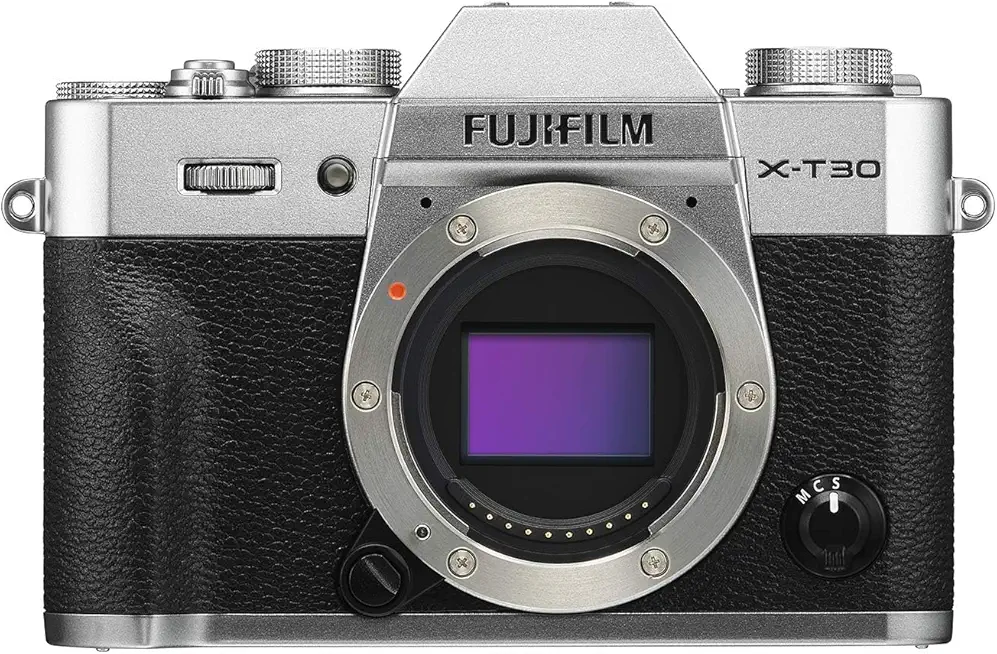
Fujifilm X-T30 Camera
Compact retro-styled camera combining a 26MP sensor, celebrated film-simulation color profiles, fast autofocus and smooth 4K capture—delivering professional-grade images and cinematic tones in a pocketable, tactile body.
Check PriceI shoot portraits and street work with Fujifilm bodies when I want color that’s already beautiful straight from the camera. The X-T30 gives you those film-like JPEGs and textures that can cut down editing time versus the M3. Its handling — tactile dials and a proper viewfinder — also makes shooting feel more deliberate and enjoyable, especially for street and portrait work.
Compared to the M3, the X-T30 adds nicer colors and a better built-in EVF and also brings 4K video. But it can be a little less forgiving with autofocus in some very low-light scenes compared to newer AF systems, and battery life is still modest. If you rely on Canon glass, swapping systems means rethinking lenses or buying new ones — though Fuji’s own lenses are excellent.
Choose the X-T30 if you care about color straight out of camera and a fun, tactile shooting experience. It’s ideal for street shooters, portrait photographers, and anyone who values beautiful JPEGs and classic controls over sticking with Canon’s color and lens ecosystem.
What People Ask Most
Does the Canon EOS M3 have a built-in viewfinder?
No; it lacks a built-in EVF but supports an optional external EVF (EVF-DC1).
How is the autofocus performance?
Autofocus is reasonably fast and accurate in good light with 49 AF points, but it’s not ideal for fast-moving subjects compared with newer models.
What is the battery life like?
Battery life is average at about 250 shots per CIPA, so carry spare batteries for long days.
Does it shoot 4K video?
No; video is limited to Full HD 1080p at 24/25/30 fps.
Is the Canon EOS M3 good for travel photography?
Yes — its compact, lightweight body and excellent 24MP still-image quality make it well suited for travel.
What lenses does it use?
It uses Canon’s EF-M mount for native lenses, with a 1.6× crop factor on the APS-C sensor.
Conclusion
The Canon EOS M3 excels where it was meant to: delivering appealing still-image quality and that unmistakable Canon color palette in a compact, travel-friendly package. Its ergonomics, intuitive controls and responsive touchscreen make shooting a pleasure rather than a chore. Built‑in wireless connectivity also keeps sharing and remote work effortless on the go.
That said, the M3 makes clear compromises. There is no integrated viewfinder, autofocus performance is solid but not cutting‑edge for fast action, and video capabilities are modest compared with more recent rivals. Battery endurance is unremarkable, so long days demand spares or a plan B.
For the enthusiast photographer who prioritizes image quality, handling and portability over the latest autofocus and video bells and whistles, the M3 remains a compelling and sensible choice. If your work depends on blazing AF or advanced video features, you’ll find better fits elsewhere. Overall, it’s a confident, well‑balanced camera for still‑first shooters who want Canon color in a small, pleasant body.
Canon EOS M3 Camera
Compact mirrorless with a 24MP APS-C sensor delivers sharp images, responsive hybrid autofocus, a tilting touchscreen for creative angles, and built-in connectivity for quick sharing — perfect for photographers on the move.
Check Price



0 Comments