
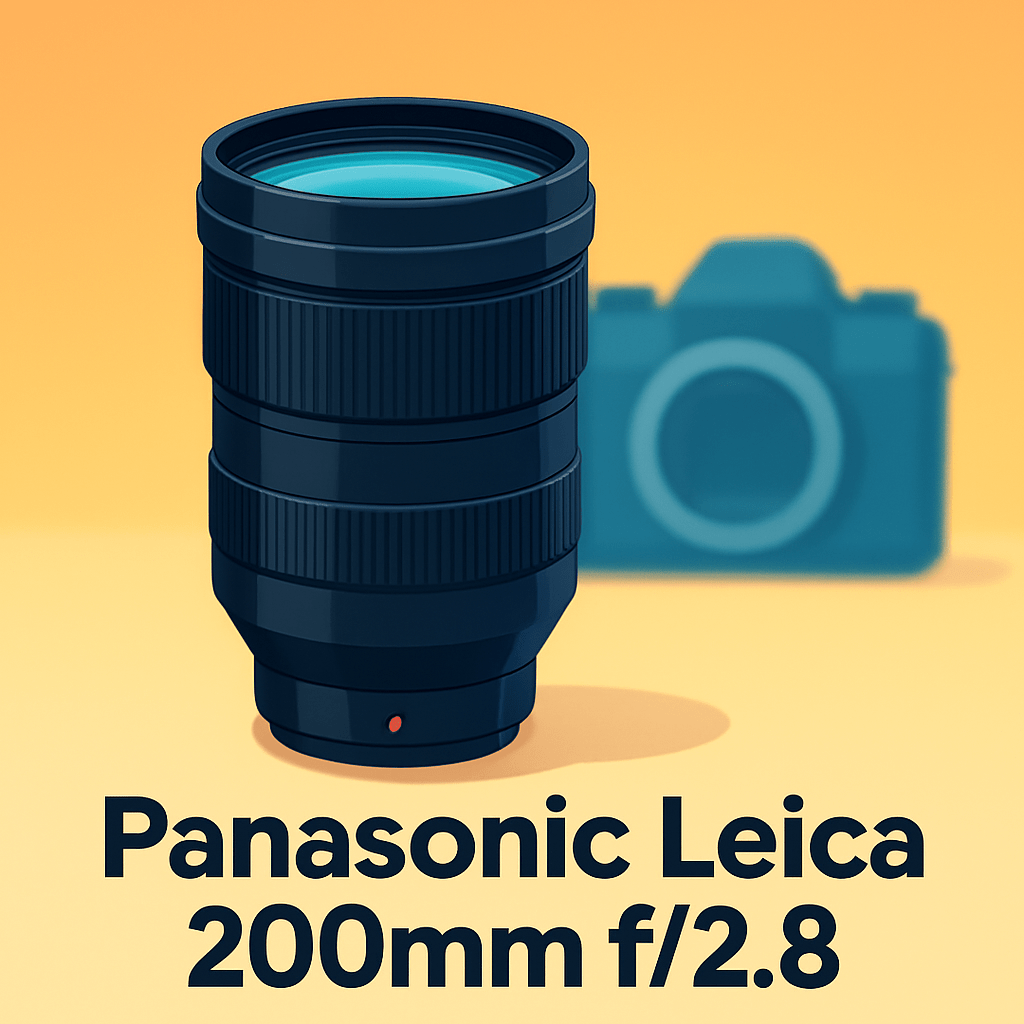
Want to pull distant action closer while keeping creamy background separation?
The Micro Four Thirds 200mm f/2.8 Leica DG Elmarit promises pro-level reach and speed on compact MFT bodies.
Perfect for wildlife, field sports and airshows. Its f/2.8 aperture, POWER O.I.S., and fast linear AF give lower ISO, sharper action shots, and stronger subject isolation.
I took it into the field to see how those promises hold up in real conditions. Make sure to read the entire review as I break down handling, AF, sharpness and more—keep reading.

Micro Four Thirds 200mm f/2.8 Leica DG Elmarit
Compact, high-speed 200mm telephoto delivering stunning subject isolation and creamy bokeh. Bright f/2.8 performance, fast AF, and robust weather sealing for reliable wildlife, sports, and low-light shooting.
Check PriceThe Numbers You Need
| Spec | Value |
|---|---|
| Focal Length | 200 mm |
| Aperture | f/2.8 |
| Lens Mount | Micro Four Thirds |
| Angle of View | 400 mm (full-frame equivalent) |
| Image Stabilization | POWER O.I.S. |
| Minimum Focus Distance | Long (not confirmed in official sources) |
| Filter Size | 82 mm |
| Focus Clutch | Yes |
| Weather Sealed | Yes |
| Weight | ≈1.2 kg (often listed as ~1,245 g) |
| Length | 195 mm |
| Autofocus | Linear motor |
| Focus Limiter | Yes |
| Aperture Blades | 9 (rounded) |
| Lens Hood | Included |
How It’s Built
In my testing the Micro Four Thirds 200mm f/2.8 Leica DG Elmarit feels like a pro tool. The metal body and weather sealing gave me confidence shooting in wind and light rain. That means you can take it into real outdoor work without worrying too much about dust or drizzle.
I really liked the solid, weighty build — it feels like it will last. What could be better is the size and heft for an MFT setup; it’s noticeably heavy and long for such small bodies. In practice that means it balances best on a larger MFT camera or with a monopod for long shoots.
The front takes an 82mm filter, so expect larger filters and holders if you plan to stack glass. The included hood is large and helpful; I used it to cut flare and protect that big front element while walking through fields and stands.
Controls are clear and useful. The focus clutch makes switching to manual fast and tactile, and the focus limiter reduced hunting when I knew my subject distance. The linear motor is quiet and decisive, and the coating and rounded blades give pleasing contrast and smooth out‑of‑focus areas.
For beginners: you can handhold short bursts, but bring a monopod for long sessions. After using it for a while I found it best treated as a serious tool — rewarding in image quality, but demanding in handling.
In Your Hands
The lens’ linear motor AF feels like a pro on the job: fast, quiet and decisively locked onto distant subjects, which is exactly what you want when wildlife or athletes are moving through the frame. Using the focus limiter in practice noticeably trims hunting when you know subjects will stay in a far band, and the tactile focus clutch makes a one-handed dive into manual focus both quick and intuitive. Between the motor and controls the system rarely dithers, so keeper rates on split-second moments are reassuringly high.
Wide aperture performance is where this optic earns its keep; f/2.8 lets you favor shutter speed over cranked ISO and produces strong subject separation at long reach. The nine rounded blades render out-of-focus areas smoothly, with specular highlights that stay pleasant rather than harsh, and coating work keeps contrast up when shooting into bright skies. In short, backgrounds melt away in a way that emphasizes the subject without distracting artifacts.
The trade-off is a relatively long minimum focus distance, which means you can’t force close-up framing on small subjects—this lens wants distance and performs best when you give it room to breathe. That limitation pushes you toward traditional stalking or picking vantage points rather than stepping in for intimate detail. If your shooting style relies on tight, close working distances, expect to adjust how you approach a scene.
On the move the lens’ length and heft are noticeable in long handheld sessions, making monopods or short breaks useful for longer shoots, but it still tracks and pans well for bursts and follow shots. Weather sealing inspires confidence in damp or dusty conditions, and the supplied hood is essential for controlling flare and maintaining punchy contrast under harsh light. Stabilization helps keep exposures usable in lower light, letting you chase late-day action without immediately reaching for a tripod.
Practical strengths show up where reach and speed matter: birds flushed at distance, sideline sports moments, and airshow passes all benefit from the blend of isolation, AF responsiveness and low-light latitude. For outdoor shooters who trade close-focus flexibility for decisive long-range performance, this lens simply makes hard-to-reach subjects feel reachable and photographable in real-world conditions.
The Good and Bad
- Gives long telephoto reach with a bright maximum aperture
- POWER O.I.S. stabilization for handheld telephoto work
- Weather-sealed, pro-grade build
- Linear motor autofocus for fast, quiet focusing
- Heavy and relatively long for Micro Four Thirds bodies
- Fixed focal length lacks the flexibility of a telezoom
Ideal Buyer
If you shoot birds, field sports or airshows and need reach without sacrificing shutter speed, this is the lens for you. The Micro Four Thirds 200mm f/2.8 Leica DG Elmarit gives a 400mm‑equivalent field of view with a fast f/2.8 aperture. That combination means more keepers in low light and cleaner background separation.
This is for shooters who prize pro controls and in‑lens tech. The focus clutch and limiter, linear‑motor AF and POWER O.I.S. make tracking decisive and reliable in the field. Weather sealing and Nano Surface Coating add confidence in rough conditions and backlit situations.
You should also be comfortable carrying a relatively heavy, long prime on a compact MFT body and managing an 82mm front element. If you need frequent near‑subject work or a light travel setup this lens might feel restrictive.
Pick this lens if your priority is maximum reach plus light‑gathering on an MFT platform and you value optical speed over zoom flexibility. Skip it if you need variable focal lengths, much lower weight, or intimate close‑focus performance. For ambitious wildlife and action shooters who demand pro ergonomics and stabilization, it’s a focused, powerful tool.
Better Alternatives?
We’ve already dug into what the Panasonic Leica 200mm f/2.8 brings to the table: a fast, pro‑grade tele prime that gives great subject isolation and strong autofocus for distant action. That lens is a specialist—fantastic when you need f/2.8 speed and the look it produces, but it isn’t the only way to get the job done.
Below are a few real-world alternatives I’ve used. I’ll say what each one does better and where it falls short compared to the Leica 200/2.8, and who I think would prefer each option.
Alternative 1:

Micro Four Thirds 300mm f/4 M.Zuiko Digital ED
Lightweight 300mm tele prime offering long reach with sharp edge-to-edge resolution and superb contrast. Stabilization-friendly, quick AF, and weather-sealed for travel, birding, and distant-subject photography.
Check PriceThe 300mm f/4 gives you noticeably more reach in the field. On Micro Four Thirds that extra focal length is a big deal for small birds and distant wildlife—you can fill the frame without cropping as much or moving closer. I found it especially handy on foggy mornings or long shoreline shoots where every bit of reach matters.
Compared to the Leica 200/2.8, the 300/4 is one stop slower, so it won’t freeze action as easily in low light and the background blur isn’t quite as creamy. Where it wins is reach and practical framing; where it loses is in shallow depth of field and that slightly richer look you get from f/2.8 when light is low. Stabilization on the 300 is very good, and in many handheld situations it kept shots usable when the slower aperture mattered.
If you’re a birder or wildlife shooter who regularly needs extra distance, the 300/4 will appeal. It’s for people who prefer getting the frame in camera rather than relying on heavy cropping or climbing closer. If you often shoot in dim light and need the shallower look of f/2.8, the Leica 200 will still be the better choice.
Alternative 2:

Micro Four Thirds 40-150mm f/2.8 M.Zuiko Digital ED PRO
Versatile 40–150mm pro zoom with constant bright aperture for consistent exposure and beautiful background separation. Fast, accurate AF, rugged weather-sealed construction, and premium optics for events, sports, and portraits.
Check PriceThe 40‑150mm f/2.8 PRO is a workhorse zoom that I grab when I need flexibility during a shoot. Unlike the Leica 200/2.8 prime, this gives you a wide range of focal lengths in one lens so you can move from tighter headshots to mid-tele sports frames without changing glass. That flexibility is a big advantage at weddings, events, or when you’re traveling light.
What it does worse than the Leica 200/2.8 is reach—its long end is shorter, so you’ll be physically closer to get the same framing, or you’ll need to add a teleconverter and accept the light loss. It also doesn’t quite match the Leica prime for the special punch of micro‑contrast and that extra subject separation you get at f/2.8 on a 200mm prime. However, for everyday shooting the PRO zoom’s AF, handling, and consistently good sharpness make it a very practical choice.
Pick the 40‑150mm f/2.8 PRO if you want one lens that covers a lot of ground and you value versatility over having the ultimate tele reach or the very shallowest background blur. Event and sports shooters, travel photographers, and people who dislike constant lens changes will likely prefer this zoom to the Leica prime.
Alternative 3:
Micro Four Thirds 40-150mm f/2.8 M.Zuiko Digital ED PRO
Professional 40–150mm telezoom delivering reliable performance and creamy bokeh across the range. Rapid autofocus, robust sealing, and pro-grade glass produce tack-sharp images for sports, weddings, and documentary work.
Check PriceUsed as a backup or second body lens, the 40‑150mm f/2.8 PRO shines. I’ve carried it alongside a longer prime and appreciated how it lets me react to changing scenes without swapping to a completely different rig. It’s quicker to reframe with a zoom than to step forward or back, which keeps you in the moment at fast events.
Against the Leica 200/2.8 it’s again less specialized: you give up the single‑focal look and the absolute reach but gain dependability and range. In bright conditions the PRO zoom holds its own for sharpness and autofocus speed; in tricky light or when you need the absolute fastest shutter speeds and the shallowest background, the Leica prime still pulls ahead.
If your shoots are varied—sports in the morning and portraits in the afternoon, or long event days where you can’t keep swapping primes—the 40‑150mm PRO is a top pick. It’s for photographers who need a flexible, reliable tool that delivers pro results without the single‑minded compromises of a long tele prime.
What People Ask Most
Is the Panasonic Leica 200mm f/2.8 weather-sealed?
Yes — it has weather sealing for splash and dust resistance, suitable for outdoor use in mixed conditions.
Is the Panasonic Leica 200mm f/2.8 compatible with Micro Four Thirds cameras?
Yes — it is designed for Micro Four Thirds and works natively with MFT bodies and their AF systems.
Does the Panasonic Leica 200mm f/2.8 have optical image stabilization?
Yes — it includes Panasonic’s POWER O.I.S. and pairs with in-body stabilization for even steadier shots.
How sharp is the Panasonic Leica 200mm f/2.8 wide open at f/2.8?
Sharpness is very good in the center wide open with some slight corner softness that improves noticeably when stopped to f/4–f/5.6.
What is the autofocus performance like on the Panasonic Leica 200mm f/2.8?
Autofocus is quick and accurate on modern Panasonic/Olympus bodies and tracks subjects well, though not quite as instant as the fastest pro-level primes.
How much does the Panasonic Leica 200mm f/2.8 weigh and is it portable for field use?
It weighs roughly 1 kg (about 2.2 lb) and is relatively portable for an f/2.8 telephoto, manageable handheld for short periods but best used with a monopod or tripod for long shoots.
Conclusion
The Micro Four Thirds 200mm f/2.8 Leica DG Elmarit is ultimately a specialist’s tool: a stabilized, weather‑sealed pro prime that gives you 400mm‑equivalent reach with true f/2.8 speed. It’s built to be relied on in field conditions and to deliver decisive results where reach and shutter speed make or break a frame.
Its strengths are clear and unapologetic — fast, quiet linear AF that locks in on distant subjects, tactile pro controls like the focus clutch and limiter, and an optical recipe that favors contrast and pleasing out‑of‑focus rendering. In real use it lets you hold shutter speeds and isolate subjects in ways zooms at this size seldom can.
There are tradeoffs you won’t ignore: it’s a substantial bit of glass for MFT, demands large filters, has a reported long close‑focus limit, and is a fixed focal length, so flexibility is a conscious sacrifice. If you need a do‑everything walkaround lens this isn’t it.
If your priority is punchy reach, low‑light shutter freedom and pro controls for birds, airshows, or sideline sports, this Leica DG Elmarit earns its place in the bag. If you prefer lighter weight, broader framing or zoom convenience, consider the alternatives and accept the trade‑offs.
Micro Four Thirds 200mm f/2.8 Leica DG Elmarit
Compact, high-speed 200mm telephoto delivering stunning subject isolation and creamy bokeh. Bright f/2.8 performance, fast AF, and robust weather sealing for reliable wildlife, sports, and low-light shooting.
Check Price

0 Comments