
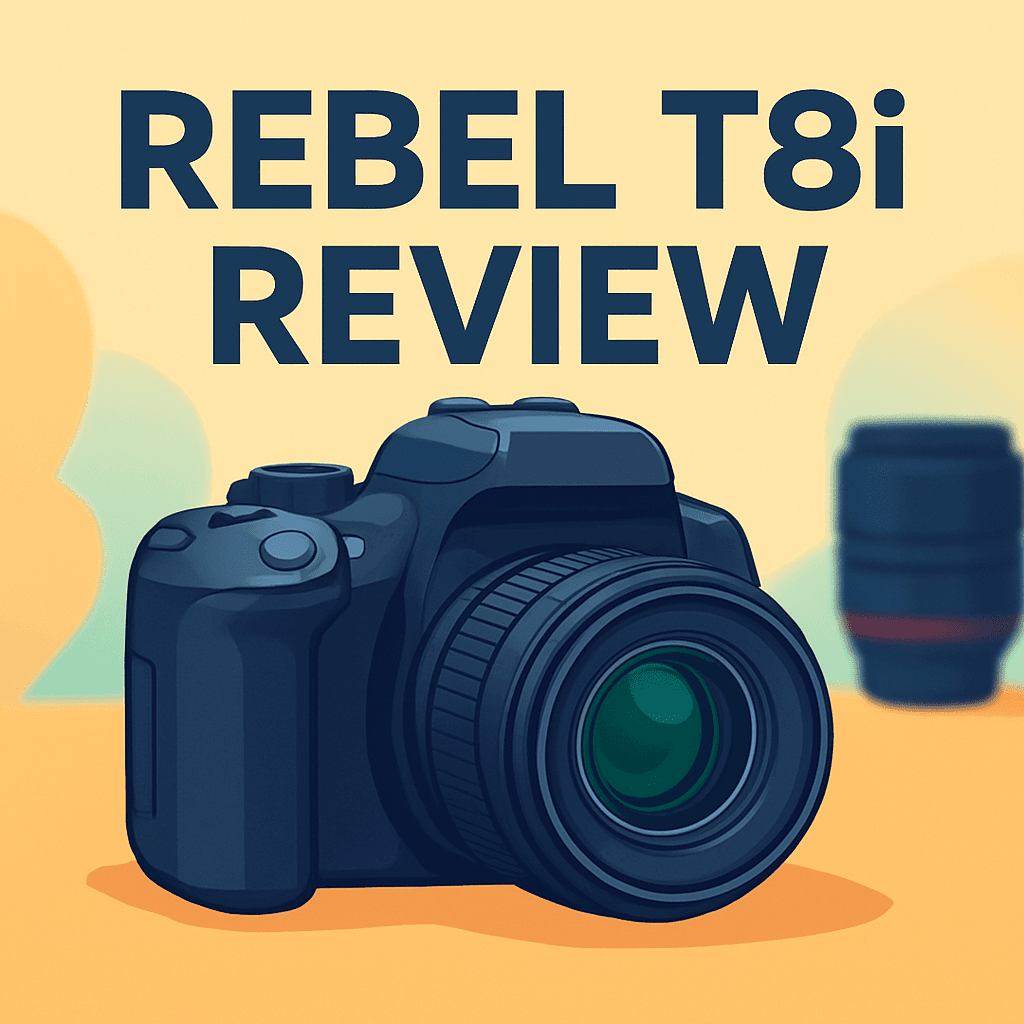
Curious if the Rebel T8i can actually raise your photo and video game?
I’m talking about the Canon EOS 850D Camera, an approachable DSLR that promises modern conveniences for hybrids. I spent days field-testing it in real shoots to see how it behaves.
If you shoot family moments, travel, or starter vlogs, this camera aims to be practical, portable, and forgiving. You’ll see how its responsiveness and flexibility translate to usable images and clips.
This won’t be a laundry list of specs — it’s a photographer-first take focused on real-world payoffs. Expect clear guidance on who benefits and where compromises matter.
If you’re weighing this as your next step, stick around. Make sure to read the entire review as I separate marketing from what actually helps you shoot better — keep reading.

Canon EOS 850D Camera
Versatile APS-C DSLR delivering sharp 24MP images, responsive autofocus, intuitive vari-angle touchscreen, and fast continuous shooting—ideal for ambitious photographers seeking reliable image quality and creative flexibility in any situation.
Check PriceThe Numbers You Need
| Spec | Value |
|---|---|
| Sensor Type | APS-C CMOS |
| Resolution | 24.1 MP |
| Processor | DIGIC 8 |
| Lens Mount | Canon EF/EF-S |
| Continuous Shooting | 7 fps |
| Autofocus (OVF) | 45-point (all cross-type) |
| Autofocus (Live View) | Dual Pixel CMOS AF |
| Viewfinder | Optical pentamirror (95% coverage) |
| LCD | 3.0" vari-angle touchscreen |
| ISO Range | 100–25600 (expandable to 51200) |
| Video | 4K (3840×2160, 1.6× crop), 24p/25p |
| Wireless | Built-in Wi-Fi & Bluetooth |
| Storage | SD/SDHC/SDXC (UHS-I) |
| Weight | Approx. 515g (body only) |
| Battery | LP-E17 |
How It’s Built
In my testing the Canon EOS 850D Camera felt noticeably light and easy to carry, sitting comfortably in my shoulder bag for long days of shooting. At about the weight of a typical everyday camera, it made wandering through markets and family outings far less tiring.
The grip is pleasantly shaped for most hands and the buttons fall naturally under the fingers. I found the menus straightforward and forgiving for beginners, so you spend more time shooting and less time digging through settings.
The optical viewfinder is bright but doesn’t show the very edges of the frame in my experience, which means I double-check shots for precise composition. For casual shooting this is rarely a deal-breaker, but it’s something to be aware of when framing landscapes or tight scenes.
The 3.0-inch vari-angle touchscreen was a standout for me. It’s snappy and reliable for low or high angles and makes self-recording and vlogging much easier, which I really liked.
The built-in pop-up flash is handy as a quick fill light and the EF/EF‑S mount gives you lots of lens options as you grow. That practical flexibility is great for beginners building a kit.
One thing that could be better is the single SD card slot, which limits backup or overflow options in the field. On the plus side, built-in Wi‑Fi and Bluetooth made quick sharing and remote control an easy part of my workflow, and the LP‑E17 battery fits the compact, travel-friendly package.
In Your Hands
Put simply, the Canon EOS 850D delivers satisfying image quality for everyday shooters — clean detail, pleasing color, and enough rendering to support large prints or social-ready crops without fuss. Its APS‑C sensor paired with Canon’s modern processor handles broad lighting situations gracefully, offering usable performance from bright daylight through indoor and twilight scenes, with noise appearing only when you push sensitivity for dim interiors.
Responsiveness is geared toward casual action: the camera will keep up when kids or pets dart around, rewarding good timing and steady burst discipline rather than prolonged continuous firing. Autofocus snaps into place quickly in most scenarios, so you spend more time composing and less time chasing focus.
Shooting through the optical viewfinder feels traditional and immediate, though the framing doesn’t include every edge of the scene — so double-check tight compositions. Flip into Live View and the touchscreen plus Canon’s on-sensor AF make composing odd angles, focus taps, and video framing altogether smoother and more predictable.
Workflow conveniences land where you’d expect: wireless pairing for quick transfers and remote control, and card performance that’s solid for casual bursts and everyday video. The vari-angle screen opens up low and high creative angles and self-recording, the pop-up flash is a handy fill option, and the body’s portability makes it an easy companion for travel and daily family shoots.
The Good and Bad
- 24.1MP APS‑C sensor with DIGIC 8
- Dual Pixel CMOS AF in Live View
- 3.0″ vari-angle touchscreen
- Built-in Wi‑Fi & Bluetooth
- 4K video has a 1.6× crop
- Optical pentamirror viewfinder with 95% coverage
Ideal Buyer
If you want a lightweight DSLR that still feels like a photographer’s tool, the Canon EOS 850D Camera fits the bill. The optical viewfinder, comfortable grip and fully articulating touchscreen make it easy to shoot families, travel and everyday projects. Approachable controls, reliable menus and built‑in Wi‑Fi/Bluetooth keep sharing and remote control simple as you grow into the system.
Its Dual Pixel Live View AF, touch‑to‑focus and 1080/60p capability suit vloggers and hybrid shooters who prioritize dependable autofocus and ease of use over cinema‑grade video specs. The 24MP sensor and 7 fps burst handle kids, pets and casual action well, and the 4K crop still serves talking‑heads and travel B‑roll when you need the extra resolution. The single SD slot and LP‑E17 battery keep the package compact and straightforward for day trips and everyday carry.
Look elsewhere if uncropped or higher‑frame‑rate 4K is a priority, or if you need faster burst speeds, deeper buffers and UHS‑II/dual‑card workflows for pro sports or wildlife. Serious videographers and shooters who want a more rugged body, longer battery life or expanded media options will prefer higher‑end models. For most enthusiasts, parents and content creators who value versatility and easy Live View AF, the 850D is a smart, well‑rounded choice.
Better Alternatives?
We’ve gone through the Rebel T8i (Canon EOS 850D) and how it handles everyday shooting, from family photos to casual video. If you like the T8i’s friendly controls and vari-angle screen but need something different — more speed, more resolution, or tougher build — there are a few clear directions to look in.
Below are three cameras I’ve used in the field that photographers often pick instead of the 850D. I’ll point out what each one does better and where it falls short compared to the 850D, and who will get the most from each choice.
Alternative 1:

Canon EOS 90D Camera
High-resolution APS-C shooter combining 32.5MP detail with rapid 10fps continuous capture, crisp uncropped 4K video, and durable weather-sealed build—perfect for sports, wildlife, and demanding hybrid creators.
Check PriceThe 90D shines when you need more detail and faster bursts than the 850D. In real shooting I noticed the extra megapixels let me crop tighter for wildlife or get larger prints without losing detail. The 10 fps burst and bigger buffer really help when tracking kids running or birds taking off — you get more keepers per burst than the 850D’s 7 fps.
Where it’s worse is in size and weight. The 90D feels more like a pro body in your hands — that’s great for long sessions and big lenses, but it’s heavier to carry all day compared to the lighter 850D. It’s also pricier, so if you’re after a small, easy walk-around kit the 850D still wins for portability and cost.
Buy the 90D if you’re an enthusiast who shoots action, nature, or wants large prints. If you travel light, shoot mostly family stuff, or want a simpler, cheaper body, stick with the 850D instead.
Alternative 2:

Nikon D7500 Camera
Robust DX-format performer with 20.9MP sensor, responsive autofocus, and 8fps continuous shooting. Capture stunning low-light images and smooth 4K video with dependable ergonomics for field use.
Check PriceThe D7500’s real strength is low-light handling and build quality. Shooting indoors and at dusk I found cleaner files at higher ISOs and a very solid feel—its weather sealing and larger battery mean I worry less about long outdoor days or bad weather than I do with the 850D. The viewfinder handling and button layout also feel aimed at people who work in the field.
Where it falls short is in live view and video AF compared to the 850D. Canon’s Dual Pixel AF on the 850D is smoother for touch focus and video tracking; on the D7500 you’ll rely more on contrast-based live view focus which can be slower and grabby for moving subjects. If you shoot a lot of run-and-gun video or vlog with touch-to-focus, the 850D will feel easier to use.
Pick the D7500 if your priority is outdoor, travel, or low-light stills and you want a tougher body and longer battery life. If smooth live view AF and an easy vari-angle screen matter more, the 850D remains the simpler hybrid option.
Alternative 3:
Nikon D7500 Camera
Action-ready body with durable weather sealing, wide ISO range, and intuitive tilting touchscreen for versatile framing. Fast buffer and precise metering make it a favorite for enthusiasts and pros alike.
Check PriceLooking at the D7500 from the action-shooting angle, it holds up well thanks to a responsive shutter and a buffer that lets you keep shooting without long pauses. In fast-paced situations I trusted its metering and shutter feel to capture decisive moments — the 850D is capable, but the D7500’s ergonomics and weather resistance give it an edge for heavier use.
On the downside, its tilting screen and autofocus approach make some creative angles and video work less fluid than on the 850D. The 850D’s fully articulating screen and Dual Pixel AF can make framing awkward angles and subject tracking for video easier, so videographers might prefer the Canon despite the Nikon’s sturdier body.
If you’re an enthusiast or semi-pro who spends time in rough conditions, shoots a lot of still action, and values a solid grip and longer battery life, the D7500 is a strong fit. If you want the friendlier video tools and an easier-to-use vari-angle touchscreen, the 850D will likely serve you better.
What People Ask Most
Is the Canon Rebel T8i (EOS 850D) worth buying?
Yes—it’s a well-rounded, affordable APS-C DSLR with good image quality and user-friendly controls, ideal for hobbyists and beginners; choose something else only if you need pro features, better battery life, or uncropped 4K.
Does the Rebel T8i shoot 4K video and is there a crop?
Yes, it records 4K but with a significant 1.6x crop and limited autofocus performance in 4K mode, so wide-angle video and smooth AF are restricted.
Is the Rebel T8i good for beginners and vlogging?
Yes—its guided menus, vari-angle touchscreen, and reliable Full HD Dual Pixel AF make it friendly for beginners and sit-down vlogs, though the 4K crop and lack of in-body stabilization limit handheld wide-angle vlogging.
What are the main differences between the Rebel T8i and the Canon 90D?
The 90D offers higher resolution (32MP), faster burst shooting, better battery life and uncropped 4K, while the T8i is lighter, cheaper and more beginner-oriented.
What lenses should I buy for the Rebel T8i?
Start with a versatile zoom like the 18-55mm or 18-135mm, add a 50mm f/1.8 for portraits and low light, and a wide 10-18mm (or 10-22mm) for vlogging/landscapes; pick a 55-250mm or 70-200mm if you need reach.
How is the autofocus and image quality on the Rebel T8i?
Image quality is excellent for its class with clean detail and good color at typical ISOs, and autofocus is very good in Live View thanks to Dual Pixel AF but less capable in 4K and the optical-viewfinder AF is a competent 45-point system.
Conclusion
The Canon EOS 850D Camera strikes a clean balance between approachable handling and modern hybrid features, and it’s easy to recommend to photographers who want dependable stills and straightforward video without a steep learning curve. From real-world fieldwork it delivers pleasing color and sharpness, a responsive Live View experience, and a fully articulating screen that actually gets used in the field. Its compact feel makes it a sensible everyday companion for families, travel, and casual content creation.
That said, there are clear compromises that matter depending on your priorities. Video shooters will notice limits to the 4K implementation and framing, serious action photographers may find the burst and tracking performance modest, and the camera’s viewfinder and media support aren’t aimed at professionals chasing top-tier specs. Battery and single-card considerations also favor more committed or studio-based users looking for heavier-duty solutions.
Bottom line: if you want a friendly, capable DSLR that prioritizes ease of use, reliable Live View AF, and portability, the Canon EOS 850D Camera is a smart value for everyday shooters and beginner hybrids. If you need uncropped 4K, blistering frame rates, deeper buffers or pro-level toughness, look to more specialized models instead.
Canon EOS 850D Camera
Versatile APS-C DSLR delivering sharp 24MP images, responsive autofocus, intuitive vari-angle touchscreen, and fast continuous shooting—ideal for ambitious photographers seeking reliable image quality and creative flexibility in any situation.
Check Price

0 Comments