
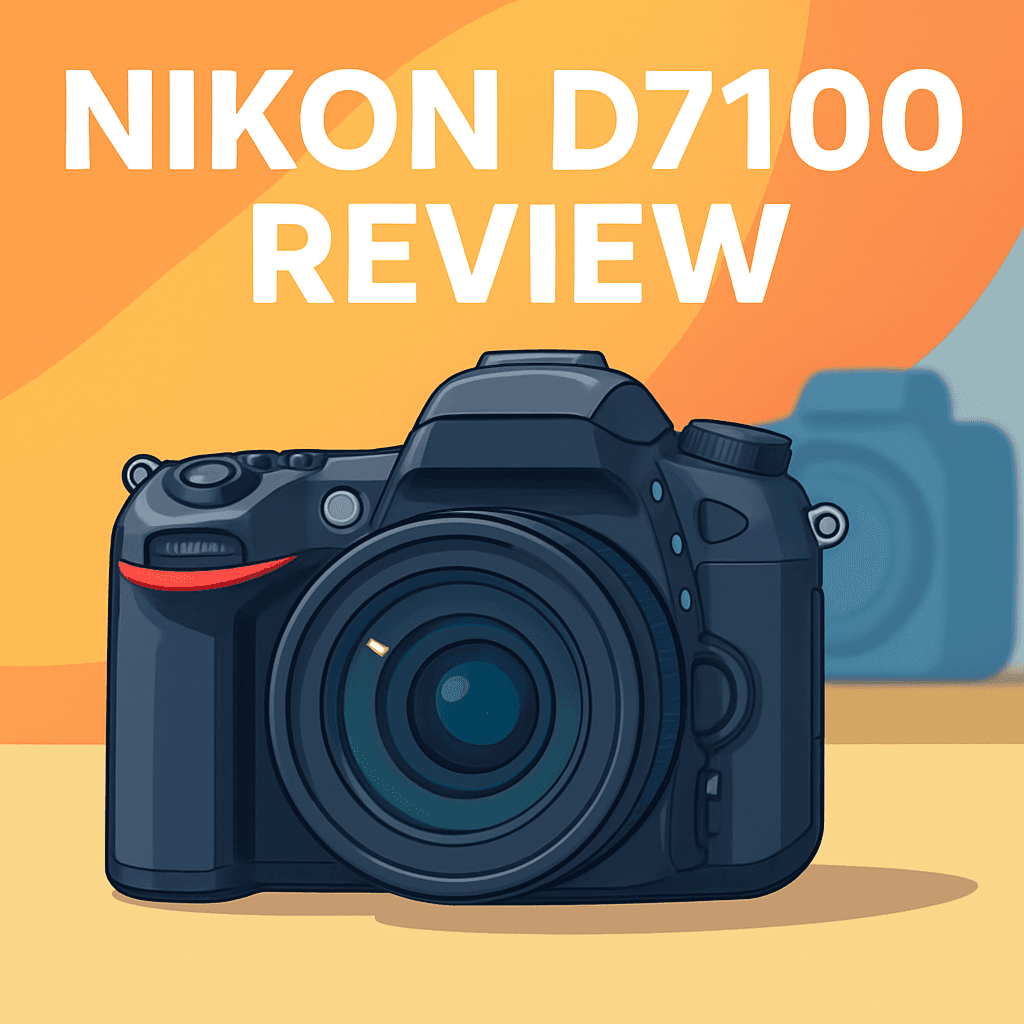
Want to know if the Nikon D7100 Camera will actually improve your images?
I field-tested the D7100 across landscapes, portraits and events to see how it performs in real work.
It’s aimed at serious enthusiasts and working shooters who want razor-sharp stills, a confident optical viewfinder, and a rugged body you can trust in the field.
You’ll also find practical perks like dual card slots, long battery life, and solid video for run‑and‑gun clips.
I’ll break down handling, autofocus behavior, image quality and the tradeoffs you should know before buying. Make sure to read the entire review as I go deeper into where the D7100 shines and where it falls short—keep reading.

Nikon D7100 Camera
Rugged enthusiast DSLR with high-resolution APS-C sensor, reliable autofocus and dual-card slots for extended shooting. Solid build and weather resistance deliver dependable performance for landscape and portrait photographers.
Check PriceThe Numbers You Need
| Spec | Value |
|---|---|
| Sensor | 24.1 MP APS-C (DX) |
| Optical low-pass filter | None |
| Autofocus | 51-point phase detection |
| AF system | Multi-CAM 3500DX |
| ISO range | 100–6400 (expandable to 25600) |
| Shutter speed | 1/8000–30 sec |
| Continuous shooting | 6 fps |
| Buffer | Approx. 6 frames RAW, 100 JPEG at full speed |
| Viewfinder | Optical pentaprism, 100% coverage |
| LCD | 3.2-inch, 1.2M dots, fixed |
| Video | Full HD 1080p at 24/25/30/50/60 fps |
| Build | Magnesium alloy, weather-sealed |
| Memory | Dual SD slots, one UHS-I compatible |
| Weight | ~765g (body only) |
| Battery life | ~950 shots (CIPA) |
How It’s Built
In my testing the Nikon D7100 feels rock-solid in the hand thanks to its magnesium-alloy shell and weather sealing. That means you can keep shooting in drizzle or dusty conditions without panicking about a little bad weather.
The camera has a noticeable, reassuring heft and it balances well with typical DX zooms and primes. After using it for a long shoot I found it a bit weighty for backpack-only days, but the stable feel makes framing and steady shooting easier.
The optical pentaprism viewfinder is bright and shows you exactly what you’ll capture through the lens. In real-world use that “what-you-see-is-what-you-get” view makes composing fast and reliable for beginners and pros alike.
I really liked the dual SD card slots because they let me shoot with an instant backup or simple overflow during events. The one downside is the fixed rear screen; it’s solid and durable, but it limits low-angle and high-angle flexibility unless you get creative with your stance.
The buttons and grip feel classic Nikon — easy to find by touch and comfortable for long sessions. Battery life is excellent in the field, so you’re less likely to swap batteries mid-event and more likely to focus on shooting.
In Your Hands
The Nikon D7100 feels purposeful in motion: its continuous shooting mode is well suited to moderate action, but the small RAW buffer means you learn to time your bursts and pick your moments. In practice that translates to high keeper rates when you shoot with intention, or a workflow that leans on JPEGs for long sequences. I found myself composing shorter, decisive bursts for sports and wildlife rather than holding the shutter down through long plays.
Shutter headroom and metering behavior are both reassuring in the field; the camera gives you flexibility with fast exposures in bright conditions and dependable, consistent results in backlit or high‑contrast scenes. Dual card slots let you balance redundancy and overflow, and pairing a faster card in the primary slot keeps write pauses to a minimum. That small throughput ceiling is manageable with a simple card strategy and a little discipline during action runs.
Battery life and ergonomics make the D7100 a workhorse — a full day of events or landscape hikes rarely forced an early swap, and the confident grip and weather sealing encourage shooting in less forgiving conditions. The fixed rear screen is tough but limits creative low‑ or high‑angle framing, so I relied on the optical viewfinder for most critical moments.
Video is serviceable for run‑and‑gun clips when you don’t need advanced autofocus, but live‑view AF is best for static subjects or tripod work. In my sample sequences, RAW bursts captured crisp opening frames before the buffer slowed, full‑day event coverage stayed consistent across changing light, and metering held exposure nicely from shadowed interiors to bright exteriors. File transfer in the field requires a workaround, but the camera’s real‑world performance proves its stills‑first pedigree.
The Good and Bad
- 24.1MP DX sensor with no OLPF for high detail potential
- 51-point phase-detect AF (Multi-CAM 3500DX) for reliable OVF shooting
- Magnesium alloy build with weather sealing
- Strong battery life (~950 shots)
- Small RAW buffer (approx. 6 frames) limits sustained bursts
- No built-in wireless connectivity
Ideal Buyer
The Nikon D7100 Camera is aimed squarely at stills-first shooters who prize peak microdetail and an old-school optical viewfinder. Its 24.1MP sensor with no optical low-pass filter rewards careful technique with razor-sharp files. If you value decisive framing and file quality over flashy modern extras, this is your tool.
Working shooters and event photographers will appreciate the dual SD slots and the long battery life that keeps you shooting all day. In-camera backup and overflow give peace of mind during weddings or commercial jobs. The small RAW buffer is manageable when you pair timing with solid burst discipline.
If you work outdoors, the magnesium-alloy, weather-sealed body inspires confidence in foul weather and dusty locations. The heft balances nicely with common DX zooms and legacy F‑mount glass. Owners of screw‑drive lenses will be pleased by broad compatibility and retained autofocus with many older optics.
This camera suits shooters whose action needs are moderate — 6 fps is plenty when you pace bursts or shoot high-quality JPEGs. If you prioritize 4K, modern live‑view AF, or built‑in wireless, look elsewhere; the D7100 rewards craft over convenience. For photographers who value rugged handling, precise OVF AF, and the sharpest stills possible, it still shines.
Better Alternatives?
We’ve already gone deep on what makes the Nikon D7100 a great stills camera: sharp files, a solid viewfinder, long battery life and that no‑OLPF look. If you want similar handling but need a few modern comforts or better low‑light behavior, there are a few Nikon bodies that make sense as next steps.
Below I list the models I’ve used in the field and how they compare to the D7100 in real shooting situations — what each one does better, where they fall short, and who I’d recommend them to.
Alternative 1:

Nikon D7200 Camera
Upgraded enthusiast body offering improved low-light sensitivity, faster continuous shooting and generous buffer for sustained bursts. Intuitive controls, refined metering and wireless connectivity simplify workflow on location shoots.
Check PriceHaving shot with the D7200 a lot, the first thing you notice is cleaner files in low light and a bigger buffer when you need to hold a burst. In real shoots that means fewer missed frames at a wedding reception or when tracking birds — the camera keeps going longer than the D7100 before slowing down.
Compared to the D7100 it also adds built‑in Wi‑Fi, so I could send picks to my phone from location instead of relying on adapters. What it doesn’t change is the handling: the body feel, button layout and OVF shooting are very familiar, which is nice if you like the D7100. The tradeoffs are small — no touchscreen and no 4K — so it’s an evolutionary, not radical, jump.
If you like the D7100’s fit in your hands but want cleaner high‑ISO shots, a better sustained burst and simple wireless transfers, the D7200 is the most sensible step up. If you need 4K or want a different live‑view experience, look further down the list.
Alternative 2:

Nikon D7500 Camera
Lightweight professional-grade camera blending speed and image quality with impressive low-light performance, responsive autofocus and high-frame-rate shooting—ideal for action, wildlife and handheld low-light photography, plus advanced controls and durable weather sealing.
Check PriceThe D7500 felt like a real step forward when I switched from the D7100. In the field it gives cleaner high‑ISO files and I could push exposures further without ugly noise — useful for handheld low‑light work. The faster burst rate meant I nailed more decisive moments at soccer games and bird flights than I did with the D7100.
What it does worse than the D7100 is lose the dual card slots and the old screw‑drive lens support. I missed the safety of a second card during long wedding days, and a few of my older lenses stopped autofocusing on the D7500, so you must check lens compatibility if you have legacy glass. Also the OVF feel is slightly different, and some shooters prefer the D7100’s dual‑slot workflow.
Choose the D7500 if you shoot a lot of action or low‑light scenes and want cleaner results and faster shooting. It’s also for photographers who plan to use modern AF‑S lenses and value better live‑view and video tools. If you need in‑camera backup or rely on older AF‑drive lenses, I’d lean toward the D7200 instead.
Alternative 3:
Nikon D7500 Camera
Versatile hybrid tool for creators: captures sharp stills and cinematic 4K video, features a tilting touchscreen, fast autofocus and robust connectivity for rapid file transfer and on-the-go editing.
Check PriceUsed as a hybrid camera, the D7500 shines where the D7100 shows its age: clean 4K video, a tilting touch screen that helps for low and high angles, and noticeably better live‑view autofocus. On short run‑and‑gun video jobs or social content shoots, I could get usable clips straight out of the camera without hauling extra gear.
On the downside, the D7500 still gives up the D7100’s strengths: there’s only one card slot and you lose the full legacy lens AF support. For long photo jobs where I want instant backup on two cards, or when I rely on older manual‑drive lenses, the D7100’s dual‑slot design and broader lens compatibility were a big plus.
If you want a single camera that handles both photos and modern video work well, the D7500 is a great pick — especially for content creators and hybrid shooters who value a touchscreen and 4K. If your work is stills‑first and you need rugged dual‑card security or vintage lens AF, stick with the D7100 or D7200.
What People Ask Most
Is the Nikon D7100 still worth buying?
Yes — it’s a solid, well-built enthusiast DSLR with excellent image quality for its age, but you’ll miss modern features like 4K, improved high-ISO performance, and newer autofocus systems.
How is the image quality of the D7100?
Very good for an APS-C sensor — sharp files with strong detail and reliable color, especially with good lenses.
Does the D7100 have an autofocus motor for older Nikon lenses?
Yes, it includes a built-in screw-drive AF motor, so it will autofocus with older AF-D and AF-S non-motorized lenses.
How does the D7100 perform in low light and high ISO?
It’s usable up to ISO 1600–3200 with careful processing, but noise and dynamic-range limitations become noticeable compared to newer sensors.
Is the D7100 good for video?
It records 1080p up to 60fps with manual controls, but lacks 4K and modern video conveniences, so it’s fine for casual use but not ideal for professional video work.
How fast is the D7100 and what’s the battery life like?
It shoots about 6 fps continuous and gets roughly 800–950 shots per charge depending on usage, so it’s responsive and has solid endurance for shoots.
Conclusion
The Nikon D7100 Camera earns its keep as a stills‑first workhorse, delivering crisp, high‑detail files thanks to the no‑OLPF approach and a proven optical‑viewfinder autofocus system. Its magnesium‑alloy build, dual card slots and dependable battery life give you field confidence that many newer bodies don’t quite match. For photographers who value precision framing and tactile controls, it still feels purposeful and unsentimental in the best way.
That said, the camera shows its age in clear ways. A very small RAW buffer forces disciplined bursts for action, the fixed rear screen limits high‑ and low‑angle flexibility, and there’s no built‑in wireless to smooth modern workflows. Live‑view AF is noticeably slower and video tops out at full‑HD, so hybrid shooters will find compromises.
If your priority is ultimate stills sharpness, rugged handling and in‑camera redundancy for critical shoots, the Nikon D7100 Camera remains a smart, value‑driven choice. If you need deeper buffers, cleaner high‑ISO, modern live‑view AF, 4K or built‑in connectivity, consider bodies like the D7200, D7500 or competing alternatives. For many enthusiasts and working shooters focused on stills, the D7100 still punches well above its weight.
Nikon D7100 Camera
Rugged enthusiast DSLR with high-resolution APS-C sensor, reliable autofocus and dual-card slots for extended shooting. Solid build and weather resistance deliver dependable performance for landscape and portrait photographers.
Check Price



0 Comments