
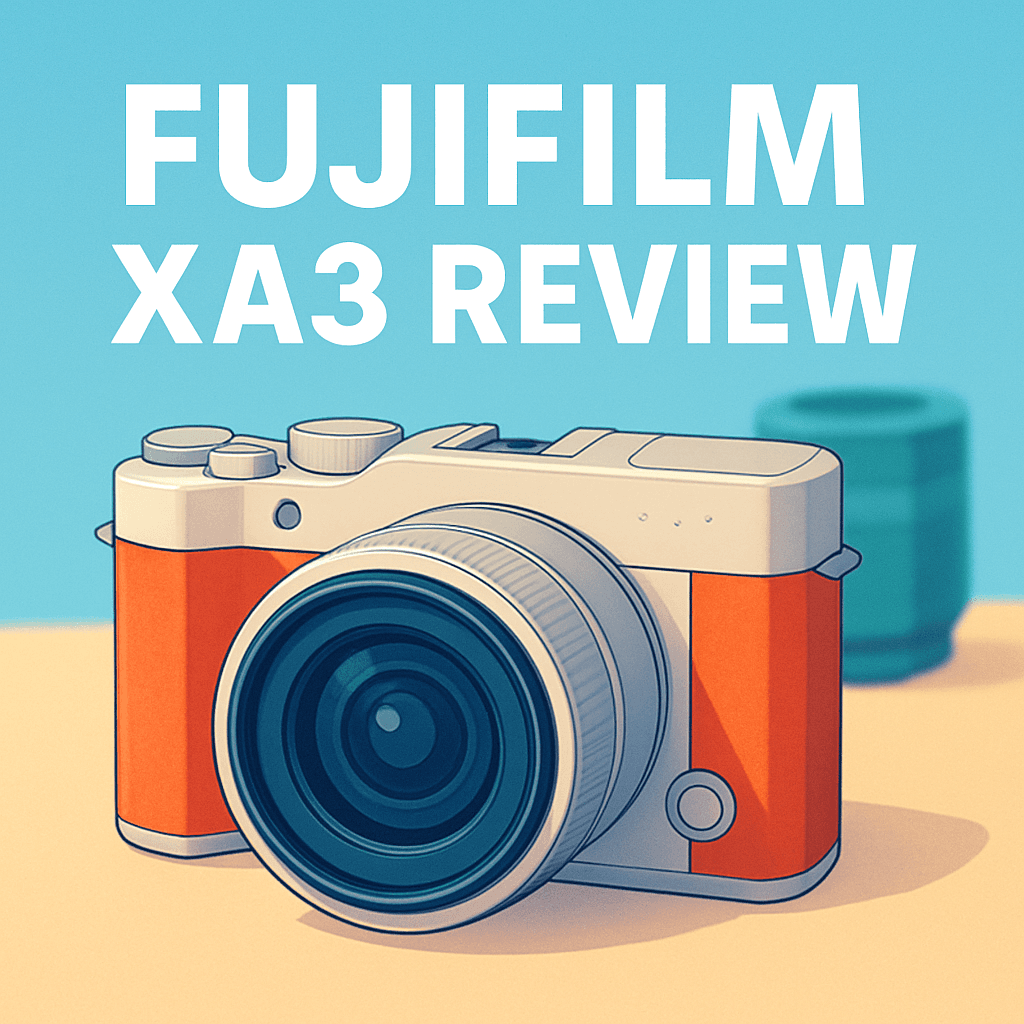
Want to step up your image quality without lugging a pro rig or wrestling menus? I spent time shooting with the Fujifilm X-A3 Mirrorless Camera on real shoots and compared it to a couple rivals.
It’s a compact APS-C mirrorless with a tilting touchscreen and those signature Fujifilm film simulations that make JPEGs sing straight out of camera. You’ll see who it really helps—travelers, street shooters, and casual vloggers who prize portability and color.
I’ll walk through how the body handles, real-world image quality, autofocus behavior, and where it fits against more modern options. If you’re weighing a lightweight Fuji for stills and casual video, keep reading.

Fujifilm X-A3 Mirrorless Camera
Entry-level APS-C shooter with a retro-inspired body and vivid color rendition. Features a large tilting touchscreen, easy controls, and fast autofocus for great selfies, travel snapshots and everyday creativity.
Check PriceThe Numbers You Need
| Spec | Value |
|---|---|
| Sensor | 24MP APS-C |
| Lens Mount | Fujifilm X-mount |
| Image Stabilization | No (no built-in) |
| Autofocus | Contrast-detection AF |
| Continuous Shooting | Up to 6 fps |
| Video Resolution | 1080p (Full HD) @ 30 fps |
| ISO Range | ISO 200–6400 |
| Screen Type | Tilting touchscreen |
| Screen Size | 3.0″ |
| Viewfinder Type | None |
| Battery Life | Approx. 410 shots (CIPA) |
| Weight | Approx. 290 g (body only) |
| Dimensions | 117 × 67 × 40 mm |
| Film Simulations | Included (e.g., Velvia, Provia) |
| Memory Card Slot | Single SD/SDHC/SDXC slot |
How It’s Built
In my testing the Fujifilm X-A3 felt like a true grab-and-go camera, small enough to slip into a jacket pocket and light enough to carry all day. It sits comfortably in the hand and doesn’t fight you when you’re trying to take quick shots. That portability makes it great for travel and everyday use.
The tilting touchscreen is a real standout for me. I flipped it up for self-facing shots and tilted it down for low angles, and touch-to-focus made composing fast and intuitive. Beginners will love how straightforward it is to tap for focus and swipe through menus without digging for tiny buttons.
What could be better is the lack of a viewfinder. In bright sun I found myself squinting at the rear screen and shading it with my hand more than once. That means you’ll need to be mindful when shooting outdoors or position yourself where the screen stays visible.
There’s a single memory card slot, so I made a habit of offloading images every evening and carrying a spare card for peace of mind. The battery easily gets you through a typical shooting day in my experience, but I still pack a backup for longer outings.
Build-wise it isn’t overbuilt or weatherproof, so I treated it like a delicate tool and avoided rain and dusty rigs. Controls are simple and beginner-friendly, which makes learning the camera less intimidating and more fun.
In Your Hands
Out of the box the Fujifilm X-A3 feels eager to work: startup is swift and the camera moves through menus and live view with a steady, tactile pace that suits street and travel shooting. Burst performance is geared toward short, decisive sequences—good for fleeting expressions and casual action but not for extended sports runs.
In mixed-light scenarios the sensor delivers clean, detailed stills at low to moderate sensitivities, with noise creeping in as you push higher; I found a practical ceiling that balances detail and grain, especially when shooting JPEGs with Fuji’s film simulations. Faster lenses and mindful shutter choices help more than relying on high sensitivity alone.
Video is straightforward and friendly: files are ideal for social clips, vlogs, and family footage, and the touchscreen makes framing and quick focus adjustments effortless. Without in-body stabilization you’ll want stabilized glass or support for smooth handheld pans and steady low-light capture.
Battery life comfortably covers a typical day of snapshots and short shoots, but I always bring a charged spare for longer assignments or heavy burst shooting. Single card storage means you should plan an offload-and-backup rhythm during important shoots to avoid risk and keep workflow flowing.
The Good and Bad
- 24MP APS-C sensor
- Tilting 3″ touchscreen with touch control
- Fujifilm film simulations (e.g., Velvia, Provia)
- Compact and lightweight (approx. 290 g)
- No electronic viewfinder
- No in-body image stabilization
Ideal Buyer
For photographers who prize a pocketable APS‑C camera with film‑like color and touch‑first controls, the Fujifilm X‑A3 is a sweet spot. It blends 24MP detail with Fujifilm’s beloved film simulations for JPEGs that need minimal fuss. The tilting touchscreen and light weight make it easy to carry and compose on the move.
Ideally it fits travel shooters, street photographers, students, and lifestyle creators who value simplicity over spec wars. You’ll get clean files for prints and social sharing, solid short‑burst performance for candid moments, and responsive touch AF for easy framing. The lack of an EVF or IBIS is a trade‑off many users accept in exchange for size and color character.
It also works well for casual vloggers who record 1080p clips for Instagram and YouTube and want pleasant straight‑out‑of‑camera color. Battery life and the camera’s compact kit lenses make full‑day outings reasonable with one spare cell. Just remember the single card slot and no weather sealing when you plan important shoots.
This isn’t the right tool if you demand phase‑detect AF, robust subject tracking, 4K video, or pro‑level durability and redundancy. Sports, wildlife, or event photographers will want faster AF and an EVF. Consider the X‑A7, Sony ZV‑E10, or Canon M50 II if those features matter more than Fuji’s easy color and compact handling.
Better Alternatives?
We’ve already walked through how the Fujifilm X-A3 handles shooting, its image look, and the trade-offs you trade for that small, touch-first design. If you like the X-A3’s size and Fujifilm color but wish it did a few things better, there are a few clear alternatives to consider.
Below I’ll run through three cameras I’ve used in real shoots that feel like natural step-ups or sideways moves from the X-A3. I’ll point out what each one does better and worse in real shooting situations, and who I’d recommend each to.
Alternative 1:

Fujifilm X-A7 Mirrorless Camera
Bright 3.5-inch touchscreen and lightweight body deliver an intuitive shooting experience. Capture detailed APS-C stills, smooth 4K video, and reliable autofocus—perfect for content creators seeking portability and vibrant colors.
Check PriceI’ve used the X-A7 as a direct step up from the X-A3 and the first thing you notice in the field is the big 3.5″ touchscreen. It makes framing, quick focus pulls, and selfies much easier than the X-A3’s smaller tilting screen. In practice that means faster compositions on the street and smoother self-recorded clips when you’re vlogging or shooting short social videos.
Compared to the X-A3 the X-A7 improves autofocus and adds 4K video, so it’s better for moving subjects and for anyone who wants sharper video clips. What it doesn’t fix is the lack of an EVF and no in-body stabilization — so in bright sun you still fight the rear screen, and you’ll want stabilized lenses or a tripod for steady low-light shooting. The Fuji color and JPEG look are still great, though, so you get that same straight-out-of-camera feel.
If you own an X-A3 and want a clear everyday upgrade, the X-A7 is the easiest choice: it’s for photographers and content creators who want more responsive AF, a larger, friendlier touchscreen, and 4K without leaving the Fuji color world. If you need pro-level tracking, an EVF, or IBIS, look elsewhere.
Alternative 2:

Sony Alpha ZV-E10 Mirrorless Camera
A vlogger-focused interchangeable-lens body offering sharp 4K capture, lightning-fast autofocus, and a side-flip screen for monitoring. Built-in directional microphone, clean HDMI output, and compact design streamline on-the-go content creation.
Check PriceI’ve shot run-and-gun videos and quick portraits with the ZV-E10 and the thing that stands out is how fast and reliable the autofocus is compared to the X-A3. In real shoots it locks onto eyes and moving faces without the hunting you can get from the X-A3, so you waste less time re-focusing and miss fewer shots. The side-flip screen and built-in mic make it plug-and-play for video work.
Where the ZV-E10 beats the X-A3 is clear: much stronger AF, proper 4K video, and a wider lens ecosystem so you can choose glass for every job. Where it loses is the Fuji JPG colors and simple menu feel — Sony’s images can need a little more work in post to get the same pop Fuji delivers straight away. Also, like the X-A3 it doesn’t have in-body stabilization, so handheld low-light video still benefits from a stabilized lens or a gimbal.
This camera is for people who make video a lot or who need fast, trustworthy AF for mixed stills and clips. If you’re moving from phone video to a real camera, or you want to pair the body with a range of lenses, the ZV-E10 is a practical, real-world upgrade over the X-A3.
Alternative 3:
Sony Alpha ZV-E10 Mirrorless Camera
Designed for creators, this compact APS-C model delivers crisp images, excellent low-light performance, and eye-tracking AF. Features product showcase mode, quick mic input, and user-friendly controls for livestreams and social videos.
Check PriceUsing the ZV-E10 in low-light cafés and small event rooms showed me it handles higher ISOs and moving subjects better than the X-A3—the AF holds steady and the files are clean enough to rescue in editing. The product showcase mode and easy mic input are practical touches I used on live demos: they speed up setup and keep focus on the subject during product shots or quick streams.
What it doesn’t give you compared to the X-A3 is Fuji’s film-simulation color and simple JPEG look. If you love instant, pleasant color straight from the camera, the ZV-E10 will feel more work because you’ll spend time grading. Also, Sony’s menu system and control layout are busier, so there’s a small learning curve coming from the very simple X-A3 controls.
I’d pick this ZV-E10 option for creators who value video tools, quick on-camera audio, and reliable eye/face AF in tougher light. It’s a good call if you want a camera that feels modern for livestreaming and social videos, even if you give up some of the X-A3’s out-of-camera color charm.
What People Ask Most
Is the Fujifilm X-A3 good for beginners?
Yes — it’s easy to use, compact, and produces great JPEG colors, making it a strong choice for new photographers who want simple controls and good image quality.
What sensor does the Fujifilm X-A3 have?
It uses a 24.2MP APS-C Bayer CMOS sensor (not Fuji’s X-Trans), which delivers detailed images in good light but is a bit limited at very high ISOs.
Does the Fujifilm X-A3 have an electronic viewfinder?
No, the X-A3 does not include an electronic viewfinder — it’s rear LCD only, so composing in bright sunlight can be harder.
Is the Fujifilm X-A3 good for vlogging and video?
It can work for casual vlogging with 1080p video and the flip screen, but there’s no 4K, no external mic input, and autofocus is only average for moving subjects.
Does the Fujifilm X-A3 have a tilting/selfie touchscreen?
Yes — the rear screen flips up 180 degrees and is touch-enabled for selfies, touch focus, and touch shutter.
Is the Fujifilm X-A3 still worth buying?
Yes, as a cheap used camera for beginners or as a stylish travel body, but skip it if you need a built-in EVF, 4K video, or top-tier autofocus.
Conclusion
The Fujifilm X-A3 is a quietly capable compact that delivers the kind of straight-to-the-heart stills many shooters want: pleasing in-camera color, a high-resolution sensor feel, and a tilting touchscreen that makes everyday framing and selfies genuinely effortless. Its design favors portability and intuitive touch operation, so it slips into a bag and into your workflow without drama. For photographers who prize image character and simple, enjoyable handling, it still hits a sweet spot.
That said, the X-A3 wears its compromises openly. It lacks an eye-level viewfinder, relies on a contrast-based autofocus approach, and offers modest video and stabilization options, all of which limit versatility for fast action, low-light handheld work, and heavy video use. A single memory slot and minimal weather protection mean it’s better suited to casual and travel shooting than to pro assignments that demand redundancy and ruggedness.
Bottom line: buy the X-A3 if you want a lightweight APS-C Fuji that prioritizes stills, tactile color, and touch-first shooting over cutting-edge AF and video features. If you need more modern autofocus and stronger video, look to Fuji’s newer X-A models, Sony’s video-focused options, or cameras with an EVF and more robust AF for a more demanding toolkit.
Fujifilm X-A3 Mirrorless Camera
Entry-level APS-C shooter with a retro-inspired body and vivid color rendition. Features a large tilting touchscreen, easy controls, and fast autofocus for great selfies, travel snapshots and everyday creativity.
Check Price


0 Comments