
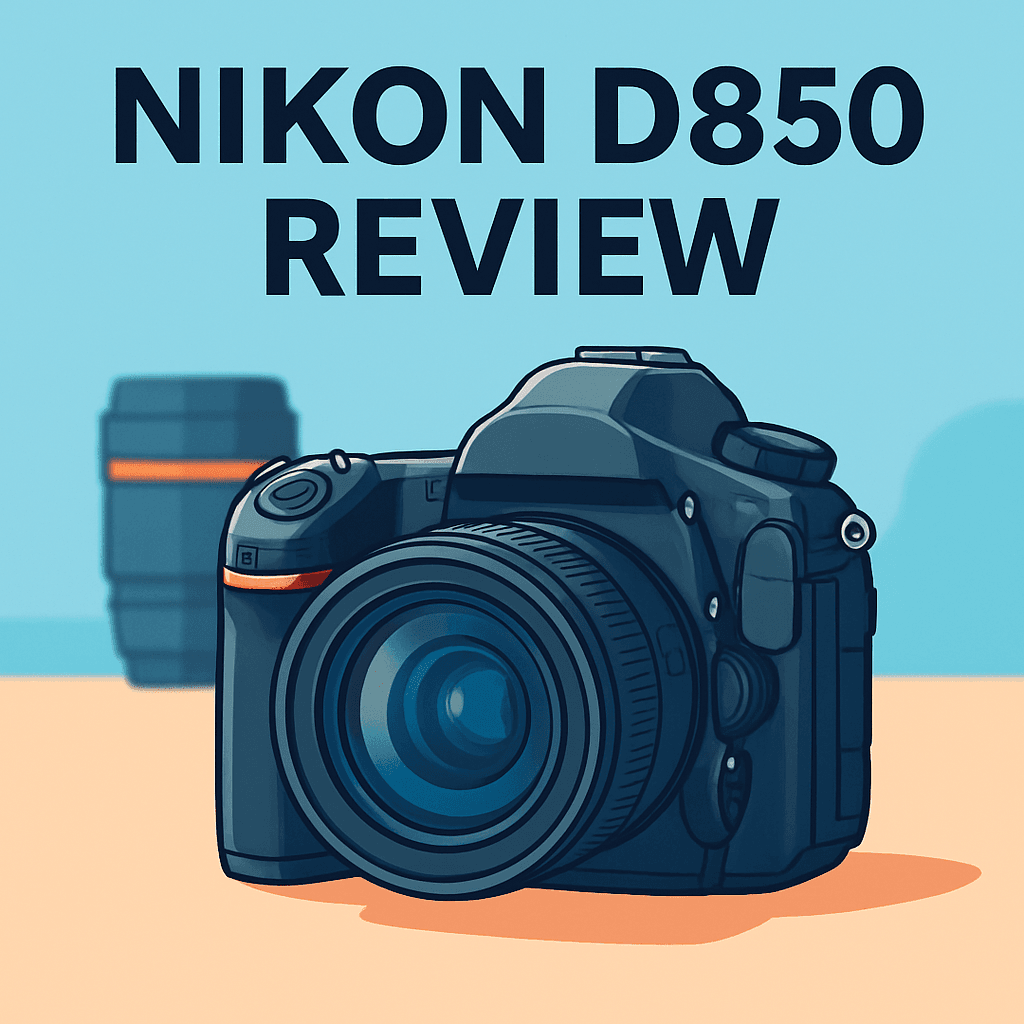
Want sharper images and a camera that won’t quit on a long assignment?
If you’re wondering whether the Nikon D850 DSLR Camera is the pro tool for you, this hands-on, photographer-first review will walk you through the real-world payoffs. I’ve field-tested it across weddings, landscapes and wildlife, so you’ll get usable notes on resolution, autofocus, battery life, weather sealing, dual slots and 4K video.
Whether you’re a landscape, portrait, or event shooter who values high detail, reliable endurance and the optical viewfinder experience, this review is for you. Make sure to read the entire review — keep reading.

Nikon D850 DSLR Camera
A rugged full-frame DSLR delivering 45.7MP clarity, exceptional dynamic range and low-light performance. Fast autofocus and long battery life make it ideal for landscapes, weddings, and high-resolution commercial work.
Check PriceThe Numbers You Need
| Spec | Value |
|---|---|
| Sensor | 45.7 MP CMOS full-frame |
| ISO range | 64–25600 (expandable to 32–102400) |
| Max burst | 7 fps (up to 9 fps with battery grip/XL battery) |
| Autofocus | 153-point Multi-CAM 20K |
| Shutter speed | 1/8000–30 sec |
| Viewfinder | Optical, 100% coverage, 0.75× magnification |
| LCD | 3.2-inch tilting touchscreen, 2.36M dots |
| Video | 4K UHD up to 30p; Full HD up to 120p |
| Storage | Dual card slots (SD UHS-II / XQD) |
| Weight | 1,005 g (body only) |
| Weather sealing | Yes |
| Battery life | Approx. 1,840 shots (CIPA) |
| Silent shooting | Yes (electronic shutter up to 6 fps) |
| Built-in Wi-Fi | Yes |
| Built-in flash | No |
How It’s Built
In my testing the Nikon D850 feels like a proper tool you can trust, not a toy. It’s on the heavier side, so expect it to balance nicely with big lenses but also to tire your shoulders on long hikes. For beginners that means more stability for sharp photos, but plan for a good strap or a backpack if you’re walking all day.
I shot in drizzle and dusty trails and the weather sealing held up better than I expected. That gave me real confidence to keep working when the forecast wasn’t perfect. For casual shooters that translates to fewer worries about sudden weather or dirty conditions.
The optical viewfinder is one of my favorite things; it’s clear and instant, and you never get that laggy preview feeling. The tilting touchscreen on the back made low and high-angle shots much easier to nail in live view. Touch control is simple to use and helpful when you’re learning composition tricks.
Dual card slots gave me a safety net and faster workflow during busy shoots, and the built-in Wi‑Fi meant quick transfers to my phone for social posts. Don’t expect a built-in flash though — you’ll want an external trigger or speedlight for fill light.
I also liked that adding the optional battery grip improves handling and burst speed for action work. The one thing I’d change is the weight; after a full day I noticed it, so beginners should consider extra support or the grip for comfort.
In Your Hands
The D850 feels responsive in both single-shot and continuous modes, making it easy to catch decisive moments in action and wildlife work, and an optional battery grip unlocks higher burst capability when you need it. Its mechanical shutter offers a wide range of speeds that accommodate fast glass and long exposures without fuss. A silent electronic-shutter option is invaluable for quiet environments like weddings or theater work.
Battery endurance is a standout—this body reliably carries you through full days of heavy shooting without constant swaps, which is a huge practical advantage for event and travel shooters. That stamina, paired with dual card slots, keeps workflows moving and minimizes interruptions on long assignments. You spend more time framing and less time managing power and media.
A high-resolution full-frame sensor provides striking detail and generous cropping latitude, rewarding careful composition and post-processing. Broad native and expandable sensitivity covers bright-to-dim scenarios, while sophisticated metering helps maintain consistent exposures in mixed light. The resulting files give you real latitude for large prints and tight crops alike.
Video capabilities cover practical needs with ultra-high-definition capture at standard frame rates and high-frame-rate HD for slow motion, though mirrorless bodies push more advanced video features. The optical viewfinder delivers a natural, lag-free connection to the scene, while the tilting touchscreen simplifies low- and high-angle composition and menu navigation. Overall handling favors photographers who prize tactile controls, a solid grip, and proven DSLR ergonomics over instant EVF previews.
The Good and Bad
- 45.7 MP full-frame sensor for high detail capture
- 153-point Multi-CAM 20K AF system
- Excellent battery life: ~1,840 shots (CIPA)
- Weather-sealed body built for field reliability
- No in-body image stabilization (IBIS); alternatives offer 5-axis IBIS
- AF lacks the modern subject/eye detection widely found in newer mirrorless bodies
Ideal Buyer
If you prize image quality above all else, the Nikon D850 is a natural fit. Its 45.7‑megapixel full‑frame sensor delivers files with the resolution and tonal latitude that studio, landscape, architectural, and commercial shooters demand. You get the kind of detail and cropping room that makes large prints and heavy retouching effortless.
This body also suits working professionals who need endurance and dependability in the field. With roughly 1,840‑shot battery life, weather sealing, and dual card slots, it’s built for long days, tough locations, and mission‑critical assignments. Wedding photographers, photojournalists, and outdoor shooters will appreciate the familiar DSLR handling, optical viewfinder clarity, and optional battery grip for higher burst rates when action matters.
That said, it’s less ideal for creators chasing the latest mirrorless conveniences. If you rely on in‑body stabilization for handheld low‑light work, subject and eye‑detect AF for fast action, or cutting‑edge video codecs and frame rates, a modern mirrorless body will serve you better. Choose the D850 when DSLR feel, rugged reliability, and ultimate stills quality outweigh the newest autofocus and video bells and whistles.
Better Alternatives?
We’ve gone through the D850’s strengths and where it lags behind modern bodies. The D850 is still a top choice for high-res stills, great battery life, and that classic DSLR feel. But many shooters now want in-body stabilization, a viewfinder that shows exposure, and smarter autofocus for people and animals.
Below are a few real-world alternatives I’ve used. I’ll point out what each one gives you compared to the D850, what they trade away, and the kind of shooter who’ll get the most from them.
Alternative 1:
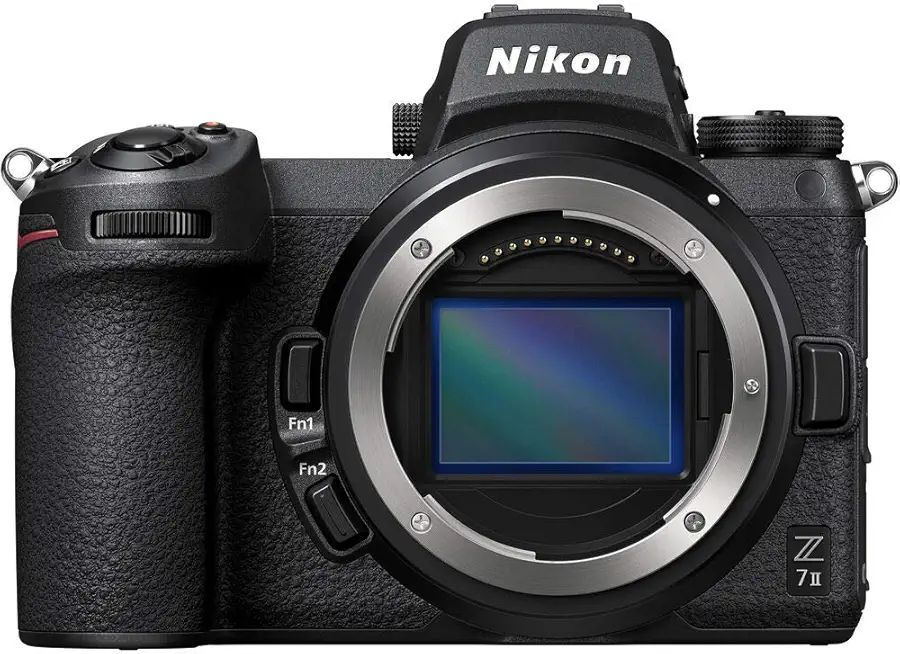
Nikon Z7 II Mirrorless Camera
Compact full-frame mirrorless with improved processing and autofocus, in-body stabilization, and dual card slots. Offers 45.7MP detail and 4K video for demanding hybrid photo and video creators.
Check PriceI’ve used the Z7 II back-to-back with the D850 and the biggest day-to-day gain is how it handles handheld work. The same 45.7MP detail is there, but the Z7 II’s in-body stabilization (IBIS) and high-res EVF let you shoot slower shutter speeds and check focus and exposure on the spot—things the D850 can’t do without support gear.
The Z7 II’s autofocus and live view feel more modern; eye and subject detection work better in continuous shooting and for video. On the downside, the Z7 II’s battery life doesn’t match the D850’s marathon days, and if you love the optical viewfinder and the heft of a DSLR, the mirrorless feel may take some getting used to. Also, native Z lenses are great but the selection isn’t as deep as mature F-mount choices unless you use the FTZ adapter.
If you’re a hybrid shooter who wants the D850’s resolution but also needs IBIS, a true exposure preview, and better live AF, the Z7 II is the smart move. If you need the longest battery life, a big optical finder, or already own lots of F-mount glass and don’t want to adapt, the D850 still makes a lot of sense.
Alternative 2:

Sony A7R IV Mirrorless Camera
Ultra-high-resolution 61MP sensor captures stunning detail with wide dynamic range. Fast autofocus, in-body stabilization, and high-speed continuous shooting support large prints, commercial retouching, and fine-art landscapes.
Check PriceThe A7R IV pushes resolution higher than the D850 with its 61MP sensor. In real shoots I could crop aggressively and still keep beautiful detail for big prints or tight crops — something the D850 already does well, but the Sony gives you an extra margin. The IBIS and fast eye-AF make portrait and moving-subject work easier handheld than the D850’s viewfinder-based approach.
The trade-offs are practical: those massive files slow your card buffer, fill hard drives fast, and need a stronger computer to process without waiting around. Battery life and grip ergonomics feel closer to mirrorless norms and don’t match the D850’s all-day stamina. I also found the Sony’s smaller body less reassuring on rough location days compared to the D850’s rugged build.
Pick the A7R IV if your work is all about ultimate detail — fine art, large prints, or commercial retouching — and you can handle the bigger files and shorter battery life. If you prefer long shoots without swapping batteries or the feel of an optical viewfinder, the D850 is still the more practical daily tool.
Alternative 3:
Sony A7R IV Mirrorless Camera
61MP resolution empowers extreme cropping and meticulous editing; reliable eye AF and robust build deliver pro-level performance. Streamlined connectivity and extended exposures suit studio and landscape work.
Check PriceUsing the A7R IV on long landscape and studio days showed me another side: its resolution and dynamic range make it a dream for capture-and-edit workflows. The EVF and focus peaking mean you rarely miss a critical pixel, and IBIS helps when conditions force handheld shots. Those are clear shooting wins over the D850 when ultimate detail and on-the-spot checking matter.
Where it falls short compared to the D850 is the day-to-day durability and simplicity. The D850’s battery and menus let me work longer with fewer interruptions, and the files from the D850 are a bit friendlier for quick culling. On multi-day shoots, I still missed the D850’s endurance and the confidence of an optical viewfinder for long glass work.
If you’re a studio or landscape pro who needs extreme resolution, modern AF, and the convenience of an EVF and IBIS, the A7R IV is a strong pick. If you’re out on long assignments, shoot a lot of wildlife with big lenses, or simply want the DSLR feel and battery life, stick with the D850.
What People Ask Most
Is the Nikon D850 still worth buying?
Yes — it’s still an excellent buy for photographers who want a high-resolution, rugged DSLR with great battery life and image quality, especially if you find a good used deal; mirrorless bodies do offer newer features though.
How does the Nikon D850 compare to the Nikon Z7?
The D850 is a high-res DSLR with an optical viewfinder and longer battery life, while the Z7 is mirrorless with better in-body stabilization and live-view autofocus, so choose based on handling, lenses, and whether you need modern mirrorless features.
Is the Nikon D850 good for video?
It shoots sharp 4K video from the full sensor and delivers excellent detail, but it lacks modern video conveniences like advanced AF tracking and in-body stabilization, so you’ll want support gear for serious video work.
What are the main pros and cons of the Nikon D850?
Pros: 45.7MP image quality, excellent dynamic range, strong battery life, and robust build; Cons: heavy, no IBIS, older live-view AF and fewer mirrorless video features.
How many megapixels does the Nikon D850 have and how is its image quality?
It has 45.7 megapixels and delivers outstanding detail, dynamic range, and color fidelity that hold up for large prints and commercial work.
Is the Nikon D850 good for low-light and astrophotography?
Yes — the sensor’s high ISO performance and dynamic range make it very capable for low-light and astrophotography, especially when paired with fast lenses and good tracking or stacking techniques.
Conclusion
The Nikon D850 DSLR Camera is still a yardstick for photographers who put image quality and field-proven reliability above trend chasing. Its high-resolution sensor delivers files that sing, and the camera’s rugged build, long battery life, dependable autofocus architecture, optical viewfinder and dual-card redundancy make it a genuine workhorse with useful video basics. This is a camera designed to be trusted on long shoots and in bad weather.
That said, it’s not the best fit for every modern hybrid shooter. The D850 lacks in-body stabilization, the subject- and eye-detection autofocus now common on mirrorless bodies, and the most advanced video toolset; it’s also heavier than many current alternatives. For photographers who need cutting-edge AF, handheld low-light freedom, or cinematic video features, mirrorless options offer clear advantages.
If you prize DSLR handling, optical viewing, endurance and impeccable still-image quality, the D850 remains an outstanding, defensible buy. If your work demands IBIS, constant subject/eye tracking or next-level video, plan to look at mirrorless models instead. In short: the D850 is an honest, enduring pro camera—brilliant for its strengths, realistic about its trade-offs.
Nikon D850 DSLR Camera
A rugged full-frame DSLR delivering 45.7MP clarity, exceptional dynamic range and low-light performance. Fast autofocus and long battery life make it ideal for landscapes, weddings, and high-resolution commercial work.
Check Price

0 Comments