
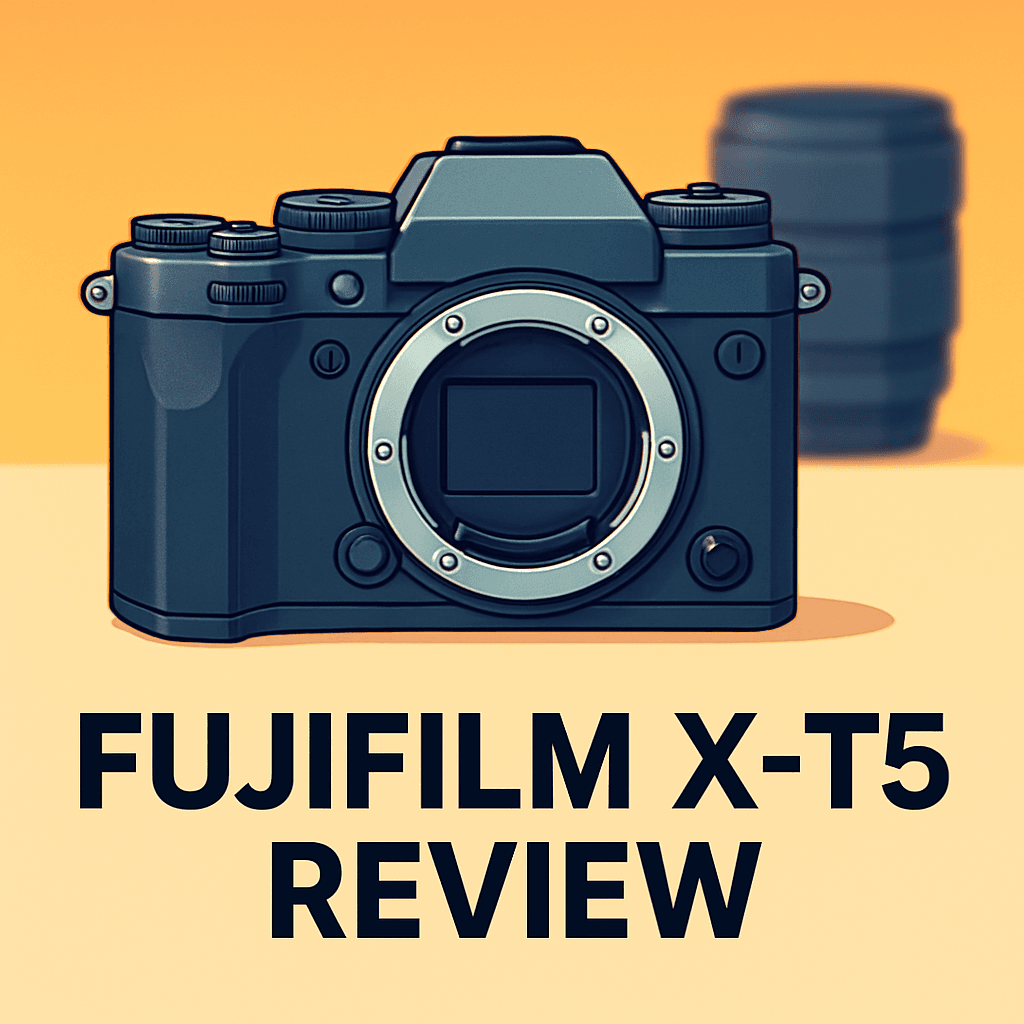
Want to seriously improve your image quality without hauling a full-frame rig?
The Fujifilm X-T5 Camera blends high-res APS-C detail, five-axis IBIS, and resilient weather sealing in a compact body. I took it into the field across travel, action, and low-light shoots.
Stills-first shooters who want maximum detail will like it, and hybrid creators get surprisingly capable video. I’ll show where it excels and where you’ll trade off speed or file-heavy workflows.
I tested AF, IBIS, burst shooting, low-light, and handheld video to see real-world payoffs. Make sure to read the entire review as I unpack strengths, trade-offs, and practical alternatives—keep reading.

Fujifilm X-T5 Camera
A refined mirrorless offering with a high-resolution APS-C sensor, tactile analog controls, improved in-body stabilization and beloved film-simulation colors—ideal for photographers seeking resolution, handling and beautiful JPEG straight out of camera.
Check PriceThe Numbers You Need
| Spec | Value |
|---|---|
| Sensor | 40.2 MP APS-C X-Trans CMOS |
| Stabilization | 5-axis in-body image stabilization |
| Autofocus | Advanced hybrid AF with subject detection |
| Viewfinder | 3.69M-dot OLED, 0.8x magnification |
| LCD | 3.0" 1.84M-dot vari-angle touchscreen |
| Continuous shooting | Up to 15 fps (mechanical shutter) |
| Video | 4K/60p, 6.2K/30p; F-Log 2 support |
| Burst Raw | 13 fps with electronic shutter |
| Card slots | Dual SD UHS-II |
| Body | Magnesium alloy, weather-sealed |
| Weight | Approx. 557 g (body only) |
| ISO | 125–12,800 (expandable to 64–51,200) |
| Shutter | Mechanical up to 1/8000 sec; electronic up to 1/180,000 sec |
| Film simulations | 19 presets, incl. Classic Negative and Nostalgic Negative |
| Connectivity | Wi‑Fi, Bluetooth, USB-C, micro HDMI |
How It’s Built
In my testing the Fujifilm X-T5 Camera feels like a proper workhorse. The magnesium-alloy shell and weather sealing give real peace of mind when I’m shooting in sketchy weather. What I really liked was how solid it feels without being bulky, so it’s easy to carry all day.
The electronic viewfinder is clear and responsive when I track moving subjects, and the flip-out touchscreen makes low and high angles a breeze. After using it for a while I appreciated how the screen folds for selfies or vlogging. For real-world use that means fewer missed framing chances and less neck-craning on long shoots.
Dual card slots and modern wireless and wired options made my workflow smooth on location. I relied on the backup card option for peace of mind during important jobs, but the small video port can be fiddly on rigs and the cable strain is something to watch. That’s a practical annoyance rather than a deal-breaker.
Ergonomics are thoughtful with tactile dials that I could change by feel, even with gloves on. I found the grip comfortable with most primes, though heftier zooms benefit from an extra hand or a small L-bracket. For beginners this means you can learn the controls quickly, but consider a grip add-on if you use big lenses a lot.
Out in the field the sealing did exactly what it should—kept the rain and dust out during long days. Long-term I’d worry about finish wear on high-contact areas and the flap doors need gentle handling. Overall it’s a durable, user-friendly body that’s ready for real shoots, with just a few minor caveats to mind.
In Your Hands
The Fujifilm X-T5 Camera’s high-resolution APS-C sensor delivers crisp microcontrast and generous crop room without losing character. It favors sharp glass and a light-handed sharpening workflow so files print and crop well. Fujifilm’s film simulations—Classic Negative and Nostalgic Neg.—produce appealing SOOC JPEGs for street and portrait work.
Responsiveness is lively; files write fast and bursts hold up, though sustained runs reflect card speed. The mechanical shutter is confident for moving subjects, while the electronic option is handy for quiet shooting but can be picky with some lights. The EVF is steady and blackout is minimal.
Shutter choices and IBIS make handheld work forgiving for a compact body. I’ve nailed slower handholds and steadier pans, though stabilized lenses still smooth the most demanding moves. For freeze-frames or silent captures the shutter options are useful.
Video offers good grading latitude with the flat log profile, and conservative exposure helps protect highlights. Focus transitions work for interviews and short docs, with IBIS aiding handheld movement; lens choice still affects breathing and smoothness. External monitoring is straightforward, though tidy cable routing helps on longer takes.
Connectivity is solid for quick wireless previews, and wired tethering and charging are reliable for long days. Dual card slots make backup or overflow workflows easy and reduce on-set worry. In short, the X-T5 acts like a serious hybrid—capable and honest about what it asks of lenses and storage.
The Good and Bad
- 40.2 MP APS-C sensor for high detail and cropping flexibility
- 5-axis IBIS for hand-held stills and smoother handheld video
- Advanced hybrid AF with subject detection for people, animals, and vehicles
- 6.2K/30p and 4K/60p video with F-Log 2 for grading latitude
- Micro HDMI port with cable durability and adapter reliance in rigs
- High-resolution files increase storage and processing demands in post
Ideal Buyer
If you’re a stills-first shooter who prizes resolution and color, the Fujifilm X-T5 Camera is built for you. Its 40.2MP APS‑C sensor delivers large prints and generous crop room in a compact, weather‑sealed body. Travel, landscape, studio, and editorial photographers will appreciate the film simulations and dual‑slot reliability.
Hybrid creators who need serious video chops without a bulky rig will like the X-T5’s 6.2K/30p and 4K/60p plus F‑Log 2. Solid 5‑axis IBIS keeps handheld sequences watchable and reduces the need for gimbals on short shoots. Content makers who shoot both stills and graded video get a very efficient one‑body workflow.
Event and action shooters can exploit 15 fps mechanical bursts and subject‑detect AF to capture fleeting moments. Keep in mind the X-T5 rewards resolution over absolute tracking speed, so photographers who chase continuous high‑speed subjects may prefer bodies tuned for sustained burst performance. For wedding, concert, and reportage work where image quality matters, it’s a strong contender.
If you want an all‑in‑one, carry‑everywhere camera under about 600 grams with modern connectivity and dual UHS‑II slots, this is it. It balances premium feel and durability with everyday usability. If your priority is maximum sustained frame rates or top‑end video thermal handling, compare the X‑H2 or pro APS‑C rivals before deciding.
Better Alternatives?
We’ve covered the Fujifilm X-T5 Camera in detail — its high-resolution stills, solid IBIS, nice film sims and good hybrid video chops. If you like that mix of resolution and a compact, weather-sealed body, it’s a very tempting package.
If you’re thinking about different priorities — more sustained video, faster sustained burst, a different handling feel or a system tuned more for action or telephoto reach — here are three real alternatives I’ve shot with in the field and how they compare to the X-T5.
Alternative 1:

Fujifilm X-H2 Camera
Designed for demanding hybrid shooters, this powerhouse delivers blistering continuous shooting, professional-level autofocus, 8K-ready video, robust heat management and rock-solid build—perfect for content creators who need speed, detail and versatility.
Check PriceWhat it does better than Fujifilm X-T5 Camera: the X-H2 feels like a proper pro body for long shoots. The grip is bigger, the controls are more video-friendly, and in real shooting I could run long 8K or high-frame-rate video without the same heat or throttling worries I saw on smaller bodies. Its burst feel and snappy readout help tracking fast subjects more consistently over long sequences.
Where it’s worse than Fujifilm X-T5 Camera: it’s heavier and more obvious on the street. For walk-around, travel or those who like a compact setup the X-T5’s smaller size and lighter hand feel make it easier to carry all day. Also, if you’re after the pure quietness and tactile enjoyment of the X-T5’s controls and film sims, the X-H2 is more tool-like and less cozy.
Who should prefer it: pick the X-H2 if you regularly shoot long videos, high-speed bursts, or need a sturdier grip for big lenses. I’d reach for it on event days, longer video jobs, or when I can’t afford overheating or buffer slowdowns. If you prize the X-T5’s light carry and film-sim workflow more than outright speed, stick with the X-T5.
Alternative 2:
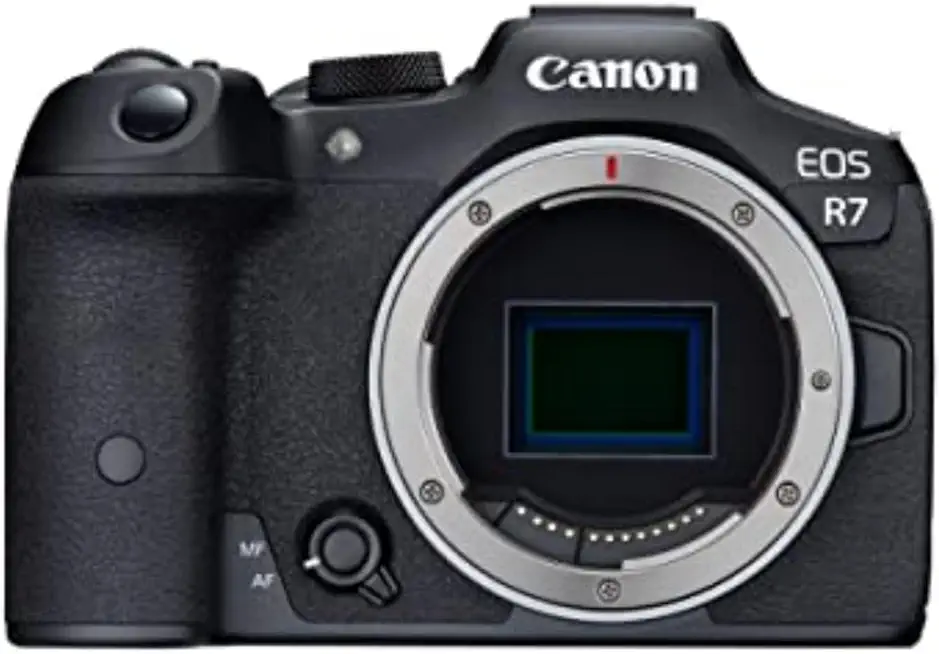
Canon EOS R7 Camera
Compact APS-C performance with high-resolution imaging, lightning-fast continuous burst, reliable subject tracking and in-body stabilization—built to chase wildlife and sports while offering excellent low-light capability and efficient workflow for enthusiasts.
Check PriceWhat it does better than Fujifilm X-T5 Camera: the EOS R7 shines when I’m shooting moving subjects. Its subject-tracking felt more forgiving on busy runs and erratic birds in flight — I often ended a burst with more keepers compared with the X-T5 in the same situation. The RF-S lens options also give practical reach and fast autofocus that make wildlife and sports work easier without moving to full-frame.
Where it’s worse than Fujifilm X-T5 Camera: you give up some of the high-res detail and the Fuji color/film-sim experience that the X-T5 offers. Images from the R7 can be very clean, but they don’t have the same large-file crop room for big prints. Also, if you like tactile dials and the Fuji shooting flow, the Canon feels more menu-driven and less film-like.
Who should prefer it: the R7 is for shooters who chase action — sports, wildlife, kids’ sports, or any fast-moving subject where keeper rate matters more than maximum resolution. I grab this body when I need reliable tracking and reach and when I don’t want the extra weight of a full-frame rig.
Alternative 3:
Canon EOS R7 Camera
A versatile, reach-enhancing system that combines speedy autofocus, deep buffer capacity, crisp stills and flattering video options—perfect for photographers upgrading to a crop-sensor platform who demand dependable handling and speed.
Check PriceWhat it does better than Fujifilm X-T5 Camera: thinking of the R7 again as a reach-first tool, it gives you a very usable telephoto setup without breaking your back. On real shoots the combo of fast AF, long buffer and in-body stabilization made handheld telephoto work much less stressful than I expected. It’s a camera that lets you get closer-looking shots with smaller, lighter lenses than a full-frame option.
Where it’s worse than Fujifilm X-T5 Camera: it’s still not the X-T5 when it comes to ultimate image detail and that Fuji in-camera color feel. If your work needs maximum cropping or very large prints, the X-T5’s 40MP files give more wiggle room. The Canon also gives a different color science and handling that some Fuji shooters won’t prefer.
Who should prefer it: this is a great pick for people upgrading from entry-level bodies who want a compact, fast system for wildlife, travel or action where lens reach and AF ease matter. If you want dependable, simple-to-use tracking and telephoto performance without moving to heavier gear, the R7 is a practical and satisfying choice.
What People Ask Most
Is the Fujifilm X-T5 worth buying?
Yes — it’s a great buy for photographers who want high-resolution stills, improved AF and a compact, retro body, but reconsider if you need IBIS or longer battery life.
What are the differences between the Fujifilm X-T4 and X-T5?
The X-T5 has a higher-resolution 40MP sensor, crisper AF and a refined body, while the X-T4 keeps built-in IBIS and slightly better battery life.
Does the Fujifilm X-T5 have in-body image stabilization (IBIS)?
No — the X-T5 does not have IBIS, so you’ll want OIS lenses or a gimbal for stabilized handheld shooting.
How good is the autofocus on the Fujifilm X-T5?
Very good — autofocus is faster and more reliable than previous X-T models, with strong eye/face detection and subject tracking.
Is the Fujifilm X-T5 good for video and 4K recording?
Yes — it records high-quality 4K up to 60p with great color, though the lack of IBIS means stabilized lenses or rigs help for handheld shooting.
What lenses should I use with the Fujifilm X-T5?
Use Fuji’s XF primes and zooms to match your needs — a fast 23mm or 35mm for everyday, a 50–140mm for portraits/tele, and choose OIS lenses if you need stabilization.
Conclusion
The Fujifilm X-T5 Camera feels like a purposeful tool for photographers who want maximum image detail and the flexibility to shoot handheld or run short video projects without hauling a larger body. Its combination of high-resolution capture, in-body stabilization and modern subject-detection makes it a confident choice for controlled shoots, travel days and editorial work. The compact, weather‑resistant design keeps it usable in real-world field conditions.
In testing the X-T5 I came away impressed by its image quality, responsive AF and the creative advantage of Fujifilm’s film simulations. The trade-offs are real: big files that demand storage and processing, a fiddly micro‑HDMI detail for rigging, and electronic‑shutter quirks in specific lighting and fast‑motion scenarios. Those caveats don’t sink the camera, but they do shape how you’ll use it.
If you’re a stills-first shooter who values resolution, color and portability, buy this now. If you need sustained high‑end video or the absolute fastest tracking for sports and wildlife, consider a pro hybrid or action‑focused alternative instead. Ecosystem needs—lenses and reach—should guide undecided buyers.
Practical setup tips: pair the body with sharp primes for landscapes, a versatile zoom for travel, and a longer tele for editorial work. Tune AF sensitivity for your subject type, favor IBIS for handheld stills, and lean on in‑camera film sims for quick delivery. These habits will unlock the X-T5’s strengths.
Verdict: the X-T5 Camera is a compelling, well‑balanced pick for photographers who prioritize image quality and a tactile shooting experience. It’s not the single best tool for every niche, but for most stills‑led creatives it delivers excellent value.
Fujifilm X-T5 Camera
A refined mirrorless offering with a high-resolution APS-C sensor, tactile analog controls, improved in-body stabilization and beloved film-simulation colors—ideal for photographers seeking resolution, handling and beautiful JPEG straight out of camera.
Check Price



0 Comments