
Want better photos and video without hauling lenses and a big bag? Can a pocket camera really give you travel-ready reach and action-ready speed?
The Sony RX100 VI Camera promises long reach, fast bursts, and 4K video. It’s perfect for travelers and parents chasing moments on the move.
Having field-tested it in travel and fast-action scenarios, I focused on real-world tradeoffs. Make sure to read the entire review as you’ll want the full results—keep reading.
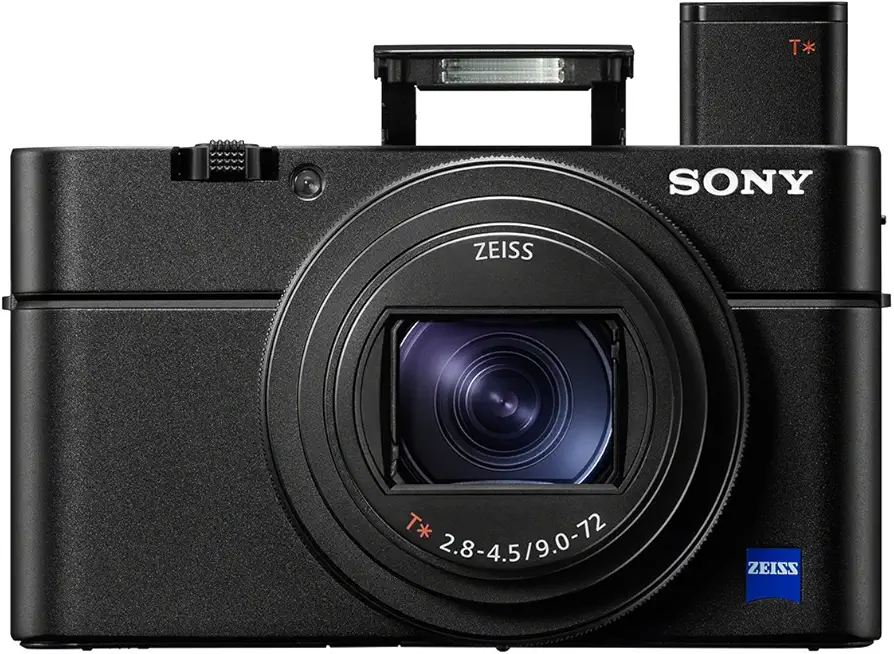
Sony RX100 VI Camera
Compact premium with a 1-inch sensor and versatile 24–200mm zoom, delivering sharp images and responsive autofocus. Ideal for travel, street photography, and crisp 4K video capture in a pocketable body.
Check PriceThe Numbers You Need
| Spec | Value |
|---|---|
| Sensor | 1-inch stacked 20.1 MP |
| Lens | 24–200mm equivalent (f/2.8–4.5) |
| Autofocus | 315-point hybrid AF, phase-detect |
| Continuous shooting | Up to 24 fps |
| Buffer | Up to 233 JPEG, 150 RAW |
| Video | 4K (no crop); 1080p up to 120 fps |
| Slow motion | 1080p at 120/240 fps |
| Display | 3.0-inch tiltable touchscreen LCD |
| Viewfinder | 0.39-inch OLED (pop-up) |
| Battery life | Approx. 220–240 shots per charge (CIPA) |
| Weight | ~302 g (with battery & memory card) |
| Dimensions | 101.6 × 58.1 × 42.8 mm |
| Wi‑Fi / NFC | Built-in |
| RAW support | Yes |
| Mic input | Yes (micro USB port with adapter) |
How It’s Built
In my testing the Sony RX100 VI felt like a real pocket camera that you’ll actually use. It’s compact enough to slide into a jacket or small bag, yet it doesn’t feel cheap in the hand. That means you can travel light and still have reach when a shot appears.
The tilting touchscreen is genuinely useful for low and high angles, and I found the touch response quick for focus and menu work. It makes shooting from hip level or over crowds much less fiddly for beginners. The screen won’t replace a big articulating display, but it gets the job done fast.
I really liked the pop‑up EVF for bright days; it tucks away neatly and pops up with a satisfying click. It’s small but sharp enough to compose when the sun makes the rear screen hard to see. Deployment is simple and it saves space compared with a fixed finder.
Built‑in Wi‑Fi and quick transfer options sped up my workflow, and RAW support gives beginners room to learn editing. One thing that could be better is the ergonomics and battery endurance during long shoots, so carry a spare battery and consider a small grip or secure strap. With those simple extras it’s a great, pocketable travel camera.
In Your Hands
In the field the RX100 VI feels remarkably snappy; the shutter fires with minimal lag and the camera digs in for extended runs without feeling like it’s choking on the action. Thanks to a generously sized buffer, long bursts feel effortless—great for kids’ soccer, street candids, or that one decisive wildlife moment when timing is everything. Blackout between frames is brief enough that tracking moving subjects rarely becomes a guessing game.
The zoom’s sweep from wide to reach is where the camera truly shines for travel and everyday carry, letting you capture environmental portraits, tight headshots and distant subjects without changing lenses. The lens is pleasantly bright at the wide end for subject separation and low-light convenience, but you’ll notice the tele end requires more care to maintain fast shutter speeds and creamy background blur. In practice that means picking your moments: favor wider framing in dim light, push reach when the light cooperates.
Video recording benefits from a full-field-of-view workflow, making framing simpler and more cinematic straight out of the camera, while high-frame-rate slow motion adds a dramatic punch to sports and motion studies. These features reward handheld shooting and quick-turnaround clips, though long-form video and heavy slow‑motion use expose limits in endurance.
Overall the RX100 VI balances reach, speed and pocketability in a way that’s rare; it’s versatile for travel, action and hybrid creators. Expect to manage battery and tele-aperture constraints on long days, and you’ll find a compact that covers more photographic ground than its size suggests.
The Good and Bad
- 24–200mm equivalent zoom in a pocketable body
- Up to 24 fps continuous shooting with a large buffer (up to 233 JPEG / 150 RAW)
- 315-point hybrid phase-detect AF for fast acquisition
- 4K video with no crop; 1080p up to 120 fps and slow motion options
- Battery life approx. 220–240 shots per charge; plan for spares
- f/4.5 aperture at 200mm limits low-light and background separation at telephoto
Ideal Buyer
If you travel light but refuse to compromise reach, the Sony RX100 VI is for you. Its pocketable 24–200mm zoom and quick handling let you skip bulky lenses without losing framing flexibility. The pop‑up EVF and tilting touchscreen make it effortless to frame and shoot from odd angles while on the move or in crowded streets.
Families, sports parents, and action shooters will favor the 24 fps bursts, generous buffer and 315‑point phase‑detect AF. Those features translate to long sequences of keepers when kids, pets or fast subjects cross the frame in unpredictable light. Compact ergonomics are competent, letting you hang on to the camera for quick grab‑and‑shoot moments at events and travel.
Hybrid creators who mix 4K no‑crop video and high‑frame‑rate 1080p slow motion with stills find the RX100 VI punches above its size without lugging an interchangeable kit. It supports RAW capture and fast Wi‑Fi transfers for quick turnarounds to cloud or phone. Be honest about tradeoffs: battery life is modest and the 200mm f/4.5 aperture limits low‑light reach, so plan spares and favor wider angles in dim conditions.
Better Alternatives?
We’ve already gone deep on the RX100 VI — how it packs a 24–200mm reach, fast bursts, and solid 4K video into a pocketable body. That camera is a great all-rounder, but no single compact is perfect for every shooter.
Below are a few real-world alternatives I’ve used. I’ll point out what each one does better or worse than the RX100 VI and who I’d recommend it to, based on field experience rather than just specs.
Alternative 1:
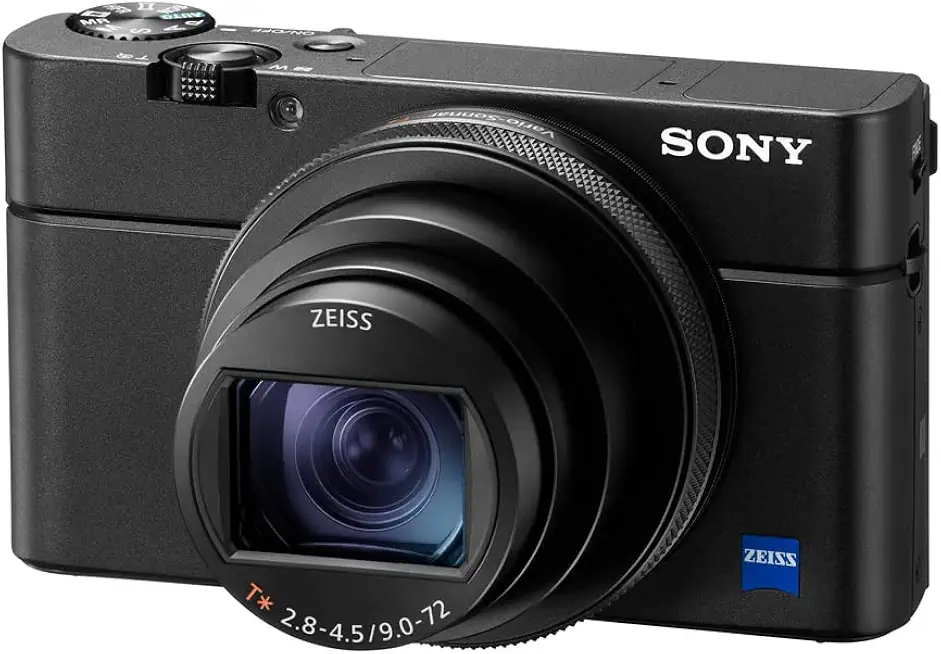
Sony RX100 VII Camera
High-performance compact delivering blistering 20fps burst shooting, advanced real-time eye-tracking autofocus, and 4K video. Perfect for action, travel, and creators seeking DSLR-level speed from a pocket-friendly camera.
Check PriceI’ve used the RX100 VII in fast-paced shoots and it’s the RX100 VI’s sharper-action cousin. What it does better is autofocus and tracking — real-time eye AF and blackout-free 20 fps with continuous AF make it far more reliable on moving subjects. If you’re shooting kids, sports, or street action where you need the camera to lock and stay locked, the VII feels noticeably more confident.
Where it’s worse is that it doesn’t fix the practical downsides of the VI: battery life is still short, there’s no mic jack, and you’re paying more for the improved AF. Image quality at base ISO and handling are very similar to the VI, so if you don’t need top-tier tracking you won’t see a big jump in still image look.
Buy this if you’re an action or event shooter who wants the best pocketable tracking and burst behavior. If you value pure reach or longer battery life over snappier AF, stick with the VI or look elsewhere.
Alternative 2:

Canon PowerShot G5 X Camera
Bright, fast lens and a 1-inch sensor combine for rich low-light performance and creamy background separation. Includes a pop‑up electronic viewfinder and intuitive controls for enthusiast photographers on the go.
Check PriceI’ve shot evenings and indoor scenes with the G5 X and its brighter wide end really helps. Compared to the RX100 VI it gives you cleaner low-light shots and easier subject separation at wider angles — portraits and dim cafés feel nicer without constantly pushing ISO. The pop-up EVF and comfortable controls make it easy to handhold and frame quickly.
What it loses to the RX100 VI is reach and speed. The G5 X can’t stretch out to the same long tele photo focal lengths, and its autofocus and burst speed aren’t as steady on fast-moving subjects. For travel where you often need a longer zoom, the RX100 VI’s reach is more useful.
Choose the G5 X if you shoot a lot in low light, like wider-angle portraits, or want a camera that feels nicer to handle and produces pleasing JPEG colors straight out of camera. If you need reach for wildlife or sports, the RX100 VI is the better pick.
Alternative 3:
Canon PowerShot G5 X Camera
Versatile compact offering full manual control, RAW capture, and a fast f/1.8–2.8 zoom for striking portraits and landscapes. Tilt touchscreen and built-in EVF make precise framing effortless.
Check PriceUsed as a small manual camera, the G5 X feels very inviting. The manual dials, RAW capture, and tilt touchscreen let you shape shots more creatively than you might with the RX100 VI’s quick-shoot focus. For deliberate street, landscape, or portrait work where you want to control depth and composition, the G5 X makes that easy and satisfying.
It still falls short when you need reach or lightning-fast AF. The f/1.8–2.8 zoom is great for shallow depth at the wide end, but you lose the RX100 VI’s longer telephoto reach and faster continuous shooting for action bursts. In busy scenes where subjects change distance quickly, the RX100 VI will keep up better.
Go for this version of the G5 X if you’re an enthusiast who prefers manual control, tilt-screen framing, and shooting RAW for editing later. If you’re after a do-it-all travel zoom that can chase moving subjects, the RX100 VI remains the more flexible choice.
What People Ask Most
Is the Sony RX100 VI worth buying?
Yes—if you want a true pocketable camera with a long 24–200mm equivalent zoom and fast autofocus; skip it if you prioritize low-light performance or want the absolute best image quality from a larger sensor.
How does the Sony RX100 VI compare to the RX100 V and RX100 VII?
The VI trades some low-light speed of the V for a much longer 24–200mm zoom, while the VII improves on the VI mainly with more advanced AF and video features.
What is the image quality of the Sony RX100 VI in low light?
Image quality is excellent for a 1-inch sensor at low to moderate ISOs, but noise rises noticeably above ISO 3200 and it won’t match APS-C or full-frame cameras in dim conditions.
Does the Sony RX100 VI have good autofocus and eye-detection?
Yes—the AF is fast and reliable for stills with effective eye-detection, making it great for quick portraits and street shooting.
Is the zoom range on the RX100 VI suitable for travel and everyday use?
Absolutely—the 24–200mm equivalent range is extremely versatile for travel, landscapes, portraits, and casual telephoto needs while staying pocketable.
What are the main pros and cons of the Sony RX100 VI?
Pros: compact build, long zoom, fast AF and solid image quality for the class; Cons: pricier than simpler compacts, weaker low-light performance than larger sensors, and limited versatility in ergonomics and battery life.
Conclusion
The Sony RX100 VI Camera is a rare pocketable package that pairs long reach with serious speed and modern video tools. It delivers the convenience of a travel-ready compact plus the burst, buffer and 4K capabilities that let you shoot fast, frame precisely and craft slow‑motion clips without fuss. In everyday use that combination is genuinely liberating.
Where it shines is obvious: the zoom-to-go versatility for street, travel and distant subjects; the responsive autofocus and rapid continuous shooting that keep up with action; and the dependable EVF and tilting screen that make composition painless. For photographers who value reach and responsiveness in a hand‑portable body, it’s a winning mix.
That mix comes with tradeoffs worth owning up to. The long end’s slower aperture and the camera’s modest battery life limit low‑light tele work and long days out without spares. Compact ergonomics also mean longer tele shooting can feel cramped compared with larger bodies.
Bottom line: choose the RX100 VI Camera if you want a balanced, travel‑ready tool that maximizes reach and speed without stepping up to the premium price of the RX100 VII. If you need the absolute best tracking or brighter wide‑angle low‑light performance, consider the RX100 VII, Canon G5 X Mark II or Panasonic ZS200 depending on which compromise you’re willing to make.
Sony RX100 VI Camera
Compact premium with a 1-inch sensor and versatile 24–200mm zoom, delivering sharp images and responsive autofocus. Ideal for travel, street photography, and crisp 4K video capture in a pocketable body.
Check Price


0 Comments