
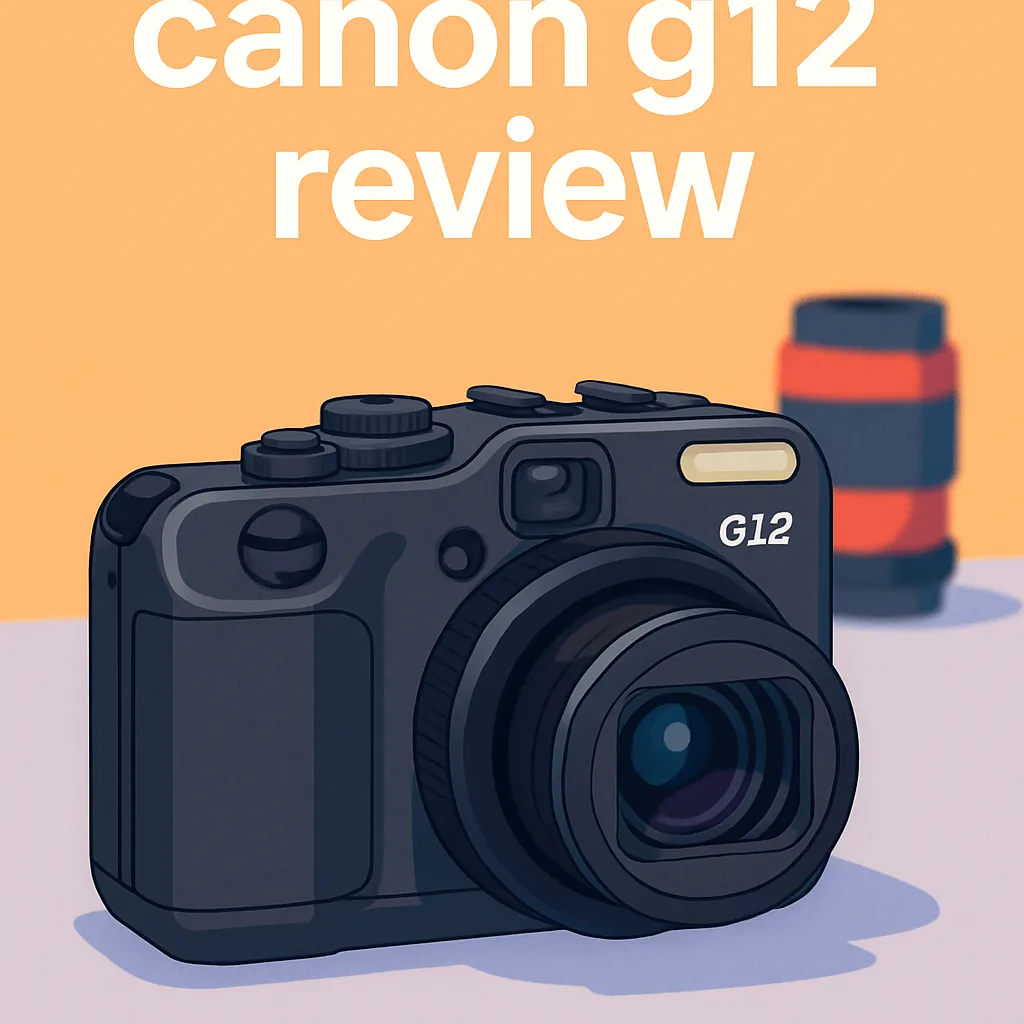
?Tired of juggling a backpack full of gear but still wanting real manual control and creative freedom? I personally field-tested the Canon PowerShot G12 Camera and compared it with “a couple of close rivals”. I pushed it through real shoots to see what actually matters when you’re shooting on the move.
This camera suits enthusiasts who crave tactile dials, full exposure control, and RAW files for serious editing. You’ll appreciate the articulating screen for odd angles, the handy zoom range for travel, and the quick manual feel. Those benefits pay off in faster setups and more usable shots when light or time is tight.
There is a clear compromise: image noise climbs at higher ISOs and video features are lightweight compared with today’s rivals. If you mostly shoot outdoors or process RAW files, you’ll still get striking results and a camera that encourages craft. Keep reading as I will reveal something shocking about the Canon PowerShot G12 Camera that might change your photo quality drastically.

Canon PowerShot G12 Camera
Classic enthusiast compact delivering manual controls, RAW capture, robust zoom range and tactile dials. Articulating LCD and solid build make it perfect for travel, street photography, and creative experimentation.
Check PriceThe Numbers You Need
| Spec | Value |
|---|---|
| Sensor | 10 megapixel 1/1.7" CCD |
| Lens focal length | 28–140mm equivalent (5x optical zoom) |
| Maximum aperture | f/2.8–4.5 |
| Image Stabilization | Optical Image Stabilizer (OIS) with Hybrid IS for macro |
| ISO Range | 80–3200; High ISO up to 12800 (reduced resolution) |
| LCD | 2.8" fully articulating, 461,000 dots |
| Viewfinder | Optical, tiltable |
| Shooting Modes | Full PASM, Scene modes, HDR, multi-aspect (4:3, 3:2, 16:9, 1:1, 4:5) |
| Burst | Up to 4.2 fps |
| Video | 720p HD, H.264 MOV format |
| Storage | SD / SDHC / SDXC / MMC |
| RAW Capture | Yes (CR2); bundled Digital Photo Professional |
| Connectivity | USB 2.0; no GPS or Wi‑Fi |
| Dimensions | 112 × 76 × 48 mm |
| Weight | 401 g (with battery) |
How It’s Built
In my testing the Canon PowerShot G12 feels like a little DSLR in your hand. Its metal shell and deep grip give it a solid, reassuring weight that makes you want to shoot. That means it handles everyday knocks and stays comfortable during long walks.
The control layout is old-school in the best way, with chunky dials and a new front control ring that click into place. I found the dials let me change aperture and shutter without diving into menus, so I stayed in the moment. Beginners will appreciate how physical knobs teach camera settings by feel.
The fully articulating screen flips out and tilts for waist-level or overhead shots and even forward-facing framing. In my testing that screen turned awkward angles into instant, usable compositions. One thing I really liked was how satisfying the dials are to use, and one thing that could be better is its size — it’s not made for a pants pocket.
After using it for a while I appreciated how the refined ergonomics evolve the older G models into something more comfortable. For real-world shooting this means less fumbling, faster shots, and more creative angles. If you’re a beginner who wants hands-on control without a big learning curve, the G12 is easy to live with — expect to carry it, not pocket it.
In Your Hands
The PowerShot G12’s CCD yields vibrant, detailed images in good light, rewarding careful exposure with rich color and fine rendering. In dimmer situations grain becomes more evident, so conservative sensitivities deliver the cleanest results.
Physical dials and a lens control ring make adjustments immediate and intuitive, giving a DSLR-like workflow in a compact body. The build feels reassuringly solid and encourages deliberate, hands-on shooting.
The tilting optical viewfinder is surprisingly useful outdoors, while the fully articulating LCD makes waist-level and overhead framing effortless. Close-focus capability plus effective stabilization means handheld macro work is practical and forgiving.
Video recording is fine for casual clips but lacks pro audio options and doesn’t compete with dedicated camcorders. The camera powers up quickly and responds responsively, though it isn’t geared toward sustained high-speed action shooting. For most enthusiasts the balance of responsiveness and tactile controls feels right.
RAW capture gives enthusiasts plenty of latitude in post, and removable storage fits familiar workflows. Battery life will carry you through a day of mixed shooting with a spare extending outings; overall feedback praises image quality and manual control while noting it’s not a true pocket camera.
The Good and Bad
- Excellent manual controls providing a DSLR-like feel in a compact body
- Versatile zoom range from 28mm wide to 140mm tele
- Articulating LCD enables flexible framing and shooting angles
- RAW support (CR2) for post-processing flexibility
- Noisy at high ISO, limiting low-light performance
- Video capabilities are mediocre compared with competitors
Ideal Buyer
The Canon PowerShot G12 Camera is aimed at enthusiast photographers who want DSLR-style manual controls and RAW capture in a compact body. Chunky dials, an EOS-style front control ring and full PASM modes let you change exposure and focus quickly without menu diving. Its 10MP CCD with Optical IS yields punchy color and fine detail at base and moderate ISOs for photographers who process RAW.
Use it for travel, street shooting and close-up work where the 28–140mm zoom covers most needs and the 1 cm macro gets you tight on subjects. The fully articulating 2.8-inch LCD, optical tiltable viewfinder and Hybrid IS give flexible framing and stable handheld results. The metal body and comfortable grip feel robust, though the camera is too substantial to be a true pocket piece.
It’s not ideal for low-light shooters who need clean high-ISO files, for action photographers wanting long burst performance, or for videographers needing advanced video and mic input. There’s no Wi‑Fi or GPS so wireless transfer and geotagging are absent, but battery life and inexpensive spare batteries keep you shooting through a day. If you love hands-on controls, a DSLR-like tactile experience and RAW flexibility, the G12 delivers a rewarding, old-school photographer’s tool.
Better Alternatives?
We’ve gone through the Canon G12 in detail — its 28–140mm-style zoom, tactile dials, and that handy articulating screen. It’s a great enthusiast compact, but there are other cameras and items that solve some of the G12’s pain points in real shooting situations.
Below are a few alternatives I’ve used myself. I’ll tell you where each one shines compared with the G12, where it falls short, and what kind of shooter would reach for it in the field.
Alternative 1:
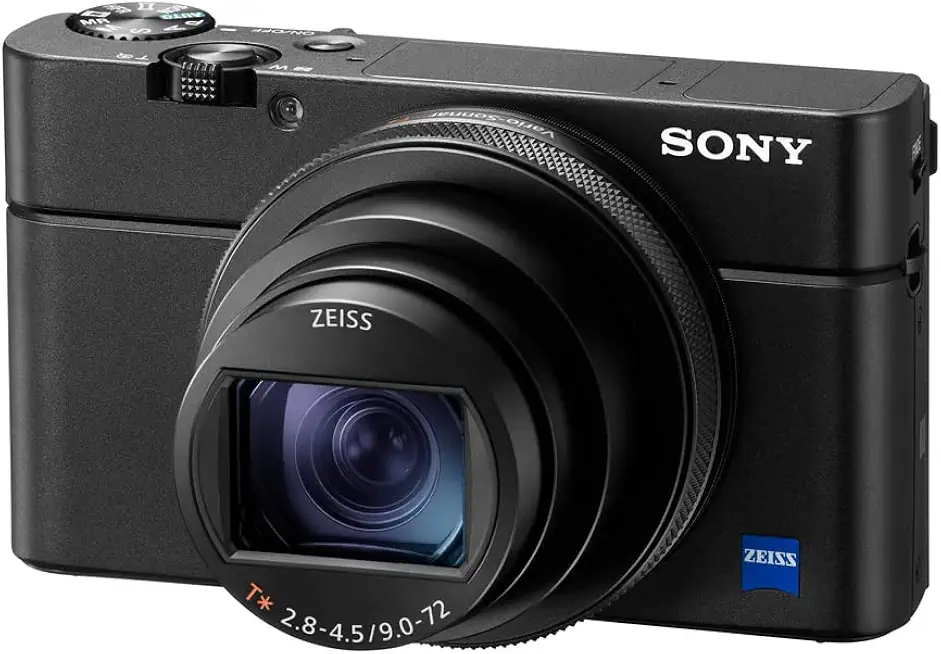
Sony RX100 VII Camera
Premium pocket powerhouse with a large 1-inch sensor, versatile zoom, lightning-fast autofocus and 4K video. Ideal for travelers and content creators seeking pro performance in a truly portable package.
Check PriceThe Sony RX100 VII beats the G12 in plain shooting performance in low light and in speed. The larger 1‑inch sensor and much faster autofocus give cleaner images at higher ISOs and lets you lock onto subjects quickly — useful for street work and travel when you don’t have time to fiddle with settings. Its reach and wide end also cover a broad range, and the video is a big step up if you shoot clips or quick vlogs.
Where it falls short versus the G12 is in hands-on controls and viewfinder experience. The RX100 is tiny and smooth-bodied, so you lose the chunky dials and the tiltable optical finder that make the G12 so easy to tweak on the fly. The small body also means less physical grip and shorter battery life on long days. In practice that means the RX100 is faster at making good pictures automatically, but the G12 lets you feel and refine settings more directly.
If you’re a traveler, vlogger, or someone who wants top image quality from a true pocket camera, you’ll probably prefer the RX100 VII. If you want big tactile controls and a finder for deliberate shooting, the G12 still wins for that kind of hands-on work.
Alternative 2:

Leather Camera Case
Handcrafted leather protection that combines timeless style with secure cushioning. Soft-lined interior prevents scratches, while reinforced stitching and easy-access closure keep gear safe and presentable during everyday carry.
Check PriceA good leather case doesn’t make better pictures, but it does protect the G12 and makes shooting every day less stressful. Compared to carrying the G12 bare in a bag or pocket, a snug leather case stops scratches, cushions against bumps, and looks sharp when you’re pulling the camera out at an event or on the street. I’ve used one for weddings and travel — it keeps dust out and keeps the camera feeling like a tool, not a loose item in a bag.
Of course a case won’t fix the G12’s weak high‑ISO or its video limits. It can add bulk, slow your draw, and may limit access to some controls depending on design. If you need super-fast access for spontaneous shots, a case that covers the dials can be a hindrance. It’s protection and style, not a performance upgrade.
Buy a leather case if you carry the G12 every day, care about presentation, and want basic physical protection without a full bag. If you’re a fast-action shooter who needs immediate access or you prefer minimalist, lightning-fast setups, leave the case at home.
Alternative 3:

Canon PowerShot G7 X Mark III Camera
Compact creator-focused camera featuring a large sensor, bright lens and responsive autofocus for crisp stills and high-quality video. Flip-up touchscreen and livestreaming-ready connectivity simplify modern content production.
Check PriceThe G7 X Mark III is closer in spirit to the G12 but modernized for today’s shooting. In real use it gives cleaner photos in dim light than the G12 thanks to its larger sensor and handles video far better — 4K and live-streaming features make it a go-to for content creators. The flip-up screen makes framing selfies and vlogs easy, which is something the G12’s articulating screen handles differently but not as cleanly for forward-facing work.
Where it loses to the G12 is in physical controls and handling. The G12’s dials, hotshoe and optical viewfinder give a more tactile shooting experience and easier flash or accessory mounting. The G7 X is more of a point-and-shoot with fewer direct controls, so if you like to twist a dial and set everything by feel, the G12 feels more satisfying. Also, the lack of a finder can be a real downside in bright sun when you want stability and composing precision.
If you’re a modern creator who shoots lots of video, vlogs, or travels light and wants much better low-light stills, the G7 X Mark III is the practical upgrade. If you’re an enthusiast who loves manual dials, a finder, and a more hands-on approach to still photography, the G12’s controls will still appeal more.
What People Ask Most
Is this camera good for enthusiasts who want DSLR-like controls?
Yes — it has full PASM modes, tactile dials and an EOS-style front control dial that give a true DSLR-like handling in a compact body.
How is the image quality and low light performance?
The 10MP CCD delivers vibrant, detailed images at low to moderate ISO, but noise becomes noticeable at ISO 800 and above, so best results are at base ISO.
Does it shoot RAW and what file type does it use?
Yes, it records RAW files in Canon’s CR2 format and ships with Digital Photo Professional for processing.
Is the zoom and stabilization good for travel and close-up work?
The 28–140mm f/2.8–4.5 zoom is versatile for travel and the Optical Image Stabilizer with Hybrid IS helps handheld and macro shooting down to 1 cm.
How is the video quality and are there external mic or connectivity options?
Video is 720p HD in H.264 MOV format and is adequate for casual clips, but there’s no external mic input and no Wi‑Fi or GPS connectivity.
Is the camera pocketable and how is the build quality?
It feels solid with a metal body and comfortable grip, but at 401 g and relatively chunky dimensions it’s generally too bulky for most pockets.
Conclusion
The Canon PowerShot G12 Camera is pure joy for photographers who crave tactile dials and full manual control. Its handling feels intentional and precise, with an articulating screen and flexible shooting options that encourage creativity. RAW capture and thoughtful ergonomics let you shape images exactly the way you want without fighting the camera.
That said, the camera shows its age in low light, with noise creeping in earlier than modern sensors tolerate and limiting handheld high‑ISO work. Video performance is serviceable for casual clips but lacks the refinement and inputs that serious shooters expect today. Finally, it is a confident, substantial piece of kit that many will find too bulky for a pocket or light travel setup.
If your priority is still photography and hands‑on control, the G12 remains a compelling, characterful tool rather than a disposable point‑and‑shoot. It delivers creative freedom, robust build, and image flexibility that will satisfy enthusiasts prepared to accept its compromises. Buy it for intentional shooting and photographic pleasure; skip it if low‑light performance, cutting‑edge video, or absolute pocketability are deal breakers.
Canon PowerShot G12 Camera
Classic enthusiast compact delivering manual controls, RAW capture, robust zoom range and tactile dials. Articulating LCD and solid build make it perfect for travel, street photography, and creative experimentation.
Check Price

0 Comments