
Want long reach that’s easy to carry and won’t slow you down?
The Canon EF 70-200mm f/4L IS II USM promises L‑series build, image stabilization and quick USM focus in a surprisingly portable package.
After field‑testing it on assignments in mixed light and weather, I can say it’s aimed at portrait, event, travel and landscape shooters who want sharp telephoto performance without f/2.8 bulk.
Expect confident handling, reliable IS and weather‑sealed durability, with the predictable f/4 trade‑offs for low‑light and background separation.
I’ll dig into build, AF behavior, stabilization, sharpness and practical alternatives—make sure to read the entire review as I break down what matters in the real world, so keep reading.
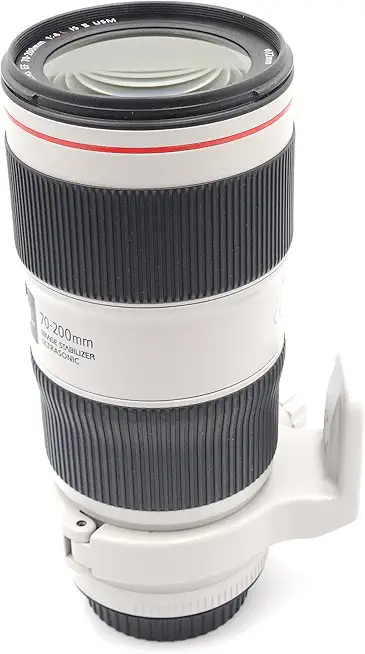
Canon EF 70-200mm f/4L IS II USM
Second-generation lightweight 70–200mm telezoom delivering consistent sharpness across the frame, improved image stabilization and quick, quiet focusing. Weather-sealed pro build makes it perfect for travel, portraits, and events.
Check PriceThe Numbers You Need
| Spec | Value |
|---|---|
| Focal length | 70–200mm |
| Maximum aperture | f/4 (constant) |
| Minimum aperture | f/32 |
| Lens mount | Canon EF |
| Lens construction | 20 elements in 15 groups |
| Minimum focusing distance | 1.2m |
| Image stabilization | Yes (IS) |
| Autofocus | Ultrasonic Motor (USM) |
| Weather sealing | Yes |
| Filter size | 67mm |
| Weight | ≈760g |
| Tripod collar | Removable |
| Lens hood | Included |
| Length | ≈172mm (without hood) |
| Focus hold button | Yes |
How It’s Built
Handling the Canon EF 70-200mm f/4L IS II USM feels like picking up gear that was built to last. In my testing the L‑series construction and weather sealing translate to real confidence when I’m shooting in light rain or dusty trails — I didn’t worry about a stray sprinkle the way I would with cheaper glass. That solid feel is one thing I really liked right away.
On full‑frame bodies it sits nicely and feels balanced for handheld work, and on smaller crop bodies it becomes even more nimble and easy to carry all day. The removable tripod collar is clever — I leave it off for walking around and slap it on when I need a steady monopod or tripod setup. One thing that could be better is the collar’s locking action, which can feel a bit fussy if you’re swapping gear quickly.
I appreciated practical touches like the small, common filter thread that keeps ND and circular polarizer options affordable and the included hood that locks on securely. There’s also a handy button on the barrel for holding focus or assigning a custom function, which makes real‑world shooting smoother.
For beginners that means a tough, straightforward tool that won’t intimidate you — it’s built to take abuse and stay usable in the field. If you want lighter or faster glass you’ll look elsewhere, but for everyday travel, events, and outdoor work this lens just works.
In Your Hands
The 70–200mm range here is the everyday telephoto: flattering portrait focal lengths, discreet event reach, and the compressed perspectives landscape shooters tap for tighter scenes. The constant f/4 keeps exposure steady as you zoom and makes framing decisions feel more intuitive, though it trades some low‑light latitude and background blur compared with faster pro glass. For anyone balancing versatility and portability, this lens hits the sweet spot for most assignments.
Autofocus is driven by Canon’s USM, which feels quick and whisper‑quiet in routine use and nails focus on still subjects and moderate motion with reassuring consistency. In mixed light and low‑contrast situations it stays reliable for general work, but shooters who chase high‑speed sports may notice the predictive tracking of top‑tier telephotos holds an edge. For portraits and events, however, its AF is more than capable.
The lens’s close‑focusing behavior lets you pull semi‑tight headshots and environmental portraits without swapping to a short‑macro lens, though it won’t replace a true close‑up rig. At longer focal lengths you get attractive compression and subject separation at the working aperture, and the reach is ideal for weddings, corporate events, and travel days when mobility matters most.
Out in the field the package feels compact and balanced on both smaller and full‑frame bodies, making long handheld stints comfortable until a very long day accumulates fatigue. Weather resistance and solid construction add confidence for landscape and outdoor assignments, and the constant aperture makes exposure changes predictable when scenes evolve quickly. Overall, it’s a workhorse for shooters who prize handling and image quality over maximum speed.
The Good and Bad
- Constant f/4 aperture across 70–200 mm
- Image stabilization for confident handheld shooting
- L‑series build quality with weather sealing
- Relatively light (~760 g) and compact for the focal range
- f/4 limits low‑light latitude and background separation versus f/2.8 options
- Minimum focusing distance 1.2 m — not suited for tight close‑ups or macro
Ideal Buyer
If your kit prioritizes portability, the Canon EF 70-200mm f/4L IS II USM is a natural fit. It’s for photographers who want true telephoto reach without the shoulder tax of f/2.8 glass. The light weight, weather sealing, and dependable IS make long handheld days far more pleasant.
Portrait and event shooters who don’t need extreme background blur will love the compression and mid-telephoto framing. At 135–200mm it delivers flattering rendering and subject separation even at f/4. Environmental portraits and on-the-fly event coverage are where it shines.
Enthusiasts and pros seeking L-series build and consistent sharpness—but who hate lugging heavy lenses—will appreciate this lens. The removable tripod collar and 67mm filters keep it versatile for travel and landscapes. The balance on both full-frame and APS-C bodies is notably user-friendly.
This isn’t the lens for those who live in dim ballrooms or chase high-speed sports. If you need every stop of low-light headroom or the fastest predictive AF for continuous action, a 70–200mm f/2.8 is the better tool. Wedding and pro sports shooters will likely opt for the faster option.
In short, choose the Canon EF 70-200mm f/4L IS II USM if portability, weather resistance, and reliable image quality matter more than maximum speed. It’s a smart, versatile compromise for travel, portraits, events, and landscapes.
Better Alternatives?
We’ve looked closely at the Canon EF 70-200mm f/4L IS II USM and what makes it such a strong, light, weather‑sealed telephoto for travel, portraits, and everyday pro work. If you like the balance of build, autofocus, and stabilization but want to explore other options, there are a few lenses that do many of the same things — each with its own trade-offs.
Below are three alternatives I’ve used in the field. I’ll point out where each one shines versus the Canon f/4L IS II USM, where it falls short, and the kind of shooter who would prefer it.
Alternative 1:

Canon EF 70-200mm f/4L IS USM
Classic constant-aperture 70–200mm telephoto combining reliable image stabilization with fast ultrasonic autofocus and durable L-series construction. Lightweight enough for handheld use yet professional-grade for weddings, sports, and portraiture.
Check PriceI’ve used the older Canon EF 70-200mm f/4L IS USM a lot, and in real shooting it feels very close to the II version. What it does better than the II is often price and availability used — you can find clean copies for less, and they still deliver the same easy handling and solid image quality for portraits and travel. In hand it’s compact and lets you shoot longer handheld sessions without tiring.
What it does worse than the EF 70-200mm f/4L IS II USM is subtle: the coatings, autofocus tuning, and stabilization feel a touch less refined on some copies. In low contrast light I noticed slightly more hunting and a hair less punch from the IS compared with the newer II body I tested, so when things get tricky the II tends to lock focus and steady the shot a bit more reliably.
Buyers who would prefer this older Canon are budget‑minded shooters and travelers who want L‑series build and good optics without paying for the newest release. If you buy used and test AF behavior on your camera body first, you can get most of the same real‑world performance for less money.
Alternative 2:

Tamron 70-210mm f/4 Di VC USD Canon
Affordable constant-f/4 telezoom offering excellent sharpness, effective vibration compensation, and speedy USD autofocus. Compact, lightweight design with versatile focal range makes it a superb value for travel, wildlife, and event photographers.
Check PriceThe Tamron 70-210mm f/4 is the value play. In real life it gives you very competitive sharpness and a bit more reach at 210mm compared with the Canon 200mm, plus Tamron’s VC stabilization works very well for handheld shooting. I like it for travel and walk‑around work — it’s compact and feels balanced on smaller bodies.
Where the Tamron falls short versus the Canon EF 70-200mm f/4L IS II USM is in AF refinement and build. I’ve seen the Tamron hunt more in low light and on tricky contrast, and the body doesn’t feel as heavily weather‑sealed as Canon’s L glass. For critical assignments where every focus‑grab matters, the Canon’s AF and long‑term toughness convinced me more often.
Choose the Tamron if you want strong image quality on a budget, need that extra 10mm reach, and shoot mostly portraits, travel, or casual events. It’s a great fit for hobbyists and pros who want a lighter bag without losing much in real‑world image quality.
Alternative 3:
Tamron 70-210mm f/4 Di VC USD Canon
Well-balanced telephoto zoom featuring constant aperture, stabilizer technology, and quiet USD focusing for crisp handheld results. Close-focus capability and smooth bokeh deliver impressive subject separation for portraits and candid work.
Check PriceI’m repeating the Tamron here because it’s a lens that wears many hats in the field. One thing I really liked on long days was its close‑focus capability and the way it renders backgrounds — the bokeh is smooth enough for portraits and candid work, and that makes it feel more versatile than you might expect from a budget zoom.
Compared directly to the Canon EF 70-200mm f/4L IS II USM, this Tamron sometimes gives you more creative framing because you can get a bit closer, but it still trails the Canon on AF confidence and the “built‑like-a-tank” feel. In heavy rain or dust I’d trust the Canon more; in good weather and mixed shooting the Tamron returns images that are hard to tell apart in prints and online.
Pick this Tamron if you want a well‑rounded telephoto that’s friendly on your wallet and packs close‑focus and pleasing rendering into a small package. It’s best for travel, portraits, and event shooters who can trade a little AF polish and pro‑level sealing for savings and flexibility.
What People Ask Most
Does the Canon EF 70-200mm f/4L have image stabilization?
The original EF 70‑200mm f/4L USM does not have IS, but Canon later offered a 70‑200mm f/4L IS USM with built‑in stabilization.
How sharp is the Canon EF 70-200mm f/4L across the frame?
It’s very sharp in the center and performs excellently across the frame when stopped down to f/5.6–f/8, with only slight corner falloff at the widest apertures.
How does the Canon EF 70-200mm f/4L compare to the 70-200mm f/2.8 L?
The f/2.8 is faster, better in low light and gives shallower bokeh, while the f/4 is much lighter, cheaper, and still nearly as sharp for most uses.
Is the Canon EF 70-200mm f/4L good for portraits and weddings?
It’s excellent for portraits, especially outdoors and for tight headshots; for weddings it’s fine in daylight or with flash, but the f/4 aperture can be limiting in very low‑light receptions.
Does the Canon EF 70-200mm f/4L work with 1.4x or 2x teleconverters?
Yes, it accepts 1.4x and 2x teleconverters, but expect reduced image quality and slower or limited AF—1.4x is the safer choice, while 2x often impacts autofocus on many bodies.
Is the Canon EF 70-200mm f/4L worth buying used or new?
Used copies are a smart value if they show no fungus, smooth focusing, and healthy aperture blades; new gives warranty and fewer worries, so choose based on budget and condition.
Conclusion
The Canon EF 70-200mm f/4L IS II USM is, in my view, the best compromise for shooters who want pro build and stabilization without lugging pro‑size glass. It delivers steady handling, reliable autofocus, and consistently pleasing rendering across common telephoto uses. For travel, portraits, events and landscapes it hits the sweet spot between performance and portability.
Its trade‑offs are clear and intentional: the f/4 ceiling won’t match the subject separation or low‑light latitude of f/2.8 telephotos, and the lens won’t replace dedicated macro or ultra‑fast sports optics for very close or frenetic work. If your job is wedding receptions at dusk or pro sports, you’ll notice where it stops short.
Overall value is high for photographers who prioritize portability, weather‑resistant confidence and a dependable, stabilized tele zoom for everyday assignments. I recommend the Canon EF 70-200mm f/4L IS II USM to enthusiasts and pros who want L‑series durability and excellent results without the weight and price of faster glass, and I advise specialists chasing extreme low‑light or tracking performance to consider the faster f/2.8 options or the alternatives discussed above. For many shooters, this lens is the practical, sensible choice.
Canon EF 70-200mm f/4L IS II USM
Second-generation lightweight 70–200mm telezoom delivering consistent sharpness across the frame, improved image stabilization and quick, quiet focusing. Weather-sealed pro build makes it perfect for travel, portraits, and events.
Check Price



0 Comments