
Why is the Afghan Girl photo famous? Could one portrait from a refugee camp change how millions see a distant war?
A single, haunting image humanized a faraway conflict and reached millions after appearing on a National Geographic cover. This article will answer why is the afghan girl photo famous and explain the full story behind the picture.
You will read about Steve McCurry and Sharbat Gula, how the photo was taken, and why it moved the world. The piece also covers the photograph’s impact and legacy and the long search to find Sharbat Gula.
The reporting uses trusted sources like National Geographic, McCurry’s interviews, and major news outlets, and it treats Sharbat Gula’s story with care. Expect short, clear sections, photos, a timeline, and facts you can trust.
The story of Steve McCurry & Sharbat Gula
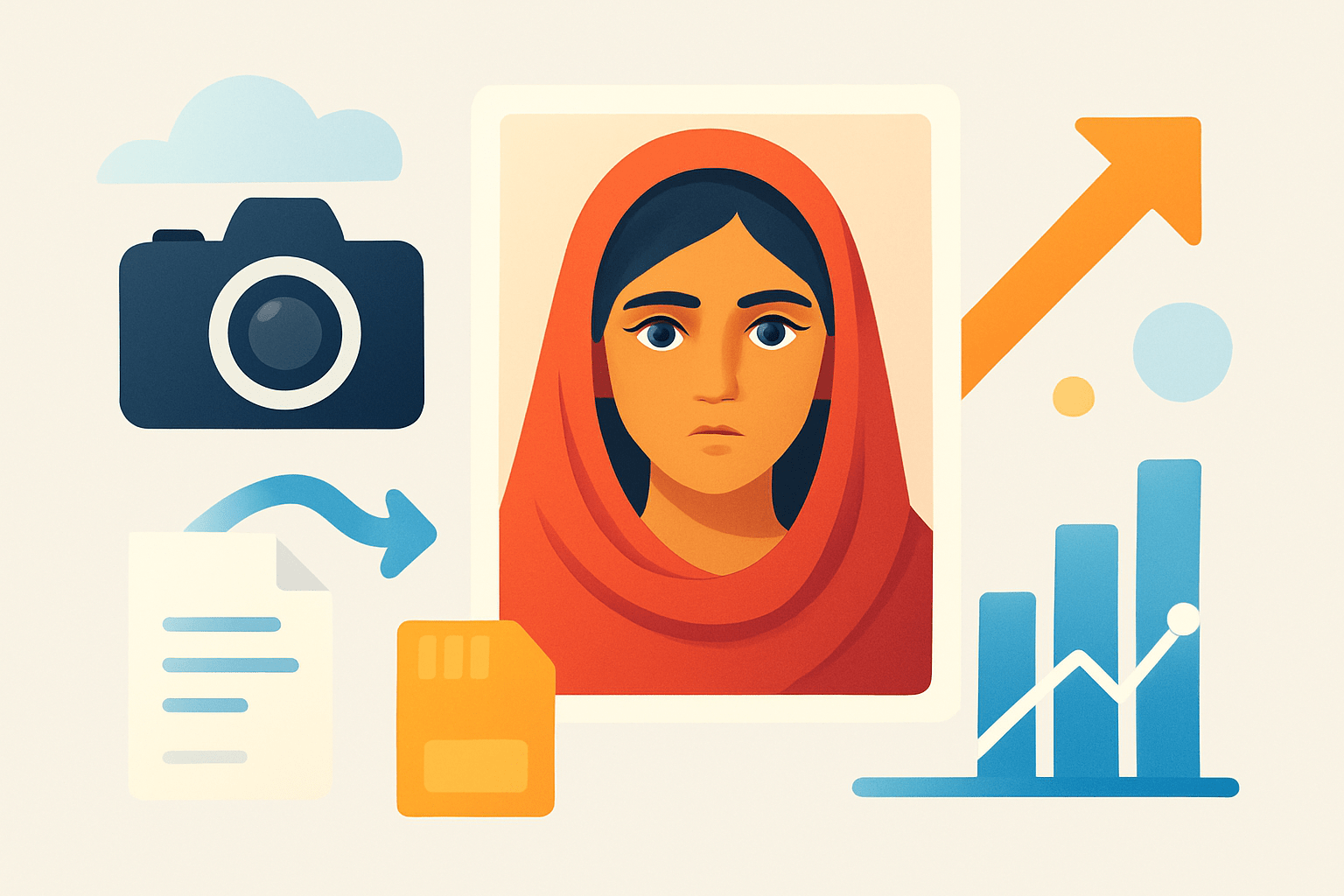
Original photograph by Steve McCurry (1984), published as the National Geographic cover in June 1985.
People still ask: why is the Afghan Girl photo famous? Because one unforgettable portrait captured the human cost of a distant war and echoed across the world.
Photographer Steve McCurry traveled to Pakistan to document Afghan refugees during the Soviet–Afghan war. In December 1984 he entered the Nasir Bagh camp near Peshawar, looking for faces that could tell the story more directly than any statistic.
In a makeshift classroom he noticed a teenage student with an intense gaze and a red headscarf. McCurry later said, “Her eyes are haunting,” so he asked the teacher for permission to photograph her by the doorway.
The portrait of Sharbat Gula ran on National Geographic’s June 1985 cover and quickly became the magazine’s most recognized image. For more context on the day and the editorial process, see McCurry’s account.
How the photo was taken
The portrait works because of clear, simple composition. McCurry framed her tightly, filling the frame with her face and shawl, leaving almost no background to distract the viewer.
Her eyes sit near the upper third of the frame, and her gaze meets the lens head‑on. That central confrontation pulls viewers in and holds them there.
The shallow depth of field softens the green wall behind her while natural light skims across her face. The shadows deepen her expression, while the highlights sharpen the eyes.
Color does the final lift. The cool green of her eyes and backdrop clashes with the warm rust of her headscarf, creating a complementary contrast that makes the stare feel almost electric. Those choices made viewers feel the image before they even read a caption.
Notice, too, the absence of other people or props. By reducing the scene to one face, McCurry removed any visual escape route, so the eyes become the story.
Why the photo moved the world
So, why is the Afghan Girl photo famous? Because a single, piercing portrait humanized a far‑away conflict, and its vivid gaze reached millions when it appeared on a global magazine cover.
Visual immediacy came first. The direct eye contact creates a private encounter between subject and viewer, collapsing the distance between a refugee camp and a living room.
Then came humanization. Instead of a statistic or a troop movement, readers met one person with a name and a story, even if they would not learn that name until later.
Timing and reach mattered. National Geographic’s massive circulation carried the June 1985 issue into homes and classrooms worldwide, and the image quickly became known as Afghan Girl, inviting curiosity rather than supplying answers.
The mystery also amplified the pull. People wondered who she was, what became of her, and whether the war had spared her family, questions that kept the image alive long after the issue left newsstands.
Over time, follow‑up stories and exhibitions renewed attention and deepened the symbolism. But even as the picture became an icon, editors and critics noted the tension between symbol and person, a reminder that Sharbat Gula is more than a cover.
The photograph’s impact and legacy
The photograph’s impact was immediate and lasting. It raised awareness of the refugee crisis, helped fuel classroom conversations, and became one of National Geographic’s most recognizable covers worldwide.
In photojournalism, it set a touchstone for empathetic portraiture. Many photographers cite its tight composition and ethical focus as a model for showing dignity within hardship.
Yet critics have challenged the image too. They ask why is the afghan girl photo famous if it risks turning a real teenager into a symbol for Western audiences, and they debate consent, power, and cultural context.
Those debates are healthy and necessary. They push viewers to see both the beauty of the picture and the imbalance between photographer and subject, and to extend any admiration into action that respects real lives.
The search for Sharbat Gula
For years after 1985, the girl on the cover remained anonymous. In 2002, a National Geographic team traced her to eastern Afghanistan and used iris recognition to confirm her identity as Sharbat Gula; “I remember being photographed,” she told National Geographic, “It was the first time.”
The reunion story revealed a life marked by displacement, marriage, and children, and it reframed the portrait as one chapter of a larger life. Later, reports described legal troubles over identity papers in Pakistan in 2016 and a humanitarian relocation to Italy in 2026.
These updates kept the image in public view while reminding readers that icons have consequences for the people inside them. For critical perspectives on representation and context, explore this hidden truth analysis.
What People Ask Most
Why is the Afghan Girl photo famous?
The photo became famous for the girl’s piercing green eyes and the way it captured the human cost of the Afghan refugee crisis after being widely published. It turned into a powerful symbol that many people recognized.
Who took the Afghan Girl photo?
Photographer Steve McCurry took the image while working near a refugee camp, and National Geographic later published it. The magazine’s wide reach helped make the photo iconic.
What made the Afghan Girl photo so powerful?
The close-up composition and her direct, intense gaze created an emotional connection with viewers. That simple human moment made the image unforgettable.
Did the Afghan Girl photo change public opinion about refugees?
Yes, it helped raise global awareness and sympathy for Afghan refugees and drew attention to their struggles. The image motivated conversations and support for aid efforts.
Can I use the Afghan Girl photo on my website?
No, the photo is copyrighted and you need permission or a license to use it legally. Using it without rights can lead to copyright issues.
Was the Afghan Girl ever identified?
Yes, she was identified in 2002 as Sharbat Gula after journalists and researchers confirmed her identity. Reports and interviews followed her rediscovery.
Are there common myths about the Afghan Girl photo?
Yes, some people wrongly think the photo was fully staged or that she was simply a model, but it was a spontaneous portrait that later raised ethical questions about consent and representation. The story is more complex than the image alone suggests.
Final Thoughts on the Afghan Girl
Even if you started here for a quick answer — that the Afghan Girl became famous because a single portrait turned a distant conflict into a human face — the piece gave more: a clearer sense of craft, context, and consequence. That clarity is the core benefit, and even small archival tags like 270 point readers back to the sources that ground the story.
But it’s realistic to note a caution: powerful images can slip into shorthand, flattening a life into a symbol. That tension matters for photographers, students, and anyone trying to mix visual power with respect; they benefit most from this balance because it teaches how to make images that move people without erasing them.
We opened by asking why the photograph lodged in global memory, and the article answered that: composition and color made a striking image, context and publication gave it reach, and the long search for Sharbat Gula returned the human story behind the icon. Keep looking with curiosity and care — that’s how stories stay honest and useful.





0 Comments