
Want cleaner, creamier portraits without lugging a bulky lens?
If you’re choosing an 85mm for headshots and candid work, the Canon EF 85mm f/1.8 is a compact short-tele prime with a bright f/1.8 and quick USM AF.
I’ll cover handling, AF behavior, and image rendering across apertures based on hands-on field testing. Make sure to read the entire review — I’ll unpack where it shines and where it falls short, so keep reading.

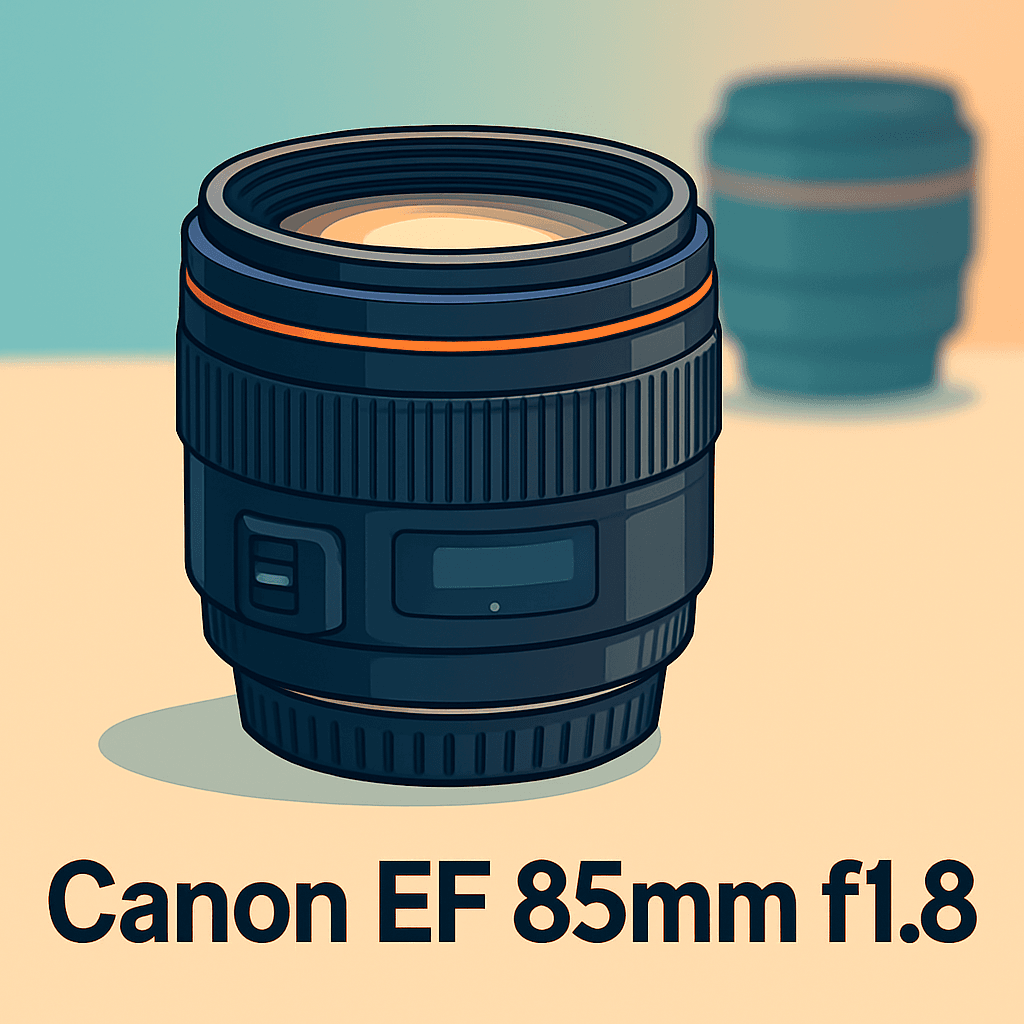
Canon EF 85mm f/1.8
Compact, fast short-telephoto ideal for portraits and low-light shooting. Smooth background separation, sharp center performance, and lightweight handling make it a go-to lens for everyday portrait work.
Check PriceThe Numbers You Need
| Spec | Value |
|---|---|
| Focal Length | 85 mm |
| Aperture | f/1.8 – f/22 |
| Lens Type | Short telephoto prime |
| Mount | Canon EF |
| Minimum Focusing Distance | 90 cm |
| Maximum Magnification | 0.13× |
| Ultrasonic Motor | Yes |
| Image Stabilization | No |
| Lens Elements | 7 |
| Lens Groups | 5 |
| Weight | Approximately 380 g |
| Dimensions | 71.5 × 58.5 mm |
| Filters | 58 mm |
| Diameter | 71.5 mm |
| Autofocus | USM (Ultrasonic Motor) |
How It’s Built
In my testing the Canon EF 85mm f/1.8 felt refreshingly small and light. It balances beautifully on both small and larger Canon bodies, so it’s easy to shoot with all day. I really liked how grab-and-go it is for events and portraits.
Autofocus uses Canon’s USM and I found it fast and quiet in normal shooting. The AF/MF switch is solid and the manual-focus ring is smooth, though a bit narrow. For beginners that means you get quick focus and simple fine-tuning when needed.
Optically it held contrast well and stood up to backlight better than I expected, but bright sun can bring flare so I keep a hood handy. One thing that could be better is the lack of image stabilization — in low light you have to raise shutter speed or ISO to avoid blur. That’s an easy trade if you move around or shoot with faster settings.
The close-focus limit keeps you from crazy tight macro-style shots, so I usually step back and reframe for tight headshots. After using it on full sessions I found the simple controls, solid AF, and light weight make it an easy lens to rely on.
In Your Hands
The Canon EF 85mm f/1.8’s USM autofocus feels eager and unobtrusive in practice, locking onto faces with a smooth, near-silent action that suits portraits and candid moments. It occasionally hunts in very low-contrast scenes but typically corrects quickly, letting you keep shooting without missing the moment.
The generous f/1.8 aperture gives real-world low-light freedom, allowing faster shutter choices and pleasing subject separation without immediately resorting to extreme ISO. Because there’s no in-lens stabilization, I relied on steady technique—bracing, a monopod, or slightly faster shutters—to preserve bite and detail in handheld captures.
In backlit and indoor tungsten environments the AF hit rate stayed high, and the lens was reliably accurate on subjects’ eyes after minimal fine-tuning on some bodies. For typical portrait workflows it was repeatable and trustworthy, delivering the kind of focus consistency you want during fast-paced sessions.
Its compact, lightweight build made long days of shooting far less fatiguing and ideal for travel or on-location work, while balance on smaller and larger Canon bodies remained comfortable. Threading common screw-in filters like ND and polarizers is straightforward and useful for controlling ambient light and reflections in environmental portraits.
The minimum-focus limit does prevent extremely tight close-ups, so I habitually stepped back, reframed, or cropped modestly to get headshots that felt natural. For three-quarter, profile, and contextual portraits that constraint rarely hindered creativity and often preserved flattering perspective.
The Good and Bad
- f/1.8 maximum aperture for shallow depth of field and low-light flexibility
- USM autofocus system
- Compact and lightweight (approximately 380 g; 71.5 x 58.5 mm)
- Common 58 mm filter thread
- No image stabilization
- Minimum focusing distance 90 cm and max magnification 0.13x limit close-up capability
Ideal Buyer
As a compact, short-tele prime the Canon EF 85mm f/1.8 delivers the classic 85mm compression and creamy subject separation without weighing you down. It’s the kind of lens you grab when you want fast apertures and foolproof handling on any EF body.
Portrait and headshot shooters will love how quickly the USM locks on eyes and how easy it is to move through a session. Event and documentary shooters will appreciate the light weight for long days on their feet. If you can accept no in-lens stabilization, the f/1.8 gives real low-light flexibility.
Street portraitists and travel photographers who prize portability and quick, uncluttered kits will find this lens ideal. The 90 cm minimum focus distance and 0.13x magnification mean it isn’t for tight product or macro-style closeups. For environmental portraits and candid work it performs beautifully.
This is a smart buy for Canon EF users building a compact prime set or a fast portrait kit without top-tier pro budgets. Professionals who require IS, closer focus, or the most luxurious rendering should consider stepping up, but many shooters will find this lens the perfect everyday 85mm.
Better Alternatives?
We’ve already walked through what the Canon EF 85mm f/1.8 does well: it’s light, easy to carry, focuses quickly with USM, and gives nice subject separation at f/1.8. But it also has limits — no image stabilization, a 90 cm close-focus limit, and it’s not the absolute sharpest 85mm you can buy.
If you find any of those limits a deal-breaker, there are a few clear alternatives to consider. Below I’ll run through lenses I’ve used in real shoots and point out what each one gives you that the Canon doesn’t, and who would prefer each option.
Alternative 1:

Sigma 85mm f/1.4 DG HSM Art Canon EF
Exceptional wide-aperture optic delivers razor-sharp detail and velvety bokeh, engineered for demanding portrait and low-light applications. Solid build and precise autofocus provide pro-level image quality and creative control.
Check PriceI’ve used the Sigma Art 85mm on studio and outdoor portrait jobs, and the first thing you notice is how much more detail and punch it gives compared with the Canon f/1.8. Wide open at f/1.4 you get a creamier, more three-dimensional subject separation and finer detail in hair and eyes. If image quality and bokeh character are your top priority, this lens is a clear step up.
Where it trades away from the Canon is size, weight, and cost. The Sigma is heavier and bulkier, so it’s less comfortable for long handheld sessions or travel. Autofocus is very good in normal light, but on some camera bodies I found it a touch slower or needed microadjustment compared to Canon’s native USM. Also, it doesn’t add stabilization, so low-light handheld shooting still needs technique or higher ISO.
Who should pick it: photographers who shoot portraits or studio work and want the best possible look from an 85mm — the painterly bokeh and extra sharpness are worth the extra weight and price if you care about image quality above portability.
Alternative 2:
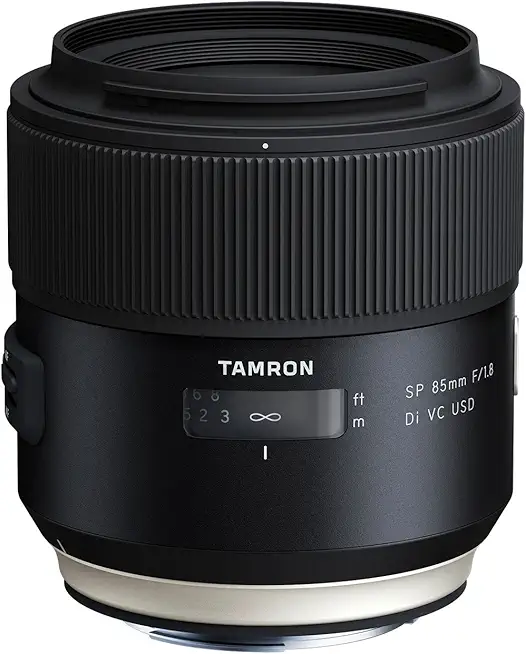
Tamron 85mm f/1.8 SP Di VC USD
Stabilized short-telephoto combines a bright aperture with vibration reduction for steady handheld portraits and events. Smooth, quiet focusing and high-resolution optics help deliver crisp images and beautiful subject isolation.
Check PriceOn location I leaned on the Tamron’s VC (vibration compensation) more than I expected — it really helps when you want to keep shutter speeds lower for natural light portraits or candlelit events. Compared to the Canon f/1.8, the Tamron gives you more usable shutter speed options handheld and a little more confidence in low light without pushing ISO through the roof.
Optically the Tamron is very competitive: sharp in the center and useful across the frame, though its bokeh feels a touch busier than the Sigma or Canon L options. It’s also heavier and larger than the Canon f/1.8, so you trade the Canon’s grab-and-go convenience for more features and a chunkier lens to carry.
Who should pick it: wedding and event shooters, or anyone who needs an 85mm that makes handheld low-light shooting easier. If you want stabilization and solid image quality for real-world work, this is a practical step up from the simple Canon f/1.8.
Alternative 3:
Tamron 85mm f/1.8 SP Di VC USD
Professional-grade portrait optic featuring effective image stabilization and a fast aperture for low-light reliability. Delivers creamy out-of-focus backgrounds, accurate color rendition, and dependable autofocus for on-location shoots.
Check PriceUsed on longer shoots, the Tamron shows its build and autofocus reliability — the focus is smooth and quiet for video and live events, and the lens feels tough enough for daily professional use. Compared with the Canon f/1.8 it feels more like a tool built for demanding schedules rather than a lightweight backup prime.
The downside versus the Canon is again weight and size, and some photographers will prefer the Canon’s simpler handling and slightly sweeter background blur for quick headshots. The Tamron’s stabilization and weather-sealing make it more versatile outdoors, but you’ll notice the penalty in your bag weight over a full day.
Who should pick it: pros and serious shooters who need a dependable, stabilized 85mm for all-day use — especially if you work events where lower shutter speeds and reliability matter more than having the smallest lens possible. If you want a single 85mm that handles a variety of real-world shoots, this is the more versatile choice over the Canon f/1.8.
What People Ask Most
Is the Canon EF 85mm f/1.8 a good portrait lens?
Yes — it’s a classic portrait prime with flattering compression, a fast f/1.8 aperture, and pleasing bokeh for tight headshots and medium portraits.
Is the Canon EF 85mm f/1.8 worth buying?
Yes — it offers excellent image quality for the price, making it one of the best value choices for portrait and low-light work.
How sharp is the Canon EF 85mm f/1.8?
Very sharp in the center at f/1.8 and even sharper stopped down, though corners on full-frame can be a bit softer wide open.
Is the Canon EF 85mm f/1.8 compatible with Canon mirrorless cameras (EOS R) or usable with an adapter?
Yes — it works on EOS R bodies with Canon’s EF‑EOS R adapter and retains autofocus and image quality.
Can the Canon EF 85mm f/1.8 be used on APS-C cameras and what is the crop equivalent?
Yes — on Canon APS‑C bodies it gives an equivalent field of view of about 136mm (85mm × 1.6), good for tighter portraits and headshots.
How does the Canon EF 85mm f/1.8 compare to the Canon EF 85mm f/1.4 or f/1.2?
The f/1.8 is smaller, lighter, and much cheaper with similar sharpness, but the f/1.4 and f/1.2 give smoother, creamier bokeh and stronger low-light/background separation.
Conclusion
The Canon EF 85mm f/1.8 proved itself as a compact, fast portrait lens — the f/1.8 aperture and USM autofocus let me isolate subjects and lock onto eyes quickly, even in dim venues. Its portability and rendering make it a go-to for grab-and-go assignments, but the absence of image stabilization and the 90 cm minimum focus distance limit very tight close-ups and ultra-slow handheld shooting.
If you prioritize lightweight handling, quick AF, and classic 85mm subject separation, this lens delivers exceptional value for photographers building a nimble EF kit. For studio work, extreme resolution seekers, or shooters who need in-lens stabilization and closer focusing, stepping up to an L-series or stabilized third-party 85mm will address those gaps. In short, it does exactly what it promises—clean, fast portrait work without pretense.
Buy it now if you want an affordable, reliable 85mm that travels well and makes portraits sing; skip it and save if your brief demands top-tier optics or built-in stabilization. Either way, it earns a permanent slot on bodies where mobility and classic rendering matter most. For many pros and enthusiasts this is the smart, pragmatic 85mm to own.
Canon EF 85mm f/1.8
Compact, fast short-telephoto ideal for portraits and low-light shooting. Smooth background separation, sharp center performance, and lightweight handling make it a go-to lens for everyday portrait work.
Check Price



0 Comments