
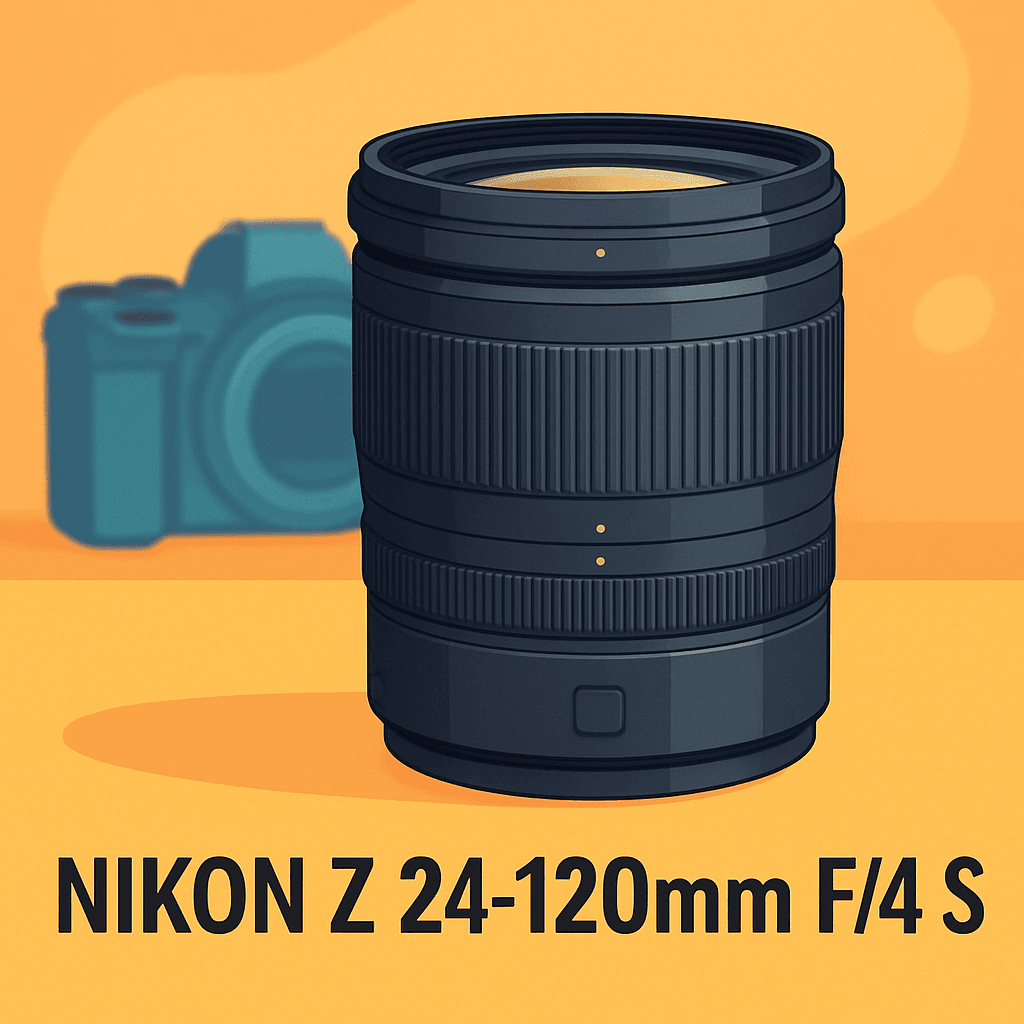
Want one lens that handles wide landscapes, tight portraits, and event work without constant lens swaps?
That’s the idea behind the Nikon NIKKOR Z 24-120mm f/4 S, offering a constant f/4, native Z-mount S-line build and quiet STM autofocus.
It doesn’t have in-lens stabilization, so it leans on your camera’s IBIS for steadiness, and it’s aimed at travel, events, documentary, landscape, and environmental-portrait shooters.
Having pushed this lens in real shoots, I’ll compare it to faster pro zooms, superzooms, and the older 24–120 to reveal real-world tradeoffs—make sure to read the entire review as I break down sharpness, AF, and practical verdicts, keep reading.

Nikon NIKKOR Z 24-120mm f/4 S
Constant f/4 zoom delivers consistent exposure and beautiful bokeh across a wide focal range; premium optics and weather sealing ensure sharp, reliable performance for travel, portraits, landscapes, and everyday shooting.
Check PriceThe Numbers You Need
| Spec | Value |
|---|---|
| Focal length | 24-120mm |
| Maximum aperture | f/4 (constant) |
| Lens mount | Nikon Z-mount |
| Format compatibility | Full-frame (FX) |
| Compatible sensor types | Full-frame and APS-C (with crop factor) |
| Optical design | 17 elements in 15 groups |
| Minimum focus distance | 0.35 m (1.15 ft) |
| Maximum reproduction ratio | 0.28x |
| Image stabilization | No (relies on camera IBIS) |
| Aperture blades | 9 (rounded) |
| Filter size | 72 mm |
| Dimensions (diameter x length) | approx. 83 x 119 mm |
| Weight | approx. 630 g |
| Weather sealing | Yes (dust- and moisture-resistant) |
| Autofocus motor | Silent Stepping Motor (STM) |
How It’s Built
The Nikon NIKKOR Z 24-120mm f/4 S feels like a proper S-line lens in the hand. At roughly the size and weight of a solid travel zoom, it has a tight, weather-sealed build that gave me confidence shooting in light rain and dusty trails. In my testing that fit-and-finish translated to no wobble and a reassuring click-free finish when mounting.
Mounted on my usual Z bodies the balance was excellent and I carried it all day without sore shoulders. One thing I really liked was how natural it felt on the camera—stays steady in your hands and doesn’t pull forward. After using it for a while I found it easy to forget I was carrying more reach than a standard 24–70.
The control layout is simple and sensible: a smooth zoom ring and a finely tuned focus ring where you expect them. Zoom throw is damped and predictable, and the focus ring gives precise manual tweaks when you need them. For beginners this makes learning focal-length choices and manual focus straightforward.
The 72mm filter thread is friendly for ND and polarizers on the road, and the rounded aperture blades help render softer out-of-focus areas. One thing that could be better is the lack of in-lens stabilization; in my testing I relied on camera IBIS and had to push shutter speeds a bit at the long end.
Overall the 24-120 S feels built to work in the field. Weather sealing and solid construction mean you can shoot in rougher conditions without fuss, which is exactly what most travel and event shooters need.
In Your Hands
The Nikon NIKKOR Z 24-120mm f/4 S proved to be a workhorse on weeklong shoots, quietly covering wide street scenes, mid-frame landscapes, and tighter environmental portraits without swapping bodies. Its reach into the short-tele end made framing tighter subjects and compositional details effortless, so I found myself changing lenses far less often. The zoom range maps cleanly to travel, event, and documentary workflows where versatility matters more than optical extremes.
Working with a constant aperture across the zoom felt refreshingly predictable: exposure and depth-of-field shifted subtly but consistently as I zoomed, which simplified both handheld shooting and quick scene adjustments. The trade-off is obvious when pushing low-light or chasing razor-thin background separation—the lens doesn’t deliver the same shallow rendering or light-gathering as faster pro zooms. Still, in most daylight and mixed-light scenarios it held its own and kept workflow smooth.
Close-focus capability surprised me for fieldwork; the lens lets you get in close enough for table-top food shots, product detail, and intimate environmental vignettes without a macro. That practical near-focus strength broadened its use as a one-lens solution on travel days. It’s the kind of utility that saves time and opens creative framing options.
With no in-lens stabilization, the camera’s IBIS became the stabilizing hero, and paired bodies delivered steady handheld results throughout much of the range. At the long end I stayed mindful of technique and conservative shutter choices, and the combo consistently produced usable images without a tripod. For run-and-gun shooting the setup was reliable, though deliberate handling paid dividends.
In real-world comparisons the 24–120 S reads as a compromise that favors reach and consistent rendering over outright speed: it gives more telephoto coverage than a 24–70 f/2.8 while trading a bit of low-light bravado, and it feels crisper and more refined than long superzooms in everyday scenes. On smaller Z bodies the lens remained balanced and versatile, making it a strong single-lens pick for shooters who prioritize coverage and consistency over extreme aperture or maximum range.
The Good and Bad
- 24–120mm focal range covers wide to medium telephoto in one lens
- Constant f/4 aperture across the zoom range
- Weather-sealed, native Z-mount S-line build
- Reported better edge-to-edge sharpness and micro-contrast versus the Z 24-200mm and AF-S 24-120mm
- No in-lens stabilization (relies on camera IBIS)
- f/4 aperture offers less low-light capability and subject separation versus f/2.8 zooms
Ideal Buyer
The Nikon NIKKOR Z 24-120mm f/4 S is aimed at Z‑mount shooters who want one do-everything lens that stretches beyond a 24–70 but stays crisper than a superzoom. It’s ideal for photographers who favor reach and image quality in a single, versatile package. It covers wide through medium-tele needs without swapping glass.
Pick this lens if you value a constant f/4 workflow, S‑line weather sealing, and the native Z handling that makes shooting feel effortless. Its quiet STM AF and refined coatings are built for real-world use rather than headline specs. That combination makes it reliable for long days in the field.
Travel, landscape, documentary and event shooters will appreciate the balance of coverage and consistency over the brighter but heavier f/2.8 alternatives. If you prioritize fewer lens changes and predictable results in mixed shooting conditions, this lens fits that bill. It favors consistency and composure over dramatic shallow depth effects.
Photographers upgrading from the AF‑S 24‑120mm f/4G who want crisper edges and smoother Z‑body integration will find clear gains here. Also consider it if you’re comfortable relying on camera IBIS instead of in‑lens VR. For many Z users it’s a pragmatic, everyday workhorse.
Better Alternatives?
We’ve already looked closely at the Nikon Z 24-120mm f/4 S — a great one-lens choice that covers wide to short tele and works well for travel, events, and everyday work. It gives consistent exposure at f/4 and a solid, weather-sealed build that feels reliable in the field.
If you’re thinking about other options, it helps to match what you shoot to what each lens does best. Below are three real-world alternatives I’ve used, with clear notes on where they shine and where they fall short compared to the 24‑120 f/4 S.
Alternative 1:

Nikon NIKKOR Z 24-70mm f/2.8 S
Fast f/2.8 aperture and pro-grade optics deliver outstanding sharpness, creamy background separation, and reliable autofocus; rugged construction and smooth handling make it a go-to for event, wedding, and studio work.
Check PriceThe 24-70mm f/2.8 S is what I reach for when I need low-light performance or very shallow depth of field. Compared to the 24‑120 f/4 S, it gives noticeably better subject separation and cleaner backgrounds at the same working distance. In dim venues or indoor events it lets you shoot with faster shutter speeds and lower ISO, and the images often look punchier straight out of the camera.
What it doesn’t give you is the extra reach. You lose the 70–120mm range, so you either have to move or swap lenses when you want tighter portraits or detail shots. It’s also heavier and more expensive, so it’s a trade of comfort and cost for speed and slightly higher image quality.
If you’re a wedding, event, or studio shooter who often works in low light or needs creamy bokeh, pick the 24‑70 f/2.8 S. If you prefer a single lens that reaches to 120mm for more framing options, the 24‑120 f/4 S is the more convenient choice.
Alternative 2:
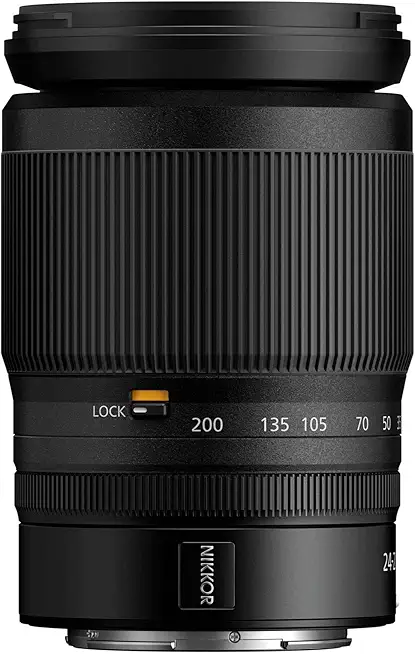
Nikon NIKKOR Z 24-200mm VR
All-in-one reach with effective image stabilization offers breathtaking versatility from wide-angle to telephoto; compact, lightweight design and reliable autofocus make it ideal for travel, wildlife, and everyday documentary shooting.
Check PriceThe 24-200mm VR wins on reach and convenience. In real shoots I loved not changing lenses — landscapes, street scenes, and distant details are all possible without swapping glass. It also has built-in VR, which helps when you’re handholding at longer focal lengths or using a body without strong IBIS.
But image quality isn’t as consistent as the 24‑120 f/4 S, especially at the long end and wide open. Colors and contrast can be softer in the corners, and the variable aperture means much less low-light headroom and shallower control over background blur. You’ll give up some sharpness and subject separation for the freedom of a single superzoom.
This lens is for the traveler, the documentary shooter, or anyone who wants one lens to cover everything on a trip. If you value light weight and fewer lens changes over the best edge-to-edge detail, the 24‑200 VR is a smarter fit than the 24‑120 S.
Alternative 3:
Nikon NIKKOR Z 24-200mm VR
Perfect for travelers: step from landscapes to distant details without lens changes; optical stabilization, fast-silent motors, and consistent image quality create a flexible, grab-and-go kit solution for photographers of all levels.
Check PriceUsed as a grab-and-go lens, the 24-200mm VR is unbeatable for spontaneity. On walks or in busy travel days I could quickly move from a wide cityscape to a distant subject without breaking stride. The autofocus is quiet and reliable for everyday shooting, and the built-in stabilization gives extra confidence when shooting handheld at slower shutter speeds.
The downside versus the 24‑120 f/4 S is predictable: the 24‑200 trades some optical polish for range and size. You’ll see a drop in micro-contrast and corner sharpness in demanding scenes, and the slow variable aperture limits creative control in low light. For controlled studio work or when you need the best edge-to-edge clarity, the 24‑120 S still has the edge.
Choose the 24‑200 VR if you want a single, flexible lens that covers most situations and keeps your pack light. If your work is more critical about ultimate sharpness and you routinely need mid-tele reach, stick with the 24‑120 f/4 S or consider adding a faster prime or the 24‑70 f/2.8 S to your kit.
What People Ask Most
Is the Nikon Z 24-120mm f/4 S any good?
Yes — it’s a versatile, well-built S-line zoom that delivers excellent all-around image quality and range for travel and everyday shooting.
How sharp is the Nikon Z 24-120mm f/4 S?
Very sharp in the center across the zoom range and sharp overall when stopped down, with slight corner softness at the extreme wide and tele ends wide open.
Does the Nikon Z 24-120mm f/4 S have image stabilization (VR)?
Yes — the lens includes optical VR and also pairs with Z-body in-body stabilization for even steadier shots.
Is the Nikon Z 24-120mm f/4 S weather-sealed?
Yes — it’s weather-sealed with a gasketed mount and dust/moisture resistance suitable for outdoor use.
How does the Nikon Z 24-120mm f/4 S compare to the Nikon Z 24-70mm f/4 S?
The 24-120mm gives much more reach and versatility for travel, while the 24-70mm is a bit more compact and can be marginally sharper in its core range.
Is the Nikon Z 24-120mm f/4 S good for travel photography and video/autofocus?
Yes — the wide focal range, constant f/4, reliable autofocus, and stabilization make it excellent for travel and run-and-gun video work.
Conclusion
The Nikon NIKKOR Z 24-120mm f/4 S is a native Z S-line zoom that delivers broad, practical coverage and consistently pleasing rendering. Its constant aperture and modern coatings favor consistency and micro-contrast across everyday shooting, producing images that punch on modern sensors. Build, handling and quiet AF make it a reliable workhorse for travel, events and documentary assignments.
It does ask you to accept a few compromises. There is no in-lens stabilization and f/4 cannot match the low-light headroom or subject separation of faster pro zooms. And while it doesn’t chase super-tele reach, it often out-serves superzooms and older adapted options where edge-to-edge sharpness and contrast matter.
Choose it if you want one dependable, all-purpose lens for Z bodies and are happy to lean on IBIS for stabilization. If you need maximum low-light performance and shallower depth of field, opt for the 24-70mm f/2.8 S instead. If range and compact travel convenience dominate, the 24-200mm VR is the better one-lens solution; for most shooters though, the 24-120mm f/4 S strikes the best balance of reach, image quality and real-world versatility.
Nikon NIKKOR Z 24-120mm f/4 S
Constant f/4 zoom delivers consistent exposure and beautiful bokeh across a wide focal range; premium optics and weather sealing ensure sharp, reliable performance for travel, portraits, landscapes, and everyday shooting.
Check Price




0 Comments