
Want to make your landscapes, interiors, and night skies look more dramatic and technically clean? If you’re hunting an ultra-wide pro lens that can change your framing, this review will help you decide.
The Nikon Z 14-24mm f/2.8 S is Nikon’s ultra-wide, constant f/2.8 zoom for Z full-frame bodies, aimed at landscape, architecture, interior, and astro work. After taking it into the field across coastlines and city blocks, I’ve seen why shooters are curious about it.
Expect real-world payoffs like strong sharpness, low distortion, weather sealing, support for 112mm front filters, and protective coatings, though there’s no in-lens stabilization to rely on. Make sure to read the entire review as I break down how it performs in practice and against rivals — keep reading.

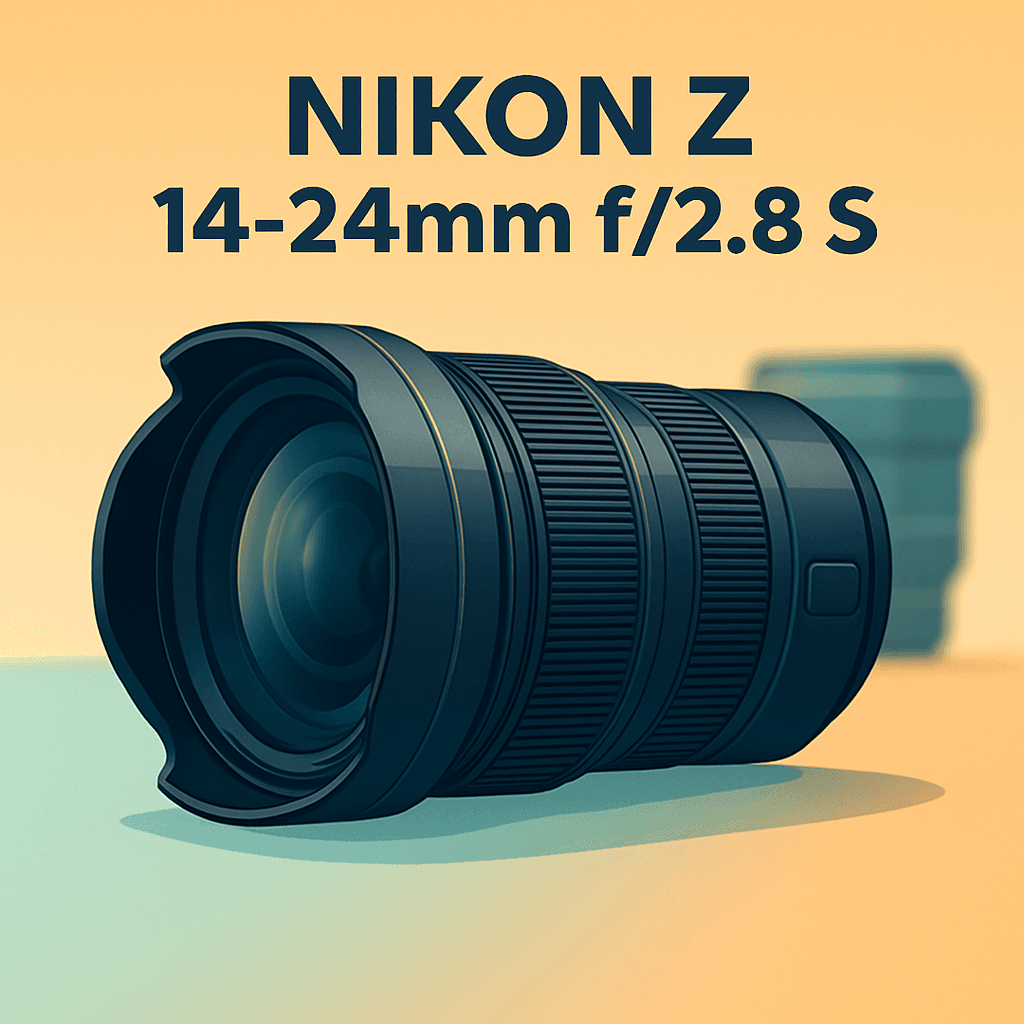
Nikon Z 14-24mm f/2.8 S
Ultra-wide pro-grade lens delivering stunning edge-to-edge sharpness and consistent f/2.8 brightness for landscapes, interiors, and night skies. Superior coatings minimize flare while maintaining accurate color and contrast.
Check PriceThe Numbers You Need
| Spec | Value |
|---|---|
| Lens Type | Ultra-wide constant f/2.8 zoom |
| Focal Length | 14-24mm |
| Format | Full-frame |
| Compatibility | Nikon Z mount |
| Aperture | f/2.8 (constant) |
| Weather Sealing | Yes |
| Optical Performance | High sharpness; low distortion |
| Purpose | Landscapes, architecture, interiors, astrophotography |
| Elements/Groups | 16 elements in 11 groups |
| Ergonomics | Designed for comfort and functionality |
| Special Features | Nano Crystal Coat; fluorine coating |
| Filters | Supports standard 112mm filters |
| Lens Hood | Includes lens hood |
| Optical Stabilization | None |
| Manual Focus Override | Yes |
How It’s Built
In my testing the Nikon Z 14-24mm f/2.8 S feels like a pro-grade tool the moment you pick it up. It balances nicely on Z bodies, so long hikes or long shoots don’t make your shoulder hate you. The weather sealing gave me confidence shooting in drizzle and dusty coastal wind without worrying about the gear.
One thing I really liked was how the coatings and hood work together to keep contrast up and stray flare down. The front element stays easier to clean in the field, and the hood fits snugly for real protection. For everyday landscape or interior work that means fewer ruined frames and less time wiping glass.
Manual-focus override is a joy for critical work. In my hands the focus ring is smooth and predictable, which helped lock focus on tiny stars or fine architectural details. That tactile control makes night and interior shoots less fiddly for beginners learning to focus manually.
If there’s a gripe it’s the lack of in-lens stabilization. That means you’ll reach for a tripod more often or rely on a body with stabilization for handheld low-light or video. In practice it’s an easy trade-off if you value the build, coatings, and overall handling, but it’s worth knowing up front.
In Your Hands
In the field, the Nikon Z 14-24mm f/2.8 S renders scenes with a pleasing blend of resolution and controlled geometry. Edge-to-edge clarity keeps architectural lines honest and sweeping vistas punchy, while restrained distortion makes framing feel intuitive. The constant f/2.8 aperture brings usable low-light flexibility and subject separation in interiors and night scenes.
Autofocus is confident, and the tactile manual-focus override lets you refine focus when it matters most. The lens balances well on Z bodies and its controls fall naturally under the hand, so long days shooting panoramas or interiors fatigue less. Weather sealing means you can keep working through light rain or dust without worry.
On landscapes it excels for foreground-to-horizon compositions, and full filter compatibility helps shape exposures without compromising the frame. For architecture and interiors, the wide perspective and low distortion let straight lines stay straight and tight rooms feel open. That consistency across the zoom reduces surprises in post.
At night the lens’s brightness and resolving power gather stars cleanly and let you include foreground with a wide sweep of sky. Without optical stabilization handheld low-light shooting is more demanding, so I rely on support, faster shutter choices, or in-body stabilization when available. Paired with good technique this lens delivers the calm, reliable performance professionals need.
The Good and Bad
- Ultra-wide 14–24mm range on full-frame
- Constant f/2.8 aperture
- High sharpness
- Low distortion
- No optical stabilization
- Large 112mm filters required
Ideal Buyer
The Nikon Z 14-24mm f/2.8 S is aimed squarely at Nikon Z full-frame shooters who make their living—or feed their passion—on extreme wide-angle work. Landscapers, architects, interior photographers and night-sky shooters will instantly feel at home with its field of view.
Its pro-level strengths are obvious: edge-to-edge sharpness and very low distortion that preserve straight lines and fine texture, plus a constant f/2.8 for low-light flexibility and creative control. Weather sealing and robust ergonomics mean you can haul it through rain, cold and long days without second-guessing. Support for standard 112mm front filters makes graduated NDs and polarizers part of a practical landscape workflow.
For astrophotographers the wide 14–24mm range and fast aperture let you frame expansive starfields and keep pinpoint stars to the edges when focused carefully. For interiors and architecture the lens’s geometry minimizes converging lines so you spend less time correcting perspective in post. Do note there’s no in-lens stabilization, so plan on a tripod or rely on body IBIS and faster shutter speeds for handheld work.
If you need built-in optical stabilization or shoot on non‑Z mounts, this probably isn’t the right fit. Otherwise, if you want one ultra-wide that prioritizes optical performance, durability and filter workflows, it’s an easy professional pick.
Better Alternatives?
We’ve gone over the Nikon Z 14-24mm f/2.8 S in detail — what makes it sharp, why landscape and architecture shooters love it, and the trade-offs like no in-lens stabilization and a big 112mm filter thread. That lens is a strong, reliable choice for Nikon Z users who want top optical quality and a tough, weather-sealed build.
If you’re still deciding, there are a few solid alternatives that trade some of Nikon’s strengths for other real-world benefits: lower price, extra wide angle, or different system features. Below are three lenses I’ve used in the field that are worth considering depending on your priorities and camera system.
Alternative 1:

Sigma 14-24mm f/2.8 DG DN Art L
High-resolution ultra-wide zoom crafted for mirrorless shooters, marrying fast f/2.8 performance with smooth rendering, robust build, and precise autofocus—perfect for dramatic landscapes, architecture, and low-light creative shooting.
Check PriceThe Sigma 14-24mm f/2.8 DG DN Art gives you almost the same sharp look as the Nikon in the center and it’s usually a lot cheaper. In my field use it delivered punchy detail for landscapes and did very well on night sky shots — you get great images without paying the higher S-line price.
Compared to the Nikon, Sigma skips some of the little refinements: handling and fit don’t feel quite as tailored on a Nikon Z body, and very wide open the extreme corners can be a touch less controlled. On the plus side, its design and filter options are friendlier for some workflows, and autofocus on native Sony/L bodies is fast and reliable.
If you want Nikon-like image quality but at better value, or you shoot on Sony or L-mount cameras, the Sigma is a smart pick. It’s the lens I’d recommend to photographers who care about image results first and want to save money, or to anyone who needs a tool that performs well without the premium price tag. From here, if you want even more ultra-wide reach, look at the next option.
Alternative 2:

Sony FE 12-24mm f/2.8 G Master
Exceptional ultra-wide optic engineered to deliver razor-sharp detail across the frame at f/2.8, while offering reliable autofocus, weather sealing, and immaculate control of coma and chromatic aberration for night scenes.
Check PriceThe Sony FE 12-24mm f/2.8 GM goes wider than the Nikon and the effect is obvious in the field — interiors feel bigger and landscapes gain a dramatic foreground-to-sky sweep. I used it for tight rooms and wide nightscapes where that extra 2mm made composition easier and more dramatic.
Where it beats the Nikon is in sheer width and very strong edge-to-edge performance when stopped down, and on Sony bodies the autofocus and handling feel completely native and locked-in. What it doesn’t give you is the Nikon’s easy 112mm front filter workflow — the curved front element means you work with rear gels or special holders, and the lens is heavier and pricier too.
This Sony is the one to pick if you shoot on Sony bodies and want the widest possible look with top glass and rock-solid AF. If you prize convenience with big front filters or you stay inside the Nikon system, the Z 14-24 will still make more sense — but for Sony shooters chasing drama and ultimate coverage, this GM is hard to beat. Next, a slightly different take on the same Sony lens for pros who need consistent edge clarity.
Alternative 3:
Sony FE 12-24mm f/2.8 G Master
Versatile ultra-wide zoom providing spectacular edge clarity and creamy depth even at wide apertures; built for demanding professionals seeking precise optics, fast focusing, and dependable performance in challenging environments.
Check PriceUsed in longer sessions, the 12-24 GM shows itself as a very dependable pro tool — contrast and micro-detail hold up even at f/2.8, and the lens handles difficult light with minimal stray flare. For astrophotography I found the coma and star shape to be well controlled, and for landscape work the edges stay usable without heavy correction.
Against the Nikon Z 14-24 S, the Sony gives you a wider field and a slightly different character — a bit punchier at the edges when you stop down, but more cumbersome for filter-based landscape workflows. It’s also heavier and leans more toward a pro budget, so you trade Nikon’s easier filter support and slightly lighter handling for extreme width and very even image quality on Sony bodies.
Pick this version of the 12-24mm GM if you’re a pro on Sony who needs consistent edge clarity and fast, predictable autofocus for demanding shoots or night work. If you’re a Nikon shooter who wants simple filter use and a lens tuned for the Z system, stick with the Nikon 14-24mm S — but for Sony users wanting the widest, most reliable ultra-wide, this is a top choice.
What People Ask Most
Is the Nikon Z 14-24mm f/2.8 S worth buying?
If you need a top-tier ultra-wide for landscapes, architecture, or astro, yes — it’s optically outstanding though expensive and a bit heavy, so skip it if you don’t need pro-level performance.
How sharp is the Nikon Z 14-24mm f/2.8 S across the frame?
Very sharp in the center wide open, with edges improving noticeably when stopped to f/4–f/5.6, giving excellent overall uniformity for the class.
Is the Nikon Z 14-24mm f/2.8 S weather-sealed and durable?
Yes — it has a robust metal build and comprehensive weather sealing for field work, but avoid prolonged exposure to saltwater and heavy immersion.
Does the Nikon Z 14-24mm f/2.8 S accept front filters or filter holders?
It has a bulbous front element so no standard screw-in filter; use the rear filter slot or compatible clip-on/adapter systems from Nikon and third parties.
Is the Nikon Z 14-24mm f/2.8 S good for astrophotography?
Yes — the fast f/2.8 aperture and strong coma control make it excellent for Milky Way and night-sky work, especially when stopped slightly for the corners.
Is the autofocus on the Nikon Z 14-24mm f/2.8 S fast and reliable for video?
Yes — AF is fast, smooth and quiet on Z bodies, making it very reliable for run-and-gun video and smooth focus transitions.
Conclusion
The Nikon Z 14-24mm f/2.8 S is an ultra-wide, constant-aperture zoom that delivers the kind of edge-to-edge sharpness and restrained distortion pro shooters demand. Its optical pedigree and advanced coatings translate to contrasty, reliable images in challenging light. Built with weather sealing and professional ergonomics, it feels like a tool you can trust on long assignments.
It’s not without compromises. Nikon chose not to include optical stabilization, so handheld low-light work and run-and-gun video require either a stabilized body or solid support. The lens also invites logistical thinking with substantial front glass and a native mount that ties it to the Z ecosystem.
For landscape, architecture, interiors, and astrophotography specialists, the lens is a compelling and often decisive choice. It rewards photographers who prioritize frame-filling detail, straight lines, and expansive perspectives over the convenience of smaller, lighter walkaround glass. If ultra-wide rendering is central to your work on Z bodies, this lens pays back its cost in image quality.
In short, the Nikon Z 14-24mm f/2.8 S is a professional-grade, purpose-built optic that favors optical performance and reliability over marginal conveniences. Expect to adapt your kit—tripod, filter strategy, or stabilized bodies—but those are small trade-offs for consistently outstanding results. For committed Nikon Z shooters who make ultra-wide perspectives a core part of their work, I recommend it without hesitation.
Nikon Z 14-24mm f/2.8 S
Ultra-wide pro-grade lens delivering stunning edge-to-edge sharpness and consistent f/2.8 brightness for landscapes, interiors, and night skies. Superior coatings minimize flare while maintaining accurate color and contrast.
Check Price

0 Comments