
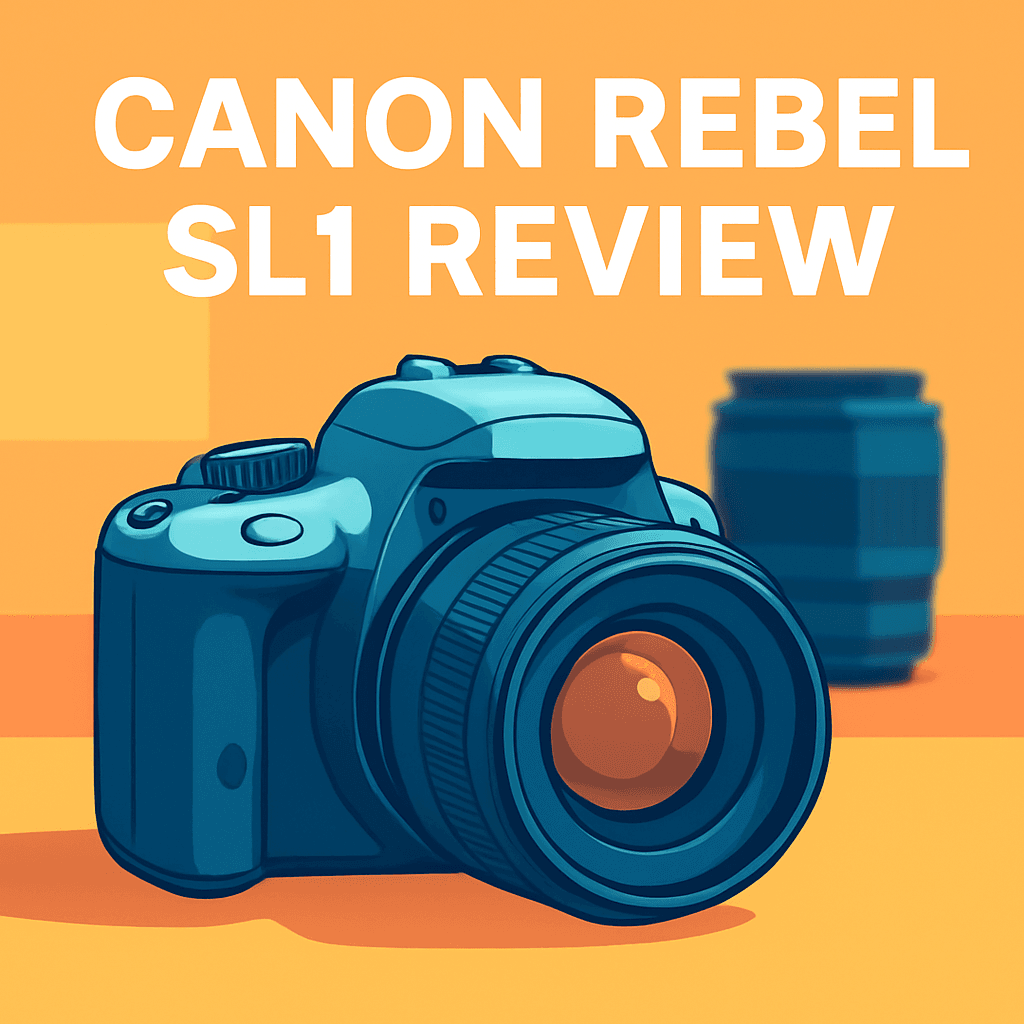
Want DSLR image quality without lugging a big camera?
Could the Canon EOS Rebel SL1 Camera be the small, practical choice for everyday shooters?
I field-tested the Canon EOS Rebel SL1 Camera on trips and family shoots to judge real-world payoff.
It’s aimed at beginners and casual shooters who want an optical viewfinder, easy handling, and true portability.
I’ll focus on the practical trade-offs—image quality versus higher-resolution rivals, autofocus for everyday stills, battery life, screen usability, and mobile workflow.
Make sure to read the entire review as I break down where the SL1 shines and where you might want a different camera—keep reading.

Canon EOS Rebel SL1 Camera
Ultra-compact DSLR designed for creators who prioritize portability. Delivers sharp images, responsive autofocus, intuitive controls, and versatile lens compatibility—ideal for travel, everyday shooting, and budding photogs.
Check PriceThe Numbers You Need
| Spec | Value |
|---|---|
| Sensor | 18 MP APS-C |
| Lens Mount | EF / EF-S |
| Weight | Approximately 370 g |
| Dimensions | 116 × 87 × 69 mm |
| Viewfinder | Optical (0.87x magnification) |
| LCD Screen | 3.0″ — approx. 1 million dots |
| ISO Range | 100–12800 (expandable to 25600) |
| Shutter Speed | 1/4000s to 30s |
| Continuous Shooting | 4 fps |
| Video Resolution | 1080p at 30 fps |
| Memory Cards | SD / SDHC / SDXC |
| Battery Life | Approximately 380 shots |
| Image Stabilization | No in-body stabilization (lens dependent) |
| Autofocus Points | 9 AF points |
| Connection | USB 2.0, HDMI |
How It’s Built
In my testing the Canon EOS Rebel SL1 surprised me with how small and light it feels in hand. That tiny footprint makes it easy to toss in a day bag and actually bring along, which means more shots and fewer missed moments. What I really liked was how its size encourages daily use without feeling like a compromise.
After using it for a while I appreciated the access to Canon’s wide range of lenses. The trade-off is that the camera itself doesn’t stabilize the image, so you rely on lenses for shake control. For real-world shooting that means picking the right lens becomes more important than with cameras that have built-in stabilization.
The optical viewfinder is honest and easy to look through during quick shoots. I found it plenty clear for composing, though people who wear glasses might notice it feels a bit snug at times. Using the viewfinder makes handheld shooting feel natural and steady.
The fixed, non-touch LCD is sharp enough for reviewing photos but it slows down menu navigation and focus placement compared with touch screens. I often missed the quick tap-to-focus convenience you get on newer cameras and phones. Still, the screen does the job for checking framing and exposure.
On connections the camera uses removable memory cards and has ports for linking to other gear, but transfers aren’t as seamless as wireless options. Battery life is fine for a day of casual shooting, though I recommend a spare for long outings. Overall the finish feels solid and well put together for such a compact body.
In Your Hands
The SL1’s autofocus is straightforward and concentrated toward the center, which suits portraits and deliberate compositions but means you’ll often recompose for off-center subjects. It locks quickly in good light, yet hunting becomes more common as conditions dim or contrast falls.
Continuous shooting is deliberately modest, allowing you to capture brief bursts of kids or playful pets but not sustained action sequences. The camera encourages timing and anticipation over a rapid-fire shooting style.
Shutter options cover typical daylight work and basic long-exposure creativity without fuss, though very bright conditions or ultra-wide apertures may require care or filtering. High-sensitivity performance is perfectly serviceable for social sharing and family prints, while critical large-format work benefits from keeping exposures in cleaner ranges.
Video recording is clean and uncomplicated, ideal for travel clips and home movies, but it lacks advanced frame-rate choices and in-body stabilization so handheld footage can feel limited. Live-view autofocus is noticeably slower than contemporary mirrorless offerings, so the optical viewfinder remains the most reliable route for decisive stills.
Without built-in wireless, your workflow relies on card readers or wired transfers, which slows spontaneous mobile sharing and remote control options. Battery life is average for such a compact body—plan a spare for day-long outings to avoid missing moments.
The Good and Bad
- Ultra-compact and light for a DSLR, easy to carry daily
- EF/EF-S lens compatibility; broad system and lens-based IS options
- Optical viewfinder shooting experience
- 3″ ~1M-dot screen offers clear review
- Straightforward stills camera with 1080/30p for casual video
- 9-point AF is basic; limited coverage for off-center subjects
- 4 fps burst is modest for action
- 1080/30p only; no advanced video features
- No in-body image stabilization
- No built-in wireless; relies on USB 2.0 or card removal for transfers
- Fixed, non-touch screen limits flexibility and ease of focus control
- Battery life (~380 shots) is average and trails some rivals
- Live view/video AF is slow versus modern standards
Ideal Buyer
The Canon EOS Rebel SL1 is ideal for beginners and casual shooters who crave the tactile pleasure of a true DSLR without the bulk. Its tiny 370g footprint, optical viewfinder and physical controls make photography feel intentional and immediate. For someone upgrading from a phone or compact camera, it’s an easy, confidence-building step into interchangeable-lens photography.
Think travel, weekend family outings, and portraits in good light where portability often beats megapixels. The SL1 shines when you want to grab-and-go, slip it into a small bag, and not miss a moment, while choosing lenses with stabilization covers low-light compromises. It’s also a smart pick for learners exploring the vast EF/EF‑S lens ecosystem without committing to a larger system.
Skip the SL1 if your work demands fast action autofocus, long continuous shooting or advanced video codecs and 4K. Likewise, if seamless smartphone tethering, Bluetooth/Wi‑Fi control and all-day battery life are must-haves, a newer entry-level DSLR or mirrorless camera such as the D3500, T7 or a D5600 will serve you better. The SL1’s strengths are size and simplicity, not state-of-the-art speed, connectivity or extended runtime.
Better Alternatives?
We’ve already looked closely at the Canon EOS Rebel SL1 Camera — its tiny size, simple controls, and the trade-offs that come with being one of the smallest DSLRs around. If the SL1’s pocketable body and straightforward shooting are what you wanted, it’s a great pick. But some photographers want more resolution, longer battery life, or easier phone sharing.
Below are a few models I’ve used in real life that change those trade-offs. Each one gives up a bit of the SL1’s tiny footprint for gains in other areas. I’ll point out what each does better, where it falls short compared to the SL1, and what kind of buyer will like it.
Alternative 1:

Nikon D3500 Camera
Entry-level DSLR offering impressive image quality and exceptional battery life. User-friendly guide modes, fast performance, and comfortable grip make it a perfect companion for learners and hobbyists.
Check PriceI’ve shot with the Nikon D3500 on trips and family days out. Compared to the Canon EOS Rebel SL1 Camera, the D3500 gives you more pixels and noticeably longer battery life. That means you can crop more and go all day shooting without swapping batteries — handy on long outings when you want extra detail for prints or tight crops.
Where it loses to the SL1 is size. The D3500 is bigger and sits more comfortably in a hand, but it won’t disappear into a small bag the way the SL1 does. Also, live-view autofocus is still slow on the D3500, so if you rely on quick touchscreen focusing for video or awkward angles, you’ll feel the same limits you do with the SL1.
Pick the D3500 if you want better image detail and real all-day battery life and you don’t need the smallest possible DSLR. It’s a good choice for beginners who shoot lots of stills, travel photographers who want extra cropping room, or anyone with larger hands who found the SL1 too fiddly.
Alternative 2:
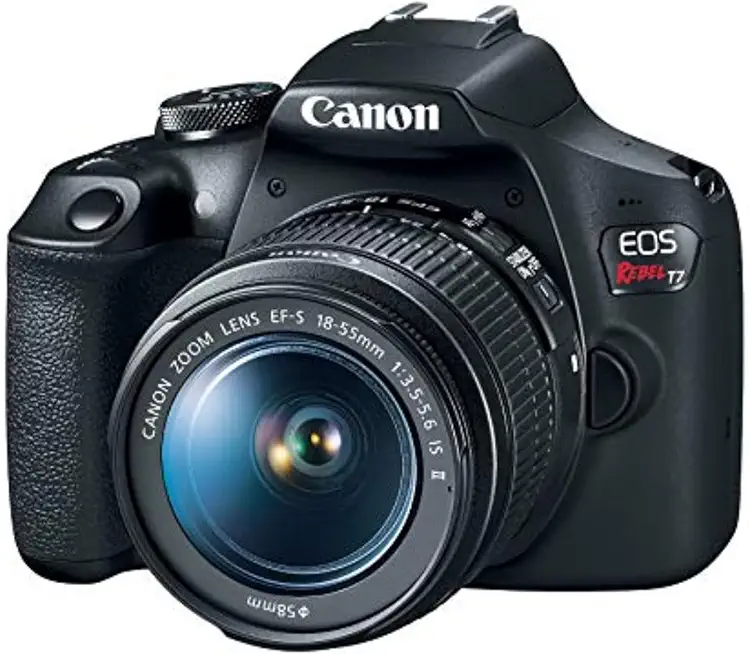
Canon EOS Rebel T7 Camera
Reliable beginner DSLR with clear image detail and easy-to-navigate menus. Built for everyday photography, it combines solid autofocus, dependable shooting speeds, and simple connectivity for sharing memories.
Check PriceThe Canon EOS Rebel T7 is the most straightforward step up if you like Canon color and menus but want more resolution and phone connectivity than the SL1. In everyday shooting the T7’s higher megapixel count gives you sharper-looking JPEGs and a bit more room to crop, and its built-in Wi‑Fi/NFC makes sending shots to your phone much easier than the SL1’s card or USB shuffle.
On the downside, the T7 is not smaller than the SL1 — it’s a more conventional starter DSLR. You lose the SL1’s ultra-compact charm. Also, autofocus and burst speed feel similar in real shooting: neither camera is built for fast action. Video and live-view AF remain basic compared to modern mirrorless bodies.
This one is for budget-minded shooters who want a familiar Canon feel but need higher image size and easy sharing to a phone. If you’re mostly doing family photos, social sharing, and travel shots and don’t need the tiniest body, the T7 is a sensible, simple alternative to the SL1.
Alternative 3:
Canon EOS Rebel T7 Camera
Affordable DSLR for learning photography, offering manual controls and reliable scene modes to grow skills. Robust battery, versatile lens support, and crisp JPEGs straight out of the camera.
Check PriceI’ve used the T7 as a learning camera and it’s forgiving. Compared to the Canon EOS Rebel SL1 Camera, it gives you the same easy controls but with more pixels and simpler wireless sharing. For new shooters who want to practice manual modes and experiment with lenses, the T7 delivers clean, usable images right away.
What it doesn’t do as well as the SL1 is fit into a small pack or jacket pocket. The SL1 wins on portability and the optical viewfinder feels very compact and quick to use. The T7 also keeps a fixed, non-touch screen like the SL1, so if touch focus is important, neither camera will satisfy you.
Choose this T7 setup if you’re learning photography and want straightforward controls, higher resolution, and easy sharing without spending much. It’s a classroom or family camera — a good pick if you value simple tools to build skills rather than chasing the smallest body possible.
What People Ask Most
Is the Canon Rebel SL1 (EOS 100D) a good camera?
Yes — it’s a solid, very compact APS-C DSLR that delivers good image quality for stills, though it’s an older model with dated autofocus and fewer modern features.
Is the Canon Rebel SL1 good for beginners?
Yes — its small size, simple controls and optical viewfinder make it beginner-friendly and a good tool for learning manual exposure.
How does the Canon Rebel SL1 compare to the Canon Rebel T5i (700D)?
They share similar 18MP sensors, but the T5i adds a tilting touchscreen and better Live View autofocus while the SL1 is noticeably smaller and lighter.
Does the Canon Rebel SL1 shoot 1080p video and have autofocus in video mode?
Yes, it records 1080p video, but video autofocus is slow and relies on contrast-detect Live View AF that tends to hunt rather than smooth continuous AF.
What are the main specifications and features of the Canon Rebel SL1?
Key specs: 18MP APS-C sensor, DIGIC 5 processor, 3.0″ non-articulating LCD, 9-point AF, 4 fps burst, 1080p video and ISO 100–12800 (expandable).
Is the Canon Rebel SL1 worth buying today, new or used?
Not new — it’s discontinued — but used it’s a good, budget-friendly choice if you want a tiny DSLR and can accept older AF performance and no modern connectivity.
Conclusion
The Canon EOS Rebel SL1 Camera is a rare compact DSLR that actually encourages you to bring a camera everywhere. Its optical viewfinder shooting experience and access to Canon’s EF/EF‑S glass deliver straightforward, pleasing results for travel and family photos. Beginners will appreciate its straightforward controls and forgiving character.
That convenience comes with trade‑offs: autofocus coverage and continuous shooting are basic, video features are limited, and there’s no in‑body stabilization or built‑in wireless. The fixed, non‑touch screen and modest battery life remind you this isn’t a modern mirrorless all‑rounder for vlogging or marathon shoots. If you demand bleeding‑edge autofocus, advanced video tools or seamless phone sharing, the SL1 will feel restrained.
For buyers who prize pocketable DSLR handling, an optical viewfinder and the Canon lens ecosystem, the SL1 is an easy recommendation, especially as a second camera or a first step into interchangeable-lens shooting. If you prioritize longer runtimes, higher resolution, or better connectivity, consider the Nikon D3500, Canon T7 or Nikon D5600 as clear alternatives. In short: buy the SL1 for its size and shooting feel; pick something else if flexibility and modern conveniences come first.
Canon EOS Rebel SL1 Camera
Ultra-compact DSLR designed for creators who prioritize portability. Delivers sharp images, responsive autofocus, intuitive controls, and versatile lens compatibility—ideal for travel, everyday shooting, and budding photogs.
Check Price

0 Comments