
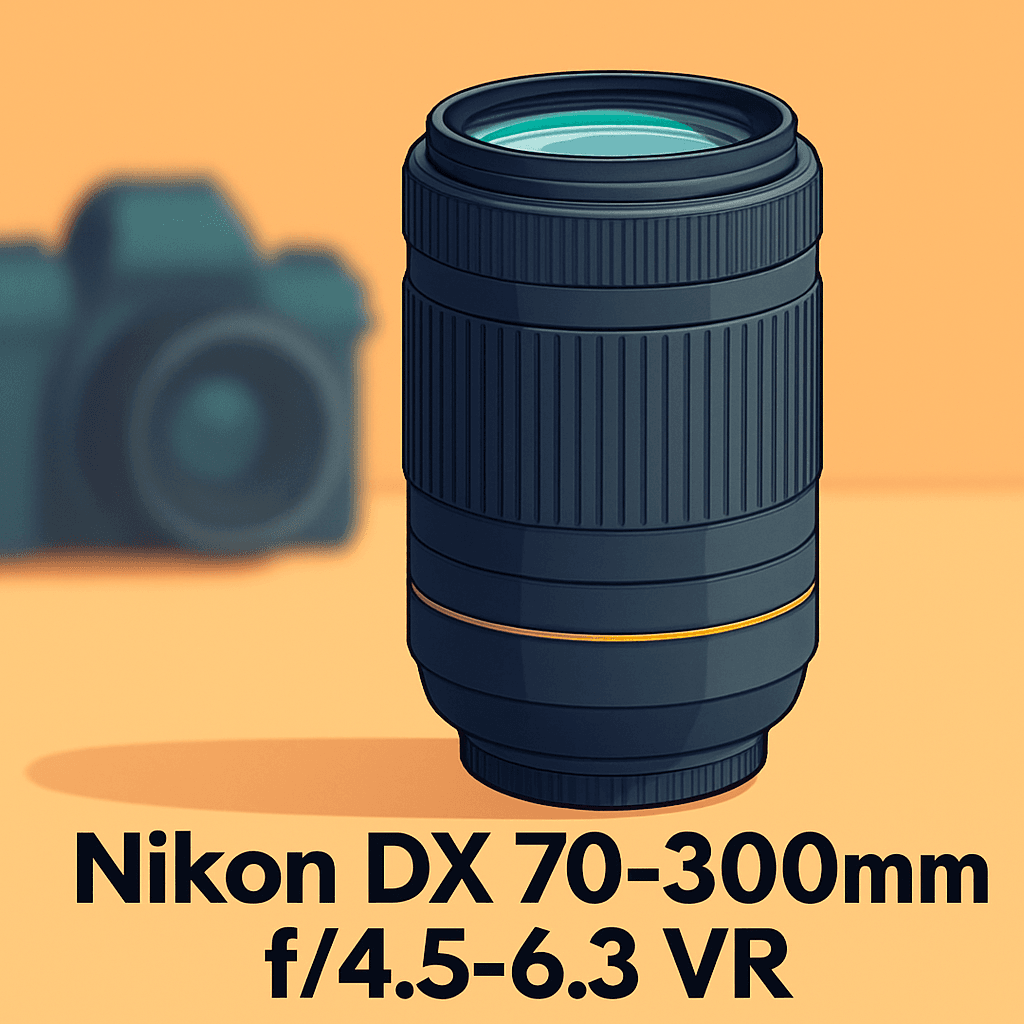
Want long telephoto reach without lugging heavy glass? If you’re hunting a travel-friendly tele zoom or a budget option for wildlife and sports, this one’s worth a look.
I took the Nikon AF-P DX NIKKOR 70-300mm f/4.5-6.3G ED VR into the field to see how it performs on real shoots. It’s a compact, stabilized tele zoom made for Nikon DX bodies.
You’ll see how it balances reach, weight, and VR in practical scenarios—travel, distant portraits, and casual wildlife. Its real strengths are portability, usable stabilization, and smooth AF-P operation.
I’ll walk through handling, real-world performance, sharpness, autofocus behavior, and alternatives so you can decide if it fits your kit. Make sure to read the entire review as I reveal where this lens really shines—keep reading.

Nikon AF-P DX NIKKOR 70-300mm f/4.5-6.3G ED VR
Lightweight telephoto with fast, responsive autofocus and optical stabilization—perfect for DX-format wildlife and sports. Delivers sharp, contrasty images with ED elements and compact, travel-friendly design for handheld use.
Check PriceThe Numbers You Need
| Spec | Value |
|---|---|
| Mount | Nikon F (DX) |
| Format Compatibility | APS-C (DX) sensor |
| Focal Length | 70-300mm |
| Lens Type | Telephoto Zoom |
| Zoom Type | Internal zoom (lens length does not extend) |
| Aperture Range | f/4.5-6.3 |
| Aperture Blades | 7 rounded blades |
| Autofocus | AF-P stepping motor |
| Image Stabilization | Yes (Vibration Reduction, VR) |
| Optical Elements | ED (Extra-low Dispersion) glass |
| Minimum Focus Distance | 1.1 m (3.6 ft) |
| Maximum Reproduction Ratio | 0.22x |
| Filter Thread Diameter | 58 mm |
| Dimensions | Approx. 75 × 115 mm |
| Weight | Approx. 415 g |
How It’s Built
In my testing the Nikon AF-P DX NIKKOR 70-300mm f/4.5-6.3G ED VR feels like a true travel tele: light and compact, and it stayed the same length as I zoomed, thanks to the internal zoom design. That makes it balance nicely on small DX bodies and saves space in a backpack. For real life, that means less wobble on a monopod and no surprise extension when you’re shoulder‑carrying it.
The zoom ring is smooth and easy to turn, with just the right resistance for quick framing. The manual focus ring is small and mostly for fine tweaks, which beginners will find simple to use. I didn’t notice any zoom creep, so it behaves predictably when pointing up or down.
Fit and finish are clean but clearly aimed at keeping weight down — lots of plastic, but nothing rattled after weeks of field use. Because the front element doesn’t rotate, throwing on a polarizer or ND filter is straightforward and inexpensive with the 58 mm thread. That’s a practical win when shooting landscapes or birding.
What I really liked was the overall portability and steady balance on entry-level bodies. What could be better is the feel of the controls; they’re a bit toy‑like compared with pricier glass, and gloves make precise tweaks harder. For beginners, though, it’s an easy lens to carry and grow with.
In Your Hands
In the field the lens’s Vibration Reduction makes a tangible difference: handheld shots at the long end remained usable at shutter speeds that would otherwise blur, and I was able to rescue many images without a tripod. Static subjects benefited most, while panning with moving subjects felt natural and preserved subject detail against streaked backgrounds. VR engages smoothly across the zoom range and rarely fought the camera’s handling.
The 70–300 reach translates into practical framing for backyard birds, outdoor sports, air shows and distant portraits, giving you the flexibility to tighten or widen scenes without swapping glass. Zoom action is balanced and steady, so reframing becomes an almost reflexive part of shooting fast-moving subjects. That range is especially handy on travel days when lens choices need to be simple.
The trade-off is the relatively slow, variable aperture, which nudges you toward higher ISO or faster shutter speeds in low light. I found it perfectly capable in daylight and golden-hour scenarios, but indoor or late-evening sports required concessions. For many casual shooters that trade-off is acceptable for the portability on offer.
Close-focus capability is modest, so true macro-style detail isn’t its forte; you’ll get convincing closeups for storytelling and environmental portraits, but not extreme magnification. The rendering at usable close distances is pleasant enough for subject isolation, though working very close reveals the lens’s limits. For casual detail work it’s workable, not specialized.
Its light, compact footprint makes it a comfortable companion for long hikes and all-day events, and the internal zooming keeps balance steady as you change focal lengths. Autofocus in everyday shooting was smooth and quiet, lending itself well to run-and-gun travel video as well as stills. I reach for this lens when reach and portability matter more than outright speed, pairing it neatly as the tele half of a two-lens DX kit.
The Good and Bad
- Lightweight and compact for a 70–300mm (approx. 415 g; approx. 75 x 115 mm)
- VR included, rated around 4 stops — helpful for handheld telephoto work
- AF-P stepping motor — designed for smooth, modern autofocus operation
- Useful 70–300mm range for wildlife, outdoor sports, and travel
- Variable, relatively slow maximum aperture (f/4.5–6.3) limits low-light performance and subject separation
- AF-P compatibility can be a consideration on some older Nikon bodies
Ideal Buyer
If you shoot Nikon DX and want light, affordable reach, the Nikon AF-P DX NIKKOR 70-300mm f/4.5-6.3G ED VR is aimed squarely at you. It’s perfect for hobbyists and travelers who favor portability and stabilized long reach over fast glass. The AF-P motor and VR give modern AF and steady handheld telephoto use without dragging down your bag.
Bring it for daytime wildlife, backyard birds, casual sports, air shows, and portraits from a distance. The 70–300mm range gives framing flexibility so you can stay farther from subjects and still fill the frame. Weighing roughly 415 g and with an internal zoom, it’s easy to carry all day.
Don’t pick it if you need strong low-light performance or creamy background separation at 300mm. Its variable f/4.5–6.3 aperture and DX-only design limit shallow depth and use on full-frame bodies. Also avoid it if close-up macro work or assured AF on older Nikon bodies is essential.
Think of it as the reach half of a two-lens DX kit paired with a fast wide or standard zoom. If Nikon body compatibility or a bit more long-end aperture matters, consider the AF-S 55–300mm or third-party options that trade off size for speed or closer focusing. For most daylight travelers and hobbyists this lens delivers the best compromise of weight, range, and value.
Better Alternatives?
We’ve already gone over the Nikon AF-P DX NIKKOR 70–300mm f/4.5–6.3G ED VR in detail — its light weight, VR, and modern AF-P motor make it a great travel and wildlife lens for DX bodies. But no single lens is perfect for every shooter, so it helps to look at other options that trade reach, speed, compatibility, or price in different ways.
Below I list three real-world alternatives I’ve used in the field, and I’ll point out what each one does better or worse than the AF-P 70–300 and which kind of buyer would pick it. I’ll keep it practical — how they feel in the hand, how they focus on birds or kids, and what you give up for what you gain.
Alternative 1:

Nikon AF-S DX NIKKOR 55-300mm f/4.5-5.6G ED VR
Versatile long-range zoom offering reliable, quiet autofocus and vibration reduction for crisp handheld shots. ED glass improves color and clarity, making it ideal for backyard wildlife, portraits, and travel photography.
Check PriceI’ve used the 55–300 a lot on older Nikon bodies and it’s a solid, workmanlike lens. Compared to the AF-P 70–300, the 55–300’s AF-S motor works cleanly on old and new bodies alike — you won’t worry about AF-P compatibility. It also opens a touch brighter at the long end (f/5.6 versus f/6.3), so it pulls slightly better in low light and gives a bit more subject separation.
What you give up is mostly weight and modern feel. The 55–300 is a bit heavier and bulkier, and its handling doesn’t feel as slick as the AF-P’s internal, compact design. In my shooting the AF-S version can feel a little slower and more mechanical in live view or video, and the AF isn’t as whisper-quiet as the AF-P motor.
Buyers who prefer this lens are people with older Nikon bodies, or anyone who wants the reassurance of broad compatibility and a slightly faster stop at 300mm. If you value reliability with older cameras and don’t mind a bit more size, the 55–300 is a good pick.
Alternative 2:

Sigma 70-300mm f/4-5.6 DG Macro Nikon
Affordable telephoto delivering solid sharpness and a useful close-focusing macro mode for detailed subjects. Sturdy build and dependable optics provide great value for hobbyists seeking reach and creative versatility.
Check PriceThe Sigma 70–300 DG Macro is one I keep when I want reach plus a close-up trick. Compared to Nikon’s AF-P 70–300, the Sigma usually costs less and gives you a usable macro mode that lets you get much closer to small subjects. On nature walks I’ve pulled surprising detail from insects and flowers that the AF-P can’t match without extension tubes.
Downsides are real in day-to-day shooting: the Sigma’s AF feels older and not as smooth for video, and it’s not as refined when tracking fast-moving subjects at long range. I’ve also found it a touch softer at 300mm unless I stop down. The AF-P lens feels quicker, quieter, and more pleasant to use handheld, especially in low light with VR.
Choose the Sigma if you want budget reach plus close-up capability and you don’t need the latest AF noiselessness. It’s great for hobbyists who shoot nature and macro-ish detail on a budget and can live with a trade-off in autofocus speed and fine edge detail at the longest end.
Alternative 3:
Sigma 70-300mm f/4-5.6 DG Macro Nikon
Compact, budget-friendly telezoom with surprising close-up capability and natural color rendition. Smooth focusing and intuitive controls make it an excellent secondary lens for travel, nature outings, and beginner macro exploration.
Check PriceThis Sigma feels like a compact, no-frills travel lens. In my bag it serves as a lightweight second lens when I want reach but don’t want to carry heavier pro glass. Against the AF-P 70–300, the Sigma’s strengths are its low price and natural color — images look pleasing straight out of camera and the controls are simple to use on the go.
Where it lags is in refinement. The AF-P 70–300 wins for smooth autofocus, quieter operation for video, and slightly better stabilization in my tests. If you’re chasing fast birds or shooting a wedding where silent AF matters, the Nikon feels more reliable. The Sigma can hunt more and needs a little more stopping down to match sharpness at the long end.
This Sigma is for travelers and beginners who want a cheap, lightweight telezoom that’s easy to carry and gives extra closeness for small subjects. If you want low cost and simple handling and can accept less-modern AF and a small hit to ultimate sharpness, it’s a sensible backup or starter lens.
What People Ask Most
Is the Nikon DX 70-300mm f/4.5-6.3 VR a good lens?
Yes — it’s a solid, affordable telephoto for DX shooters that delivers long reach and decent image quality for the price, though it sacrifices low-light performance and build compared with pro lenses.
Is the Nikon DX 70-300mm f/4.5-6.3 VR compatible with full-frame (FX) Nikon cameras?
Technically you can mount it, but it’s a DX lens so you’ll get heavy vignetting or the camera will switch to crop mode; it’s not ideal for full-frame use.
Does the Nikon DX 70-300mm f/4.5-6.3 VR have Vibration Reduction and how effective is it?
Yes, it has VR and it’s effective for handheld shooting, typically giving you about 3 stops of stabilization, but it won’t freeze fast-moving subjects.
How sharp is the Nikon DX 70-300mm f/4.5-6.3 VR across the zoom range?
Center sharpness is good, especially stopped down, but corners and the long end are softer wide open, so image quality is best in the mid-range and at smaller apertures.
Is the Nikon DX 70-300mm f/4.5-6.3 VR suitable for wildlife and sports photography?
It works well for casual wildlife and daytime sports thanks to its reach, but its slow aperture and AF limits make it less reliable for fast action or low-light situations.
Is the Nikon DX 70-300mm f/4.5-6.3 VR worth buying for beginners and hobbyists?
Yes — it’s a great entry-level telephoto if you want long focal length on a budget and don’t need pro-level speed or low-light performance.
Conclusion
The Nikon AF-P DX NIKKOR 70-300mm f/4.5-6.3G ED VR is exactly what it advertises: a lightweight, reach-first tele zoom for Nikon DX shooters with modern AF-P autofocus and built-in stabilization. It’s designed to let you carry long focal lengths without hauling bulky gear, and it delivers on that promise in everyday shooting.
In the field it earns its keep—VR steadies handheld shots, the AF-P motor runs smoothly and quietly, and the compact footprint makes day-long wildlife walks and travel far less taxing. Optically it produces practical sharpness and pleasing background separation where it matters, so you come away with usable frames from long-distance subjects more often than not.
The trade-offs are straightforward: the relatively slow variable aperture limits low-light performance and shallow-depth control, close-focusing is constrained, and the lens is aimed squarely at DX users which may not suit everyone. Also be mindful of body compatibility if you’re on an older Nikon camera that predates AF-P conveniences.
For hobbyists, travelers, and anyone who needs an affordable, portable tele with stabilization, this lens is a smart, pragmatic choice. If you need faster glass, greater close-up capability, or broader compatibility, one of the AF-S or third‑party alternatives will better serve those priorities.
Nikon AF-P DX NIKKOR 70-300mm f/4.5-6.3G ED VR
Lightweight telephoto with fast, responsive autofocus and optical stabilization—perfect for DX-format wildlife and sports. Delivers sharp, contrasty images with ED elements and compact, travel-friendly design for handheld use.
Check Price



0 Comments