
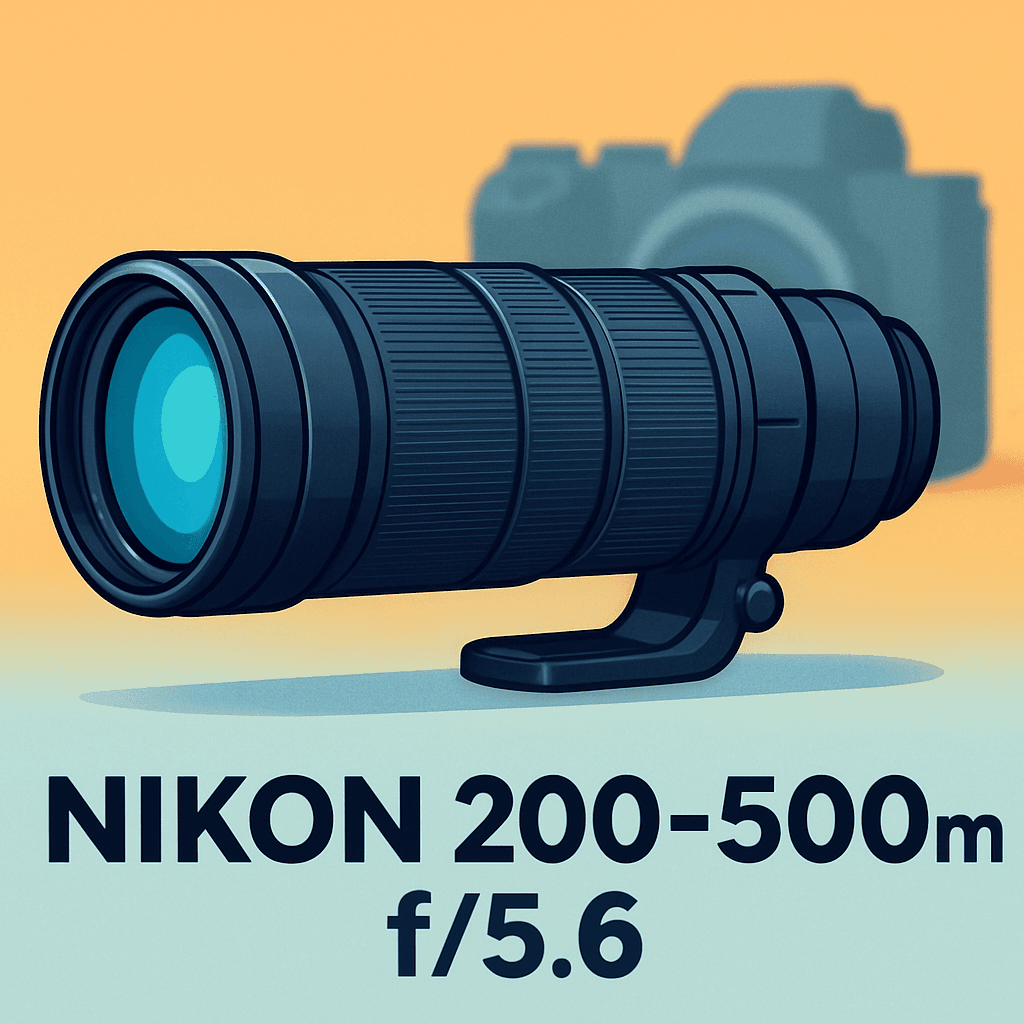
Want to get closer to distant wildlife and field sports without hauling pro-level glass? If you shoot birds, airshows, or sideline action, reach matters more than ever.
The Nikon AF-S FX NIKKOR 200-500mm f/5.6E ED Nikon F mount is Nikon’s native super-tele zoom for F‑mount shooters. It promises long reach with a predictable exposure and Nikon-style handling.
You get 200–500mm reach, a constant f/5.6, VR stabilization, ED glass and a tripod collar. Those features translate to consistent exposure while tracking distant subjects and fewer technical surprises in the field.
It’s big and fairly heavy, with a 95mm front filter and a long front element—so balance and support matter. VR helps for handheld work, but plan on monopod or tripod use for long outings.
After field-testing it on birds and airshows, I’ll walk through sharpness, AF, handling and trade-offs. Make sure to read the entire review as I dig into what this lens actually delivers in the wild—keep reading.

Nikon AF-S FX NIKKOR 200-500mm f/5.6E ED Nikon F mount
Super-telephoto 200–500mm zoom with constant f/5.6 brightness, exceptional sharpness and contrast from ED elements, surprisingly portable design, ideal for wildlife and sports shooters needing dependable long-reach performance.
Check PriceThe Numbers You Need
| Spec | Value |
|---|---|
| Focal Length | 200-500mm |
| Aperture | f/5.6 |
| Lens Mount | Nikon F-mount |
| Vibration Reduction | Yes |
| Extra-Low Dispersion Glass | Yes |
| Minimum Focus Distance | 7.2 feet |
| Lens Elements | 19 |
| Lens Groups | 12 |
| Filter Diameter | 95mm |
| Weight | Approximately 2300g |
| Weather Sealing | Not mentioned specifically for this lens |
| Tripod Collar | Yes |
| Maximum Reproduction Ratio | 1:4 |
| Distortion Compensation | Designed to minimize distortion |
| Multi-Coating | Super Integrated Coating |
How It’s Built
In my testing the glass and coatings really stood out—colors stayed rich and contrast held up even in bright skies. The extra-low-dispersion elements and Nikon’s coating did a nice job keeping fringing and odd color shifts under control, so my RAW files needed less cleanup. What that means day-to-day is cleaner shots straight from the camera, which is great when you’re chasing birds or action.
The tripod collar is one of the things I liked right away; it turns smoothly, locks solidly, and the foot sits nicely on my tripod head. On the flip side the front is big—95mm filters and holders are chunky and add weight to your kit, which can be annoying on long shoots. For beginners, plan for larger, pricier filters and a roomy bag.
The build feels robust and confidence-inspiring, but Nikon doesn’t spell out full weather sealing here, so I avoided shooting in steady rain and used a rain cover when needed. That caution matters in the field—treat it like a serious piece of gear and protect it when conditions turn.
Balance is front-heavy as you’d expect, so I found a monopod or the collar-mounted tripod foot made long sessions far easier on my neck and arms. Mount and unmount from the collar rather than the camera body, keep a hand under the barrel, and you’ll be shooting longer with less fatigue. After using it for a while, the handling felt natural once you adapt your support routine.
In Your Hands
The Nikon AF-S FX NIKKOR 200-500mm f/5.6E ED feels purpose-built for long-reach work; its constant aperture delivers consistent exposure and AF behavior as you zoom during action. That steadiness simplifies shooting fast-changing scenes.
Vibration Reduction makes handheld work more manageable than the lens’s size suggests, especially with a solid stance and controlled breaths. VR complements technique—clean panning and proper support still separate keepers from the rest.
Reach makes this a go-to for wildlife and birding, where subjects hop between perches and sky and you need to reframe quickly. It also holds up for field sports and airshows when anticipation and tracking are the limiting factors.
Close-focus capability lets you pull tight portraits of larger subjects and fill the frame, though it won’t replace a true macro. You’ll need to manage working distance when composing tight shots.
Practicalities matter: the large front element influences filter choice and handling, and the tripod collar is essential for stable mounting and smooth rotation between orientations. The design aims to minimize distortion, but I still checked straight lines and architectural edges in my sample shots.
The Good and Bad
- 200–500mm reach with constant f/5.6 aperture
- VR stabilization
- ED elements and Super Integrated Coating
- Tripod collar included
- Heavy (~2300 g) causing fatigue over long sessions
- Large 95mm filter size and bulky accessories
Ideal Buyer
If you chase birds, wildlife or distant field sports with a Nikon F‑mount body, the Nikon AF‑S FX NIKKOR 200‑500mm f/5.6E ED is built for you. Its 200–500mm reach, constant f/5.6 and VR give predictable exposure and usable handheld performance when paired with solid technique. The included tripod collar and native Nikon communication make it a workhorse for assignments and long days in the field.
This lens rewards photographers who accept bulk in exchange for reach — think experienced wildlife shooters who routinely use a monopod or gimbal head. The roughly 2.3 kg weight and 95mm front filter mean you should plan support, transport, and larger filters into your kit. When you need tight framing on larger subjects the 1:4 reproduction ratio and 7.2‑ft close focus are handy additions.
It’s less attractive to hikers, travel shooters, or anyone who prioritizes minimal weight and compactness. If you need a full 600mm of reach or a more flexible short end for mixed shooting, consider the Tamron/Sigma 150–600 options or Nikon’s 80–400mm depending on whether reach or portability matters more. In short: choose this lens when native Nikon handling, consistent f/5.6 exposure and long‑tele reach beat the desire for lighter, longer‑reach alternatives.
Better Alternatives?
We’ve gone through the Nikon 200-500mm f/5.6 and what it does well: a native Nikon feel, a constant f/5.6 for steady exposure, solid VR, and that useful 200–500mm range for wildlife and field sports. It’s a lens that gives predictable results, but it’s also heavy and some shooters want either more reach, less weight, or a lower price.
If you’re thinking about other options, the big choices usually come down to getting to 600mm, saving weight and cash, or gaining a more flexible short end. Below I’ll run through three lenses I’ve used in the field, how they shoot differently from the 200–500, and who I’d recommend each one to.
Alternative 1:

Tamron SP 150-600mm f/5-6.3 Di VC USD G2 Nikon F mount
Versatile 150–600mm zoom offering industry-leading stabilization and fast ultrasonic autofocus, refined optics for edge-to-edge sharpness, weather-sealed construction and improved mechanics—perfect for birding, wildlife, and action photography.
Check PriceThe Tamron 150–600 G2 gives you an extra 100mm of reach over the Nikon 200–500, and you feel that in the field. When I’m on a seabird cliff or a blind for wary waterfowl, that extra reach lets me fill the frame without cropping. It’s also a touch lighter and more compact, so hiking with it is easier than lugging the Nikon around all day.
Where it loses to the Nikon is in constant light and the native Nikon handling. The Tamron is f/5–6.3, so at full tele you have less light and sometimes need higher ISOs or slower shutter speeds. Autofocus is good in my experience, but on some Nikon bodies it can feel a bit less snappy than the Nikon 200–500, especially when tracking fast birds in flight. Optically you’ll get great images, but I found the sharpest results after stopping down a bit at the long end.
If you want 600mm without paying big or carrying the heft of pro Nikon glass, the Tamron is the lens to try. Pick it if you bird, travel, or hike a lot and need reach plus weather sealing in a package that’s easier to move with. If you’re a pro who shoots tight action in mixed light and depends on the absolute fastest AF and a constant aperture, the Nikon still has the edge.
Alternative 2:

Sigma 150-600mm f/5-6.3 Contemporary DG OS HSM Nikon F mount
Compact 150–600mm telezoom pairing impressive reach with advanced optical stabilization and hypersonic-motor autofocus, delivering crisp images and manageable weight for travelers and enthusiast wildlife shooters on a budget.
Check PriceThe Sigma 150–600 Contemporary is a very practical 600mm option. In the field it feels lighter and a bit easier to handhold than the Nikon 200–500, and its stabilization does a good job when you’re shooting handheld from a blind or a slow-moving vehicle. For the money you get a lot of reach, which is the headline benefit compared to the Nikon.
On the downside, like the Tamron it’s a variable f/5–6.3 lens, so you’ll lose a stop or more of light at the long end compared to the Nikon’s constant f/5.6. In my experience the Sigma can be a bit softer wide open at 600mm and benefits from stopping down and steady support. AF tracking is fine for casual use, but on fast-moving subjects the Nikon’s native body integration and constant aperture sometimes produce a higher keeper rate.
Choose the Sigma Contemporary if you want maximum reach on a tight budget and don’t mind dialing in technique — monopod use, slightly higher ISO, and stopping down when needed. It’s great for hobbyists, travelers, and anyone who prioritizes reach and price over the last bit of edge-to-edge sharpness and the Nikon-native AF feel.
Alternative 3:
Sigma 150-600mm f/5-6.3 Contemporary DG OS HSM Nikon F mount
Long-range zoom engineered for reliable performance and smooth handling, featuring optical stabilization, durable build, and customizable settings—an affordable, high-reach solution for hobbyists seeking versatile telephoto capability.
Check PriceLooking at the Sigma again from a slightly different angle: it’s a tool that rewards good shooting habits. I’ve used it on long wildlife days and found that with a monopod and a little patience it delivers images that rival more expensive glass in the right conditions. Its handling is smooth, and the zoom action is easy to work with when you’re tracking a subject across the frame.
Compared to the Nikon 200–500 the Sigma’s trade-off is clear in low light and fast action. The Nikon’s constant f/5.6 gives a predictable exposure and can keep AF happier in marginal light. The Sigma asks you to accept variable aperture behavior and to adjust technique — faster ISO, more support, or stopping down — to get the best results at 600mm.
This Sigma is for shooters who want the longest reach without the big price, and who are willing to work a little for sharp results. If you’re a hobbyist, a weekend wildlife shooter, or someone who travels light but still wants serious reach, the Sigma is a sensible, affordable choice. If you need consistent aperture, the snappiest AF, and the smoothest out-of-camera results, stick with the Nikon 200–500.
What People Ask Most
Is the Nikon 200-500mm f/5.6 a good lens for wildlife photography?
Yes — it’s an excellent budget-friendly wildlife lens with lots of reach and reliable AF for most situations, though it won’t match pro super-telephotos for speed or ultimate sharpness.
Does the Nikon 200-500mm f/5.6 have vibration reduction/VR?
Yes — it has VR (around 3–4 stops of stabilization) which makes handheld shooting at long focal lengths much more usable.
Can you use teleconverters with the Nikon 200-500mm f/5.6?
You can use a 1.4x teleconverter with acceptable results and maintained AF on many bodies, but a 2x will usually hurt AF performance and image quality significantly.
How sharp is the Nikon 200-500mm f/5.6 at different focal lengths?
Sharpness is best around 300–400mm and remains good at 500mm for most uses, with improved detail when stopped down to f/8–11.
Is the Nikon 200-500mm f/5.6 compatible with DX bodies and what is the 35mm equivalent?
Yes — on a DX body it gives about a 300–750mm 35mm-equivalent field of view thanks to the 1.5x crop factor.
Is the Nikon 200-500mm f/5.6 worth buying compared to Sigma/Tamron 150-600mm lenses?
If you want maximum reach and slightly better optics, Sigma/Tamron 150–600mm lenses are strong options, but the Nikon 200–500mm offers better value, lighter weight, and very good performance for the price.
Conclusion
The Nikon AF-S FX NIKKOR 200-500mm f/5.6E ED Nikon F mount is a purpose-built super-telephoto for Nikon shooters who want long reach with consistent exposure and dependable VR. Its optical tuning and ergonomics feel focused on one job: distant wildlife, birds and field sports. If you spend your days chasing small, fast subjects, this lens will reward steady technique and thoughtful support.
That clarity of purpose brings trade-offs you should not dismiss. It’s a substantial, front‑heavy lens that rewards a monopod or tripod; the 95mm front filter and the 7.2 ft minimum focus distance make it bulky and limit tight close-ups. Weather sealing remains ambiguous in the notes, so treat it cautiously in foul conditions.
My recommendation is straightforward: choose this lens if you want native Nikon handling, a constant f/5.6 across the zoom and effective stabilization more than absolute reach or minimal weight. If you need 600mm reach, less mass or more short‑end versatility, consider the Tamron, Sigma or Nikon 80–400 alternatives instead. For shooters who can carry it, this is a sharp, purposeful tool that delivers real value in its niche.
Nikon AF-S FX NIKKOR 200-500mm f/5.6E ED Nikon F mount
Super-telephoto 200–500mm zoom with constant f/5.6 brightness, exceptional sharpness and contrast from ED elements, surprisingly portable design, ideal for wildlife and sports shooters needing dependable long-reach performance.
Check Price


0 Comments